




Day trading alerts can be a powerful tool in helping to identify short-term trading opportunities and manage risk. For example, you could set an alert in your broker’s app to notify you when the price of Apple (AAPL) stock reaches a certain level, prompting a buy or sell action.
This guide will catalog the different types of trading alerts out there, explain how they can enhance a day trader’s returns, and discuss the key things to consider when choosing an alert provider.
Best Brokers With Day Trading Alerts
Following our hands-on tests, these are the 1 highest-rated brokers with day trading alerts, available through desktop platforms and mobile apps:
-
- Demo account
- Regulator: NFA, CFTC, CySEC
- Min. trade: 1 contract

Learn how we test brokers and why you can trust our ratings.
Here is a summary of why we recommend these brokers in October 2026:
- NinjaTrader 4.5/5 NinjaTrader is a US-headquartered and regulated brokerage that specializes in futures trading. There are three pricing plans to suit different needs and budgets, as well as ultra-low margins on popular contracts. The brand's award-winning charting software and trading platform also offers a high-degree of customization and superb technical analysis features.
Community Sentiment
See how users rate these brokers based on the average customer ratings submitted on DayTrading.com, plus ratings from Trustpilot, the Apple App Store and Google Play.
| Broker | Our Users' Rating | Trustpilot Score | Trustpilot Reviews | iOS App Rating | Android App Rating |
|---|---|---|---|---|---|
| NinjaTrader | 1251 |
NinjaTrader
NinjaTrader continues to meet the demands of active futures traders looking for low fees and premium analysis tools. The platform hosts top-rate charting features including hundreds of indicators and 10+ chart types.
 Christian Harris, Reviewer
NinjaTrader quick facts
- Demo Account
- ✔Yes
- Instruments
- Futures, Forex, Stocks, Options, Commodities, Futures, Crypto (non-futures depend on provider)
- Regulator
- NFA, CFTC, CySEC
- Platforms
- NinjaTrader Desktop, Web & Mobile, eSignal
- Minimum Deposit
- $0 (live trades must meet intraday margin minimums, e.g., $50 to trade micro contracts)
- Minimum Trade
- 1 contract
- Account Currencies
- USD, EUR, GBP, CAD, AUD
Pros
- NinjaTrader's ecosystem gives traders access to thousands of add-ons and applications from developers across more than 150 countries, covering indicators, strategies, and custom tools that go well beyond what the platform ships with natively
- The market replay function is a standout feature — you can download tick-by-tick historical data, rewind to any specific date, and interact with it as if trading live, making it genuinely useful for both strategy testing and real-world practice
- Nano contracts — one-hundredth the size of standard contracts — allow traders to size positions with precision and manage risk at a much smaller scale, a meaningful advantage for those building positions gradually
Cons
- NinjaTrader was acquired by Kraken in May 2025, and while it continues to operate independently for now, traders who value long-term stability may have reservations about how the platform's direction and pricing could shift under new ownership.
- Intraday margin requirements can spike by as much as four times in the 15 minutes leading up to major economic news releases, and may stay elevated for several minutes after volatility subsides — a detail that can catch underprepared traders off guard at exactly the wrong moment.
- NinjaTrader was fined $250k in 2025 for failing to implement an adequate anti-money laundering (AML) program and for supervisory failures.
What Is A Day Trading Alert?
As a short-term trader, you are presented with many hurdles to overcome. How do you choose between thousands of securities? How do you react to news announcements before the market?
This is where day trading alerts come in. Put simply, they alert you when an event takes place.
This event could be a market development, technical indicators, or reaching a specified price target, for example, a notification if the price of gold declines by 1.5% over a four-hour period.
Armed with this information you’re able to act or react swiftly, increasing your chance of yielding a profit. You may want to pay more attention to a security, or know when to enter or exit a trade.
Alerts will flash up on your trading platform when the conditions are met. They can also be sent by email, SMS, and increasingly by push notification on your mobile phone.
You can get straightforward and free trading signals, that come with your trading platform, and you can get additional, complex alerts that come at a price. The complexity of your notifications will depend on your individual trading style and needs.
 Royston WildAuthor
Types Of Alerts
As technology has rapidly evolved, effective intraday trading alerts can now be found for nearly all markets, including stocks, forex, commodities, and cryptocurrencies.
That said, trading alerts can be broken down into several categories:
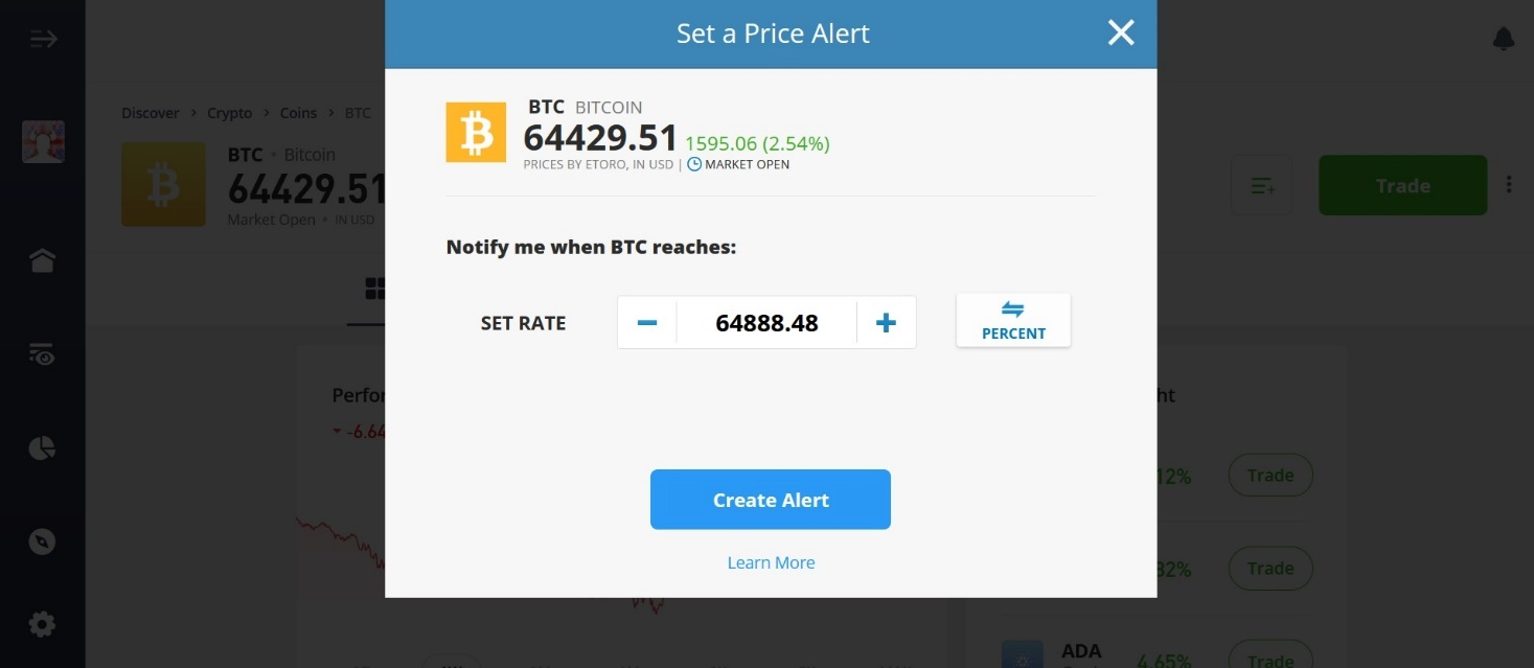
Price Alerts
These inform you when prices move by a certain percentage or hit a specific price level.
They are useful because they can immediately notify you when the market breaches support or resistance levels, or encounters a breakout on a price chart – events that often lead to significant price volatility and opportunity for short-term traders.
Technical Alerts
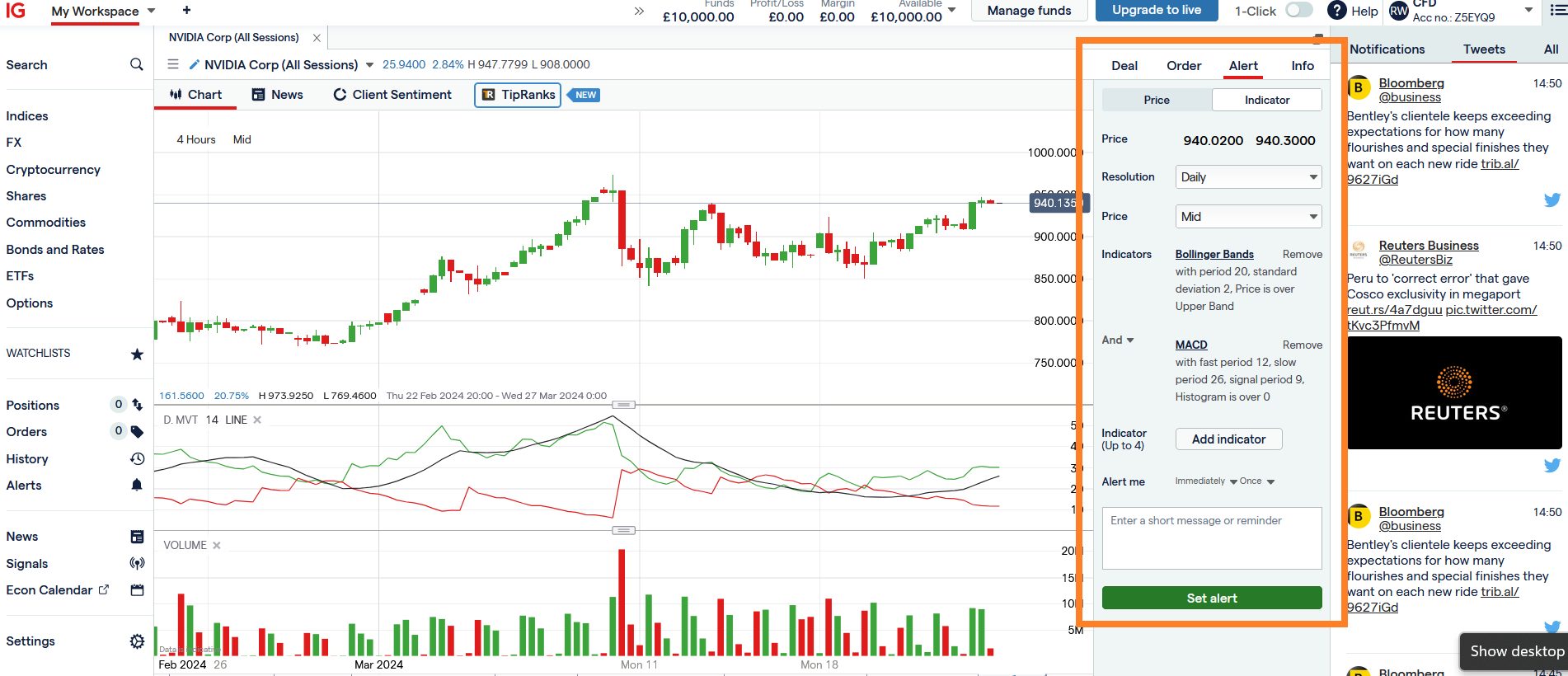
Technical analysis is used extensively by short-term traders, who – after studying charts – can then set up and buy and sell alerts based on an array of popular technical indicators. These include Moving Average Convergence Divergence (MACD), Bollinger Bands, and Ichimoku Cloud.
You can set alerts based on specific conditions or crossovers of these indicators. For instance, I could establish a copper alert on my trading platform to tell me when the MACD line crosses above or below the signal line.
A cross above is a bullish crossover, and an alert in this instance could encourage me to create a buy order for a copper mining stock, such as Rio Tinto (RIO).
News Alerts
Economic reports, geopolitical updates, corporate announcements, market news and other events can have a significant impact on asset prices. Some of the most watched events in the economic calendar include:
- Market-specific supply and demand data (like the weekly US oil rig count)
- Employment data (such as non-farm payrolls in the US)
- Trade numbers (like export data from China)
- GDP data from major economies
- Inflation numbers
News alerts that cover these events – as well as unexpected off-diary occurrences – can help short-term traders stay informed and react to market shifts.
The best news notifications of this sort will come with commentary and analysis to enhance your trading decisions.
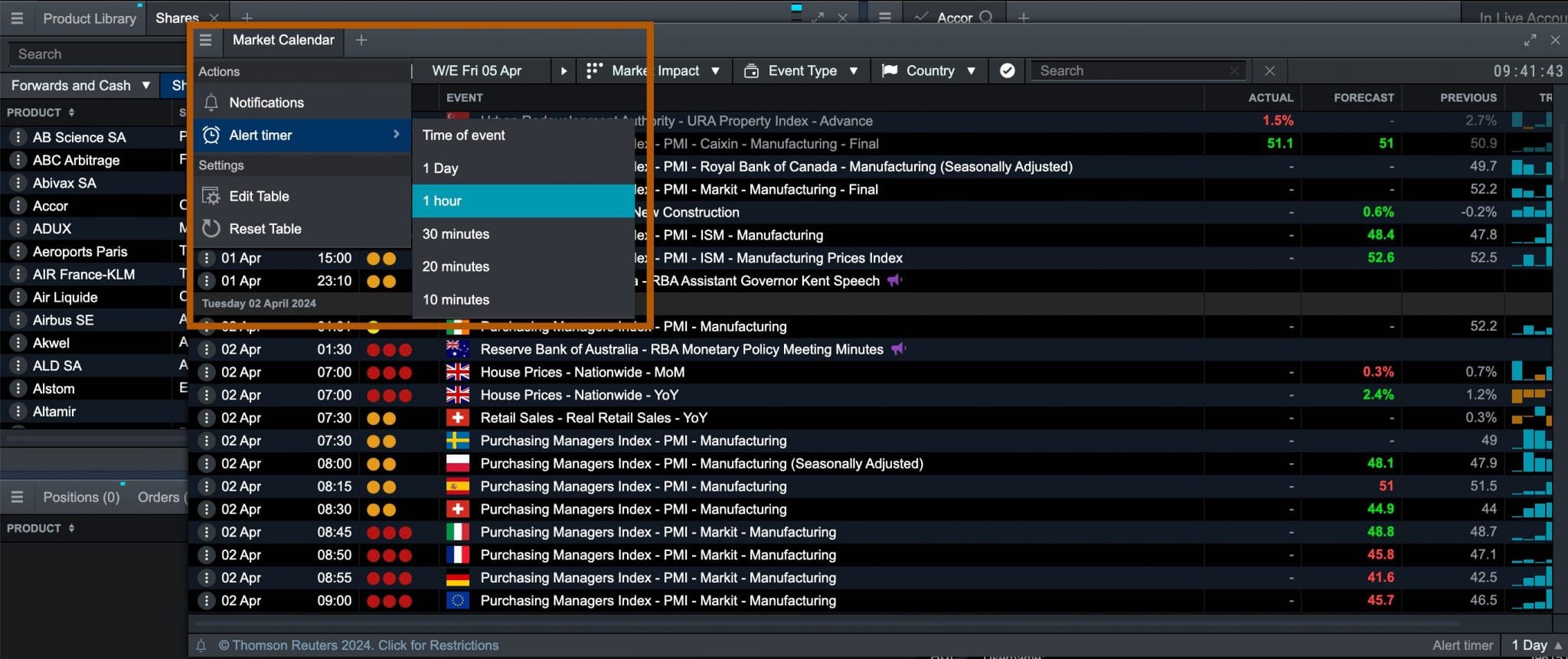
Several platforms also allow you to scroll through a tailor-made economic calendar and then tick the events you’d like to set reminders for. They usually allow you to specify how you’d like to be notified, and how much notice you would like.
Pros And Cons Of Using Trading Alerts
Pros
- Opportunity discovery: By alerting you to certain price movements, technical indicators, or news events, you can identify potential entry and exit points and improve your chances of capturing profitable trades.
- Noise reduction: Alerts can streamline the decision-making process, allowing you to block out random market fluctuations and irrelevant information that can obscure meaningful trends or patterns.
- Time efficiency: By setting up notifications, you don’t have to intensively monitor the markets themselves, giving you time to focus on other tasks and refine your short-term trading strategies.
- Speed and accuracy: Some alert systems are now 100% automated, relying on highly accurate maths and removing the human error margin. This also means that the information you need to make a decision can be provided more quickly.
- Risk management: You can minimize risk to your trades by establishing alerts when markets hit certain thresholds, making them an important tool in your risk management arsenal.
Cons
- Technological problems: While technology is rapidly improving, alerts can still convey incorrect or misleading information that provides false trading signals. Notification delays, platform malfunctions, and connectivity issues may also impact your ability to capitalize on trading opportunities or manage risk.
- Over-dependency: Traders can become excessively reliant on alerts to inform dealing decisions. This may dull your ability to adapt to market conditions, lead to overtrading, and hinder the development of analytical skills.
- Increased trading costs: Many brokers offer free alerts, although you can pay third parties for more sophisticated notification systems. While these tools can boost returns, the associated subscription fees or one-off costs can eat into profits.
Choosing An Alert Provider
Hot competition means that brokerages are all investing heavily to provide the best user experience. This is why many increasingly offer trading alert services to their clients.
But with a lot of different companies operating in this industry, what should you consider when deciding which to use?
Based on our direct experience testing a long row of trading alert providers, there are five key things we, and you, should consider:
- Which asset class are you trading? Some specialist notification companies concentrate on certain markets like currencies, while brokers like CMC Markets provide alerts spanning multiple asset classes, from forex to stocks, indices, and commodities.
- How transparent are they? Only choose a service that provides detailed information on their trading strategies, alert methodologies, and performance metrics, notably win rates and average returns. FOREX.com stands out here with its AI-powered Smart Signals engine that provides short-term trade ideas across 4-, 6-, 8- or 12-hour time intervals with a hit rate out of 10. Whatever you choose, be aware that services provided by brokers licensed by respectable bodies are more likely to be reliable, and read up on the relevant rules and guidance in your jurisdiction.
- Is the alert platform user-friendly? It’s important to select an interface that is easy to use and offers a variety of functions. IG excels here with an intuitive panel in its app that we’ve used to set price alerts, breaking out triggered vs untriggered alerts with accompanying details like price, time and date.
- Do they offer good customer support? Technical problems can be expensive and very frustrating for traders. Try to find out how responsive and effective the provider is in addressing issues, and consider if they provide multiple ways for customers to make contact. XTB has delivered first-class support 24/5 over our years of testing, with integrated live chat in the platform and dedicated account managers.
- What are their fees? Selecting an alert provider requires a trade-off between quality of service and cost. Remember that high fees can take a big bite out of your profits. Opting for a broker with free trading alerts like AvaTrade can help keep fees down. Real-time alerts are available through its web platform and award-winning mobile app.
Many of these questions can only be answered once a provider’s services have been employed. So choosing one that offers a demo account can be a good idea.
Royston WildAuthorWe’ve reviewed a growing list of independent trading alert providers over the years, many of which specialize in specific markets and types of trading notifications…
Specialist Trading Alert Providers
- Autochartist is a technical analysis tool that assists with trade set up and patterns, as well as providing signals, market reports and other useful features.

Disclaimer – the service providers listed here are not endorsed, or guaranteed, by DayTrading.com to be fit for any purpose. Any use of third-party service providers is at the user’s personal risk. We may receive financial compensation from providers listed here.
Bottom Line
Traders who wish to increase their returns and manage their risk effectively can benefit greatly from day trading alerts.
Yet despite these advantages, traders should also be mindful of the associated costs of using these tools, whilst also remembering to guard against overreliance. They should only be employed as part of a balanced approach to decision-making.
To get started, use our list of the best brokers with day trading alerts.
FAQ
How Can I Receive Trading Alerts?
You can receive your alerts in a number of straightforward ways. You can register for notifications that will pop up when you’re actually in your web-based trading platform, say TradingView. They will usually make a sound to inform you an event of interest has occurred.
Alternatively, you can get mobile SMS notifications. These allow you to respond to important market developments even when you’re on the move.
There is even the option of X, formerly Twitter, alerts. That’s right, you can keep up to date with Donald Trump at the same time as receiving crucial trading information. If that isn’t to your fancy you can set up email alerts and absorb data that way.
Technology now allows you to receive your alerts in whichever medium is most suitable for your needs. For example, an intraday trader glued to the screen all day may benefit most from alerts on their web-based platform.
Can You Profit From Trading Alert Services?
Despite the promise of riches alert service providers claim, there remain downsides to stay aware of. Firstly, remember that however many benefits trading signals and alerts offer, they don’t replace experience and they won’t work without an effective strategy.
Secondly, you need to take into account slippage. There will always be some lag in the alert and your ability to make or exit a trade, and when you’re day trading, every second and tick counts.