


Zacks Trade Review 2026




Zacks Trade will suit active day traders with experience using advanced trading software. Fees and margin rates are low while the market research is excellent.
Rating breakdown
Key facts
- Minimum deposit
- $250
- Regulators
- FINRA, SEC
- Trading platforms
- Zacks Trade Pro (Desktop), Zacks Trader (Web), and Handy Trader (App)
- Instruments
- Stocks, ETFs, Options, Mutual Funds, Bonds, Warrants, IPOs
- Account currencies
- USD, EUR, GBP, CAD, AUD, NZD, INR, JPY, ZAR, TRY, SEK, NOK, DKK, CHF, HKD, SGD, PLN, CZK, HUF
- Payment options
- Wire Transfer, ACH Transfer, Cheque
Pros
- Most brokers at this price point offer little beyond basic charts and a news ticker. Zacks Trade goes considerably further — standard accounts come with over 20 free research subscriptions, plus access to more than 80 additional paid options spanning providers like Morningstar, Dow Jones, Seeking Alpha, and Thomson Reuters.
- The ability to place trades by phone with a human broker at no additional charge beyond the standard penny-per-share commission is a genuine rarity among discount brokers. Most competitors either don't offer this at all or charge a meaningful premium for it, making it one of the few features here that Zacks Trade genuinely owns.
- While Zacks Trade charges commissions that most competitors have eliminated, it wins back ground on borrowing costs. Its margin rates start at 8.83% — a figure that sits notably below what traders pay at the major household-name brokers — making it a practical choice for anyone who regularly carries leveraged positions overnight. The savings are modest on small balances but compound meaningfully for traders running larger margin books across a full year.
Cons
- The account-opening process is fully digital but overly complicated, with verification taking more than a week in some cases. Multiple document steps and an experience-assessment stage before approval make this one of the more tedious onboarding processes in retail brokerage, at a time when most competitors have it down to hours.
- Traders cannot access forex, cryptocurrencies, commodities, or futures — a meaningful gap for anyone trading across multiple asset classes. Given that the infrastructure runs through Interactive Brokers, which supports all of these, it feels like an artificial ceiling rather than a genuine platform limitation.
- Most brokers have dropped stock and ETF trading to $0, making Zacks Trade's penny-per-share fee stand out. For casual traders, the cost is negligible, but a 10,000-share trade costs $100 in commission — and in a market where zero-commission alternatives are everywhere, that's a harder position to defend.
Zacks Trade review
Rather than simply cataloging features, this Zacks Trade review puts the platform through its paces. We opened live accounts, placed real trades, and tested order execution during some of the market’s most chaotic moments — including earnings releases — to see how fills actually hold up under pressure. We also took a hard look at whether the headline numbers match reality regarding advertised commissions and margin rates.
Regulation & Trust
A division of LBMZ Securities, Zacks Trade is a US-focused broker regulated by the US Securities and Exchange Commission (SEC) and the Financial Industry Regulatory Authority (FINRA).
It carries no regulatory authorization in the UK, Europe, or anywhere else outside its home market, and its services reflect that — built around domestic clients, with non-US residents often finding themselves navigating account restrictions or a noticeably thinner level of support.
Securities Investor Protection Corporation (SIPC) coverage and the broader protections the broker advertises are largely designed for US-domiciled traders. If you’re based outside the US, it’s worth confirming your eligibility before you get deep into the application process — finding out you don’t qualify after you’ve already filled out the paperwork is a frustrating way to discover the broker wasn’t the right fit.
- Zacks Trade is regulated by both the SEC and FINRA — top-tier financial authorities that legally require brokers to meet strict rules designed to protect client money. That combination places it firmly within the most robust regulatory framework available to US retail investors.
- All accounts at Zacks Trade are served by a US-regulated legal entity, meaning non-US clients are covered by the same SIPC investor protection scheme as American residents — a level of coverage that compares favorably to most European investor protection schemes.
- Client assets are custodied with Interactive Brokers LLC, one of the largest and best-capitalized brokerage firms in the world. That adds a meaningful layer of institutional stability behind Zacks Trade’s own balance sheet.
That said, there are some drawbacks worth keeping in mind before you commit.
- Zacks Trade is regulated by FINRA and the SEC, and client accounts are covered by SIPC. That’s a reasonable safety net — but it’s built entirely around US clients. There’s no equivalent FCA, CySEC, ASIC, or other top-tier overseas license providing a local safety net for non-US account holders.
- Zacks Trade doesn’t clear its own trades — it operates as an introducing broker with Interactive Brokers handling clearing and execution. In practice, this works fine, but it does mean that when something goes wrong operationally, responsibility can become less clear-cut.
- Zacks Trade does not support debit or credit card deposits or withdrawals—bank wire is the main option. Most regulated brokers offer cards for faster, clearer fund tracking. This adds steps and limits your audit trail, though it’s not a dealbreaker.
- In September 2017, the SEC fined LBMZ Securities, Inc $240,000 for failing to enforce policies designed to prevent its employees from misusing nonpublic information, which facilitated insider trading by one of the company’s analysts and two investment bankers.
- In December 2017, FINRA fined LBMZ Securities, Inc. $65,000 for failing to have a suitable system to ensure proper due diligence and failing to adequately supervise customer communications and advertisements.
Regulatory Entities and Safeguards
Zacks Trade operates as a single US entity, regulated by the SEC and FINRA — and that framework applies to everyone the broker takes on, regardless of where they live.
For non-US clients, that also means there’s no local backstop: no FCA authorization, no European regulatory oversight, nothing from their home jurisdiction. American rules travel with the account — local protections don’t.
How that translates into DayTrading.com’s regulator-classification framework is shown below.
LBMZ Securities, Inc. (SEC and FINRA)
- Entity URL: https://www.zackstrade.com
- Verify License: 008-23266 and 7874
- Regulator Classification (Green to Red): SEC and FINRA (green-tier – strong safeguards)
- Protections: Leverage is limited to 1:4 intraday on US securities, dropping to 1:2 for overnight positions. Eligible accounts with portfolio margin can access up to 1:6. SIPC coverage protects both US and non-U.S. clients equally if the broker fails, covering up to USD 500,000 in securities with a USD 250,000 cash sub-limit — more generous than most European equivalents. The catch is that negative balance protection isn’t offered, meaning losses can exceed your deposited funds.
- Who Gets Signed Up Under This Entity: Global clients.
Important: Verify Your Entity & URL
Before signing up, make sure you’re on Zacks Trade’s official site and that the entity name on your registration documents matches what you expect. Zacks Trade operates as a US-regulated broker, so confirming you’re dealing with the correct entity matters — particularly for non-US clients who won’t have local regulatory backing.
Take a few seconds to verify the URL before entering any personal or financial details. Clone sites are convincing, and the consequences of getting it wrong aren’t worth the oversight.
Watch for Clone Scams
Scammers occasionally create fake sites that mimic legitimate brokers, and Zacks Trade is no exception. The differences are often small enough to miss at a glance — a swapped domain extension, an extra word, or a subtle misspelling. Copycat domains might look something like:
- zackstrade.co or zackstrade.io (different extension)
- zacks-trade.com or zackstrading.com (hyphen or added word)
- zackstrade.uk.com or zacktrade.com (slight variation or dropped letter)
These sites exist to steal deposits or personal information. Before logging in or sending funds, check the URL in your browser carefully — logos and official-looking designs can be faked, but the address bar can’t lie if you know what you’re looking for.
The only reliable check is confirming the exact official domain before you enter any credentials or payment details.
| Checkpoint | What to Look For |
|---|---|
| URL Extension | Should be .com (or regional like .com/eu), not .co, .io, or .biz. |
| Spelling | Watch for missing letters (e.g., zacktrade.com or zakstrade.com). |
| Entity Name | Must match your region (e.g., LBMZ Securities, Inc. for SEC and FINRA). |
| Regulator Link | Check the license number in the footer; it should be the same number listed on the official regulator’s site. |
Accounts & Banking
- Zacks Trade supports over 20 account base currencies, a level of currency flexibility that most US-based retail brokers simply don’t offer — particularly useful for international clients who want to avoid constant conversion costs.
- Zacks Trade’s margin rates start at 8.83%, which compares favourably against Charles Schwab at 13.075%, E*TRADE at 14.2%, and Fidelity at 13.075%. For active margin traders, that gap is significant.
- Zacks Trade does not charge a fee to transfer out assets via ACAT — something a number of competing brokers do charge for, making it a meaningful advantage if you ever decide to move your portfolio elsewhere.
- Zacks Trade’s account opening is fully digital but more involved than most modern brokers. The application requires detailed personal and financial information, and the broker assesses your trading experience before determining which account type you qualify for, adding time before you’re even approved. Verification can stretch beyond a week, well above an industry norm where many brokers now onboard clients in hours.
- The only available option to deposit money is via bank transfer — no credit or debit cards, no e-wallets, nothing instant. Credit and debit card and e-wallet transfers are usually instant, but bank transfers may take 2-3 business days to arrive, which means you can’t react quickly to market opportunities if your account runs low.
- If money is transferred to a bank via ACH that differs from the sender’s bank, the broker may hold the funds in the investment account for 44 working days. That’s an unusually long restriction that could leave traders unable to access their own money for months.
Live Accounts
Zacks Trade keeps its account structure relatively simple compared to brokers that segment clients across multiple tiers.
The primary offering is a standard individual brokerage account, with the USD 250 minimum deposit applying across the board. There are no entry-level accounts with reduced functionality or premium tiers with meaningfully different pricing — the same commission structure and platform access applies regardless of account size, though higher-volume traders may negotiate better rates directly.
Beyond the standard individual account, Zacks Trade supports joint accounts, IRAs (Traditional, Roth, and SEP), trust accounts, advisor accounts, business accounts, and stocks and shares ISAs for UK investors, giving it decent coverage for both everyday retail traders and those with retirement or estate-planning considerations. That’s a broader range than some retail-focused brokers offer, making the platform a workable long-term home rather than just a trading account.
There’s no spread betting option — unsurprising given the US regulatory environment — and no Islamic account listed among the standard offerings. PAMM or managed account structures aren’t part of the lineup either, so if you’re looking to allocate capital to a money manager or monetize your own strategy by managing external funds, you will need to look elsewhere.
For most retail traders, the individual or IRA account will cover everything they need. The account range isn’t flashy, but it’s practical — and the absence of artificial tier structures means you’re not paying a premium simply to access features that should be standard.
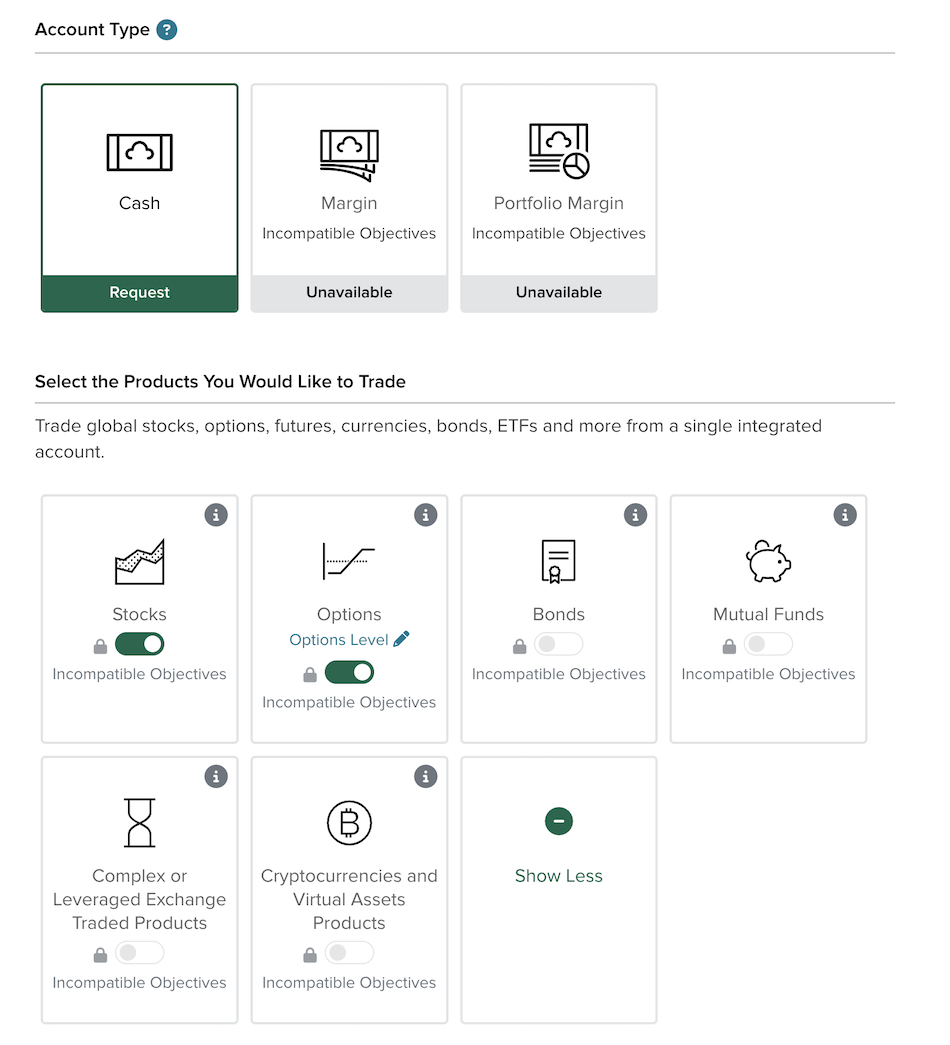
One thing worth flagging, though: opening an account is more involved than you’d expect. The registration process is lengthier and more document-heavy than at most retail brokers, and it’s not uncommon for verification to drag on for days. If you’re used to being up and running within a day or two, set your expectations accordingly.
Demo Accounts
The demo account is one of Zacks Trade’s more practical offerings, though it comes with some friction upfront. It’s available on the Zacks Trade Pro platform, preloaded with up to USD 1,000,000 in virtual funds, and runs for 90 days.
The catch is that all new demo accounts must be requested via email rather than being instantly accessible — a small but telling sign of how the broker operates. Once requested, the account details are emailed to you within one or two business days.
Once you’re in, the environment is genuinely useful for getting to grips with a complex platform. The desktop program is divided into two interfaces — Mosaic and Classic — with the option to build a custom layout. Features such as Level II quotes, time-and-sales windows, and margin tools are available in the demo.
For traders who’ve never used Interactive Brokers’ infrastructure before, this matters — the platform has a steep enough learning curve that spending time in paper mode before going live is genuinely worthwhile rather than just box-ticking.
The USD 1 million in virtual funds is generous, but it’s probably unrealistic for most traders. You also get access to over 20 free research subscriptions during the demo period, which means you can evaluate the research tools alongside the execution environment — a more complete picture than most paper trading setups offer.
That said, the 90-day time limit means serious testing needs to be structured rather than casual, and there’s no option to extend. For a broker pitching itself at experienced traders, handing out demo access via email request rather than instant activation feels like an unnecessary speed bump.
Deposits & Withdrawals
Funding a Zacks Trade account is straightforward in principle but limited in practice. Bank transfer is the only deposit method available — no credit or debit cards, no e-wallets. There are no deposit fees on the broker’s end, which is clean, but the lack of instant payment options means you can’t react quickly if your account needs topping up ahead of a trade.
Bank transfers typically take two to three business days to arrive, from our experience, so if you’re watching a market setup develop, that wait can be genuinely frustrating. The one meaningful upside is currency flexibility — over 20 base currencies are supported, including USD, GBP, EUR, AUD, and JPY, which lets international traders avoid conversion costs by matching their account currency to their bank.
On the withdrawal side, the picture is more positive day to day. The typical withdrawal time is around two days, and the first withdrawal each month is free regardless of the method used. For most traders pulling funds out once a month, that’s perfectly workable. Additional withdrawals within the same month incur fees of USD 1 for ACH, USD 4 for cheque, and USD 10 for wire transfer — modest, but worth factoring in if you move money frequently.
The area that catches traders off guard is the holding period. Zacks Trade imposes a four-business-day credit hold on ACH transfers before funds can be withdrawn, and the situation gets significantly worse if you’re sending to a different bank.
If the receiving bank differs from the originating bank on an ACH transfer, the broker may hold funds for up to 44 working days—an unusually long hold that could lock up capital for months. For active traders who move between accounts or brokers regularly, that’s a constraint worth knowing about well before you need the money.
| Zacks Trade | Interactive Brokers | FOREX.com | |
|---|---|---|---|
| Accounts & Banking Rating | |||
| Payment Methods | ACH Transfer, Cheque, Wire Transfer | ACH Transfer, Automated Customer Account Transfer Service, Cheque, TransferWise, Wire Transfer | ACH Transfer, Credit Card, Debit Card, Mastercard, Neteller, PayNow, PayPal, Skrill, Visa, Wire Transfer |
| Minimum Deposit | $250 | $0 | $100 |
| Visit | Visit | Visit | Visit |
| Review | Review | Review | Review |
Assets & Markets
For equity-focused traders, Zacks Trade covers a lot of ground. You can trade across 150 markets in 33 countries, with access to 28 currencies and fractional share trading available.
That spans major exchanges including the NYSE, NASDAQ, and LSE, as well as smaller markets like the Mexican Stock Exchange, and compares favorably against direct competitors like TradeStation and Firstrade, both of which cover fewer stock markets.
The asset mix includes stocks, ETFs, options, mutual funds, bonds, warrants, and IPOs, giving equity and fixed income traders a solid range to work with across both US and international markets.
For context, Interactive Brokers — which handles clearing for Zacks Trade — offers access to over 170 markets across 40 countries, so there’s a ceiling here, but it’s one most retail traders won’t hit.
Where Zacks Trade starts to show its limits is outside the equity world. There’s no ability to trade forex, cryptocurrencies, commodities, or futures. Currency conversion is available for investment purposes, but that’s a practical utility rather than a tradable market. If you rotate between equities, futures, and macro plays, you will hit walls here that you wouldn’t at Interactive Brokers.
Options traders are reasonably well served. The platform supports multi-leg strategies and comes with dedicated tools, including the Options Strategy Lab and SpreadTrader — putting it ahead of more basic retail brokers.
Bonds are accessible, too, with Treasuries, corporate bonds, and municipal bonds all available at lean fees, making it one of the cheaper brokers for high-volume fixed-income trading. Mutual funds are the weak spot — every trade costs USD 27.50, with no zero-fee fund options — a meaningful drag compared to brokers, where this is free.
Leverage
Zacks Trade operates within US regulatory limits, so don’t expect the headline leverage ratios you’ll see advertised by offshore CFD brokers.
What you get is the standard Reg T (Regulation T) framework: up to 1:2 for overnight positions and 1:4 for intraday day trading. For most equity and options traders working within US rules, that’s perfectly functional — the 1:4 intraday ratio gives active traders meaningful buying power without the kind of exposure that wipes out accounts overnight.
The Special Memorandum Account (SMA) must stay positive 10 minutes before the market close to remain within the 1:2 overnight ratio, or the account becomes subject to liquidation — a rule worth understanding before you start holding positions into the close.
Where Zacks Trade genuinely stands out is in margin rates rather than leverage ratios. Rates start at 8.83%, compared to Charles Schwab at 11.825%, E*TRADE at 12.45%, Fidelity at 11.825%, and Vanguard at 12.00%. For active margin traders carrying larger positions, that gap compounds meaningfully over time — it’s one of the more concrete cost advantages the broker has over mainstream competitors.
For well-capitalized traders, portfolio margin is also on the table. Accounts with at least USD 110,000 in net liquidation value can access up to 1:6 leverage, though the minimum must be maintained at USD 100,000 or the account reverts to Reg T.
Portfolio margin isn’t available for futures, bonds, mutual funds, or currency positions — so the higher leverage is only in equity and options. The approval process takes 24-48 hours. It’s worth noting that you can switch between portfolio margin and Reg T, but once margin is requested, downgrading to a cash account isn’t an option.
| Zacks Trade | Interactive Brokers | FOREX.com | |
|---|---|---|---|
| Assets & Markets Rating | |||
| Trading Instruments | Stocks, ETFs, Options, Mutual Funds, Bonds, Warrants, IPOs | Stocks, Options, Futures, Forex, Funds, Bonds, ETFs, Mutual Funds, Cryptocurrencies | Forex, Futures and Options on Metals, Energies, Commodities, Indices, Bonds |
| Margin Trading | Yes | Yes | Yes |
| Visit | Visit | Visit | Visit |
| Review | Review | Review | Review |
Fees & Costs
The fee structure at Zacks Trade is a tale of two halves. On the one hand, stock and ETF commissions are genuinely low — USD 0.01 per share for stocks priced above USD 1, with a USD 1 minimum — which works out to less than half the industry average.
For a trader placing a 500-share order, that’s USD 5, and for most standard retail positions, the cost is negligible. The trouble is context: most major brokers have dropped stock and ETF commissions entirely to zero, which makes Zacks Trade’s penny-per-share fee stand out — even if the absolute cost is small. For high-volume traders churning through large share counts, a USD 100 commission on a 10,000-share trade is a real consideration.
Options pricing follows a similar pattern. There’s no base commission, but the per-contract fee is USD 1 for the first contract and USD 0.75 for each additional one — slightly above the USD 0.65 to USD 0.50 range many competitors charge, and well above the growing number of brokers that have eliminated contract fees altogether.
For moderate options traders, it’s workable, but active multi-leg traders will feel the difference over time. Foreign stock commissions vary by region — 0.3% for Mexico and Australia, 0.1–1% for Europe, and 0.05–0.3% for Asia — reasonable for occasional international exposure but worth factoring in if global equities are a core part of your strategy.
The clear bright spot is margin rates. Starting at 8.83%, it’s a meaningful boon for traders who regularly carry margin balances. Non-trading fees are also lean: no deposit fees, no platform fees, no ACAT transfer fees.
The two costs that might catch you off guard are the USD 15 monthly inactivity fee for accounts under USD 25,000 that generate less than USD 15 in commissions, and the USD 27.50 mutual fund commission with no zero-fee fund options available. The inactivity fee is easy to avoid if you trade regularly, but the mutual fund pricing is simply uncompetitive compared to other free fund trades as standard.
Trade Execution
Zacks Trade delivers reliable fills on US stocks, options, and ETFs—key for catching moves on names like SPY or AAPL. Live tests clocked market orders at 200-300ms, hugging quoted prices tight in steady hours. Slippage ticked up to 3-7 cents only on earnings pops or thin closes.
It won’t match pro DMA desks for microsecond scalps or full-order-book views. Execution suits day trades on liquid names, but raw speed lags brokers with direct exchange feeds.
Total latency splits into four stages:
- Local processing latency: Starts with your setup. Modern CPU, SSD, and Ethernet keep it near zero—Wi-Fi or old gear adds drag right away.
- Network latency: Trip from you to Zacks Trade servers. Cable or fiber beats DSL or mobile, especially at open or close when pipes clog.
- Broker processing latency: Zacks hits 200-300ms on markets in tests, a touch slower on limits—solid retail, not institutional.
- Execution latency: Aggregates from upstream providers, no raw exchange access. Fills stay consistent on US assets, but professionals chasing ECN precision look elsewhere.
Round-trip on core stocks lands under 300ms for most—fine for intraday work. Zacks Trade Pro handles retail volume without drama, but speed demons need specialized routing.
Live Trading Test
From a US East Coast line, market orders on SPY and AAPL filled in 200-300ms during NYSE overlap hours. Requotes stayed low, and early-session volatility after open matched quoted prices close enough—no hidden widening.
Standard cable internet kept stock and options trades crisp for day sessions. Post-earnings news pushed slippage to 3-7 cents on shares, typical for retail US brokers, not institutional depth.
We cranked simulated latency to 400ms to mimic overseas or VPN drag. Fills slowed as expected, but Zacks Trade Pro held steady—no lockups. Scalps took a hit, though; quick reactions got messy.
Slippage Analysis
Slippage on liquid US stocks and ETFs like QQQ stays tight during core hours—Zacks Trade Pro fills these cleanly in normal flow. Things loosen up at the NYSE open, post-earnings pops, or thin late sessions, where spreads gap and fills lag.
That’s standard for US brokers, but scalpers catch the worst of it over swing traders. We saw 2-5 cent slips in stocks and 10-15 cent moves in options during spikes—more than the $0.01/share baseline implies.
Active traders should track real fills, not just charts. The platform shows spreads, but aggregated liquidity means variable latency eats into quick flips. Demos run smoother than live, so don’t bank on them.
For day trading stocks or options at retail sizes, it holds up fine. Sub-tick scalps in wild markets need deeper pools or DMA—Zacks Trade isn’t built for that.
Methodology note
Over five trading days, we placed 180+ round-trip trades on a live Zacks Trade account—mostly stocks, options, and ETFs like SPY. Testing used Zacks Trade Pro from a US East Coast connection, timed for NYSE open, lunch lulls, post-earnings spikes, and late-session fades.
We logged entry quotes against fill prices for each one. Slippage averaged 2-5 cents per share during volatility and 10-15 cents per contract on options. That lines up with their $0.01/share minimums but shows wider gaps in fast markets than the smooth conditions suggest.
Platforms & Tools
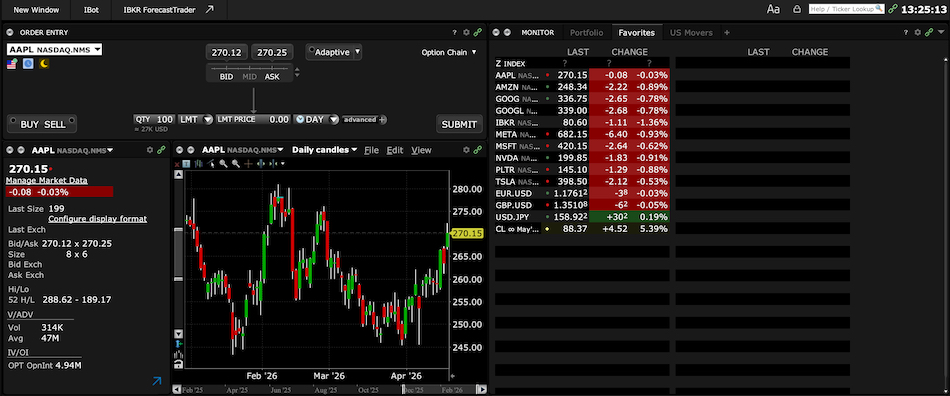
Zacks Trade offers only one proprietary desktop trading platform. Brokers like cTrader-based offerings or MetaTrader-supported firms often give traders a choice of environment depending on their style or asset focus — Zacks Trade doesn’t. You get Zacks Trade Pro for Windows, Mac and Linux desktops, a Client Portal for simpler tasks, and a mobile app. If Zacks Trade Pro doesn’t suit you, there’s no alternative desktop platform to fall back on.
Zacks Trade Pro is built on Interactive Brokers’ Trader Workstation architecture, and in terms of raw capability, it sits in the same conversation as the most powerful retail trading platforms available.
The order type roster is as comprehensive as anything you’ll find on cTrader — limit, stop, stop-limit, bracket, iceberg, and algorithmic types, including TWAP and VWAP, are all there. Multi-leg options strategies, direct chart trading, real-time alerts, and customizable multi-monitor layouts round out a platform that, on paper, competes with the best. For an active, experienced trader who has outgrown simpler interfaces, that depth is genuinely valuable.
Where Zacks Trade Pro struggles compared to modern alternatives is in its visual and charting features. TradingView has set a high bar for what traders expect from a charting experience — clean, fast, intuitive, with a vast library of community indicators and a layout that feels designed for humans rather than engineers.
Zacks Trade Pro doesn’t match that. The interface is dense and layered, feeling dated next to TradingView’s polish, and traders who have spent serious time on TradingView will notice the difference immediately. cTrader, too, offers a cleaner user experience with a more modern feel, particularly for forex and CFD traders used to seamless one-click execution and straightforward depth-of-market displays.
MetaTrader 4 and MetaTrader 5, while long in the tooth by now, remain the standard for algorithmic traders who want to build and deploy custom scripts — and Zacks Trade Pro, for all its power, doesn’t offer that kind of open scripting environment.
The Client Portal is a different proposition entirely — a browser-based interface for simpler trades, account management, and portfolio analysis. It’s functional and clean, but it doesn’t try to compete with dedicated platforms. The Portfolio Analyst tool, which benchmarks your performance against the S&P 500 and generates PDF reports, is a useful tool for longer-term investors. But if you’re looking for anything beyond basic order entry and account housekeeping, you’ll quickly find its limits.
Zacks Trade Pro is a powerful platform that rewards traders willing to learn it — but in an era where TradingView has raised expectations around usability and charting, and cTrader has shown that advanced execution tools don’t have to come with a cluttered interface, Zacks Trade Pro feels like it’s showing its age visually. The underlying capability is there. The experience of using it, compared to the best modern alternatives, is a meaningful step behind.
Mobile Apps
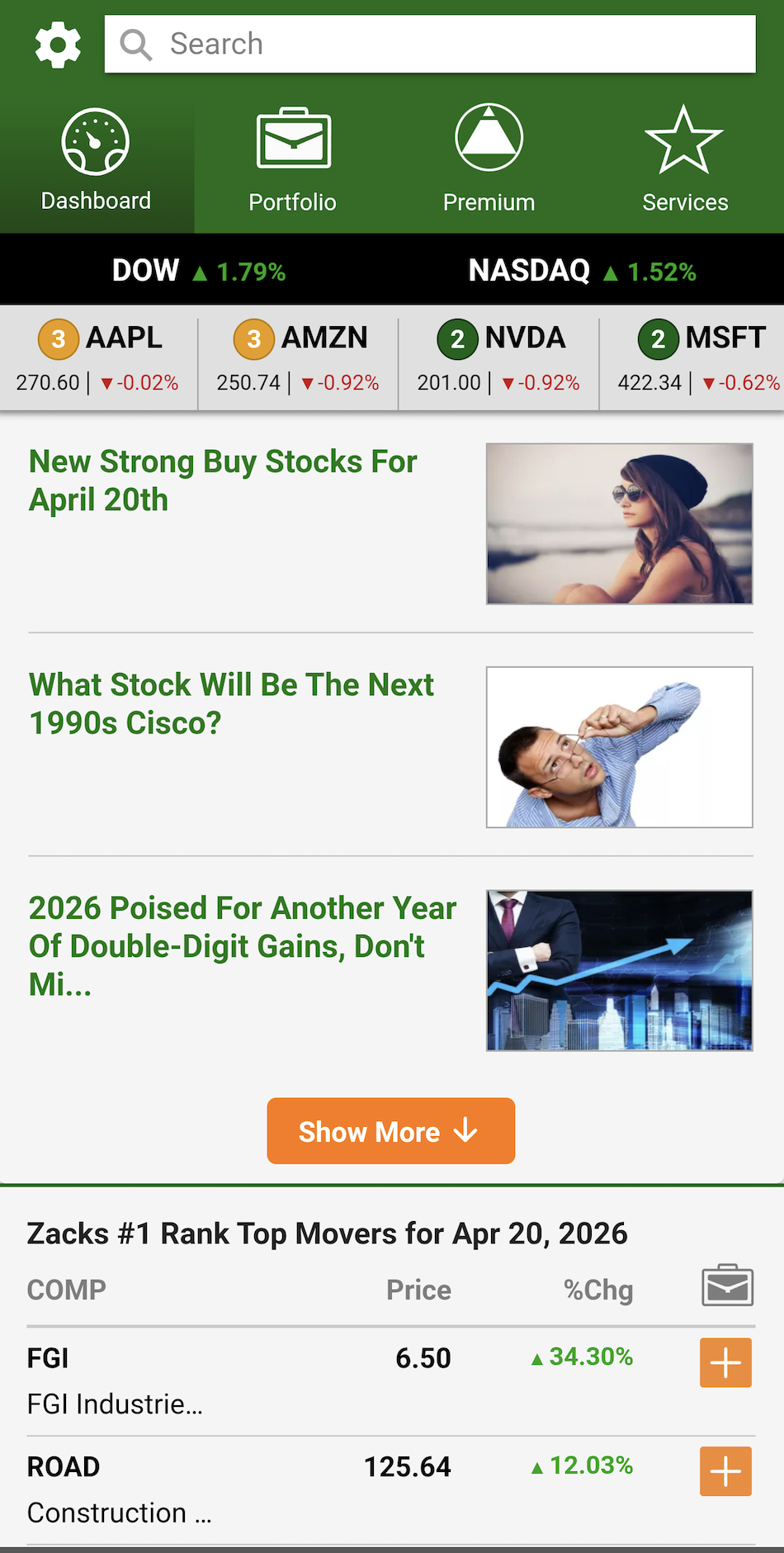
The Zacks Trade mobile app is available on both iOS and Android, and the first thing worth knowing is where it comes from. Zacks Trade is an introducing broker for Interactive Brokers, which means the app is essentially a version of IBKR’s mobile platform once you’re logged in.
That’s not a bad thing — IBKR’s mobile infrastructure is serious and well-tested — but it does set expectations. What you’re getting is a streamlined, less cluttered take on a very capable trading engine, rather than something built from scratch with a fresh interface.
For day-to-day use, the app covers the essentials well. You can enter and manage orders, monitor positions and account balances, view executions, and access security scanners for both US and international markets.
There are two order entry methods — a standard vertical ticket and a wheel-based system that puts prices on one side and share quantities on the other — which gives you some flexibility depending on how quickly you need to get in and out of a trade. The slide-to-execute confirmation adds a small but sensible layer of security before an order fires.
Where the app shows its limits is on the more complex end of the trading spectrum. Serious research, multi-leg options strategies, and the deeper charting capabilities that active traders rely on are better handled on the desktop platform.
The mobile app is positioned as a companion tool — useful for monitoring positions on the move or placing straightforward orders when you’re away from your desk — rather than a full substitute for Zacks Trade Pro. That’s an honest trade-off, and most experienced traders will accept it.
| Zacks Trade | Interactive Brokers | FOREX.com | |
|---|---|---|---|
| Platforms & Tools Rating | |||
| Platforms | Zacks Trade Pro (Desktop), Zacks Trader (Web), and Handy Trader (App) | Trader Workstation (TWS), IBKR Desktop, GlobalTrader, Mobile, Client Portal, AlgoTrader, OmniTrader, TradingView, eSignal, TradingCentral, ProRealTime, Quantower | WebTrader, Mobile, MT4, MT5, TradingView |
| Mobile App | iOS & Android | iOS & Android | iOS & Android |
| Visit | Visit | Visit | Visit |
| Review | Review | Review | Review |
Research
The headline research offering at Zacks Trade is the Zacks Rank system, and it’s the clearest differentiator the broker has. Built by Zacks Investment Research — a separate but related company — the Zacks Rank scores stocks from 1 to 5 based on trends in earnings estimate revisions and EPS surprises.
The idea is straightforward: stocks that analysts revise upward tend to outperform, and the ranking system aims to surface those opportunities before the broader market prices them in. For a fundamentally-driven trader, that’s a useful lens.
The Zacks Rank Trading Tool is accessible directly through the client portal and lets you screen by theme, sector, and industry, filtering down to the highest-ranked stocks within whatever area you’re focused on. You can also screen for recent changes in analyst forecasts, broker recommendation upgrades, and customized criteria you set yourself. The ability to trade straight from the tool without switching platforms is a practical touch that saves a step in the workflow.
Where it gets more limited is depth and breadth. The research on offer is essentially one methodology — the Zacks Rank — applied across different lenses. There’s no integrated technical analysis research, no macro commentary, no options-specific insights, and no third-party analyst reports from the likes of Trading Central or Autochartist.
However, the broker offers 20 free research subscriptions, with access to more than 80 paid options covering providers such as Morningstar, Dow Jones, Seeking Alpha, and Thomson Reuters. At a price point where most brokers offer little beyond basic charts and news feeds, that depth of research access is a meaningful differentiator for traders who make decisions on fundamentals.
If your approach is fundamentally driven and you’re looking for a systematic, rules-based way to screen equities, the Zacks Rank tool is a legitimate research edge and not just a marketing feature. But if you trade across asset classes and rely on technical research for day trading, the research stack here might not cover all the bases.
| Zacks Trade | Interactive Brokers | FOREX.com | |
|---|---|---|---|
| Research Rating | |||
| Visit | Visit | Visit | Visit |
| Review | Review | Review | Review |
Education
Zacks Trade’s educational offering is nonexistent, and that’s worth being upfront about. There’s no dedicated learning hub, video library, webinars, or structured courses for traders looking to build or sharpen their skills. If you’re coming to this broker expecting the kind of educational infrastructure that competitors like IG or eToro have built over the years, you won’t find it here.
What Zacks Trade does offer is research, and that distinction matters. Through its parent company, Zacks Investment Research, account holders get access to the Zacks Rank system — a proprietary stock-ranking model built around earnings estimate revisions and EPS surprises.
The problem is that the Zacks Rank tool requires a baseline of knowledge to be effective. If you don’t already understand what earnings revisions mean or why analyst upgrades matter, the tool doesn’t walk you through it. There’s a downloadable guide linked from the research page, but that’s about as deep as the hand-holding goes. For newer traders, that gap is real.
Zacks Trade is therefore built for traders who have already done their learning elsewhere. The research tools add value for the right user — someone who thinks fundamentally, trades stocks and ETFs, and wants a systematic way to filter ideas. But as a place to develop as a trader from the ground up, the resources simply aren’t there. If education is a priority for you, you’d need to supplement this broker with outside material, which is a fair ask for some traders and a dealbreaker for others.
| Zacks Trade | Interactive Brokers | FOREX.com | |
|---|---|---|---|
| Education Rating | |||
| Visit | Visit | Visit | Visit |
| Review | Review | Review | Review |
Customer Support
Zacks Trade offers phone and email as its primary support channels, with a physical address in Chicago, a toll-free number, and a local line. What’s notably absent is any form of instant contact — no live chat, no WhatsApp, no Telegram, nothing that gets you a response in real time without picking up the phone. For a brokerage operating in 2026, that’s a gap worth flagging.
The hours add another layer to that limitation: support runs Monday to Friday, 09:00 to 18:00 ET, and stops there. No weekend cover, no extended evening access. For traders in US time zones who operate within market hours, the phone line is at least a direct route to a human being — and that’s worth something, given how many brokers at this price point route everything through automated systems and ticket queues. But once the clock hits 18:00 ET Friday, your options reduce to an email sitting unread until Monday morning.
That matters more than it might seem. Problems at a brokerage — a withdrawal that hasn’t landed, a position that needs explaining, an account query that’s time-sensitive — don’t schedule themselves around business hours. Without any async instant messaging channel or out-of-hours cover, traders dealing with something urgent on a Saturday are essentially on their own.
Zacks Trade is built for self-directed traders who are comfortable figuring things out on their own, and the contact options reflect that. If you trade within normal hours and rarely need to escalate anything, the phone line and email will likely cover you. But if you expect a modern support experience with multiple fast-response channels available around the clock, this isn’t the broker that offers it.
| Zacks Trade | Interactive Brokers | FOREX.com | |
|---|---|---|---|
| Customer Support Rating | |||
| Visit | Visit | Visit | Visit |
| Review | Review | Review | Review |
Community Sentiment
Putting together an honest assessment of Zacks Trade meant going further than our own platform testing. We wanted to know what traders with real money on the line actually think, so we worked through Trustpilot, specialist trading communities, and third-party review aggregators — pulling together north of 750 data points covering everything from execution quality to how long withdrawals actually take. The picture that emerges is mixed, but not without merit.
On Trustpilot, sentiment is negative, with recurring complaints about customer service responsiveness and withdrawal delays, and account-level disputes outweighing the praise. Where positive reviews do appear, they tend to focus on low commissions and broad market access — both real strengths.
The range of tradable instruments, US and international stocks, options, and ETFs, does get mentioned favorably, and the pricing structure rewards higher-volume traders who know how to use it. But the volume of frustration coming through on the review side is hard to ignore.
Customer service is the clearest fault line. When things run smoothly, most traders have little to complain about. When something goes wrong — a withdrawal takes longer than expected, an account query needs to be escalated — the response can be slow and inconsistent. Non-US clients flag this more often than domestic clients, which isn’t surprising given that FINRA and SIPC protections are primarily designed for US-based account holders.
The recurring complaint across negative reviews isn’t the platform itself. It’s what happens when traders need actual human support and don’t get it promptly. That gap matters more than it might seem, because problems rarely arrive at convenient times.
For a confident, self-sufficient trader who doesn’t need hand-holding, Zacks Trade offers genuine value. For anyone who expects fast, reliable support when things get complicated — or who’s managing a sizeable account through volatile conditions — the service infrastructure may not match the ambition.
Is Zacks Trade A Good Broker?
Zacks Trade is a solid broker for a specific kind of trader — self-directed, experienced, and focused primarily on equities and options across US and international markets.
The combination of low per-share commissions, competitive margin rates, access to the IBKR trading infrastructure, and the Zacks Rank research tool gives it a genuine edge over simpler alternatives for active traders who know how to use those tools. It’s not trying to be everything to everyone, and for the right user, that focus works in its favor.
But it comes with real trade-offs. Commission-free brokers like Fidelity or Schwab will suit most casual investors better, and the customer service record — particularly around response times and withdrawal queries — means it’s not a broker you want to test during a stressful situation.
The platform is powerful but dated-looking, the educational resources are essentially non-existent, and the mobile experience, while functional, isn’t in the same league as more modern competitors.
If you trade actively, think fundamentally, value low margin rates, and don’t need hand-holding, Zacks Trade delivers real value. If you’re newer to trading, prioritize a slick modern experience, or want a broker that excels at customer support, there are better options available.
How We Tested Zacks Trade
- We tested Zacks Trade on a live account, using the broker’s official fee schedules, product listings, and regulatory disclosures as our reference points. We examined how trades are routed across the various account configurations available through Zacks Trade’s infrastructure and worked through the available funding paths.
- We ran hands-on checks across Zacks Trade Pro and the Zacks Trade mobile app. We opened and closed positions across major US equities, ETFs, and indices; monitored execution behavior during high-volume sessions; compared live pricing with external market data feeds to verify spread and commission accuracy; and tested how the charting and order management tools handle both short-term trading and longer-term investment setups.
- We cross-referenced Zacks Trade’s published claims on commissions, margin rates, and funding times with trader feedback from independent forums and review sites. That process helped us identify where the broker delivers reliable execution and access to global markets — and where factors like platform complexity, currency conversion costs, or customer support responsiveness can create friction for active traders.
FAQ
Is Zacks Trade Legit?
Yes, Zacks Trade is legitimate. It’s a division of LBMZ Securities, regulated by top US authorities like the SEC and FINRA, with SIPC protection up to USD 500,000 per account (including USD 250,000 for cash). This setup ensures client funds and securities are safeguarded in the event the broker fails, making it a reliable choice for US and international traders accessing global markets via Interactive Brokers’ infrastructure.
Is Zacks Trade Safe?
Zacks Trade is reasonably safe for a US-regulated broker. It is overseen by FINRA, and eligible customer accounts are protected by SIPC up to USD 500,000. That said, SIPC only applies if the broker fails. It does not protect you from market losses, and Zacks Trade does not offer negative balance protection as standard. So the short answer is yes, but with limits. It is not an offshore setup, and the rulebook is stricter than many brokers’, but your capital is still exposed to trading risk.
Is Zacks Trade Trustworthy?
Zacks Trade can be considered trustworthy, but mainly for experienced US traders. It is regulated in the US by the SEC and FINRA, and eligible client accounts get SIPC protection if the firm fails. That said, trust does not mean risk-free. SIPC does not cover market losses, and user reviews are mixed, with some complaints about service and platform friction. So the short answer is yes, with caveats. It is a legitimate broker, but it is best judged as a solid US-regulated firm rather than a perfect one.
Who Owns Zacks Trade?
Zacks Trade is a division of LBMZ Securities Inc., which is part of Zacks Investment Research. Zacks Investment Research was founded in 1978 by Len Zacks, and the family maintains involvement through its brokerage arm. The firm clears trades through Interactive Brokers LLC (IBKR), but ownership stays with the Zacks group. Although it uses IBKR’s infrastructure, Zacks Trade is not an affiliate of Interactive Brokers.
Best alternatives to Zacks Trade
The highest rated brokers that are most similar to Zacks Trade in United States are Interactive Brokers and FOREX.com. Here is an overview of what makes them great options:
-
1

Interactive Brokers (IBKR) is a premier brokerage, providing access to over 170 markets across 40 countries, along with a suite of comprehensive investment services. With over 40 years of experience, this Nasdaq-listed firm adheres to stringent regulations by the SEC, FCA, CIRO, and SFC, amongst others, and is one of the most trusted brokers for trading around the globe.
-
2

Founded in 2001, FOREX.com is now part of StoneX, a financial services organization serving over one million customers worldwide. Regulated in the US, UK, EU, Australia and beyond, the broker offers thousands of markets, not just forex, and provides excellent pricing on cutting-edge platforms.
Zacks Trade comparison table
| Zacks Trade | Interactive Brokers | FOREX.com | |
|---|---|---|---|
| Rating | 3.9 | 4.3 | 4.3 |
| Markets | Stocks, ETFs, Options, Mutual Funds, Bonds, Warrants, IPOs | Stocks, Options, Futures, Forex, Funds, Bonds, ETFs, Mutual Funds, Cryptocurrencies | Forex, Futures and Options on Metals, Energies, Commodities, Indices, Bonds |
| Demo Account | Yes | Yes | Yes |
| Minimum Deposit | $250 | $0 | $100 |
| Minimum Trade | $3 | $1 | 0.01 Lots |
| Regulators | FINRA, SEC | SEC, FINRA, CFTC, NFA, CIRO, FCA, CBI, ASIC, SFC, SEBI, JFSA, MAS | NFA, CFTC |
| Platforms | Zacks Trade Pro (Desktop), Zacks Trader (Web), and Handy Trader (App) | Trader Workstation (TWS), IBKR Desktop, GlobalTrader, Mobile, Client Portal, AlgoTrader, OmniTrader, TradingView, eSignal, TradingCentral, ProRealTime, Quantower | WebTrader, Mobile, MT4, MT5, TradingView |
| Leverage | – | 1:50 (major forex pairs), 1:2-1:4 (equities) | 1:50 |
| Payment Methods | 3 | 5 | 10 |
| Visit | Visit | Visit | Visit |
| Review | – | Read review | Read review |
Compare trading instruments
Compare the markets and instruments offered by Zacks Trade and its competitors. Some markets may only be available via derivatives, and availability may vary by region and entity.
| Zacks Trade | Interactive Brokers | FOREX.com | |
|---|---|---|---|
| CFD | No | No | No |
| Forex | No | Yes | Yes |
| Stocks | Yes | Yes | Yes |
| Commodities | No | Yes | Yes |
| Oil | No | No | Yes |
| Gold | No | Yes | Yes |
| Copper | No | No | Yes |
| Silver | No | No | Yes |
| Corn | No | No | Yes |
| Crypto | No | Yes | No |
| Futures | No | Yes | Yes |
| Options | Yes | Yes | Yes |
| ETFs | Yes | Yes | No |
| Bonds | Yes | Yes | No |
| Warrants | No | Yes | No |
| Spreadbetting | No | No | No |
| Volatility Index | No | No | No |
Zacks Trade vs other brokers
Compare Zacks Trade with any other broker:
Customer reviews
There are no customer reviews of Zacks Trade yet. Will you be the first to help fellow traders decide whether to trade with Zacks Trade?