



Only trade with the best regulated brokers – anything less is a risk. A trusted license ensures security, fair trading conditions, and scam protection. We’ve verified the regulatory credentials of every trading platform below.
Top 6 Regulated Brokers 2026
Our tests show these 6 regulated brokers and trading platforms are the best in October 2026:
-
- Demo account
- Regulator: NFA, CFTC
- Platforms: WebTrader, Mobile, MT4, MT5, TradingView
-
2
 Interactive BrokersRegulated by: SEC, FINRA, CFTC, NFA, CIRO, FCA, CBI, ASIC, SFC, SEBI, JFSA, MAS
- Demo account
- Min. deposit: $0
- Min. trade: $1
-
- Demo account
- Instruments: Stocks, ETFs, Options, Pink Sheets, Warrants
- Regulator: SEC, FINRA, CIRO, AFM, SCB
-
- Demo account
- Instruments: Stocks, Options, ETFs, ADRs, OTCs
- Regulator: SEC, FINRA, MAS, SFC, ASIC, CIRO, JFSA, SC
-
- Demo account
- Regulator: NFA, CFTC, CySEC
- Min. trade: 1 contract
-
- Demo account
- Instruments: Stocks, Options, ETFs, Crypto
- Regulator: SEC, FINRA
eToro USA LLC and eToro USA Securities Inc.; Investing involves risk, including loss of principal; Not a recommendation


Learn how we test brokers and why you can trust our ratings.
Why Are These The Best Regulated Brokers?
Here’s a quick rundown on why these regulated brokers made the cut:
- FOREX.com is the best regulated broker in 2026 4.3/5 Founded in 2001, FOREX.com is now part of StoneX, a financial services organization serving over one million customers worldwide. Regulated in the US, UK, EU, Australia and beyond, the broker offers thousands of markets, not just forex, and provides excellent pricing on cutting-edge platforms.
- Interactive Brokers 4.3/5 Interactive Brokers (IBKR) is a premier brokerage, providing access to over 170 markets across 40 countries, along with a suite of comprehensive investment services. With over 40 years of experience, this Nasdaq-listed firm adheres to stringent regulations by the SEC, FCA, CIRO, and SFC, amongst others, and is one of the most trusted brokers for trading around the globe.
- TradeZero 3.8/5 TradeZero is a stock and ETF broker established in the Bahamas in 2015. Though the global entity is regulated offshore, the US subsidiary is overseen by FINRA with SIPC registration. The powerful proprietary trading software makes it a popular choice for active day traders.
- Moomoo 3.2/5 Moomoo is an SEC-regulated app-based investment platform that offers a straightforward and affordable way to invest in Chinese, Hong Kong, Singaporean, Australian and US stocks, ETFs and other assets. Margin trading is available and the brand offers a zero-deposit account as well as several bonuses.
- NinjaTrader 4.5/5 NinjaTrader is a US-headquartered and regulated brokerage that specializes in futures trading. There are three pricing plans to suit different needs and budgets, as well as ultra-low margins on popular contracts. The brand's award-winning charting software and trading platform also offers a high-degree of customization and superb technical analysis features.
- eToro USA 3.4/5 eToro is a social investing platform that offers short-term and long-term trading on stocks, ETFs, options and crypto. The broker is well-known for its user-friendly community-centred platform and competitive fees. With FINRA and SIPC oversight and millions of users across the world, eToro is still one of the most respected brands in the industry. eToro securities trading is offered by eToro USA Securities, Inc.
Compare The Top Regulated Brokers On Key Metrics
Find the right regulated brokerage for you with our comparison of key features:
| Broker | Regulators | Instruments | Platforms | Minimum Deposit |
|---|---|---|---|---|
| FOREX.com | NFA, CFTC | Forex, Futures and Options on Metals, Energies, Commodities, Indices, Bonds | WebTrader, Mobile, MT4, MT5, TradingView | $100 |
| Interactive Brokers | SEC, FINRA, CFTC, NFA, CIRO, FCA, CBI, ASIC, SFC, SEBI, JFSA, MAS | Stocks, Options, Futures, Forex, Funds, Bonds, ETFs, Mutual Funds, Cryptocurrencies | Trader Workstation (TWS), IBKR Desktop, GlobalTrader, Mobile, Client Portal, AlgoTrader, OmniTrader, TradingView, eSignal, TradingCentral, ProRealTime, Quantower | $0 |
| TradeZero | SEC, FINRA, CIRO, AFM, SCB | Stocks, ETFs, Options, Pink Sheets, Warrants | TZ1, ZeroPro, ZeroFree, ZeroMobile, TradingView | $2,500 (US), $500 (International), $250 (Europe) |
| Moomoo | SEC, FINRA, MAS, SFC, ASIC, CIRO, JFSA, SC | Stocks, Options, ETFs, ADRs, OTCs | Desktop Platform, Mobile App | $0 |
| NinjaTrader | NFA, CFTC, CySEC | Futures, Forex, Stocks, Options, Commodities, Futures, Crypto (non-futures depend on provider) | NinjaTrader Desktop, Web & Mobile, eSignal | $0 (live trades must meet intraday margin minimums, e.g., $50 to trade micro contracts) |
| eToro USA | SEC, FINRA | Stocks, Options, ETFs, Crypto | eToro Trading Platform & CopyTrader | $50 |
How Safe Are These Regulated Trading Providers?
See how secure the top regulated brokers are and how they safeguard your funds:
| Broker | Trust Rating | Guaranteed Stop Loss | Negative Balance Protection | Segregated Accounts |
|---|---|---|---|---|
| FOREX.com | ✘No | ✘No | ✔Yes | |
| Interactive Brokers | ✘No | ✘No | ✔Yes | |
| TradeZero | ✘No | ✘No | ✔Yes | |
| Moomoo | ✘No | ✘No | ✔Yes | |
| NinjaTrader | ✘No | ✘No | ✔Yes | |
| eToro USA | ✘No | ✘No | ✔Yes |
Compare Mobile Trading
Here's how these regulated trading apps measure up for mobile users:
| Broker | Mobile Apps | iOS Rating | Android Rating | Smart Watch App |
|---|---|---|---|---|
| FOREX.com | iOS & Android | ✘No | ||
| Interactive Brokers | iOS & Android | ✔Yes | ||
| TradeZero | iOS & Android | ✘No | ||
| Moomoo | Yes (iOS & Android) | ✘No | ||
| NinjaTrader | iOS & Android | ✘No | ||
| eToro USA | iOS & Android | ✘No |
Are The Top Regulated Brokers Good For Beginners?
As well as a secure, regulated broker, beginners should look for key features that new traders need:
| Broker | Demo Account | Minimum Deposit | Minimum Trade | Education Rating | Support Rating |
|---|---|---|---|---|---|
| FOREX.com | ✔Yes | $100 | 0.01 Lots | ||
| Interactive Brokers | ✔Yes | $0 | $1 | ||
| TradeZero | ✔Yes | $2,500 (US), $500 (International), $250 (Europe) | $1 | ||
| Moomoo | ✔Yes | $0 | $0 | ||
| NinjaTrader | ✔Yes | $0 (live trades must meet intraday margin minimums, e.g., $50 to trade micro contracts) | 1 contract | ||
| eToro USA | ✔Yes | $50 | $10 |
Are The Top Regulated Brokers Good For Advanced Traders?
Experienced traders know regulation is just one piece of the puzzle, alongside key features for pros:
| Broker | Automated Trading | VPS | AI | Pro Account | Leverage | Low Latency | Extended Hours |
|---|---|---|---|---|---|---|---|
| FOREX.com | Expert Advisors (EAs) on MetaTrader | ✔Yes | ✔Yes | ✘No | 1:50 | ✔Yes | ✘No |
| Interactive Brokers | TWS API | ✘No | ✔Yes | ✘No | 1:50 (major forex pairs), 1:2-1:4 (equities) | ✔Yes | ✔Yes |
| TradeZero | TradeZero Developer | ✘No | ✘No | ✘No | 1:2 (U.S), 1:6 intraday/1:2 overnight (International), 1:3 (Europe) | ✔Yes | ✔Yes |
| Moomoo | Moomoo OpenAPI | ✘No | ✔Yes | ✘No | 1:2 | ✔Yes | ✔Yes |
| NinjaTrader | NinjaScript or via Automated Trading Interface | ✘No | ✘No | ✘No | $50 intraday margins for Micro contracts and $500 for popular E-mini contracts | ✔Yes | ✘No |
| eToro USA | ✘No | ✘No | ✔Yes | ✘No | - | ✔Yes | ✔Yes |
Compare The Ratings Of The Top Regulated Trading Platforms
Explore how the top regulated day trading platforms compare in every vital area based on our hands-on tests:
| Broker | Trust | Platforms | Assets | Mobile | Fees | Accounts | Research | Education | Support |
|---|---|---|---|---|---|---|---|---|---|
| FOREX.com | |||||||||
| Interactive Brokers | |||||||||
| TradeZero | |||||||||
| Moomoo | |||||||||
| NinjaTrader | |||||||||
| eToro USA |
Compare Trading Fees
Fees can significantly impact your costs - here’s how the top regulated providers compare on pricing:
| Broker | Cost Rating | Fixed Spreads | Inactivity Fee |
|---|---|---|---|
| FOREX.com | ✘No | $15 | |
| Interactive Brokers | ✘No | $0 | |
| TradeZero | ✘No | $0 | |
| Moomoo | ✘No | $0 | |
| NinjaTrader | ✘No | $35 | |
| eToro USA | ✔Yes | $10 |
Community Sentiment
See how users rate these brokers based on the average customer ratings submitted on DayTrading.com, plus ratings from Trustpilot, the Apple App Store and Google Play.
| Broker | Our Users' Rating | Trustpilot Score | Trustpilot Reviews | iOS App Rating | Android App Rating |
|---|---|---|---|---|---|
| FOREX.com | 2541 | ||||
| Interactive Brokers | 5531 | ||||
| TradeZero | 3094 | ||||
| Moomoo | 739 | ||||
| NinjaTrader | 1251 | ||||
| eToro USA | 32244 |
How Popular Are These Regulated Trading Brokers?
Many traders gravitate toward the regulated brokers with the highest client sign-ups:
Why Trade With Regulated FOREX.com?
FOREX.com remains a best-in-class brokerage for active forex traders of all experience levels, with over 80 currency pairs, tight spreads from 0.0 pips and low commissions. The powerful charting platforms collectively offer over 100 technical indicators, as well as extensive research tools.
 Christian Harris, Reviewer
FOREX.com quick facts
- Demo Account
- ✔Yes
- Instruments
- Forex, Futures and Options on Metals, Energies, Commodities, Indices, Bonds
- Regulator
- NFA, CFTC
- Platforms
- WebTrader, Mobile, MT4, MT5, TradingView
- Minimum Deposit
- $100
- Minimum Trade
- 0.01 Lots
- Account Currencies
- USD, EUR, GBP, CAD, AUD, JPY, CHF, PLN
Pros
- There’s a wealth of educational resources including tutorials, webinars, and a stacked YouTube channel to help you get educated in the financial markets.
- FOREX.com offers industry-leading forex pricing starting from 0.0 pips, alongside competitive cashback rebates of up to 15% for serious day traders.
- With over 20 years of experience, excellent regulatory oversight, and multiple accolades including runner-up in our 'Best Forex Broker' awards, FOREX.com boasts a global reputation as a trusted brokerage.
Cons
- FOREX.com's MT4 platform offers approximately 600 instruments, significantly fewer than the over 5,500 available on its non-MetaTrader platforms.
- Demo accounts are frustratingly time-limited to 90 days, which doesn’t give you enough time to test day trading strategies effectively.
- The group being FOREX.com, GAIN Capital Group LLC, had to pay a $700k fine to NFA for improperly handling some client accounts.
Why Trade With Regulated Interactive Brokers?
Interactive Brokers is one of the best brokers for advanced day traders, providing powerful charting platforms, real-time data, and customizable layouts, notably through the new IBKR Desktop application. Its superb pricing and advanced order options also make it highly attractive for day traders, while its diverse range of equities is still among the best in the industry.
Christian Harris, Reviewer
Interactive Brokers quick facts
- Demo Account
- ✔Yes
- Instruments
- Stocks, Options, Futures, Forex, Funds, Bonds, ETFs, Mutual Funds, Cryptocurrencies
- Regulator
- SEC, FINRA, CFTC, NFA, CIRO, FCA, CBI, ASIC, SFC, SEBI, JFSA, MAS
- Platforms
- Trader Workstation (TWS), IBKR Desktop, GlobalTrader, Mobile, Client Portal, AlgoTrader, OmniTrader, TradingView, eSignal, TradingCentral, ProRealTime, Quantower
- Minimum Deposit
- $0
- Minimum Trade
- $1
- Account Currencies
- USD, EUR, GBP, CAD, AUD, INR, JPY, SEK, NOK, DKK, CHF, AED, HUF
Pros
- The TWS platform has clearly been built for intermediate and advanced traders and comes with over 100 order types and a reliable real-time market data feed that rarely goes offline.
- IBKR is one of the most respected and trusted brokerages and is regulated by top-tier authorities, so you can have confidence in the integrity and security of your trading account.
- IBKR continues to deliver unmatched access to global stocks with tens of thousands of equities available from 100+ market centres in 24 countries, most recently the Saudi Stock Exchange.
Cons
- IBKR provides a wide range of research tools, but their distribution across trading platforms and the web-based 'Account Management' page lacks consistency, leading to a confusing user experience.
- TWS’s learning curve is steep, and beginners may find it challenging to navigate the platform and understand all the features.
- You can only have one active session per account, so you can’t have your desktop program and mobile app running simultaneously, making for a sometimes frustrating trading experience.
Why Trade With Regulated TradeZero?
TradeZero is best for experienced stock day traders, especially those trading momentum in small-caps or those chasing opportunities in pre- and after-hours sessions. It also suits short sellers needing hard-to-borrow locates and active options traders thanks to its direct routing tools and Level 2 data, though these typically require a paid platform subscription (ZeroPro or ZeroWeb).
 James Barra, Reviewer
TradeZero quick facts
- Demo Account
- ✔Yes
- Instruments
- Stocks, ETFs, Options, Pink Sheets, Warrants
- Regulator
- SEC, FINRA, CIRO, AFM, SCB
- Platforms
- TZ1, ZeroPro, ZeroFree, ZeroMobile, TradingView
- Minimum Deposit
- $2,500 (US), $500 (International), $250 (Europe)
- Minimum Trade
- $1
- Account Currencies
- USD
Pros
- TradeZero’s short-selling setup is one of the strongest we’ve tested, with pre-borrows, single-use locates, regular locates, and credit back on eligible unused locates - providing access to an inventory many legacy brokers simply don't.
- TradeZero brought out Developer 2026, giving experienced algo traders an API to automate stock and options trades and short locate workflows.
- In our latest support tests, comprising 7 queries on different topics, 70% of responses arrived in under 5 minutes and 90% resolved the issue without follow-up.
Cons
- It doesn't use a true 'no commission' model - free trading really applies to non-marketable limit orders of 200+ shares above $1, while marketable orders, OTC names, options, locates, borrow and data still add up fast. It charges a $0.99 flat fee on trades under 200 shares.
- TradeZero is not suitable for traders seeking to build multi-asset portfolios, with no forex, no futures, no funds, no copy trading, and no modern funding options.
- The TradingView integration disappointed during our tests and is supported by wider user feedback, with access issues, freezes and occasional order-processing problems that make it harder to trust for frequent live execution.
Why Trade With Regulated Moomoo?
Moomoo remains an excellent choice for new and intermediate stock traders who want to build a diverse investment portfolio. What really stands out is the broker's user-friendly app and the low trading fees.
 Jemma Grist, Reviewer
Moomoo quick facts
- Demo Account
- ✔Yes
- Instruments
- Stocks, Options, ETFs, ADRs, OTCs
- Regulator
- SEC, FINRA, MAS, SFC, ASIC, CIRO, JFSA, SC
- Platforms
- Desktop Platform, Mobile App
- Minimum Deposit
- $0
- Minimum Trade
- $0
- Account Currencies
- USD, CAD, AUD, JPY, MYR, HKD, SGD, CNY
Pros
- The broker offers access to extended pre-market trading hours
- API Skills provides agentic investing to retail traders, whereby users can connect their personal AI agents like Claude or OpenAI to Moomoo's infrastructure to execute algo strategies in plain natural language
- Moomoo's analytics and insights are impressive and detailed compared to other brands
Cons
- Moomoo has faced multiple regulatory penalties in recent years, including fines and orders in 2026 that stopped it temporarily accepting some Japanese and Chinese clients
- The account range is narrow compared to other brokerages in its class with no managed portfolios or robo-advisor solutions
- There is no negative balance protection, which is a common safety feature at top-tier-regulated brokers
Why Trade With Regulated NinjaTrader?
NinjaTrader continues to meet the demands of active futures traders looking for low fees and premium analysis tools. The platform hosts top-rate charting features including hundreds of indicators and 10+ chart types.
Christian Harris, Reviewer
NinjaTrader quick facts
- Demo Account
- ✔Yes
- Instruments
- Futures, Forex, Stocks, Options, Commodities, Futures, Crypto (non-futures depend on provider)
- Regulator
- NFA, CFTC, CySEC
- Platforms
- NinjaTrader Desktop, Web & Mobile, eSignal
- Minimum Deposit
- $0 (live trades must meet intraday margin minimums, e.g., $50 to trade micro contracts)
- Minimum Trade
- 1 contract
- Account Currencies
- USD, EUR, GBP, CAD, AUD
Pros
- Nano contracts — one-hundredth the size of standard contracts — allow traders to size positions with precision and manage risk at a much smaller scale, a meaningful advantage for those building positions gradually
- NinjaTrader launched CME Group Single Stock futures in July 2026, allowing traders to express directional views in top U.S. companies like Nvidia, and Amazon without needing options
- NinjaTrader's ecosystem gives traders access to thousands of add-ons and applications from developers across more than 150 countries, covering indicators, strategies, and custom tools that go well beyond what the platform ships with natively
Cons
- Intraday margin requirements can spike by as much as four times in the 15 minutes leading up to major economic news releases, and may stay elevated for several minutes after volatility subsides — a detail that can catch underprepared traders off guard at exactly the wrong moment.
- NinjaTrader was fined $250k in 2025 for failing to implement an adequate anti-money laundering (AML) program and for supervisory failures.
- NinjaTrader was acquired by Kraken in May 2025, and while it continues to operate independently for now, traders who value long-term stability may have reservations about how the platform's direction and pricing could shift under new ownership.
Why Trade With Regulated eToro USA?
eToro remains a top pick for traders looking for leading social investing and copy trading services. With a low deposit, zero commissions and an intuitive platform, the broker will meet the needs of newer day traders.
Jemma Grist, Reviewer
eToro USA quick facts
- Demo Account
- ✔Yes
- Instruments
- Stocks, Options, ETFs, Crypto
- Regulator
- SEC, FINRA
- Platforms
- eToro Trading Platform & CopyTrader
- Minimum Deposit
- $50
- Minimum Trade
- $10
- Account Currencies
- USD
Pros
- eToro USA Securities is a trustworthy, SEC-regulated broker that is a member of FINRA and SIPC
- A free demo account means new users and prospective day traders can try the broker risk-free
- The online broker offers an intuitive social investment network with straightforward copy trading on cryptos
Cons
- eToro USA was fined $1.5 million by the SEC in 2024 related to unregistered crypto offerings
- Average fees may cut into the profit margins of active traders
- There's a narrower range of day trading instruments available compared to competitors, with only stocks, ETFs, options, and cryptos
How Did We Choose The Best Regulated Brokers?
To find the best regulated trading brokers, we:
- Took our database comprizing 143 online brokers and trading platforms;
- Pinpointed those that are regulated after verifying their credentials on the respective regulator’s databases;
- Sorted them by their rating which balances 200+ data entries with the personal observations of our testers.
Do I Need A Regulated Broker?
Yes. If you want to trade on a secure trading platform then selecting a regulated broker is a no-brainer.
Sometimes traders may opt for an unregulated broker to access trading promotions or high leverage that aren’t permitted in tightly regulated jurisdictions, but we do not recommend this, especially for newer traders.
There are three key reasons why you should choose a regulated broker:
- Protection: Many regulators require authorized brokers to provide retail traders with access to compensation in the event the firm is unable to meet its financial obligations, negative balance protection to prevent traders losing more than their deposited funds, and to operate segregated accounts so client funds cannot be misused. For example, the Securities Investor Protection Corporation (SIPC) in the US provides up to $500,000 per person and the Financial Services Compensation Scheme (FSCS) in the UK provides up to £85,000.
- Transparency: Regulators normally require brokers to be transparent about trading fees, order execution, and risks, all of which are critical considerations for day traders. For example, in the European Union (EU), regulated brokers are required to publish the percentage of losing traders on their website, especially when using complex products like contracts for difference (CFDs), which are popular with active traders.
- Security: Regulated brokers are often required to implement systems to protect your data, notably encryption protocols and security audits. For example, the ASIC in Australia requires multi-factor authentication for digital transactions while the FCA in the UK requires brokers to adhere to strict rules under the General Data Protection Regulation (GDPR).
For these reasons, I only deposit funds with regulated brokers. As a UK-based investor, this means I hold my capital with FCA-regulated trading platforms.
James BarraAuthorAre All Brokers Created Equal?
Where things get slightly tricky is that simply choosing any ‘regulated broker’ isn’t enough.
This is because not all regulatory bodies offer the same levels of protection. There is a common misconception that financial agencies supervise brokers across numerous jurisdictions. However, often regulatory remit is limited to those brokers with a license issued within the regulator’s jurisdiction.
Therefore, bodies outside your financial jurisdiction may not provide such extensive legal recourse should there be an issue, be it access to investor compensation or formal dispute channels. For example, the JFSA in Japan offers up to ¥10,000,000 per investor through its Investor Protection Fund (IPF), however it’s primarily available to residents.
Equally, financial agencies enforce varying degrees of regulations. For instance, all FCA brokers must segregate trader’s funds. Whereas offshore bodies like the FSC of Mauritius may not enforce this regulation. Furthermore, FCA brokers must automate and process client withdrawals promptly, while offshore brokers have been known to delay withdrawals, which can be extremely frustrating.
To help you understand which regulators are ‘good’ and crucially – which aren’t, we’ve drawn upon our collective decades working in the trading industry and personal experiences using various trading platforms to classify regulators based on the level of protection they provide:
- Green Tier: These regulators provide the strongest investor safeguards and actively oversee authorized brokers. Notable examples include the SEC in the US, FCA in the UK and ASIC in Australia.
- Yellow Tier: These regulators still provide strong investor safeguards and monitor authorized brokers but not always to the same degree as ‘green tier’ regulators. Notable examples include the FSCA in South Africa, the SEBI in India, and the DFSA in Dubai which is becoming increasingly popular as established brokers like Plus500 have been looking to expand their presence in the Middle East.
- Orange Tier: These regulators provide limited investor safeguards and scrutiny of authorized brokers, requiring caution before signing up. Notable examples include the BMA in Bermuda, the BOB in Botswana and the BCE in Ecuador.
- Red Tier: These regulators provide little to no investor safeguards and we consider them high-risk. Notable examples include the VFSC in Vanuatu, the FSA in Seychelles, and the SCB in the Bahamas.
I recommend extreme caution when dealing with brokers registered with ‘red tier’ regulators. They are sometimes used by scammers to strip traders of any legal protections they may be afforded in well-regulated regions.
In one high-profile case, the bad actors behind trading firm EverFX, convinced aspiring investors to move their funds to offshore entities where there was little to zero regulatory oversight.
The global scamming network is estimated to have made off with up to an eye-watering $1 billion.
James BarraAuthorHow Can I Check If My Broker Is Regulated?
Checking whether a broker is regulated is incredibly straightforward, with an increasing number of financial bodies operating digital, publicly accessible databases where you can input a trading firm’s details.
You’ll normally need to follow a few simple steps:
- Navigate to the respective regulator’s database (usually searchable on the agency’s website)
- Enter the broker’s company name or license number (often found at the bottom of the broker’s website)
- Read the search results to confirm they are authorized (check which investment services and where they are permitted to do business)
I have personally checked the regulatory details of hundreds of brokers on countless regulators’ databases, from the US and UK to Europe, Australia and beyond.
To show you how it’s done, below you can see the results of a search I ran on XTB, which claimed to be authorized by the CySEC.
James BarraAuthor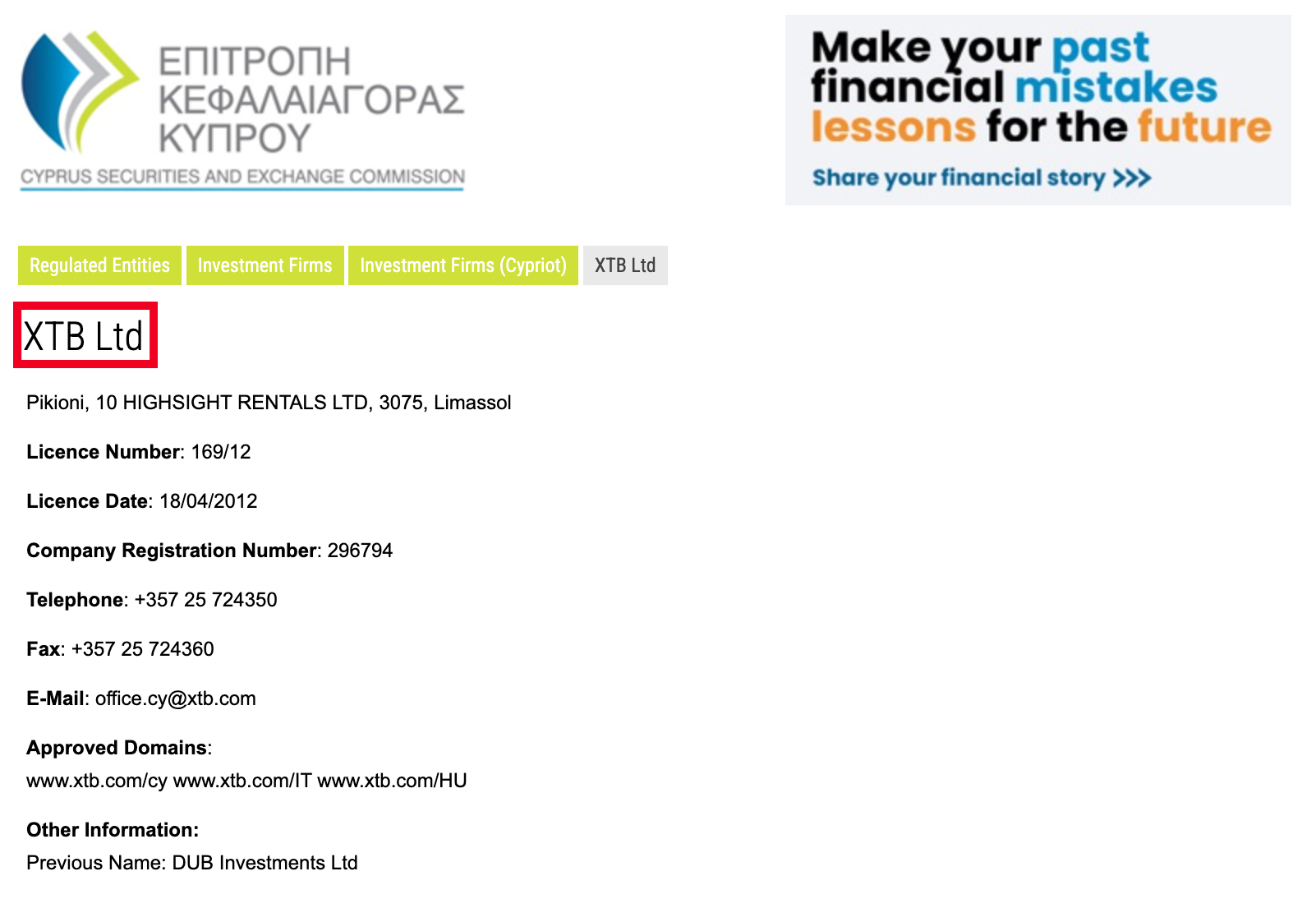
Bottom Line
Choosing a regulated trading platform should be your first priority. It’s a win-win for both traders and brokers.
For traders, it’s the best indication a firm can be trusted to operate in a fair manner. For brokers, regulatory oversight helps build a solid reputation and reduces the need to constantly try and undercut competitors in areas like leverage limits.
Picking a regulated broker is also especially important given the increasing sophistication of trading scams we’ve been witnessing with alarm in recent years, capitalizing on the growing class of ‘finfluencers’ and interest in artificial intelligence (AI).
Use our list of top regulated day trading platforms to be sure a broker is regulated.
FAQ
What Is Trading Regulation?
Regulatory bodies and watchdogs supervise financial markets and online brokers. They enforce a range of rules and regulations to protect retail traders.
The Markets in Financial Instruments Directive (MiFID), since replaced by MiFID II, is the closest the world has got to an overarching regulatory system. It was brought into the UK in 2007 and has been the bedrock of Europe’s financial regulatory systems since.
What Is A Regulated Broker?
Regulated brokers receive a license to operate within that jurisdiction, so long as they adhere to specific rules and regulations, often designed to protect retail traders and the functioning of financial markets.
What Is An Unregulated Broker?
Unregulated brokers operate without having to adhere to a set of guidelines. Arguably, therefore, they do not have the same interest in safeguarding your interests. This allows them to offer attractive features like high leverage and welcome bonuses, but the catch is limited legal protection for your funds.
Which Is The Best Regulated Broker?
Use our list of the top regulated brokers to find a trading platform that best suits your needs. Our experts have independently verified the regulatory credentials of every broker recommended.
Article Sources
The writing and editorial team at DayTrading.com use credible sources to support their work. These include government agencies, white papers, research institutes, and engagement with industry professionals. Content is written free from bias and is fact-checked where appropriate. Learn more about why you can trust DayTrading.com