




Once a relatively lax regulatory jurisdiction, attracting online trading scams, New Zealand overhauled its financial regulatory framework in 2011, introducing the Financial Markets Authority, or FMA.
New Zealand’s FMA now enforces strict rules for brokers, maintains a list of more than 195 unregistered firms, takes legal action against violators – notably handing out a $900,000 fine to Tiger Brokers – and frequently issues warnings for online investors, with over 600 alerts published.
Explore the best brokers regulated by New Zealand’s FMA. We’ve personally checked every platform recommended is authorized on the FMA’s Financial Services Register.
Top New Zealand FMA Brokers
Sorry, there are no brokers that accept traders from your location (United States). If this location is incorrect, please change it.
Methodology
To pinpoint the top brokers regulated in New Zealand, our experts:
- Leveraged our directory of 143 brokers to find those claiming to be authorized by the FMA
- Entered their details in the FMA’s register to confirm they were licensed in New Zealand
- Sorted them by their rating, combining 100+ quantitative entries with our qualitative findings
How Can I Check A Broker Is Regulated In New Zealand?
You can check whether a broker is regulated by the FMA by following these three steps, which we took to verify the credentials of every recommended platform:
- Open the FMA’s Financial Services Register
- Type in the broker’s name, FSP number or NZBN number (usually found in the footer of brokers’ websites) and click ‘search’
- Click on the returned results to check their status is listed as ‘Registered’ and to view details like ‘Registration Date’ and ‘Financial Services’
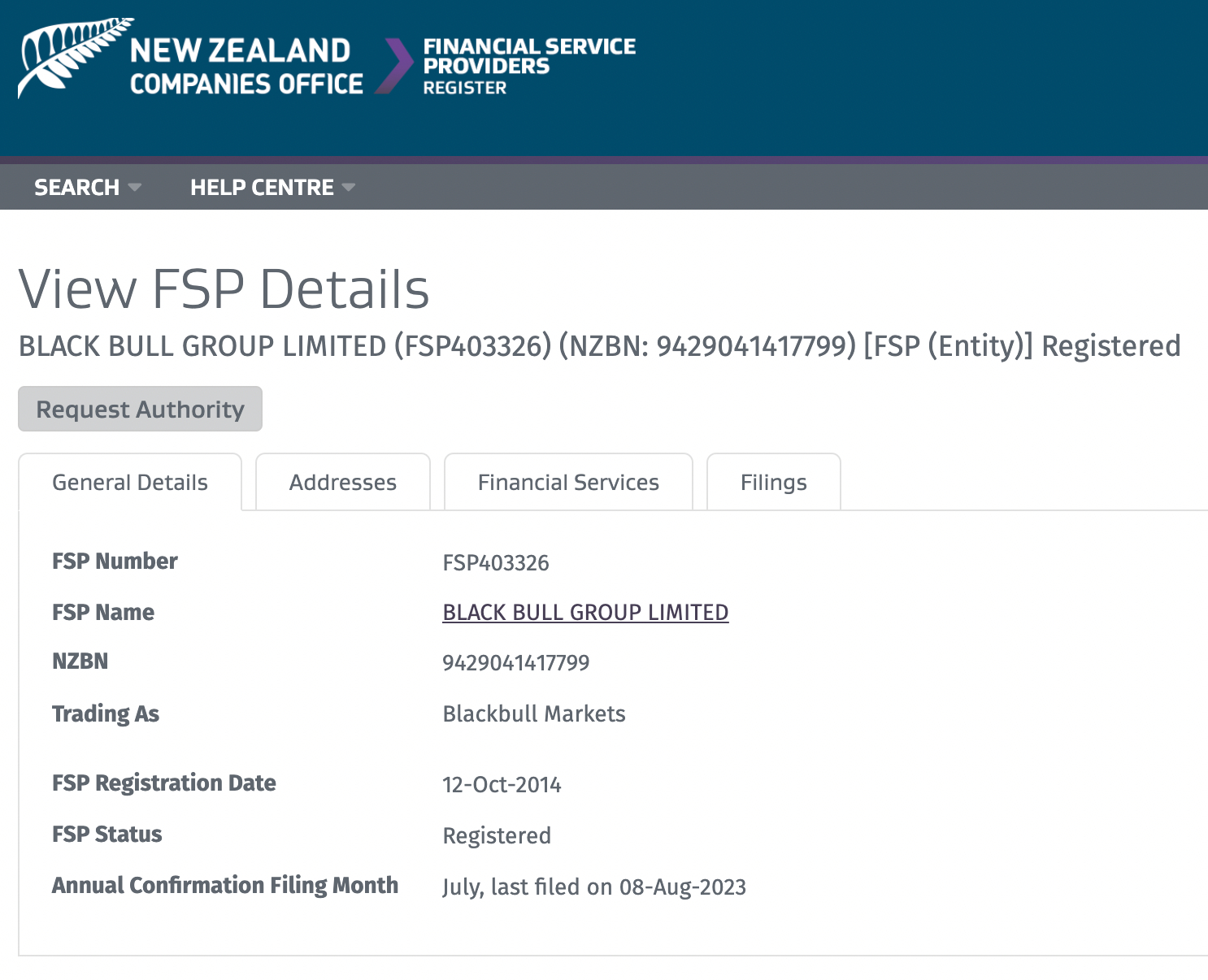
As an example, you can see I verified that BlackBull Markets is regulated by the FMA below.
New Zealand-based BlackBull continues to offer the best selection of instruments I’ve seen after years testing online brokers, with 26,000+ tradable assets on powerful charting platforms.
With execution speeds averaging less than 20 milliseconds combined with ECN pricing delivering spreads from 0.0 pips, BlackBull delivers one of the most optimal environments for day trading I’ve experienced.
 James BarraAuthor
What Rules Must FMA-Regulated Brokers Follow?
The New Zealand Financial Markets Authority (Te Mana Tātai Hokohoko in Maori) has strengthened its Broker Obligations over the years. Among the key requirements and safeguards for traders include:
- Brokers must meet minimum capital requirements, typically NZ$1 million, aligning with rules in the European Union.
- Brokers must be part of the Financial Dispute Resolution Service (FDRS), providing a mechanism to settle disputes between brokerages and traders.
- Brokers must maintain segregated accounts to keep client money and company capital separate.
- Brokers must have an office and at least one director based in New Zealand.
- Brokers must process KYC and AML checks from their New Zealand office.
- Brokers must register as a Financial Services Provider (FSP).
What Powers Do the FMA Have?
Brokers that fail to follow the FMA’s rules risk legal consequences, with New Zealand’s regulator demonstrating a willingness to take proactive action against various trading platforms in recent years.
- The FMA can issue public warnings about unregistered brokers and firms potentially operating trading scams. For example, in 2024 it issued a warning about Prospero Markets after learning it was offering CFD trading products (popular with day traders) without an FSP license.
- The FMA can issue fines and deregister non-compliant brokers. For example, in a high-profile case in 2023, it fined Tiger Brokers $900,000 for “multiple AML/CFT Act breaches”.
- The FMA can educate investors about the risks of online trading and fraudulent platforms. For example, it operates social media channels, notably X (formerly Twitter) and YouTube, teams up with partners like KiwiSaver, and runs campaigns on trending topics, such as ethical investing.
Bottom Line
New Zealand has stepped up its regulatory oversight of online brokers in recent years, with its FMA now on an equal footing with financial bodies like the ASIC in Australia.
For New Zealand residents, opening an account with an FMA-regulated broker is highly advisable. This should give you confidence that the brokerage can be trusted and operates a fair and transparent trading environment.
Still, it’s important to note online trading remains risky, regardless of whether your broker is regulated in New Zealand or not. You risk losing all the New Zealand Dollars you invest.
Article Sources
- New Zealand Financial Markets Authority (FMA)
- Licensed and Reported Entities - FMA
- Unregistered Businesses - FMA
- Warnings and Alerts - FMA
- $900,000 Tiger Brokers Fine - FMA
- Broker Obligations - FMA
- Report A Scam - FMA
- Prospero Markets Warning - FMA
- Ethical Investing Campaign - FMA
- FMA - X
- FMA - YouTube
- KiwiSaver
- Financial Dispute Resolution Service (FDRS)
The writing and editorial team at DayTrading.com use credible sources to support their work. These include government agencies, white papers, research institutes, and engagement with industry professionals. Content is written free from bias and is fact-checked where appropriate. Learn more about why you can trust DayTrading.com