




When I first started using brokers with huge product lists, I thought the only thing that mattered was having access to every market. Stocks, currencies, commodities, crypto, you name it, I wanted it on my screen.
But after spending more time comparing platforms and actually trading, I realised the value of a broker with a wide investment menu is opening doors to new strategies, risk management techniques, and opportunities.
Dig into our selection of the best brokers for market access – tested by active traders and industry experts.
Top 6 Brokers With The Widest Market Coverage
Based on our hands-on tests, these brokers stand out if you want access to the broadest range of markets, assets, and trading instruments:
-
- Demo account
- Instruments: Stocks, Options, ETFs, ADRs, OTCs
- Regulator: SEC, FINRA, MAS, SFC, ASIC, CIRO, JFSA, SC
-
- Demo account
- Regulator: CIRO
- Platforms: TradingCentral
-
- Demo account
- Regulator: FCA, ASIC, MAS, CIRO, BaFin, FMA, DFSA
- Platforms: Web, MT4, MT5, TradingView
69% of retail CFD accounts lose money. -
- Demo account
- Regulator: ASIC, CySEC, FSA, FSCA, FSC, SCB, CMA-Kenya
- Min. deposit: $0
-
- Demo account
- Instruments: Stocks, Options, ETFs, Bonds
- Regulator: SEC, FINRA
-
- Demo account
- Min. deposit: $300
- Min. trade: 0.01 Lots






Learn how we test brokers and why you can trust our ratings.
Why Are These Brokers The Best For Asset Coverage?
Here’s why we rate these platforms as the top choices for multi-asset traders:
- Moomoo offers the widest market and asset coverage in 2026 in Canada 3.2/5 Moomoo is an SEC-regulated app-based investment platform that offers a straightforward and affordable way to invest in Chinese, Hong Kong, Singaporean, Australian and US stocks, ETFs and other assets. Margin trading is available and the brand offers a zero-deposit account as well as several bonuses.
- Qtrade 3.6/5 Qtrade is an award-winning Canadian financial services firm that offers a selection of investing accounts, including with zero commission stocks, mutual fund trades and ETFs. This is a long-running brand that is well regarded in Canada, where many investors choose it to build their savings account or pension pot. QTrade is also highly trusted and authorized by the Canadian Investment Regulatory Organization (CIRO).
- CMC Markets 4.7/5 Established in 1989, CMC Markets is a respected broker listed on the London Stock Exchange and authorized by several tier-one regulators, including the FCA, ASIC and CIRO. More than 1 million traders from around the world have signed up with the multi-award winning brokerage.
- FP Markets 4.2/5 Established in 2005 in Australia, FP Markets is an ASIC- and CySEC-regulated broker boasting an extensive suite of tradable assets. Its Standard and Raw accounts cater to day traders at every level, while it packs a punch in the tooling department, from the MetaTrader suite and intuitive TradingView to actionable trading ideas from Trading Central and AutoChartist.
- TradeUp 3.5/5 Established in 1986, TradeUp operates as a commission-free broker in the US offering trading for stocks, ETFs and options. Through its web platform and mobile app, clients can trade over 5,000 instruments with cash and margin options, while idle funds can earn interest.
- AvaTrade 4.9/5 Established in 2006, AvaTrade is a leading forex and CFD broker trusted by over 400,000 traders. Operating under regulation in 9 jurisdictions, AvaTrade processes an impressive 2+ million trades each month. Through like MT4, MT5, and its proprietary WebTrader, the broker provides a growing selection of 1,250+ instruments. Whether it’s CFDs, AvaOptions, or the more recent AvaFutures, short-term traders at all levels will find opportunities. With terrific education and 24/5 multilingual customer support, AvaTrade delivers the complete trading experience.
Comparison of Instruments Available
| Broker | Number of Instruments | Range of Markets | Spot Trading | Derivatives Trading |
|---|---|---|---|---|
| Moomoo | 26000 | Stocks, Options, ETFs, ADRs, OTCs | ✔Yes | ✔Yes |
| Qtrade | 20000 | Stocks, ETFs, Bonds, Mutual Funds, Options, GICs | ✔Yes | ✔Yes |
| CMC Markets | 12000 | CFDs, Forex, Stocks, Indices, Commodities, ETFs, Treasuries, Custom Indices, Spread Betting, Certificates and Warrants (Germany and Austria) | ✔Yes | ✔Yes |
| FP Markets | 10000 | CFDs, Forex, Stocks, Indices, Commodities, Bonds, ETFs, Crypto | ✘No | ✔Yes |
| TradeUp | 5000 | Stocks, Options, ETFs, Bonds | ✔Yes | ✔Yes |
| AvaTrade | 1250 | CFDs, Forex, Stocks, Indices, Commodities, ETFs, Bonds, Crypto, Spread Betting, Futures | ✔Yes | ✔Yes |
How Safe Are The Top Multi-Asset Brokers?
We reviewed protections and safeguards to see how secure these brokers are for multi-asset traders:
| Broker | Trust Rating | Guaranteed Stop Loss | Negative Balance Protection | Segregated Accounts |
|---|---|---|---|---|
| Moomoo | ✘No | ✘No | ✔Yes | |
| Qtrade | ✘No | ✘No | ✔Yes | |
| CMC Markets | ✔Yes | ✔Yes | ✔Yes | |
| FP Markets | ✘No | ✔Yes | ✔Yes | |
| TradeUp | ✘No | ✘No | ✔Yes | |
| AvaTrade | ✘No | ✔Yes | ✔Yes |
Are The Top Multi-Asset Brokers Good For Beginners?
We assessed how beginner-friendly these brokers are for exploring a wide range of markets:
| Broker | Demo Account | Minimum Deposit | Minimum Trade | Education Rating | Support Rating |
|---|---|---|---|---|---|
| Moomoo | ✔Yes | $0 | $0 | ||
| Qtrade | ✔Yes | $0 | Variable | ||
| CMC Markets | ✔Yes | $0 | 0.01 Lots | ||
| FP Markets | ✔Yes | $0 | 0.01 Lots | ||
| TradeUp | ✔Yes | $0.01 | $1 | ||
| AvaTrade | ✔Yes | $300 | 0.01 Lots |
Are The Top Multi-Asset Brokers Good For Experienced Traders?
Advanced traders often want access to diverse markets and niche instruments - here’s how the leading brokers deliver:
| Broker | Automated Trading | VPS | AI | Pro Account | Leverage | Low Latency | Extended Hours |
|---|---|---|---|---|---|---|---|
| Moomoo | Moomoo OpenAPI | ✘No | ✔Yes | ✘No | 1:2 | ✔Yes | ✔Yes |
| Qtrade | - | ✘No | ✘No | ✘No | - | ✘No | ✘No |
| CMC Markets | Expert Advisors (EAs) on MetaTrader | ✔Yes | ✘No | ✔Yes | 1:30 (Retail), 1:500 (Pro) | ✔Yes | ✔Yes |
| FP Markets | Expert Advisors (EAs) on MetaTrader, cBots on cTrader | ✔Yes | ✘No | ✘No | 1:30 (UK), 1:500 (Global) | ✔Yes | ✘No |
| TradeUp | - | ✘No | ✘No | ✘No | - | ✘No | ✔Yes |
| AvaTrade | Expert Advisors (EAs) on MetaTrader | ✘No | ✔Yes | ✔Yes | 1:30 (Retail) 1:400 (Pro) | ✔Yes | ✘No |
Compare Detailed Ratings Of The Best Multi-Asset Brokers
See how the top multi-market trading platforms performed in each key testing area:
| Broker | Trust | Platforms | Assets | Mobile | Fees | Accounts | Research | Education | Support |
|---|---|---|---|---|---|---|---|---|---|
| Moomoo | |||||||||
| Qtrade | |||||||||
| CMC Markets | |||||||||
| FP Markets | |||||||||
| TradeUp | |||||||||
| AvaTrade |
Compare Trading Fees Across Markets
Costs can eat into profits, especially if you trade multiple asset classes. Compare fees and charges across our top-rated multi-asset brokers:
| Broker | Cost Rating | Fixed Spreads | Inactivity Fee |
|---|---|---|---|
| Moomoo | ✘No | $0 | |
| Qtrade | ✘No | $0 | |
| CMC Markets | ✘No | $15 | |
| FP Markets | ✘No | $0 | |
| TradeUp | ✘No | $0 | |
| AvaTrade | ✔Yes | $50 |
Community Sentiment
See how users rate these brokers based on the average customer ratings submitted on DayTrading.com, plus ratings from Trustpilot, the Apple App Store and Google Play.
| Broker | Our Users' Rating | Trustpilot Score | Trustpilot Reviews | iOS App Rating | Android App Rating |
|---|---|---|---|---|---|
| Moomoo | 734 | ||||
| Qtrade | 73 | ||||
| CMC Markets | 3531 | ||||
| FP Markets | 10371 | ||||
| TradeUp | - | 1 | |||
| AvaTrade | 13629 |
How Popular Are The Top Trading Platforms For Market Access?
With multi-asset trading booming, we measured user activity at our leading providers:
Why Use Moomoo For Access To Many Markets?
Moomoo remains an excellent choice for new and intermediate stock traders who want to build a diverse investment portfolio. What really stands out is the broker's user-friendly app and the low trading fees.
 Jemma Grist, Reviewer
Moomoo quick facts
- Demo Account
- ✔Yes
- Instruments
- Stocks, Options, ETFs, ADRs, OTCs
- Regulator
- SEC, FINRA, MAS, SFC, ASIC, CIRO, JFSA, SC
- Platforms
- Desktop Platform, Mobile App
- Minimum Deposit
- $0
- Minimum Trade
- $0
- Account Currencies
- USD, CAD, AUD, JPY, MYR, HKD, SGD, CNY
Pros
- The Moomoo AI assistant, found in the desktop software and app, provides genuinely useful market insights to inform active traders
- There are reduced options contract fees from $0.65 to $0
- Moomoo's analytics and insights are impressive and detailed compared to other brands
Cons
- The account range is narrow compared to other brokerages in its class with no managed portfolios or robo-advisor solutions
- Moomoo has faced multiple regulatory penalties in recent years, including fines and orders in 2026 that stopped it temporarily accepting some Japanese and Chinese clients
- There is no negative balance protection, which is a common safety feature at top-tier-regulated brokers
Why Use Qtrade For Access To Many Markets?
Qtrade is a good match for Canadian traders who are looking for a reputable and regulated broker to make longer-term investments as well as leveraged trades.
 William Berg, Reviewer
Qtrade quick facts
- Demo Account
- ✔Yes
- Instruments
- Stocks, ETFs, Bonds, Mutual Funds, Options, GICs
- Regulator
- CIRO
- Platforms
- TradingCentral
- Minimum Deposit
- $0
- Minimum Trade
- Variable
- Account Currencies
- USD, CAD
Pros
- Qtrade’s new Options Lab, built with Trading Central provides trading ideas that match your goals, risk level, and experience - head to Investment Tools > Options Lab.
- After years of testing, Qtrade has cemented its place as one of the best trading platforms in Canada, with easy-to-use software and a growing range of US and Canadian stocks as well as funds, ETFs and other assets.
- Alongside commission-free ETFs, Qtrade has slashed its options fees, now coming in at $0.75 per options contract (down from $1.00).
Cons
- The transfer out fee is a nuisance and traders should be wary of the CAD to USD exchange charge.
- Qtrade doesn't offer trading opportunities on forex or crypto markets, potentially limiting its appeal if you're looking to build a diverse portfolio.
- Although Qtrade has added support for Interac e-Transfer, it still offers relatively limited funding options with no credit/debit card deposits.
Why Use CMC Markets For Access To Many Markets?
With advanced charting tools and an extensive range of tradable CFDs, including an almost unrivalled selection of currencies and custom indices, CMC Markets provides a fantastic online platform for traders of all levels.
 Christian Harris, Reviewer
CMC Markets quick facts
- Demo Account
- ✔Yes
- Instruments
- CFDs, Forex, Stocks, Indices, Commodities, ETFs, Treasuries, Custom Indices, Spread Betting, Certificates and Warrants (Germany and Austria)
- Regulator
- FCA, ASIC, MAS, CIRO, BaFin, FMA, DFSA
- Platforms
- Web, MT4, MT5, TradingView
- Minimum Deposit
- $0
- Minimum Trade
- 0.01 Lots
- Account Currencies
- USD, EUR, GBP, CAD, AUD, NZD, SEK, NOK, SGD, PLN
Pros
- CMC offers excellent pricing, including tight spreads and low trading fees for all but stock CFDs. The Alpha and Price+ schemes also offer perks for active traders with up to 40% discounts on spreads.
- The brokerage continues to stand out with its wide range of value-add resources, including pattern recognition scanners, webinars, tutorials, news feeds, and research from respected sources like Morningstar.
- CMC Markets has added an AI News feature, using AI to surface and summarise market stories rather than place trades for you, hinting at where broker research tools are heading.
Cons
- The CMC Markets app offers the complete trading package but the design and user experience trails category leaders like eToro.
- An inactivity fee of $15 per month is applied after 12 months of inactivity, which may deter casual investors.
- Despite improvements, the web platform still requires enhancements to make it as intuitive to trade on as software from rivals like IG.
Why Use FP Markets For Access To Many Markets?
FP Markets strikes an ideal balance between affordability and quality for active traders. They’ve managed to keep trading costs low while expanding their investment offering, charting tools, and research features, all while providing excellent support you can rely on for urgent trading queries.
Christian Harris, Reviewer
FP Markets quick facts
- Demo Account
- ✔Yes
- Instruments
- CFDs, Forex, Stocks, Indices, Commodities, Bonds, ETFs, Crypto
- Regulator
- ASIC, CySEC, FSA, FSCA, FSC, SCB, CMA-Kenya
- Platforms
- Iress, MT4, MT5, cTrader, TradingView, AutoChartist, TradingCentral
- Minimum Deposit
- $0
- Minimum Trade
- 0.01 Lots
- Account Currencies
- USD, EUR, GBP, CAD, AUD, NZD, JPY, CHF, HKD, SGD
Pros
- AI-powered sentiment analysis, trading signals and real-time NewsIQ research, integrated with MT4 and MT5, has been added via FP Markets Intelligence.
- FP Markets has integrated top-notch research tools from Trading Central and Autochartist, helping traders identify short-term opportunities based on chart patterns, indicators, and other technical factors.
- With MetaTrader, cTrader, Iress and more recently TradingView, FP Markets is one of the most accommodating brokers in terms of platform choice.
Cons
- While pricing in the Raw account is excellent, spreads in the Standard account trail the cheapest brokers with a 1.1-pip average spread on the EUR/USD compared to the 0.8-pip average at IC Markets.
- FP Markets’ Iress platform is only available to clients in Australia. It also primarily emphasizes stock trading over forex trading, and data fees can accumulate rapidly unless you're an active trader or maintain a high-balance account.
- Although Traders Hub provides rich research, notably the Daily Report, Technical Report, Market Insights, and Fundamental Analysis, it needs to widen its daily content variety and keep its forex news updated to match category leaders like IG.
Why Use TradeUp For Access To Many Markets?
TradeUp is best suited to budget-conscious day traders looking to trade U.S. and global markets (via ADRs) with zero commissions on a user-friendly mobile app. Its more than 250 Chinese American Depositary Receipts (ADRs), including Alibaba Group (BABA), also make it suitable for trading Chinese equities.
Christian Harris, Reviewer
TradeUp quick facts
- Demo Account
- ✔Yes
- Instruments
- Stocks, Options, ETFs, Bonds
- Regulator
- SEC, FINRA
- Platforms
- Desktop, Web, Mobile
- Minimum Deposit
- $0.01
- Minimum Trade
- $1
- Account Currencies
- USD
Pros
- TradeUp’s platforms work smoothly across multiple devices based on our tests, including mobile apps for iOS and Android, a desktop app for Windows and Mac, and a web-based platform. This allows active traders to switch between devices without losing continuity, whether you’re at home or on the go.
- TradeUp offers commission-free trading on US stocks and ETFs, and support for fractional shares lets you buy portions of a share for as little as $1. This makes it a cost-effective choice for active day traders who want to minimize trading expenses.
- TradeUp runs an integrated and intuitive financial calendar that helps you track earnings, dividends, and IPOs relevant to your watchlist, enabling you to stay ahead of market-moving events.
Cons
- TradeUp's educational resources aren't kept updated, and were over 6 months old in our latest tests. While there are articles and tutorials aimed at newcomers, the content is somewhat limited and does not cover more advanced trading strategies or deeper topics.
- TradeUp does not support popular third-party platforms like TradingView or cTrader, so traders who rely on those for advanced charting, automation, or community features won't find that flexibility.
- A 2026 security incident left the personal and financial data of 26,985 users vulnerable, including their Social Security numbers, driver's licenses, passports, and medical information.
Why Use AvaTrade For Access To Many Markets?
AvaTrade offers active traders everything they need: an intuitive WebTrader, powerful AvaProtect risk management, a smooth 5-minute sign-up process, and dependable support you can rely on in fast-moving markets.
Jemma Grist, Reviewer
AvaTrade quick facts
- Demo Account
- ✔Yes
- Instruments
- CFDs, Forex, Stocks, Indices, Commodities, ETFs, Bonds, Crypto, Spread Betting, Futures
- Regulator
- ASIC, CySEC, FSCA, ISA, CBI, JFSA, BVI, FSRA/ADGM, AFM, CMA-Kenya, CIRO (via Friedberg Direct)
- Platforms
- WebTrader, AvaTradeGO, AvaOptions, AvaFutures, MT4, MT5, AlgoTrader, TradingView, TradingCentral, DupliTrade
- Minimum Deposit
- $300
- Minimum Trade
- 0.01 Lots
- Account Currencies
- USD, EUR, GBP, CAD, AUD, ZAR
Pros
- Support at AvaTrade performed excellently during testing, with response times of 3 minutes and localized support in major trading jurisdictions, including the UK, Europe and the Middle East.
- AvaFutures traders can now use TradingView for 100+ indicators, screeners and a calendar, the sharing of trade ideas, commissions from $0.45, intraday margins from $60, and access to exchanges like CME and EUREX.
- AvaTrade launched AvaFutures to offer low-margin access to global markets, then expanded in 2025 as one of the first brokers to add CME’s Micro Grain Futures.
Cons
- AvaTrade’s WebTrader has improved, but work is still needed in terms of customizability – frustratingly widgets like market watch and watchlists can’t be hidden, moved, or resized.
- The AvaSocial app is good but not great – the look and feel, plus the navigation between finding strategy providers and account management needs upgrading to rival category leaders like eToro.
- While signing up is a breeze, AvaTrade lacks an ECN account like Pepperstone or IC Markets, which provides the raw spreads and ultra-fast execution many day traders are looking for.
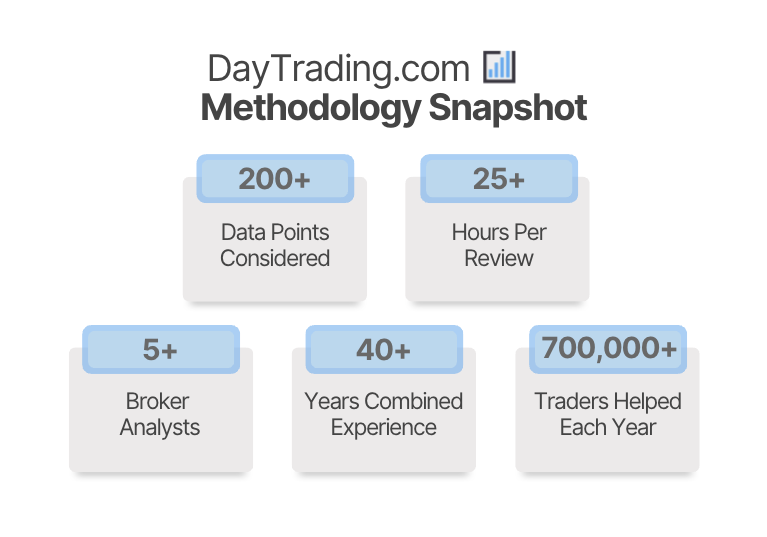
How DayTrading.com Chose The Top Brokers For Market Access
To get to our rankings, we opened live or demo accounts, explored each broker’s web and mobile platforms, and verified the full list of tradable markets.
We checked for access to major asset classes, including stocks, indices, ETFs, forex, commodities, cryptocurrencies, and bonds. We also investigated access to global exchanges, notably the US, UK, EU, and Asia-Pacific.
Then we considered the type of instruments and way you can trade, such as spot trading or derivatives like CFDs, futures, and options.
Finally, we listed brokerages by the total number of assets available.
The Upside Of A Vast Product Range
The biggest advantage is diversification. With a broker that offers thousands of instruments, you don’t have to tie your entire strategy to one asset class.
You can balance stock positions with indices, hedge currency exposure against commodities, or even mix in exchange-traded funds for broader coverage.
When we tested different brokers, we noticed that the wider the market list, the more freedom we had to shift gears when conditions changed. That flexibility is worth its weight in gold when volatility picks up.
An extensive product range also supports multiple trading strategies because it gives you room to evolve as a trader. For example, day traders can dip into fast-moving forex pairs or crypto.
I’ve had trading sessions where I switched from scalping currency pairs in the morning to holding positions in soft commodities later in the day, all because the broker’s platform made it possible.
 Paul HolmesAuthor
And then there’s opportunity. More instruments mean more potential setups. You’re not waiting around for one or two markets to give you a signal – you can scan across sectors and asset classes. In my experience, this can translate into fewer “quiet days” and more consistent chances to execute.
All The Markets You’ll Find Under One Roof
When you look at brokers with a big catalogue of instruments, you’ll notice they tend to cover the same core markets first, then branch into the more specialist areas. That’s what we found when running through platforms and comparing asset menus side by side.
- Contracts for Difference (CFDs): These are often the backbone, letting you trade price movements without owning the underlying asset. Almost every market – stocks, indices, commodities – can be wrapped up in a CFD. But CFDs aren’t permitted for retail traders in certain regions, including the U.S.
- Equities: Individual shares are still one of the most popular instruments. When we compared platforms, one of the clearest differences was how deep they went into regional stock markets. Instead of sticking to the US, UK, and Europe, the larger offerings included exchanges in Asia, the Middle East, and even some smaller emerging markets.
- Indices: Instead of picking a single stock, you can trade on the performance of entire markets like the S&P 500 or FTSE 100. These can be especially useful for hedging.
- Exchange-Traded Funds (ETFs): These give exposure to baskets of assets, sectors, or themes. Brokers with broader menus often include niche ETFs that track areas like green energy or emerging markets.
- Foreign exchange (Forex): The largest and most liquid market in the world. Beyond the major currency pairs, wider broker offerings often include minors and exotics, which can open up unique volatility plays.
- Cryptocurrency: From Bitcoin to smaller altcoins, this has become an increasingly must-have category. The brokers with the widest range often list dozens of pairs, not just the top five.
- Commodities: Both hard commodities (like gold, oil, and copper) and soft commodities (such as wheat, coffee, and sugar).
- Futures and options: These aren’t always offered at the retail level, but when they are, it adds another dimension for traders looking to speculate or hedge with more advanced structures.
- Bonds: While not as common, bonds add a fixed-income angle that can broaden some strategies.
- Binary options: A more niche category, but one that still appears on some platforms, often targeted at those who want quick, defined-outcome trades.
Does More Always Mean Better?
Not on its own. It’s tempting to think that the broker with the biggest menu is automatically the best choice.
When we first started comparing providers, we fell into that trap ourselves. But after spending time testing, it became obvious that having thousands of instruments only helps if the broker delivers on execution, platform stability, and costs.
One trade-off we noticed is spreads and fees. Sometimes, a broker that boasts the widest product coverage will offset that by making certain markets less competitive on pricing. For us, that meant checking not just how many instruments were available, but how practical they were to trade day in and day out.
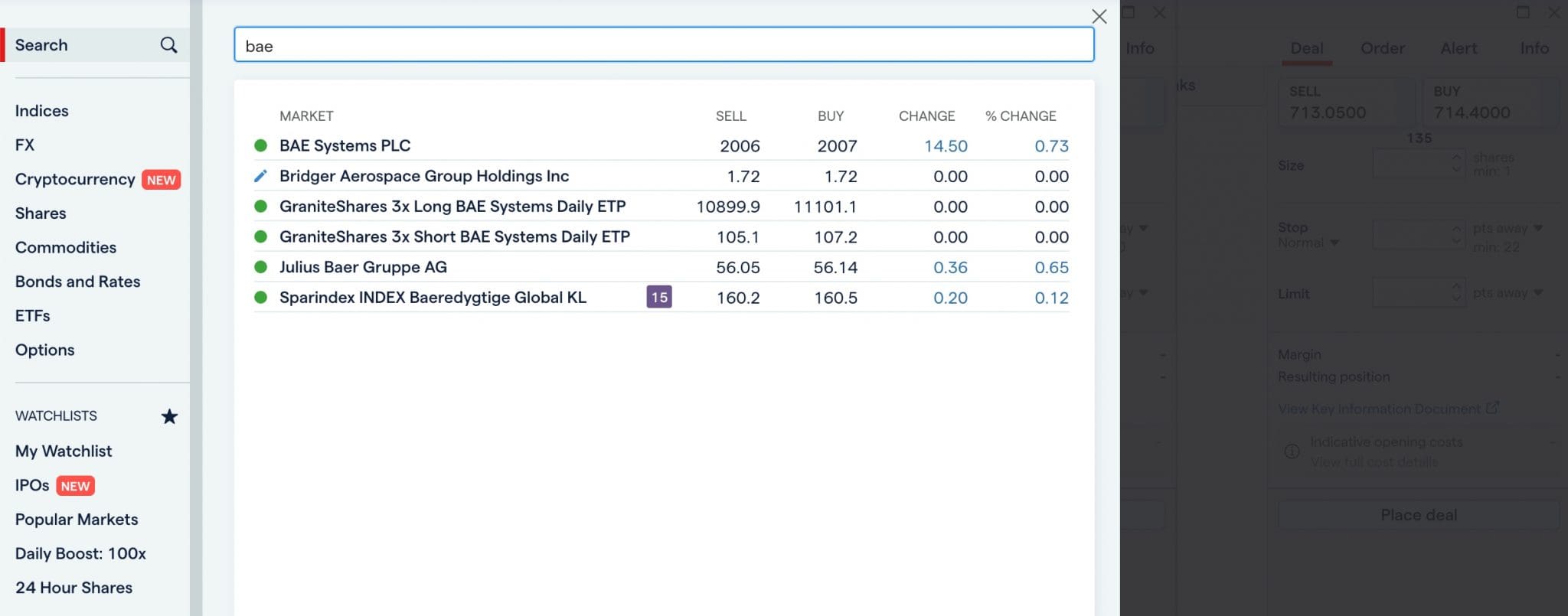
Platform complexity is another factor. A vast catalogue can feel overwhelming if the search tools, watchlists, or charting features aren’t well-designed.
During our evaluations, some platforms handled the scale beautifully with filters and smart organization. Others made us feel like we were scrolling endlessly to find what we needed.
Research depth also matters. It’s great to have access to an obscure bond or niche ETF, but if there’s no supporting analysis, education, or data feed, newer investors in particular can be trading blind. We found the best experiences came when an extensive product set was paired with solid research coverage.
Matching Instruments To Your Style Of Trading
One thing we learned from testing is that the “best” product range depends on how you trade.
- Day traders often stick to liquid markets like major currency pairs or top indices, where spreads are tight and execution is fast.
- Swing traders might prefer commodities or mid-cap equities that trend cleanly over weeks.
- Longer-term traders tend to look at stocks, bonds, or exchange-traded funds, since they fit a buy-and-hold approach.
I’ve had sessions where the forex market has been quiet, so I’ve moved into soft commodities instead. Without that flexibility, I’d have just sat on the sidelines.
The more choices you have, the easier it is to match your trading plan to what the market is offering that day.
Paul HolmesAuthorThe Risks Of Spreading Yourself Too Thin
More instruments can be a blessing, but they can also tempt you into chasing too many trades. When every market is one click away, it’s easy to jump from forex to crypto to stocks without a clear plan. That often leads to overtrading and diluted focus.
The takeaway? A wide product menu is powerful, but it works best when you stay disciplined and stick to strategies you know. Choice should support your trading, not distract from it.
To get started, head to our list of the brokers with the most trading assets.