





S&P 500 brokers provide access to the most popular stock index in the United States, followed closely by the Nasdaq. We’ve tested, rated and ranked the best brokers with access to the S&P 500. Our experts, who themselves have traded the S&P 500, also walk through placing a trade and share their tips for analyzing the US stock exchange.
The brokers listed below primarily offer stock trading through CFDs (Contracts for Difference). This allows for leverage and short-selling, making them effective tools for day traders. However, CFDs do not provide direct ownership of shares and are generally not appropriate for long-term investors due to overnight financing costs. They are also banned in some countries, including the US.Best Brokers With Access To The S&P 500
Following our hands-on review and broker analysis, these are the leading brokers for trading the S&P 500:
-
- Demo account
- Regulator: ASIC, CySEC, FSA, SCB, CMA-Kenya
- Min. deposit: $200
-
- Demo account
- Platforms: MT4, MT5, TradingCentral
- Min. deposit: $5
-
- Demo account
- Platforms: InstaTrade Gear, MT4
- Min. deposit: $1
-
- Demo account
- Regulator: FCA, ASIC, CMVM , FSCA, SCB, FSA
- Platforms: TN Trader, MT4, TradingView
-
- Demo account
- Regulator: FSC
- Platforms: R StocksTrader, MT4, MT5, TradingView
-
- Demo account
- Min. deposit: $0
- Min. trade: 0.01 Lots
73-89% of retail investor accounts lose money when trading CFDs






Learn how we test brokers and why you can trust our ratings.
Why Are These The Top S&P 500 Brokers?
Here is a summary of why we recommend these brokers in October 2026:
- IC is the best broker with access to the S&P 500 in 2026 4.8/5 IC Markets (now IC) is a globally recognized forex and CFD broker known for its excellent pricing, comprehensive range of trading instruments, and premium trading technology. Founded in 2007 and headquartered in Australia, the brokerage is regulated by the ASIC, CySEC and FSA, and has attracted more than 200,000 clients from over 200 countries.
- XM 4.8/5 XM is a globally recognized forex and CFD broker with 20+ million clients in 190+ countries. Since 2009, this trusted broker has been delivering low trading fees across its growing roster of 1000+ instruments. It also offers a comprehensive MetaTrader experience that we've observed firsthand placing test trades.
- InstaTrade 3.0/5 InstaTrade, based in the British Virgin Islands, is an online broker specializing in passive investment products and active trading through CFDs. Its zero-spread accounts, excellent research notably through InstaTrade TV, and access to the popular MT4 alongside its own web-accessible InstaTrade Gear, make it an attractive option for short-term traders at every level.
- Trade Nation 4.4/5 Trade Nation is a top FX and CFD broker regulated in multiple jurisdictions including the UK and Australia. The firm offers low-cost fixed and variable spreads on 1000+ assets with robust trading platforms and training materials. The Signal Centre can also be used for trade ideas.
- RoboForex 4.5/5 RoboForex is an online broker, established in 2009 and registered with the FSC in Belize. Traders can choose from five accounts (Prime, ECN, R StocksTrader, ProCent, Pro) catering to different needs with trades from 0.01 lots and spreads from 0 pips. RoboForex has also enhanced its offering over the years, adding CFD instruments and launching its stock trading platform, plus the CopyFX system.
- Pepperstone 4.8/5 Established in Australia in 2010, Pepperstone is a top-rated forex and CFD broker with over 830,000 clients worldwide. It offers access to 1,400+ instruments on leading platforms MT4, MT5, cTrader and TradingView, maintaining low, transparent fees. Pepperstone is also regulated by trusted authorities like the FCA, ASIC, and CySEC, helping to ensure a secure environment for day traders at all levels.
How Safe Are The Top S&P 500 Brokers?
We reviewed protections and safeguards to determine how secure these brokers are:
| Broker | Trust Rating | Guaranteed Stop Loss | Negative Balance Protection | Segregated Accounts |
|---|---|---|---|---|
| IC | ✘No | ✔Yes | ✔Yes | |
| XM | ✘No | ✔Yes | ✔Yes | |
| InstaTrade | ✘No | ✔Yes | ✔Yes | |
| Trade Nation | ✘No | ✔Yes | ✔Yes | |
| RoboForex | ✘No | ✔Yes | ✔Yes | |
| Pepperstone | ✘No | ✔Yes | ✔Yes |
Are The Top S&P 500 Brokers Good For Beginners?
We evaluated how accessible these brokers are for newer traders:
| Broker | Demo Account | Minimum Deposit | Minimum Trade | Education Rating | Support Rating |
|---|---|---|---|---|---|
| IC | ✔Yes | $200 | 0.01 Lots | ||
| XM | ✔Yes | $5 | 0.01 Lots | ||
| InstaTrade | ✔Yes | $1 | 0.01 | ||
| Trade Nation | ✔Yes | $0 | 0.1 Lots | ||
| RoboForex | ✔Yes | $10 | 0.01 Lots | ||
| Pepperstone | ✔Yes | $0 | 0.01 Lots |
Are The Top S&P 500 Brokerages Good For Experienced Traders?
Experienced traders often look for advanced tools and market access when trading the S&P 500 - here’s how the leading brokers perform:
| Broker | Automated Trading | VPS | AI | Pro Account | Leverage | Low Latency | Extended Hours |
|---|---|---|---|---|---|---|---|
| IC | Expert Advisors (EAs) on MetaTrader, cBots on cTrader, Myfxbook AutoTrade | ✔Yes | ✘No | ✘No | 1:5000 (FSA Only) | ✔Yes | ✘No |
| XM | Expert Advisors (EAs) on MetaTrader | ✔Yes | ✔Yes | ✘No | 1:1000 | ✔Yes | ✘No |
| InstaTrade | Experts Advisors (EAs) on MetaTrader | ✔Yes | ✘No | ✘No | 1:1000 | ✘No | ✘No |
| Trade Nation | Expert Advisors (EAs) on MetaTrader | ✘No | ✘No | ✘No | 1:30 (FCA, CMVM, ASIC), 1:200 (FSCA, SCB), 1:500 (FSA) | ✘No | ✘No |
| RoboForex | Expert Advisors (EAs) on MetaTrader, Strategy Builder in R StocksTrader | ✔Yes | ✘No | ✘No | 1:2000 | ✘No | ✘No |
| Pepperstone | Expert Advisors (EAs) on MetaTrader, cBots on cTrader | ✘No | ✘No | ✔Yes | 1:30 (Retail - UK, EU, Australia), 1:500 (Pro), 1:200 (Offshore), 1:400 (Kenya) | ✔Yes | ✘No |
Compare Detailed Ratings Of The Top S&P 500 Brokers
See how the top S&P 500 trading brokers scored across our main testing categories:
| Broker | Trust | Platforms | Assets | Mobile | Fees | Accounts | Research | Education | Support |
|---|---|---|---|---|---|---|---|---|---|
| IC | |||||||||
| XM | |||||||||
| InstaTrade | |||||||||
| Trade Nation | |||||||||
| RoboForex | |||||||||
| Pepperstone |
Community Sentiment
See how users rate these brokers based on the average customer ratings submitted on DayTrading.com, plus ratings from Trustpilot, the Apple App Store and Google Play.
| Broker | Our Users' Rating | Trustpilot Score | Trustpilot Reviews | iOS App Rating | Android App Rating |
|---|---|---|---|---|---|
| IC | 2 | ||||
| XM | 3130 | ||||
| InstaTrade | 16 | ||||
| Trade Nation | 2142 | ||||
| RoboForex | 773 | ||||
| Pepperstone | 3666 |
How Popular Are The Top Trading Platforms For S&P 500 Access?
We compared client figures across our leading providers:
Why Use IC To Trade The S&P 500?
IC (formerly IC Markets) offers superior pricing, exceptionally fast execution and seamless deposits. The introduction of advanced charting platforms, notably TradingView, and the Raw Trader Plus account, ensures it remains a top choice for intermediate to advanced day traders.
 Christian Harris, Reviewer
IC quick facts
- Demo Account
- ✔Yes
- Instruments
- CFDs, Forex, Stocks, Indices, Commodities, Bonds, Futures, Crypto
- Regulator
- ASIC, CySEC, FSA, SCB, CMA-Kenya
- Platforms
- MT4, MT5, cTrader, TradingView, TradingCentral, DupliTrade, Quantower
- Minimum Deposit
- $200
- Minimum Trade
- 0.01 Lots
- Account Currencies
- USD, EUR, GBP, CAD, AUD, NZD, JPY, CHF, HKD, SGD
Stock Exchanges
IC offers trading on 12 stock exchanges:
- Australian Securities Exchange (ASX)
- CAC 40 Index France
- DAX GER 40 Index
- Dow Jones
- Euronext
- FTSE UK Index
- Hang Seng
- IBEX 35
- Nasdaq
- New York Stock Exchange
- Russell 2000
- S&P 500
Pros
- You have access to over 2,250 CFDs across various markets, including forex, commodities, indices, stocks, bonds, and cryptocurrencies, allowing for diversified trading strategies.
- As a tightly regulated and widely respected broker, IC prioritizes client security and transparency, helping to ensure a reliable trading experience globally.
- IC offers fast and dependable 24/7 support based on firsthand experience, particularly when it comes to accounts and funding issues.
Cons
- While IC offers a selection of metals and cryptos for trading via CFDs, the range is not as extensive as brokers like eToro, limiting opportunities for traders interested in these asset classes.
- Despite four industry-leading third-party platforms, there is no proprietary software or trading app built with new traders in mind.
- Interest isn't paid on unused cash, an increasingly popular feature found at alternatives like Interactive Brokers.
Why Use XM To Trade The S&P 500?
With a low $5 minimum deposit, advanced charting platforms in MT4 and MT5, expanding range of markets, and a Zero account offering spreads from 0.0, XM provides all the essentials for active traders, even earning our ‘Best MT4/MT5 Broker’ award in recent years.
Christian Harris, Reviewer
XM quick facts
- Demo Account
- ✔Yes
- Instruments
- CFDs, Forex, Stocks, Commodities, Indices, Thematic Indices, Precious Metals, Energies
- Regulator
- CySEC, DFSA, FSCA, SCA, FSA, FSC-Belize, FSC-Mauritius, CMA-Kenya, CMA-UAE
- Platforms
- MT4, MT5, TradingCentral
- Minimum Deposit
- $5
- Minimum Trade
- 0.01 Lots
- Account Currencies
- USD, EUR, GBP, JPY, ZAR
Stock Exchanges
XM offers trading on 16 stock exchanges:
- Australian Securities Exchange (ASX)
- Borsa Italiana
- CAC 40 Index France
- DAX GER 40 Index
- Deutsche Boerse
- Dow Jones
- Euronext
- FTSE UK Index
- Hang Seng
- IBEX 35
- Japan Exchange Group
- Korea Exchange
- Nasdaq
- Russell 2000
- S&P 500
- SIX Swiss Exchange
Pros
- XM has rolled out platform upgrades with integrated TradingView charts and an XM AI assistant, delivering faster execution, smarter analysis, and a sleeker, more intuitive trading experience.
- XM’s Zero account is ideal for day trading with spreads from 0.0 pips, 99.35% of orders executed in <1 second, and no requotes or rejections.
- XM’s customer support has delivered over years of testing, with 24/7 assistance in 30 languages, response times of under 2 minutes and a growing Telegram channel.
Cons
- Although trusted and generally well-regulated in some regions, XM also has global entities registered with the weak regulators like FSC (Belize) and FSA (Seychelles), whilst UK clients are no longer accepted, reducing its market reach.
- While the XM app stands out for its usability and exclusive copy trading products, the selection of technical analysis tools needs to be improved to meet the needs of advanced traders.
- XM relies solely on the MetaTrader platforms for desktop trading, so there’s no in-house downloadable solution for a more beginner-friendly user experience with unique features.
Why Use InstaTrade To Trade The S&P 500?
InstaTrade offers active trading on a comprehensive platform, fast execution that can hit sub 10ms, and VPS hosting, making it a strong fit for algo traders deploying fast-paced, high-volume trading strategies.
Christian Harris, Reviewer
InstaTrade quick facts
- Demo Account
- ✔Yes
- Instruments
- CFDs, Forex, Stocks, Indices, Commodities, Cryptos, Futures
- Platforms
- InstaTrade Gear, MT4
- Minimum Deposit
- $1
- Minimum Trade
- 0.01
- Account Currencies
- USD, EUR, RUB
Stock Exchanges
InstaTrade offers trading on 12 stock exchanges:
- Australian Securities Exchange (ASX)
- CAC 40 Index France
- DAX GER 40 Index
- Dow Jones
- Euronext
- FTSE UK Index
- Hong Kong Stock Exchange
- IBEX 35
- Japan Exchange Group
- Nasdaq
- S&P 500
- SIX Swiss Exchange
Pros
- InstaTrade delivers an excellent suite of charting tools for day traders with its web trader comprising 250+ indicators, 11 chart types and a user-friendly design.
- Despite an average investment offering of around 300 assets, InstaTrade offers a particularly strong suite of currency pairs, catering to advanced traders seeking opportunities in volatile exotics.
- VPS hosting caters to algo trading strategies with a dedicated physical server providing rapid execution speeds as low as 9 milliseconds.
Cons
- Our analysis of third-party user reviews about the InstaTrade and wider InstaForex brands found instances of withdrawal complaints and account blocks.
- InstaTrade sports one of the most cluttered websites and client cabinets in the industry, potentially overwhelming new traders, especially compared to XTB’s intuitive trading journey and resources.
- InstaTrade is registered offshore and not authorized by a trusted regulator, resulting in limited statutory safeguards for retail investors.
Why Use Trade Nation To Trade The S&P 500?
Trade Nation suits discretionary traders who want to speculate on major indices like the US 500 or liquid FX pairs, and want the predictable all-in costs of fixed spreads. In tests, we found the fixed-spread TN Trader environment particularly useful for trading around scheduled economic releases owing to its reliable charting environment and because published spreads stayed capped.
Christian Harris, Reviewer
Trade Nation quick facts
- Demo Account
- ✔Yes
- Instruments
- CFDs, Forex, Indices, Shares, Commodities, Futures, Bonds, Spread Betting (UK and Ireland only), Cryptos (Bahamas entity only)
- Regulator
- FCA, ASIC, CMVM , FSCA, SCB, FSA
- Platforms
- TN Trader, MT4, TradingView
- Minimum Deposit
- $0
- Minimum Trade
- 0.1 Lots
- Account Currencies
- USD, EUR, GBP, AUD, ZAR, SEK, NOK, DKK
Stock Exchanges
Trade Nation offers trading on 16 stock exchanges:
- Australian Securities Exchange (ASX)
- CAC 40 Index France
- DAX GER 40 Index
- Deutsche Boerse
- Dow Jones
- Euronext
- FTSE UK Index
- Hang Seng
- Hong Kong Stock Exchange
- IBEX 35
- Japan Exchange Group
- London Stock Exchange
- Nasdaq
- New York Stock Exchange
- S&P 500
- SIX Swiss Exchange
Pros
- Trade Nation's 2026 partnership with Volt has sped up payments for Australian traders, who can now make instant deposits and withdrawals using PayID, with the faster payout capabilities planned for clients in the UK and EU.
- Trade Nation accounts can now be linked with TradingView, providing advanced multi-charts and the ability to execute trades directly.
- In testing of the TN Trader account under normal market conditions, fixed spreads held while fills were prompt on major forex pairs, with a slight drift in the entry level as price ticked between click and fill.
Cons
- Withdrawals can take up to five business days, which is around the industry average but slower than the 1-3 days we’re increasingly seeing brokers offer in an attempt to quash withdrawal complaints from retail investors.
- The 2–20% rebate scheme is closed to FCA, CMVM, and ASIC clients, meaning active day traders in these regions who would benefit from transaction rebates cannot claim them.
- Offshore SCB and FSA entities allow retail clients up to 1:200 and 1:500 leverage compared to 1:30 in regions like the UK, Europe and Australia, so an FSA client can have 16 times the exposure of a UK retail client on the same trade, but with less oversight and no compensation scheme.
Why Use RoboForex To Trade The S&P 500?
RoboForex is great if you want a vast range of 12,000+ day trading markets with ECN accounts, powerful charting and loyalty promotions. It also stands out for stock traders with its user-friendly R StocksTrader platform, featuring 3,000+ shares, fees from $0.01 and sophisticated watchlists.
Christian Harris, Reviewer
RoboForex quick facts
- Demo Account
- ✔Yes
- Instruments
- CFDs, Forex, Stocks, Indices, Commodities, ETFs, Futures, Crypto
- Regulator
- FSC
- Platforms
- R StocksTrader, MT4, MT5, TradingView
- Minimum Deposit
- $10
- Minimum Trade
- 0.01 Lots
- Account Currencies
- USD, EUR
Stock Exchanges
RoboForex offers trading on 13 stock exchanges:
- Australian Securities Exchange (ASX)
- CAC 40 Index France
- DAX GER 40 Index
- Deutsche Boerse
- Dow Jones
- Euronext
- FTSE UK Index
- IBEX 35
- Japan Exchange Group
- Nasdaq
- New York Stock Exchange
- S&P 500
- SIX Swiss Exchange
Pros
- In July MobileTrader Telegram Mini App was released - bringing out one of the first solutions we've seen that lets users execute trades and manage positions without leaving the Telegram messaging app.
- RoboForex is known for its tight spreads starting from 0 pips and low minimum deposits from $10, making it accessible to those on a budget. The ability to trade with micro lots further lowers the barrier to entry for new traders.
- In 2026, RoboForex introduced swap-free trading across all accounts, removing overnight interest charges, and potentially appealing to swing forex traders, though spreads and commissions may still apply.
Cons
- RoboForex now restricts base currency options to USD and EUR. This limitation may inconvenience day traders preferring to manage their accounts in other currencies, while potentially leading to conversion fees.
- RoboForex provides a variety of account types, which, while offering flexibility, can be overwhelming for newer traders trying to choose the most suitable option for their trading style. Alternatives, notably eToro, provide a smoother entry into online trading with one retail account.
- Despite offering a range of platforms, RoboForex still doesn't support the increasingly popular cTrader. This might deter traders who prefer this specific platform for their day trading activities and is available at firms like Fusion Markets.
Why Use Pepperstone To Trade The S&P 500?
Pepperstone stands out as a top choice for day trading, offering razor-sharp spreads, ultra-fast execution, and advanced charting platforms for experienced traders. New traders are also welcomed with no minimum deposit, extensive educational resources, and exceptional 24/5 support (18h a day on weekends).
Christian Harris, Reviewer
Pepperstone quick facts
- Demo Account
- ✔Yes
- Instruments
- CFDs, Forex, Currency Indices, Stocks, Indices, Commodities, ETFs, Crypto CFDs, Spread Betting
- Regulator
- FCA, ASIC, CySEC, BaFin, DFSA, SCA, SCB, CMA-Kenya
- Platforms
- Pepperstone Trading Platform, MT4, MT5, cTrader, TradingView
- Minimum Deposit
- $0
- Minimum Trade
- 0.01 Lots
- Account Currencies
- USD, EUR, GBP, CAD, AUD, NZD, JPY, CHF, HKD, SGD
Stock Exchanges
Pepperstone offers trading on 21 stock exchanges:
- Australian Securities Exchange (ASX)
- CAC 40 Index France
- DAX GER 40 Index
- Deutsche Boerse
- Dow Jones
- Euronext
- FTSE UK Index
- Hang Seng
- Hong Kong Stock Exchange
- IBEX 35
- Japan Exchange Group
- Korea Exchange
- London Stock Exchange
- Nasdaq
- New York Stock Exchange
- Russell 2000
- S&P 500
- SIX Swiss Exchange
- Shanghai Stock Exchange
- Shenzhen Stock Exchange
- Taiwan Stock Exchange
Pros
- There’s support for a range of industry-leading charting platforms including MT4, MT5, TradingView, and cTrader, catering to various short-term trading styles, including algo trading.
- After adding spread betting through TradingView, Pepperstone provides a seamless, tax-efficient trading experience with advanced analysis tools for financial spread bettors in supported countries.
- Pepperstone emerges as a low-cost broker, especially for serious day traders with spreads from 0.0 in the Razor account and rebates up to 30% (index and commodities) and $3/lot (forex) through the Active Trader program.
Cons
- Execution may not feel as reliable in fast markets as headline speeds suggest. In our own testing, execution was fast at desired prices, but some community complaints focus on slippage, stop-loss fills and spread-sensitive order triggers during volatile conditions.
- Despite improvements to its range of markets, crypto CFD offerings are still fairly limited compared to other brokers who focus on this area, such as Eightcap, and there's no option to invest in real coins.
- Pepperstone has removed support for several tools that elevated the trading experience for active retail traders, notably Autochartist, Capitalise.ai and a free VPS for qualifying traders (now only pro traders in some countries).
How We Selected The Best Brokers With Access To The S&P 500
To identify the top trading brokers that provide access to the S&P 500, we:
- Reviewed which brokers in our database offer S&P 500-linked products. We did this by registering with brokers, checking their market lists, and where possible logging into their platforms to verify access to S&P 500 stocks, ETFs, index funds, options, futures or other related instruments.
- Ranked brokers with S&P 500 access by their overall ratings. We calculate this score using more than 200 data points, from the range of S&P 500 products available and trading costs through to regulatory licenses, platform quality, execution, research tools and account features, while also incorporating the findings of our expert reviewers who spend hours testing each firm.
Comparing S&P 500 Brokers
An online broker is a trader’s gateway to the market. Therefore, it is important that you choose S&P 500 brokers that suit your financial goals, risk appetite and trading style. The key factors to consider when comparing S&P 500 brokers include:
Available S&P 500 Instruments
You can trade the S&P 500 in several ways. A major component of the best broker for you will depend on what instruments you need.
ETFs
ETFs are the most popular route for stock-account traders where you can get the whole index in one trade. SPY (State Street), VOO (Vanguard), and IVV (iShares) all track the same index. But they differ in ways that matter.
SPY is one of the oldest ETFs (forming in January 1993) and now has decades of historical data. It has the deepest liquidity and the most active options market, including dailies and options going out over two years. This makes it the strongest choice for short-term trading and hedging.
VOO and IVV charge lower expense ratios (0.03% vs SPY’s 0.09%) and reinvest dividends automatically (SPY can as well on a DRIP plan). As such, VOO and IVV traditionally favor longer holding periods. A good S&P 500 broker should offer all three, plus fractional share capabilities so you can size positions precisely.
Futures
Futures are the preferred instrument for leveraged S&P 500 trading. The CME’s E-mini S&P 500 (ES) contract provides 10x-20x+ leverage versus cash equities and trades nearly 23 hours a day, five days a week (starting Sunday night to Friday night).
The Micro E-mini (MES) is one-tenth the size of the ES and is well-suited to traders with smaller accounts or those who need more precise sizing. Some brokers let you choose your own clearing firm and offer day trading margins well below the exchange minimum.
Options
Options on SPX (index options) settle in cash and receive favorable 60/40 tax treatment under Section 1256 of the US tax code. Cboe now offers SPX, Mini-SPX (XSP, which is 1/10th the size of SPX), and Nano options across nearly 24-hour global trading hours.
But not all brokers provide access to these products. So if index options are part of your strategy, confirm availability before opening an account.
Individual Stocks
Individual stocks within the S&P 500 allow you to isolate specific sectors or trade preferred or high-conviction names. The index spans all 11 GICS sectors. Accordingly, you can trade everything from mega-cap tech to healthcare and energy through one broker, provided the platform supports direct access to the NYSE, Nasdaq, and Cboe exchanges.
Execution Quality And Order Routing
Execution quality is underrated. When you trade high-volume S&P 500 stocks, bid-ask spreads are typically tight (often a penny wide on names like AAPL or MSFT and most large-cap names). But that tightness only helps if your broker routes orders efficiently.
Look for brokers that offer direct market access (DMA) or smart order routing that gives the best available price across multiple venues. Brokers that DMA generally give you better fill prices compared to those relying exclusively on wholesale market makers.
Slippage is also worth monitoring on fast-moving days and during fast-moving periods, in general, when slippage is highest. Many traders logically look for platforms that show full depth of book. This way they can see resting order volume at each price level and manage entries during volatile sessions. FOREX.com, for example, routes equity index trades through its parent company StoneX. This helps give traders visibility into order flow.
Extended And Overnight Trading Hours
The regular S&P 500 equity session runs from 9:30 AM to 4:00 PM ET. But a growing share of price discovery now happens outside those hours. Premarket trading typically opens at 4:00 AM ET and after-hours runs until 8:00 PM ET at most brokers.
For futures traders, the ES and MES contracts trade on the CME’s Globex platform from Sunday 6:00 PM ET through Friday 5:00 PM ET, with only a brief maintenance break from 5:00 PM to 6:00 PM ET daily.
This near-continuous access means you can respond to overnight news, foreign market moves, and economic data releases without waiting for the cash market (i.e., traditional stocks and ETFs) to open. Not all of the brokers above offered the same depth of premarket and after-hours access for equities. Some may restrict traders to normal market hours only. Many restrict extended hours to limit orders only, and liquidity can be substantially thinner with wide bid-ask spreads. If reacting to earnings announcements or overnight developments is part of your approach, be sure to check the specific extended hours policies before signing up.
Data Feeds And Charting
The quality of your data feed can directly affect your decisions. Level I quotes (best bid and ask) are standard with every broker. But active traders benefit from Level II data, which shows the full order book and helps gauge potential buying and selling pressure at each price point. Some brokers include real-time data in the base package, while others charge a monthly subscription.
eToro’s platform is centered on Level I/top-of-book data rather than depth-of-book. For charting, many S&P 500 traders prefer third-party platforms like TradingView, which follows a freemium model. You can look up basically anything and add indicators for free, while additional features come as a recurring subscription. FOREX.com and Optimus Futures both support TradingView integration, which gives you access to 100+ indicators (and custom indicators (example) can be coded in Pine Script), multi-timeframe analysis, and community-built scripts. If you rely heavily on technical analysis, confirm that your broker supports the platform you already use.
Spreads, Commissions, And Total Cost
Trading costs vary depending on the instrument and the broker. For S&P 500 ETFs, several brokers offer commission-free stock and ETF trading, including eToro, TradeUp, and IBKR Lite.
But keep in mind that “commission-free” doesn’t mean cost-free. Payment for order flow (PFOF), bid-ask spreads, and spread markups are the hidden costs in this model. For futures, commission structures are more transparent. Optimus Futures advertises per-side rates starting at $0.25 for Micro E-minis and competitive rates on the full-size ES contract, with the flexibility to choose different clearing firms. FOREX.com charges competitive spreads on CFD-based index products for eligible account types.
Whatever the instrument, add up the round-trip cost of a typical trade (spread plus commission plus any exchange fees) and compare across brokers. Over hundreds of trades per month, even small differences add up.
Platform
The best platform offered by S&P brokers is a matter of personal preference. But key elements to look for when trading the S&P 500 are straightforward volume charts, market indicators (such as 50-, 100-, and 200-day moving average tickers), plus other technical analysis tools. Additionally, it is worth making sure you can access strong trend tracking and comprehensive price history, plus information on company fundamentals.
Some S&P 500 brokers will sometimes facilitate trading on industry-established platforms such as MetaTrader 4 (MT4) or MetaTrader 5 (MT5). Alternatively, traders may wish to use a platform that is independent of their brokerage when trading the S&P 500. Many active traders may prefer to use charts that they are already familiar with from TradingView, for example.
Fees
Active trading can incur various fees, including commissions, deposit and withdrawal charges, plus transaction costs. If you’re trading in high volumes, these fees can reduce your overall yield, erode profits and impact your S&P 500 margin. Some S&P 500 brokers will advertise a $0 fee package when trading the index, but bear in mind that there may be hidden charges that are applied later.
For example, overnight swap charges often apply when holding CFD positions on the index. The best brokers that support S&P 500 trading provide a transparent fee structure and a published pricing schedule available on their website. Prospective traders should be able to research how much it will cost to trade the S&P 500 without needing to create an account with a given provider.
Customer Support
Trading any asset class can be raise questions, so you may rely on the support services of S&P 500 brokers. Reliable and responsive customer service is important here.
During market operating hours, most brokerages will offer comprehensive support, with the best brokers that offer S&P 500 trading providing 24/7 customer service via live chat, telephone, email and social media.
Additional Features
Leading S&P 500 brokers will offer additional features to enhance the user experience. When trading the S&P 500, using a historical data sheet can provide insights into past trends, prices, p/e ratio and dividend history. This data can typically be split out by year or by sector if traders want to research specific stocks rather than the entire S&P 500 index.
Some S&P 500 brokers may also offer trading calculators that can be used before entering a position, or when devising a new trading strategy. These include return or compound interest calculators which allow you to adjust variables, for example, based on whether you’re trading from another country.
Other useful additional features include an economic calendar to keep track of important dates, historical and live price charts, an S&P bot to automate positions, or educational videos that traders can watch on the broker’s website. Live streams with the latest US corporation news can also provide valuable insights to support trading decisions.
Security
When you’re risking your own capital, your funds need to be secure. Most reputable S&P 500 brokers will be regulated by leading financial bodies such as the Securities & Exchange Commission (SEC) in the US or the Financial Conduct Authority (FCA) in the UK. You should always research whether your chosen brokerage is licensed to operate in your jurisdiction, and you can verify this by visiting the website of the financial watchdog.
The level of security offered by the brokers that support S&P 500 trading is also important. Standard security procedures include encrypted data processing, two-factor authentication, and segregated client funds. Some S&P 500 brokers may require additional identification documents when opening accounts to comply with anti-money laundering legislation.
How To Place A Trade On The S&P 500
Placing a trade on the S&P 500 or its components is straightforward once you know the steps. The workflow below applies whether you’re on one broker or another.
Step 1: Open And Fund Your Account
I have an account with Interactive Brokers. The registration process is relatively quick. If you aren’t already signed up, most brokers will ask for basic personal information and identity verification before you can get up and running with a live account. If you’re looking to test out a platform before committing real capital, consider a demo account first.
Step 2: Search For An S&P 500 Ticker
Inside the platform, I can search for a ticker. Let’s look at Nvidia (NVDA), one of the S&P 500’s largest components by weighting. It normally has a bid-ask spread of just $0.01 during regular hours during normal market activity.
The ticker appears along with a price chart, bid-ask spread, and basic company information.
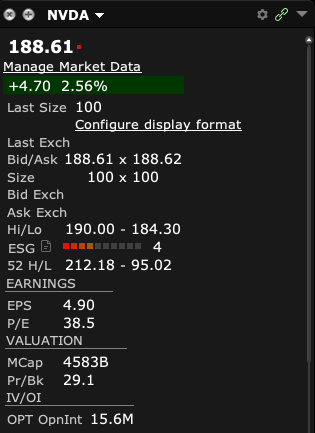
In our testing, searching for the major S&P 500 instruments was fast and easy. I also searched for several of the other top S&P 500 components to compare. The spread on MSFT, as an example, was also tight (typically also $0.01 during core market hours). This is typical for the largest S&P 500 names, but lower-weighted S&P 500 components can still show slightly wider spreads outside the busiest hours of the session.
S&P inclusion requires a market cap above approximately $23 billion, so there’s enough institutional volume to keep most tickers at 1-3 cent spreads throughout normal market hours.
Step 3: Analyze The Spread
For SPY, the most popular S&P 500 ETF, the bid-ask spread was tight at just one cent. The ETF’s massive daily trading volume makes it the most heavily traded ETF in the world, and is comparable to other broad-market funds like VOO and IVV. It will nonetheless widen out after market hours.
For individual S&P 500 components, the spread can vary. Heavyweight names like Apple, Microsoft, and Nvidia generally offer the tightest spreads during normal market hours when there isn’t news or events being digested into the market. Smaller-weighted S&P 500 components can widen out a touch, especially times around the open and close. If you’re trading smaller, individual S&P 500 stocks rather than the SPY ETF, account for the wider spread as an additional cost every time you get in and out of the trade.
Step 4: Select Your Order Type
I placed a limit order rather than a market order. (Note: I rarely use any type of market order to better control the price). On the S&P 500, where mega-cap components have gotten to be a bigger percentage of the overall index, these stocks can move the index dozens of points on a single earnings release, a limit order protects you from getting filled at a price worse than expected.
There are many different order types and nuances. But by and large it comes down to market orders and limit orders.
For most intraday S&P 500 trading, limit orders are the safest default, especially during the first 15-30 minutes after the opening bell when prices can sometimes swing faster than you can keep up. This is also true around quarterly index rebalancing events, when passive funds force concentrated buying or selling in specific names.
Step 5: Confirm And Execute
Before submitting, the platform displayed an order confirmation screen showing the ticker, order type, quantity, limit price, estimated commission, margin requirements (initial and maintenance margin), and total estimated cost. Note that things like margin requirements will be different depending on the account type (e.g., Reg-T, Portfolio Margin) and what other positions you might have in existing or related securities.
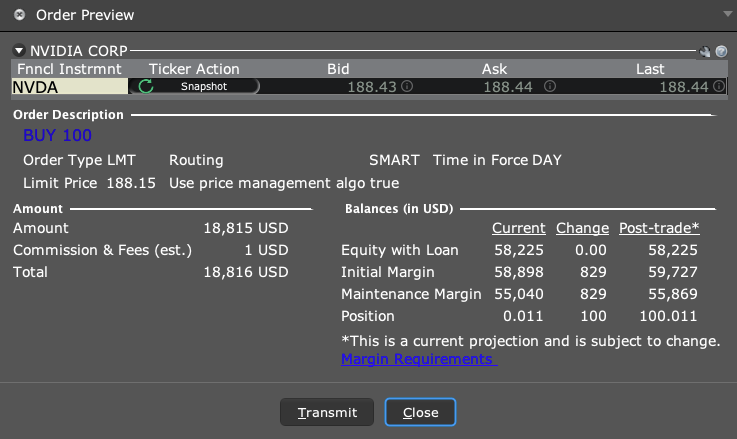
I reviewed these details and clicked confirm.
As a limit order, it shows up in your personal queue.
If you want to adjust the price of your limit order you can. On Interactive Brokers, a popup box showing the adjusted real-time price will often show.
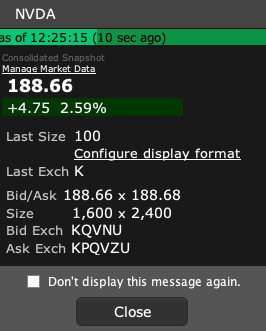
It partially filled at first, executing just 5 shares of the 100 orders. It eventually entirely filled during the regular session once it met my limit price.

This confirmation step is important because it gives you a final check before your capital is committed.
Step 6: Monitor And Manage The Position
After it filled, the position is summarized in your orders section.

And it appeared in my portfolio view with a real-time P&L on the very left, followed by the ticker, total share count owned, market value, average price purchased at, and last price.

What Is The S&P 500?
The Standard and Poor’s 500, commonly known as the “S&P 500”, is the most traded stock market index in the United States. The S&P 500 tracks the performance of the 500 largest US companies which meet the S&P criteria for selection. Because the S&P 500 represents most of the largest businesses in the US, many traders use the index to speculate on the health of the US economy in general. The index is even seen as a definition of the overall global economy.
The S&P 500 was initially introduced in 1957 to make it easier for traders to track the value of major companies trading on both the New York Stock Exchange (NYSE) and the NASDAQ Composite. It was founded by Henry Poor and the Standard Statistics Company in 1941. Since its development, US companies included on the S&P stock list have changed dramatically as firms have risen and fallen.
Note, when day trading with S&P 500 brokers, share prices and are typically denominated in USD.
S&P 500 Criteria Explained
The list of companies included in the S&P 500 is measured by the weightings of market cap and free float. For companies to be eligible for inclusion in the index, they must meet the following criteria:
- Must be a US-based company listed on the NYSE, Nasdaq, or Cboe Market cap of at least $22.7 billion
- Market cap of at least $22.7 billion (as of the time of writing)
- Majority of company shares are available in the public domain
- A minimum of 250,000 company shares have been traded in each of the last six months prior to the evaluation date
- Have positive GAAP earnings for the most recent quarter, and the sum of the prior four quarters’ earnings must also be positive The committee also considers sector balance to keep the index representative of the broader US economy. Importantly, meeting the criteria doesn’t guarantee inclusion. The committee has discretion, which is why some large companies remain outside the index despite qualifying on paper.
Note that not every large company in the US is necessarily included in the S&P as they may not satisfy the inclusion criteria above. This includes companies such as Berkshire Hathaway, Uber and Dell.
The S&P 500 have also demonstrated they have teeth over the years when it comes to their inclusion requirements. While Nasdaq and FTSE Russell relaxed their entry rules for mega-IPOs in 2026, paving the way for faster entry for much anticipated stocks likes SpaceX, the S&P stood its ground in June of the same year. SpaceX and other newly listed giants still have to complete the 12-month seasoning period and meet existing profitability and public-float tests before they can join the index. While other indices relented, the S&P flexed their muscles – something they can do as the world’s leading stock index benchmark.
Trading Hours
The S&P 500 regular hours are aligned to the hours of the New York Stock Exchange and the Nasdaq stock market. The cash session runs 9:30 AM to 4:00 PM EST (1:30 PM to 8:00 PM GMT), excluding market holidays. Additionally, it is possible to engage in premarket trading and after-hours trading, depending on whether your chosen brokerage offers it.
Premarket typically opens at 4:00 AM ET and after-hours extends to 8:00 PM ET, though specific windows vary by broker. E-mini S&P 500 (ES) and Micro E-mini (MES) futures trade on the CME’s Globex platform nearly 24 hours a day, Sunday through Friday, with only a brief daily maintenance break. This near-continuous access is one of the key advantages of trading S&P 500 futures over cash equities.
E-Mini and Micro E-Mini S&P 500
In 1997 the Chicago Mercantile Exchange (CME) began offering the E-mini S&P 500 (ES). This contract offers futures and options based on the S&P 500 index. An E-mini S&P 500 futures contract essentially states that if a trader buys a contract today, they are obligated to either buy or sell the asset at a pre-agreed price on a set date in the future. Each point of movement in the ES contract is worth $50.
In 2019, the CME introduced the Micro E-mini S&P 500 (MES), which is one-tenth the size of the standard E-mini at $5 per point. The Micro contract has become extremely popular with retail traders because it allows participation in S&P 500 futures with significantly less capital and risk per contract.
According to the CME Group, ES futures offer significantly more daily liquidity than all S&P 500 ETFs combined. Traders of the S&P 500 may also deploy a hedging strategy with ES or MES futures to hedge against unexpected price moves that might impact their current positions. Traders can also set alerts for key price movements to stay on top of swings that may compromise their trades.
Getting Started
To get started trading the S&P 500:
Fund Your Account
Once you have selected your broker, you need to deposit funds into your account before you can begin to trade. S&P 500 brokers will offer different payment options. Instant processing and flexible limits should be top of your list. A low minimum deposit requirement should also be a key point to look out for, particularly if you are new to the index.
Recognized methods include VISA & Mastercard debit/credit cards, PayPal, and Skrill. Even cryptocurrency is being accepted as tender at some brokers.
Do Your Research
Before you enter the market, it’s good practice to carry out in-depth analysis and market research on the S&P 500 and the stocks in question. Because it’s the most widely traded index in the US market, there is a significant amount of information available online. The best S&P 500 brokers will provide useful articles about the index on their websites, however third-party platforms can often provide better independent insights.
Traders looking for S&P 500 trading tips that are free of charge can use discussion forums such as Reddit or consult online articles and videos. Other popular sources include Bloomberg and Morningstar. Approach all community tips and insights carefully – do your own research.
Choose Your Asset
Many traders may intend to trade the S&P 500 or the E-mini S&P 500, however there is also the option to trade some of the individual stocks included in the 500-strong list. It’s difficult to have a good understanding of all 500 stocks, as each will have its own market price driven by unique factors and fundamentals.
Despite this, all S&P stocks on the index share two common qualities: volume and volatility:
Volume
The meaning of volume is the number of shares being traded at a specific time. The S&P 500 trading volume is based on all of the shares of the stocks listed under the index. If the chart history of the S&P showed that the index had increased by a daily trade volume of 1,000 transactions since yesterday and decreased by 500 today, then the total volume over the two days would be 500. In this example, the average daily trading volume of the S&P 500 would be 250 (500/2 days).
Traders can use trading volumes to gauge whether other market participants’ interest is increasing or decreasing in the index, which could prompt a move from the trader. This volume trading logic applies to both the entire S&P index as well as individual stocks within the S&P.
Volatility
Volatility is the risk that an asset’s share price can change unpredictably at any given time. The size of any given price movement is relatively unknown, which therefore increases the risk.
Large swings are considered to be highly volatile, whereas smaller swings in an asset’s price are considered to be of low volatility or stable. Typically, day traders thrive when a stock’s price experiences large swings because it means that they can capitalize on volatile price movements.
Choose Your Strategy
Once you have chosen between brokers that support trading on the S&P 500, and the asset you wish you trade, you need to implement a strategy.
There is a range of strategies available depending on your risk tolerance or how active you will be in the market. In all scenarios, being aware of the S&P pre-market price will give traders an insight into the opening value of the asset, which helps with the development of a day trading strategy.
For example, an unusually high close/pre-opening market price might prompt a trader to sell or short the index in anticipation of the price falling when the market opens. This strategy is an example of intraday trading on the S&P 500.
Other traders may analyze the index’s performance over a longer time, which would typically lend itself to a swing trading strategy.
Some market participants trade the S&P 500 and other assets as their full-time jobs, and will often share free advice online on developing a solid strategy. When you are seeking tips online, however, be wary of any paid groups or courses as these are usually “too good to be true” and can sometimes be scams designed to target new traders.
It is also worth checking whether S&P 500 brokers permit certain strategies and trading systems before you sign up. Some S&P 500 brokerages and platforms prohibit scalping, for example.
Bottom Line
The S&P 500 has been traded for over 60 years and remains the leading index in the USA. It is popular with day traders because it gives a good indication as to how the US market is currently performing, which can provide insights into other asset classes.
It is worth noting that the S&P can be heavily influenced by how individual companies with large weighting are performing. For example, if Tesla’s share price falls due to an Elon Musk tweet, then the index might also be slightly affected by this as the market reacts.
Overall, the S&P 500 is a solid asset to have in your portfolio, and due to its popularity, there is a wide range of helpful resources available online. Use our list of the best brokers with access to the S&P 500 to get started.
FAQs
Do S&P 500 Brokers Offer Trading On The Index Via MetaTrader 4?
Yes, trading the S&P 500 is available on MT4 through supporting brokers, typically as a CFD product (not available in certain regions, such as the US). Some brokers that support trading on the S&P 500 also provide premarket trading and charts and tools to help identify key levels. Historical data on returns and dividend yields are also available at the top S&P 500 brokerages.
What Is The Symbol For The S&P 500 At Online Brokers?
The symbol depends on the instrument. The underlying index itself uses the ticker SPX. The most popular ETF tracking the S&P 500 is SPY. For futures, the E-mini S&P 500 uses the symbol ES (which is half the size of SPX), and the Micro E-mini uses MES. (MES is 1/10th of the size of ES). Your broker’s platform may use slight variations when it comes to looking up products, so use the search function and confirm you’re trading the correct product.
What Are The Main Ways To Trade The S&P 500?
There are four primary routes to take:
- ETFs (e.g., SPY, VOO, IVV)
- E-mini and Micro E-mini futures (ES, MES) on the CME
- SPX index options on the Cboe, and
- Individual constituent stocks
ETFs are the simplest for beginners. They’re also great for long-term trading and day trading alike. VOO and IVV are generally recommended for long-term holding while SPY is most commonly used by active traders because of its liquidity.
Futures and options offer leverage and near-24-hour market access for more active traders.
We’ve pulled together a how-to guide to trading and investing in the S&P 500.
When Does The S&P 500 Rebalance?
The index rebalances quarterly on the third Friday of March, June, September, and December. Changes can also occur outside this schedule in response to mergers, acquisitions, or delistings. Rebalancing can create short-term trading opportunities for those who pursue this strategy as passive funds adjust their holdings.
Is The Nasdaq Or S&P 500 Better For Active Trading?
The S&P 500 is a much broader representation of the US market. It includes stocks across all 11 GICS sectors, whereas the Nasdaq 100 is heavily made up of technology stocks (over 50% by weight).
The S&P 500 generally offers more stable intraday price action, while the Nasdaq tends to deliver sharper moves and higher volatility. The Nasdaq has about 40% higher volatility on a daily basis, which doesn’t necessarily mean 40% higher or lower moves.
Below you can see historical return, risk, and correlation statistics:
| Name | Ticker | SPY | QQQ | Annualized Return | Daily Standard Deviation | Monthly Standard Deviation | Annualized Standard Deviation |
|---|---|---|---|---|---|---|---|
| State Street SPDR S&P 500 ETF | SPY | 1.00 | 0.84 | 8.07% | 1.22% | 4.35% | 15.06% |
| Invesco QQQ Trust | QQQ | 0.84 | 1.00 | 9.90% | 1.70% | 6.68% | 23.15% |
(Asset correlations for the period 04/01/1999 to 03/31/2026 were based on monthly returns.)
The right choice should be made based on the trader’s strategy, market knowledge, and risk tolerance. Most S&P 500 brokers also support trading on the Nasdaq.
What Time Does The S&P 500 Start Trading?
The NYSE and the Nasdaq both open at 9:30 AM and close at 4:00 PM EST. The S&P 500 and all of the stocks included in the index are also bound by these timings.
Premarket trading is available from as early as 4:00 AM ET at some brokers, and E-mini futures trade nearly around the clock on weekdays via the CME Globex platform.