
xChief Review 2026




 Services not offered to residents of United States.
See the best xChief alternatives in your location.
Pros
- xChief demonstrates reliable withdrawal execution, with most methods clearing within 24-48 hours — notably faster than offshore competitors, where 3-5 day delays are standard. Card withdrawals that take 3-5 days at Tier-1 banks often clear in 1-2 days through xChief's processors. This operational consistency matters more than advertised timelines, and the track record suggests functional withdrawal infrastructure rather than artificial friction to retain deposits.
- xChief accepts clients from jurisdictions that Tier-1 brokers exclude due to regulatory complexity — traders in regions where major brokers won't onboard accounts can still access forex, metals, and CFD markets. The broker doesn't publish a restricted countries list, and evidence suggests that the service is global, including some restricted regions. This trades regulatory protection for market access, benefiting traders in emerging markets facing binary exclusion from the international forex infrastructure.
- xChief offers 1:1000 leverage on forex majors without ESMA caps, giving exponentially more position-sizing flexibility than the 1:30 limit FCA or CySEC brokers enforce. This enables capital-efficient strategies such as grid trading, martingale systems, or short-term scalping, which require large notional exposure with minimal margin. Position-based tiering means leverage only reduces as individual positions grow, unlike regulated brokers that cut leverage across your entire account when equity crosses thresholds.
Cons
- xChief offers nothing beyond vanilla MT4 and MT5 installations identical to hundreds of other brokers — no TradingView integration, no cTrader, no proprietary tools. The xChief mobile app can't even execute trades. Every feature or limitation is dictated by MetaQuotes' roadmap rather than xChief's own development, meaning the broker contributes zero innovation that would justify choosing it over any competitor running the same platforms.
- xChief publishes no swap rate schedules on its website, meaning you can't calculate overnight holding costs before opening positions. Charges only become visible after holding past rollover in your MT4/MT5 terminal. This opacity makes it impossible to accurately model multi-day swing trades or carry strategies until you've already committed capital and discovered the rates through live positions.
- The xPRIME account uses a 50% stop-out level, compared with 30% for lower-tier accounts, meaning positions liquidate earlier during drawdowns. The premium account, supposedly offering better conditions, actually provides less breathing room during volatility while charging USD a 3/lot commission and requiring a USD 500 minimum — all while offering access to the same core forex pairs as the USD 10 Classic+ account.
xChief Review
This xChief review doesn’t stop at the marketing page. We opened live accounts across xChief’s account tiers, placed real CFD trades on forex majors, gold, and indices, and pushed the platform hard during high-volatility sessions: NFP releases, FOMC decisions, and the kind of sharp intraday reversals on XAU/USD that expose slippage in a hurry. The goal was to find out how xChief’s execution actually holds up when spreads widen and liquidity thins, not just what the broker advertises in a quiet market.
Regulation & Trust
xChief is operated by xChief LTD, licensed as an International Brokerage and Clearing company by the Mwali International Services Authority (MISA) in the Island of Mwali, Comoros, under registration number HY00923433 and license number T2023379.
The group has expanded its regulatory footprint incrementally — xChief ZA (PTY) LTD holds authorization from South Africa’s Financial Sector Conduct Authority (FSCA), though it acts solely as an intermediary and is not the product issuer or market maker. A third entity, xChief Central Asia Ltd., holds a license from the Astana Financial Services Authority (AFSA) in Kazakhstan under license number AFSA-A-LA-2025-0012.
That multi-entity structure is worth reading carefully. The FSCA and AFSA licenses are real, but neither governs the account you’d actually fund — that sits under the MISA umbrella, which is the thinnest of the three in terms of investor protection standards.
That broader geographic access comes with a trade-off, though: the broker is not regulated by a European Union authority, so it doesn’t comply with ESMA leverage capping rules — which is precisely why leverage up to 1:1000 is on the table. xChief does accept clients from the US, which is unsurprising given how many offshore CFD brokers in the same regulatory tier also don’t.
What xChief doesn’t carry is the kind of regulatory backstop that traders in tightly supervised markets would expect. There’s no FCA authorization for UK clients, no CySEC or MiFID II framework for European traders, and no ASIC-regulated entity handling retail accounts directly.
The MISA license provides a legal operating framework, but it falls well short of the oversight standards set by bodies such as the FCA, ASIC, CySEC, or MAS. If you weigh regulatory depth as heavily as spreads or execution speed, that gap is real and should factor into how much capital you’re willing to put at risk before you’ve tested the withdrawal process.
- Most MISA/offshore brokers operate through a single entity with no additional licenses. xChief has layered FSCA (South Africa) and AFSA (Kazakhstan) on top, signaling at least a partial push toward regional accountability — even if the main trading entity remains Comoros-based.
- Founded in 2014 and claiming to serve over 1 million traders, xChief has operated through multiple market cycles without a major public enforcement action or collapse — a meaningful distinction in an offshore space where broker failures and exit scams are not uncommon. Over a decade of operational history carries implicit trust weight that newer offshore competitors can’t claim.
- Many offshore brokers leave negative balance protection vague or absent entirely. xChief formally documents it in its Client Agreement (March 2026 version), alongside fund segregation obligations. It’s not ironclad — the broker retains discretion on abuse cases — but having it written into a live legal document is a stronger position than a marketing claim with no contractual backing.
Before depositing, there are a few things worth knowing.
- Unlike Seychelles FSA (which at least has an established international financial services track record), MISA is a newer, less-tested offshore authority. If a dispute escalates beyond xChief’s internal complaints process, you are left to navigate Comoros’ courts — a practical dead end for most retail clients, regardless of what the Client Agreement says.
- xChief’s multi-license structure appears reassuring on the surface, but the FSCA entity acts only as an intermediary. Traders outside South Africa and Kazakhstan are operating under MISA, regardless, making the additional licenses closer to marketing than meaningful protection for the majority of xChief’s client base.
- There’s no FSCS, no ICF, no MiFID II protection fund. If xChief were to become insolvent, recovery depends entirely on how well the broker has maintained fund segregation, with no independent verification or regulatory enforcement mechanism to confirm that segregation is actually being upheld in practice.
Regulatory Entities and Safeguards
xChief operates through xChief LTD, licensed by MISA in Comoros — and that’s the regulatory framework governing your account, regardless of where you’re based. The group’s other entities (FSCA in South Africa, AFSA in Kazakhstan) are either intermediaries or serve specific regional markets; they don’t extend meaningful protections to the typical retail client.
For international traders, there’s no local backstop. No FCA cover for UK residents, no MiFID II safeguards for European clients. Comoros law governs the account — your home regulator doesn’t.
How that maps onto DayTrading.com’s regulator-classification framework is shown below.
xChief LTD (MISA)
Entity URL: https://www.xchief.com
Verify License: T2023379
Regulator Classification (Green to Red): Mwali International Services Authority (MISA) (red-tier – weak safeguards)
Protections: xChief segregates client funds from operational capital, but pooling in omnibus accounts means individual protection isn’t guaranteed in the event of a default. Negative balance protection exists, though the broker can reject withdrawals it deems NBP abuse — and with 1:1000 leverage available, that clause isn’t just theoretical. There’s no FSCS equivalent, no MiFID II investor protection, and disputes fall under Comoros law. If xChief fails, there’s no regulatory safety net — just the broker’s own segregation practices.
Who Gets Signed Up Under This Entity: Global clients, excluding the US, Angola, Australia, Belarus, Bolivia, DR Congo, Cuba, El Salvador, Lesotho, New Zealand, Panama, Paraguay, and Uruguay.
Important: Verify Your Entity & URL
Before registering, confirm you’re on xChief’s official domain and that any account documentation references xChief LTD with registration number HY00923433. With the main operating entity under MISA in Comoros — and no local regulatory presence in most client jurisdictions — there’s no secondary verification layer to catch errors.
Check the URL before entering any personal or financial details. Clone sites targeting forex and CFD traders are increasingly convincing, and xChief’s bonus promotions — including its USD 100 no-deposit offer — make it a plausible target for impersonation. A spoofed registration page collecting KYC documents or deposit details is a harder problem to unwind than the second it takes to verify the address bar first.
Watch for Clone Scams
Scammers do build fake sites mimicking forex and CFD brokers, and xChief’s high-profile bonus promotions — including a Welcome Bonus up to USD 500 — are actively advertised across Telegram, WhatsApp, and social media — making it a credible target for impersonation. The differences between a real and fake site are often small enough to miss quickly: a swapped extension, an added word, or a single transposed letter. Copycat domains might look something like:
- xchief.co or xchief.io (different extension)
- x-chief.com or xchiefbroker.com (hyphen or added word)
- xchief.uk.com or xchief.net (regional suffix or alternative TLD)
- xchieff.com or xchief-fx.com (doubled letter or appended term)
These sites exist to harvest deposits, KYC documents, or login credentials. Given that xChief actively communicates through informal channels like Telegram, impersonators have an easier path to contact traders directly with fake links — making URL verification more important here than with brokers who operate through formal email-only communication.
Logos and platform designs can be replicated convincingly, but the address bar is the one thing a clone can’t fake. The only reliable check is confirming the exact official domain before entering any credentials or financial details.
| Checkpoint | What to Look For |
|---|---|
| URL Extension | Should be .com (or regional like .com/eu), not .co, .io, or .biz. |
| Spelling | Watch for missing letters (e.g., xchef.com or xchif.com). |
| Entity Name | Must match your region (e.g., xChief LTD for MISA). |
| Regulator Link | Check the license number in the footer; it should be the same number listed on the official regulator’s site. |
Accounts & Banking
- xChief offers base accounts in six currencies (USD, EUR, GBP, JPY, CHF, RUB), eliminating conversion fees for depositing and withdrawing in your local currency. Most offshore brokers force USD conversion on every transaction, adding 1-3% hidden costs that compound over time. This particularly benefits European and Asian traders who can maintain EUR, GBP, or JPY accounts and avoid the conversion spread that erodes profitability on standard USD-only broker accounts.
- The CENT account lets you test strategies with real market execution using cent-denominated lots (0.01 standard lot = 1 cent lot) without the artificial fills that plague demo accounts. Unlike demos, where liquidity is unlimited and slippage doesn’t exist, the CENT account exposes you to actual spreads and order execution behavior while risking dollars instead of hundreds. It bridges the gap between demo testing and live trading better than most brokers’ USD 100-500 minimum accounts that force new traders to risk significant capital before understanding real execution conditions.
- Minimum deposits start at USD 0 for CENT accounts and USD 10 for Classic+, making them genuinely accessible compared to competitors that require minimum deposits of USD 100. The USD 50 DirectFX and USD 500 xPRIME thresholds create a progression path that allows you to scale up as capital grows without being forced into premium tiers prematurely. This benefits traders building accounts with small capital and testing execution quality before committing larger deposits, though it also enables the promotional mechanics that generate most of the negative sentiment around bonus disputes.
- xChief gates instruments by account type, forcing account switches to access different markets. CENT accounts restrict you to 26 forex pairs and two metals only — no indices, commodities, or crypto CFDs. Classic+/DirectFX adds 10 indices and five crypto CFDs but caps forex at 32 pairs. Only xPRIME unlocks US stock CFDs (95 instruments) and expanded metals. Diversifying into gold or hedging with indices requires closing your current account and opening a different tier, resetting bonus eligibility.
- xChief advertises 0% deposit fees, but card issuers charge 1-3% foreign transaction fees, SWIFT transfers incur USD 20-40 intermediary bank charges, and crypto deposits face USD 5-25 network fees. Actual deposit costs run 0-9% per transaction, with withdrawals hitting 0-2% plus method charges. The “zero fee” marketing creates false expectations about true transaction costs.
- xChief segregates client funds but states they “can be held in omnibus accounts,” where multiple clients’ funds are pooled. This reduces traceability if the broker fails — your balance exists only as an accounting entry, not individually identifiable funds. With no compensation scheme and Comoros governing law, omnibus pooling means segregation provides minimal protection. If xChief collapses or disputes your withdrawal, proving your funds exist within the pooled account becomes your burden under a legal system with no investor protection framework.
Live Accounts
xChief offers four live account types — CENT, Classic+, DirectFX, and xPRIME — covering a wider range of trader profiles than most single-entity offshore brokers.
The entry bar is genuinely low. The CENT account has no minimum deposit and runs on MT4 only, with positions denominated in cents rather than dollars — a practical sandbox for testing strategies with real execution but minimal capital at risk. Spreads start from 0.9 pips, leverage caps at 1:500, and the instrument range is limited to 26 forex pairs and two metals (gold and silver). It’s a distinct offering rather than a token beginner account, though PAMM and MetaTrader-powered copy trading aren’t available here.
The Classic+ (USD 10 minimum deposit) and DirectFX (USD 50 minimum) accounts step up the instrument range to 52 CFDs, including commodities, indices, and crypto, with leverage up to 1:1000 and support for both MT4 and MT5. The key difference between them is execution cost: Classic+ builds charges into a wider spread (from 0.6 pips, commission-free), while DirectFX narrows spreads to from 0.3 pips and charges USD 2.50 per lot per side. DirectFX also unlocks copy trading and raises the open order ceiling to 1,000 — relevant for systematic traders running multiple positions simultaneously.
xPRIME (USD 500 minimum, MT5 only) is the top tier — raw spreads from 0 pips, USD 3 commission per lot per side, no cap on open orders, and the broadest instrument access, including nine metals, 17 crypto CFDs, and 95 US stock CFDs unavailable on the other account types. The stop-out level also tightens to 50% versus 30% on the other accounts, worth factoring into margin management.
PAMM accounts are available on Classic+ and DirectFX, and copy trading on DirectFX and xPRIME — giving xChief a more complete managed-money offering than most comparable offshore brokers. Islamic swap-free variants are available on MT5 versions of Classic+, DirectFX, and xPRIME.
KYC is mandatory. From our experience, registration takes under 10 minutes, and verification typically completes within one business day.

Demo Accounts
xChief’s demo account is non-expiring and runs within the same MT4 and MT5 environment as live accounts — but the setup process is more convoluted than it needs to be.
There’s no quick-access demo button on the homepage or login page. To create one, you first need a live account, then navigate to your Personal Area to generate demo credentials. Once created, the demo account doesn’t appear anywhere in your Personal Area dashboard — instead, xChief emails you the MT4/MT5 login and password, which you then manually enter into the MetaTrader platform to start trading.
That’s a multi-step process for something most brokers handle in a single click. It gets more cumbersome if you run out of virtual funds: there’s no way to top up a demo balance yourself. You have to contact support and request a new demo account entirely — an unnecessary friction point that sits at odds with how straightforward demo access is at most competing CFD brokers.
There’s no limit on how many demo accounts you can open, and KYC isn’t required — those are genuine positives. But the overall experience feels like demo access was bolted on as an afterthought rather than built into the onboarding flow. For a broker targeting newer traders with a USD 100 no-deposit bonus, the gap between that marketing and the reality of getting into a demo environment is worth noting.
Deposits & Withdrawals
xChief offers six deposit methods, all advertised at 0% commission: crypto (BTC, ETH, LTC, XRP, USDT, USDC), debit/credit card, SWIFT bank transfer, SEPA bank transfer, Binance Pay, and FPS bank transfer. Card and Binance Pay deposits processed instantly during our testing; SEPA and FPS cleared within one business day; SWIFT took up to three days; crypto deposits were processed within eight hours.
The available methods also depend on your jurisdiction and may include local payment options not visible on the main page.
The 0% fee headline deserves a closer look. xChief absorbs its own processing charges, but that doesn’t mean deposits are free in practice — your card issuer, bank, or crypto network will still apply their own costs, and SWIFT in particular often carries intermediary bank fees that can shave USD 20 to USD 40 off the funded amount before it reaches your trading account. The broker’s claim is technically accurate but easy to misread as truly cost-free, which it isn’t.
What’s notable is what’s missing from the global menu. There are no e-wallets — no Skrill, Neteller, PayPal, or Perfect Money — which puts xChief out of step with most CFD brokers operating in similar markets. If you prefer the speed and refund flexibility of e-wallets over card or bank rails, that’s a meaningful gap.
The reliance on crypto and Binance Pay also reflects the broker’s offshore posture: those options work in jurisdictions where card processing is restricted, but they also shift counterparty risk onto traders who may be less familiar with stablecoin transfers.
Crypto processing that takes up to eight hours is slower than competing brokers, which handle deposits within 30 minutes to two hours — likely a function of internal compliance checks rather than blockchain confirmation times, which complete much faster. For a broker positioned around crypto-friendly funding, that lag undercuts the implied speed advantage.
Withdrawals largely mirror the deposit menu — crypto, card, SWIFT, SEPA, FPS, and Binance Pay — with the same 0% commission claim. What the broker doesn’t disclose is more telling: minimum withdrawal amounts, daily limits, and first-time withdrawal documentation requirements aren’t surfaced anywhere on the website.
During our tests, we found the minimum withdrawal to be around USD 30, though this varies by account type and method, with SWIFT historically carrying a higher minimum of USD 60. Industry-standard AML rules apply: withdrawals are processed back to the original deposit method, meaning the funding choice you make on day one effectively dictates your payout route.
Processing also tends to run slower than deposits in practice, and you might encounter issues specifically tied to bonus-linked accounts and challenge payouts. It’s worth funding through a method you’ll actually want to be paid out through, and keeping a clean separation between bonus-eligible balances and core trading capital if you take up the no-deposit or welcome bonus offers.
| xChief | Interactive Brokers | FOREX.com | |
|---|---|---|---|
| Accounts & Banking Rating | |||
| Payment Methods | Bitcoin Payments, Credit Card, Debit Card, Ethereum Payments, FasaPay, Neteller, Perfect Money, Skrill, UnionPay, Volet, WebMoney, Wire Transfer | ACH Transfer, Automated Customer Account Transfer Service, Cheque, TransferWise, Wire Transfer | ACH Transfer, Credit Card, Debit Card, Mastercard, Neteller, PayNow, Skrill, Visa, Wire Transfer |
| Minimum Deposit | $10 | $0 | $100 |
| Visit | Visit | Visit | Visit |
| Review | Review | Review | Review |
Assets & Markets
xChief offers around 150 tradable instruments across forex, metals, commodities, indices, crypto CFDs, and US stock CFDs — a range that sits below the market average for multi-asset CFD brokers.
What’s less immediately obvious is how access to those instruments fragments across account types. The CENT account covers just 26 forex pairs and two metals. Classic+ and DirectFX step up to 32 forex pairs, two metals, three commodities, 10 indices, and five crypto CFDs. Only the xPRIME account unlocks the full instrument set: nine metals, 17 crypto CFDs, and 95 US stock CFDs unavailable on any other tier.
That tiering creates a practical problem. If you start on Classic+ and build familiarity with EUR/USD, gold, and the S&P 500, you can’t add exposure to platinum, additional altcoins, or Tesla stock without switching to xPRIME — which means opening a new account and managing separate MT5 logins. Most brokers gate features by spread or commission structure, not by which instruments you’re allowed to trade at all. xChief’s approach creates friction where it doesn’t belong.
The forex lineup itself is serviceable — majors, minors, and a selection of exotics, including USD/SGD and USD/MXN — but the 32-pair ceiling on most accounts is tighter than competitors’ 50–80-pair standard. The commodities range is minimal: crude oil (WTI and Brent) and natural gas, with no agricultural futures or softs. Index coverage hits the main developed-market benchmarks (S&P 500, DAX40, FTSE 100) but doesn’t extend to emerging markets or sector-specific indices that active CFD traders increasingly expect.
Crypto CFDs on Classic+ and DirectFX are limited to five: Bitcoin, Bitcoin Cash, Ethereum, Litecoin, Ripple. That’s enough for directional trades on the majors but excludes the mid-cap altcoins that drive volume during crypto bull runs. xPRIME’s 17-crypto lineup expands access meaningfully, but again, that tier sits behind a USD 500 minimum deposit and tighter margin rules.
The 95 US stock CFDs available on xPRIME are a genuine differentiator among offshore brokers at this regulatory tier, though the selection skews heavily toward mega-cap tech and lacks the depth of a dedicated stock CFD specialist like eToro or Interactive Brokers. No options, no bonds, no ETFs — which is standard for an MT4/MT5 broker but worth noting if portfolio diversification beyond directional trades matters to your strategy.
Leverage
xChief offers leverage up to 1:1000 on forex majors across most account types — more than 30 times higher than the 1:30 cap ESMA-regulated brokers impose on EU retail clients. The CENT account, however, caps at 1:500. That headline 1:1000 figure is the broker’s primary competitive hook in a market where offshore access to extreme leverage is one of the few remaining differentiators against Tier-1 regulated competitors.
What the broker doesn’t make clear is how to leverage tiers downward as position size grows. Minor forex pairs start at 1:1000 for positions up to USD 200,000, but drop to 1:25 once cumulative exposure exceeds USD 7 million. Commodities cap at 1:50 for positions under USD 50,000. That’s still five times higher than ESMA’s 1:10 limit on commodities, but it’s nowhere near the 1:1000 ceiling xChief’s homepage leads with.
For retail traders, the distinction matters less — most won’t approach USD 200,000 in open forex exposure — but for anyone scaling into larger positions or running multiple strategies simultaneously, the effective leverage available shrinks faster than the account type specs suggest.
The tiering structure itself is position-based rather than equity-based, which is increasingly out of step with how Tier-1 brokers manage risk. Equity-based models (like at Taurex) adjust leverage based on the total account balance, creating a smoother risk gradient as capital grows. xChief’s approach ties leverage to individual position size, which can create unintuitive scenarios where a trader with USD 50,000 in equity hits the same leverage cap on a single large position as someone with USD 5,000 — the account size doesn’t matter, only the notional exposure does.
xPRIME’s 50% stop-out level, compared with the 30% standard on other accounts, adds another layer. Higher leverage with a tighter stop-out means margin calls arrive sooner, which is counterintuitive for what’s marketed as the premium account tier. That’s a risk management decision rather than an error, but it sits at odds with the “more features, better conditions” framing xPRIME otherwise carries.
| xChief | Interactive Brokers | FOREX.com | |
|---|---|---|---|
| Assets & Markets Rating | |||
| Trading Instruments | CFDs, Forex, Metals, Commodities, Stocks, Indices | Stocks, Options, Futures, Forex, Funds, Bonds, ETFs, Mutual Funds, Cryptocurrencies | Forex, Futures and Options on Metals, Energies, Commodities, Indices, Bonds, Crypto |
| Margin Trading | Yes | Yes | Yes |
| Leverage | 1:1000 | 1:50 (major forex pairs), 1:2-1:4 (equities) | 1:50 |
| Visit | Visit | Visit | Visit |
| Review | Review | Review | Review |
Fees & Costs
xChief’s fee structure falls into two camps: commission-free accounts (CENT, Classic+), where costs are embedded in wider spreads, and commission-based accounts (DirectFX, xPRIME) that offer tighter spreads with explicit per-lot charges.
Classic+ accounts run spreads around 0.5 pips on EUR/USD with no commission, while DirectFX averages 0.4 pips plus USD 2.50 per lot per side. For a standard 1-lot round trip, that’s USD 5 in commission on top of the spread cost, which quickly erodes the 0.1-pip spread advantage unless you’re trading substantial volume.
What’s counterintuitive is that xPRIME — marketed as the premium tier with spreads “from 0 pips” — charges USD 3 per lot, fifty cents more than DirectFX. The “from 0 pips” headline is technically accurate during the deepest liquidity windows, but average EUR/USD spreads on xPRIME sit around 0.4 pips, the same as DirectFX.
You’re paying more per trade for the privilege of accessing 95 US stock CFDs and extended metals, which matters if you use those instruments, but not if you’re primarily trading forex majors, where DirectFX offers identical execution at lower cost.
xChief’s overall trading fees are above average. IC Markets’ cTrader Raw account runs EUR/USD at 0.1 pips with USD 3.50 per lot, and Pepperstone’s Razor account averages 0.09 pips with USD 3.50 commission. xChief’s DirectFX spread of 0.4 pips, plus USD 2.50 commission, totals roughly USD 6.50 per lot all-in, versus USD 3.60 to USD 4 at those brokers. The gap widens further on less liquid pairs.
The deposit and withdrawal fee disclosure is where transparency breaks down. xChief advertises “0% fees” across all funding methods on its deposit page, but deposit fees range from 0–9% and withdrawal fees from 0–2%, depending on method and potentially region. Card withdrawals incur up to 2%, and USDT (TRC20) withdrawals fluctuate between USD 2 and USD 25 based on network fees. That USD 25 ceiling on a stablecoin withdrawal — where blockchain confirmation costs under USD 2 — suggests xChief is padding the spread between actual network fees and what you pay.
What’s missing entirely is swap rate visibility. The specifications page lists spread and commission but omits overnight financing charges, which accumulate silently on positions held past 17:00 PM EST. For swing traders or anyone carrying positions across rollover, those costs can exceed the combined spread and commission over a week. FCA-regulated brokers publish swap rates per instrument — xChief doesn’t surface them on its website, forcing you to either check inside MT4/MT5 post-login or discover the cost after the fact.
Stocks and crypto CFDs carry a separate 0.1% commission, which sits on top of the account’s base commission structure if you’re on DirectFX or xPRIME. That’s not necessarily uncompetitive — it’s roughly in line with offshore CFD broker norms — but it’s another cost layer that isn’t immediately obvious when comparing account types at the headline level.
No inactivity fee is a genuine positive, and one that differentiates xChief from competitors who charge USD 10 to USD 15 per month after around 90 days of dormancy. If you’re testing the platform or taking seasonal breaks, that’s one less friction point.
| xChief | Interactive Brokers | FOREX.com | |
|---|---|---|---|
| Fees & Costs Rating | |||
| EUR/USD Spread | 0.4 | 0.08-0.20 bps x trade value | 1.2 |
| FTSE Spread | 70 | 0.005% (£1 Min) | 1.0 |
| Oil Spread | 12 | 0.25-0.85 | 2.5 |
| Stock Spread | 50 | 0.003 | 0.14 |
| Visit | Visit | Visit | Visit |
| Review | Review | Review | Review |
Trade Execution
xChief delivered solid fills on EUR/USD and GBP/USD — the pairs that matter most to the broker’s retail forex base. During normal market hours, market orders on major pairs execute at or very close to the quoted price, with slippage widening meaningfully only during high-impact events like NFP releases or FOMC decisions,, when liquidity providers rapidly widen spreads.
It won’t compete with co-located ECN brokers running sub-millisecond infrastructure, but for active CFD traders placing directional or hedging orders, it handles retail volume through MT4 and MT5 without drama. xChief’s STP/NDD model routes orders directly to liquidity providers across servers in London, Ireland, the UAE, and Singapore, with requotes explicitly absent across all account types — a baseline expectation that not all offshore brokers consistently meet.
Total latency breaks into four stages:
- Local processing latency: Starts with your own setup. A modern CPU, SSD, and wired Ethernet connection keeps this near zero — Wi-Fi, a VPN, or older hardware adds drag before your order even leaves MT4/MT5.
- Network latency: The round-trip between your connection and xChief’s servers. European traders connecting to London or Ireland servers see baseline latency under 20ms; UAE and Singapore nodes serve Middle Eastern and Asian markets with similar proximity. South America-based traders will see higher baseline network latency given the geographic distance, typically 80–120ms to European servers.
- Bridge processing latency: xChief’s STP bridge aggregates quotes from multiple liquidity providers and routes your order to the best available fill. Under normal conditions, this completes in single-digit milliseconds. During high-volatility windows — the 60 seconds surrounding NFP or BOE rate decisions — liquidity provider spreads widen and depth thins, which slows the bridge’s ability to find competitive fills. Orders still execute, but the spread you’re paying expands beyond advertised averages.
- Execution latency: DirectFX and xPRIME accounts, with their tighter spreads and commission structure, connect to deeper liquidity pools than Classic+ or CENT accounts. That translates to better fills during volatile sessions, where the 0.3 to 0.4 pip spread on DirectFX/xPRIME holds tighter than Classic+’s 0.6-pip average under the same market pressure. Exotic pairs and less-liquid instruments (USD/MXN, minor metals) still see wider spreads, particularly outside London/New York overlap hours.
Round-trip performance on EUR/USD, GBP/USD, and XAU/USD is competitive for active retail CFD trading. Algorithmic traders running latency-sensitive EAs should consider xChief’s free VPS hosting (requires an MT5 account funded with at least USD 10,000), or rent a third-party VPS in London or Amsterdam with sub-1ms ping to xChief’s servers — it’s the fastest practical way to close the gap without institutional-grade co-location arrangements. The best VPS locations for xChief are the Netherlands (Amsterdam), the UK (London), and Germany (Frankfurt), based on proximity to the broker’s server infrastructure.
Live Trading Test
From a London connection to xChief’s UK servers, market orders on EUR/USD and GBP/USD were filled cleanly during the peak overlap hours between London and New York. Slippage on major forex pairs stayed tight against quoted prices in normal conditions — no hidden widening between the displayed price and the actual fill on standard position sizes.
Standard fiber internet remained steady, and spot CFD trades were crisp across active sessions. The picture changed during high-impact news releases — an NFP print driving GBP/USD 80 pips in under a minute pushed fill prices noticeably away from the pre-order quote, consistent with how liquidity provider spreads behave on any STP/NDD broker under stress, not a platform-specific flaw.
We simulated elevated latency at 400ms to replicate overseas connections or VPN drag. Fills slowed as expected, but xChief’s MT4/MT5 bridge held stable — no platform freezes, no requotes. The STP model routes orders to liquidity providers in real-time; during extreme volatility, spreads widen organically rather than orders being rejected, which means you’ll get filled at a wider spread rather than missing the move entirely — a trade-off that favors execution certainty over price perfection during fast markets.
Slippage Analysis
Slippage on EUR/USD and GBP/USD stayed tight during peak hours — major forex pair fills tracked quoted prices closely on standard retail sizes. Things shifted during high-impact news releases, economic surprises, or sudden risk-off moves, where liquidity provider spreads widened, and market order fills landed noticeably off the pre-click quote.
We saw 0.5 to 1.5-pip slips on EUR/USD market orders during volatile windows — wider than DirectFX’s USD 2.50 per-lot commission and 0.3-pip average spread suggests, once you account for where the fill actually lands versus the quoted price at submission. Gold (XAU/USD) saw sharper moves, with slippage reaching 3 to 5 pips during the immediate aftermath of a hawkish Fed surprise or geopolitical headline.
DirectFX and xPRIME accounts access deeper liquidity pools than Classic+ or CENT accounts, which tightens execution during normal hours but doesn’t eliminate slippage under stress. Exotic pairs (USD/MXN, USD/SGD) and less-liquid instruments like minor indices still show wider spreads outside London/New York overlap, and slippage compounds when volatility spikes.
The demo account ran cleaner under simulated stress than in live execution during real NFP or FOMC events, so don’t base slippage expectations on demo sessions alone — demo liquidity doesn’t mirror the behavior of real liquidity providers when markets move fast.
For directional trades on EUR/USD, GBP/USD, or XAU/USD, execution held up well at retail sizes (0.01 to 1 lot). Tight scalping during NFP releases or central bank surprises was a different story — pending orders and careful position sizing mattered far more than they do during quiet Asian hours when spreads sit at advertised minimums.
Methodology note
Over five trading days, we placed over 150 round-trip trades on a live xChief DirectFX account — primarily EUR/USD, GBP/USD, and XAU/USD, with a selection of index CFDs (NQ100, SPX500) and oil (XTI/USD). Testing ran from a London fiber connection to xChief’s UK servers, timed across Asian open, European overlap, peak US hours, and post-close sessions when liquidity thins.
We logged entry quotes against actual fill prices on every trade. Slippage on EUR/USD and GBP/USD averaged 0.2 to 0.8 pips during normal flow, widening to 1.5 to 3.0 pips on market orders placed during a sharp GBP move following a surprise BOE statement and one hawkish Fed surprise that sent gold up 40 pips in under two minutes.
Index CFDs showed wider spreads consistently outside US market hours — fills on pending orders held tighter, reinforcing that market orders carry a real execution cost on this platform beyond the headline USD 2.50 per-lot commission. Gold slippage ran tighter during London hours (0.5 to 1.0 pips) and widened noticeably during Asian-only sessions (2.0 to 4.0 pips), reflecting the thinner liquidity pool when European and US participants are offline.
Platforms & Tools
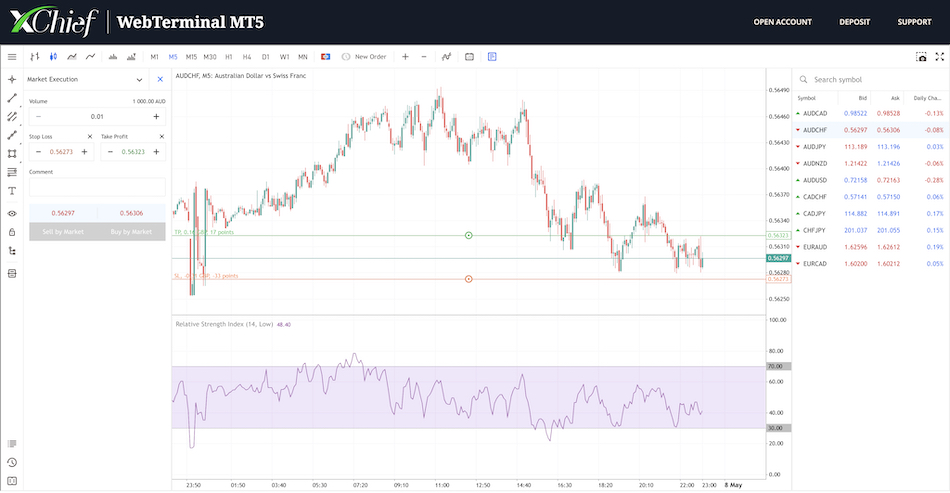
xChief offers MT4 and MT5 across desktop, web, and mobile (iOS/Android) — the industry-standard platforms that virtually every retail forex broker runs. That’s both the strength and the limitation. MT4 and MT5 are reliable, widely documented, and supported by a massive library of third-party indicators and EAs built over two decades.
They’re also dated: MT4 was released in 2005, and MT5 in 2010, and neither has seen meaningful interface or workflow updates since launch. xChief hasn’t built anything proprietary on top of them, so what you’re getting is the vanilla MetaQuotes experience — no custom tools, no integrated TradingView charts, no differentiated features that would make trading with xChief feel different from trading the same platforms at any other MT4/MT5 broker.
Platform choice also fragments across account types, creating unnecessary frustration. The CENT account runs MT4 only. Classic+ and DirectFX support both MT4 and MT5. xPRIME is MT5 only. That tiering makes sense on paper — MT5’s additional features (more timeframes, economic calendar, depth of market, better strategy tester) align with a premium account tier.
What’s missing entirely is any modern alternative. There’s no cTrader, which offers cleaner charting, Level II DOM, and a more intuitive interface if you’re coming from equity platforms, and no native TradingView integration, which has become table stakes at Tier-1 brokers and even some offshore competitors. No proprietary platform development at all means xChief’s technology offering is entirely dependent on MetaQuotes’ roadmap rather than its own vision for what retail CFD trading should look like.
MT4 and MT5 work. They’re stable, well-supported, and support EAs and copy trading. But “works” isn’t a competitive advantage when every broker in xChief’s tier offers the exact same thing. The platform experience at xChief is indistinguishable from any other offshore MT4/MT5 broker.
Mobile Apps
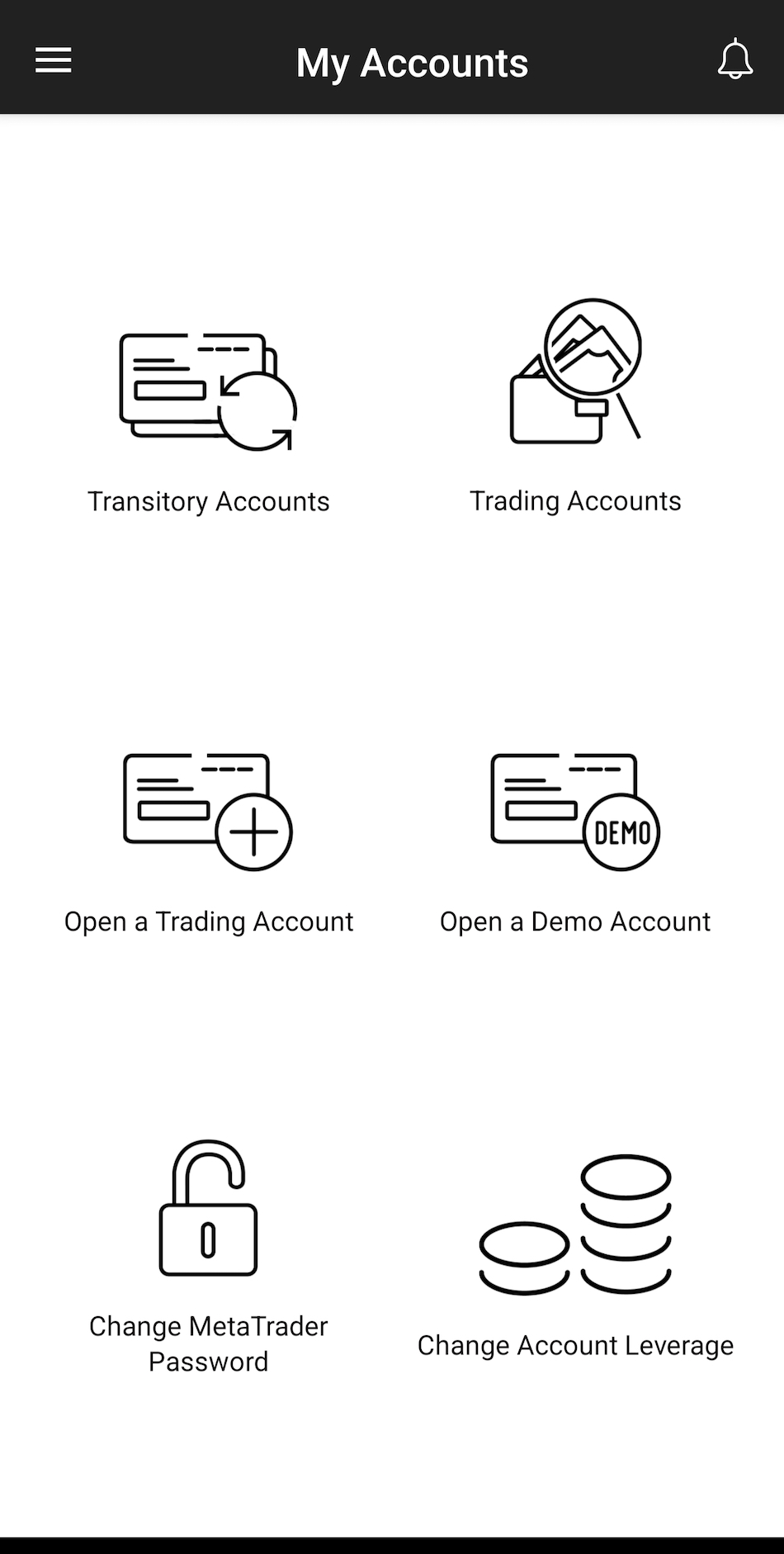
xChief markets its proprietary mobile app alongside MT4 and MT5 as a third platform option, but it’s not a trading platform at all. The app handles deposits, withdrawals, account oversight, KYC uploads, and bonus tracking, but offers no trading functionality. You can’t monitor positions, close trades, or access any charts or market data. It’s purely administrative.
The app’s real purpose becomes clear when you look at bonus mechanics: installing the xChief mobile app is required to claim the USD 100 no-deposit bonus. That’s user acquisition infrastructure disguised as a platform feature — it serves xChief’s interests (app store visibility, push notification access) more than traders who need actual mobile functionality.
For any trading activity, you’re forced back to MT4 or MT5 mobile apps, meaning the xChief app becomes an app on your phone solely for paperwork — creating exactly the fragmented workflow modern mobile-first brokers have eliminated.
But calling it a mobile trading platform when you can’t even check an open position is misleading. Compared to Capital.com, for instance, which offers full trading, charting, and account management in a single interface, xChief’s app offers only the back-office functions, leaving you stuck juggling separate apps for admin versus actual trading, while the rest of the industry has moved to unified experiences.
| xChief | Interactive Brokers | FOREX.com | |
|---|---|---|---|
| Platforms & Tools Rating | |||
| Platforms | MT4, MT5 | Trader Workstation (TWS), IBKR Desktop, GlobalTrader, Mobile, Client Portal, AlgoTrader, OmniTrader, TradingView, eSignal, TradingCentral, ProRealTime, Quantower | WebTrader, Mobile, MT4, MT5, TradingView |
| Mobile App | iOS & Android | iOS & Android | iOS & Android |
| Visit | Visit | Visit | Visit |
| Review | Review | Review | Review |
Research
xChief’s Analytics section on its website offers five tools: Analytical Reviews, Economic Articles, Currency Charts, an Interest Rates table, and a Trader’s Calculator.
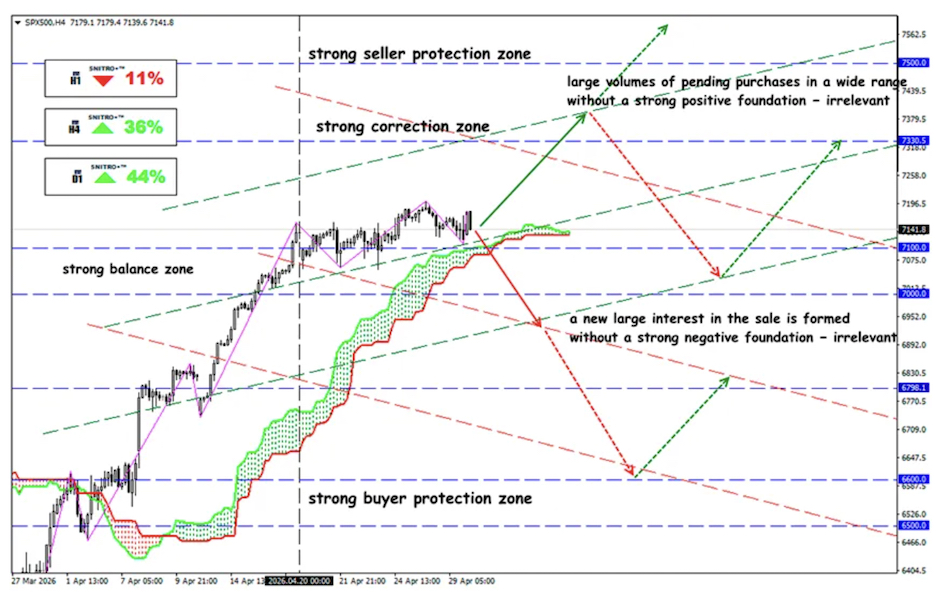
The Analytical Reviews page shows current daily commentary, though there’s no byline, no analyst credentials, and no way to assess whether this is proprietary research or republished third-party content. The low quality of the charts also makes them hard to read.
The Economic Articles section contains bylined educational blog posts — guides like “CFD Demystified” that cover CFD basics, strategy primers, and market explainers. These are evergreen educational pieces rather than timely market analysis, and the section is very infrequently updated. It functions more as a static knowledge base than an active research feed, which limits its value if you’re looking for current market insights rather than foundational concepts that you could find elsewhere.
The Currency Charts tool offers basic multi-timeframe charting for 16 pairs, accessible without login, but it’s rudimentary compared to TradingView or even what MT4/MT5 provide natively. The Interest Rates table consolidates central bank rates in one place, which is convenient reference material but not analysis. The Trader’s Calculator lets you model position size and profit/loss, which is useful for beginners but isn’t research — it’s a utility any CFD broker should offer.
What’s missing is more telling than what’s there. No economic calendar on the website itself (MT5 has one built-in, but that’s MetaQuotes’ feature, not xChief’s). No webinars, no video tutorials, no live market commentary, no earnings calendars for the 95 US stock CFDs xChief offers on xPRIME accounts. No trading signals service beyond the third-party MetaQuotes Signals marketplace. No sentiment indicators, no correlation tools, no heatmaps.
The xChief Academy page claims “daily analytics from our professional Analysis Team,” and the Analytical Reviews page appears to deliver on that — but the execution is bare-bones compared to what Tier-1 brokers provide. XM runs live webinars, real-time trading sessions, and integrated TradingView charts with an AI assistant. IC Markets publishes multi-analyst market briefs with clear trade setups.
The Analytics section functions as a content repository rather than an active research hub. It’s accessible, it’s free, and the daily commentary is current — but it won’t differentiate xChief from competitors, and it won’t replace the third-party research tools serious traders already use.
| xChief | Interactive Brokers | FOREX.com | |
|---|---|---|---|
| Research Rating | |||
| Visit | Visit | Visit | Visit |
| Review | Review | Review | Review |
Education
xChief’s Library section organizes educational content into six categories: The History of CFD Trading, Trader’s First Steps, Articles About Trading, Forex Trading Strategies, Trading Indicators, and CFD Trading Sessions. The structure suggests a progression from foundational concepts to practical application, though the execution reveals legacy content that’s infrequently maintained rather than an active educational program.
The Trading Indicators section contains 22 explainer articles covering standards such as MACD, Bollinger Bands, the Stochastic Oscillator, and Fibonacci — each with a dedicated page and brief description. The Forex Trading Strategies section offers blog posts on specific approaches: Easy Forex Strategies, Fractals Trading, Jarroo Strategy, Fibonacci Systems, Intraday Trading, Breakout Strategies, Candlestick Patterns, and Momentum Trading.
Publication dates on these strategy blogs range from February 2016 to October 2023, which signals very infrequent updates rather than regular content production. A seven-year span between the oldest and newest articles, with nothing published in the past year and a half, suggests the Library functions as an archive rather than a living resource.
The content itself is so foundational as to be generic. Articles explain margin trading, capital management, and why 95% of traders fail — concepts you’d find in the first chapter of any retail trading book or on any competitor broker’s education page. The strategy blogs cover established techniques (Fibonacci retracements, candlestick patterns, breakout systems) that have been documented across thousands of trading sites for decades.
There’s no xChief-specific content, no proprietary insights, and no clear learning path that builds from beginner to intermediate to advanced. The indicator explainers and strategy blogs are useful reference material if you’re encountering these concepts for the first time, but they don’t teach you how to combine them into a working system, how to backtest, or how to adapt them to the specific instruments and leverage that xChief offers.
What’s missing is more telling. No video tutorials, which have become baseline expectations at top brokers. No webinars, no interactive quizzes, no strategy backtesting tools, no case studies showing how actual xChief traders applied these concepts to live markets.
xChief offers a text-only library written years ago that hasn’t been meaningfully refreshed since. The Library serves as a reference repository for traders who already know what they’re looking for — if you want to refresh your memory on how the Money Flow Index works or how Fibonacci retracements function, the explainers are there.
But it won’t teach a new trader how to actually trade, it won’t help an experienced trader refine their edge, and it won’t differentiate xChief’s educational offering from what’s freely available on the Internet.
| xChief | Interactive Brokers | FOREX.com | |
|---|---|---|---|
| Education Rating | |||
| Visit | Visit | Visit | Visit |
| Review | Review | Review | Review |
Customer Support
xChief advertises 24/7 customer support through live chat, email, phone, and a support ticket system accessible through the client dashboard. The broker also maintains a presence on messaging platforms — Telegram, WhatsApp, WeChat, Facebook, and Instagram.
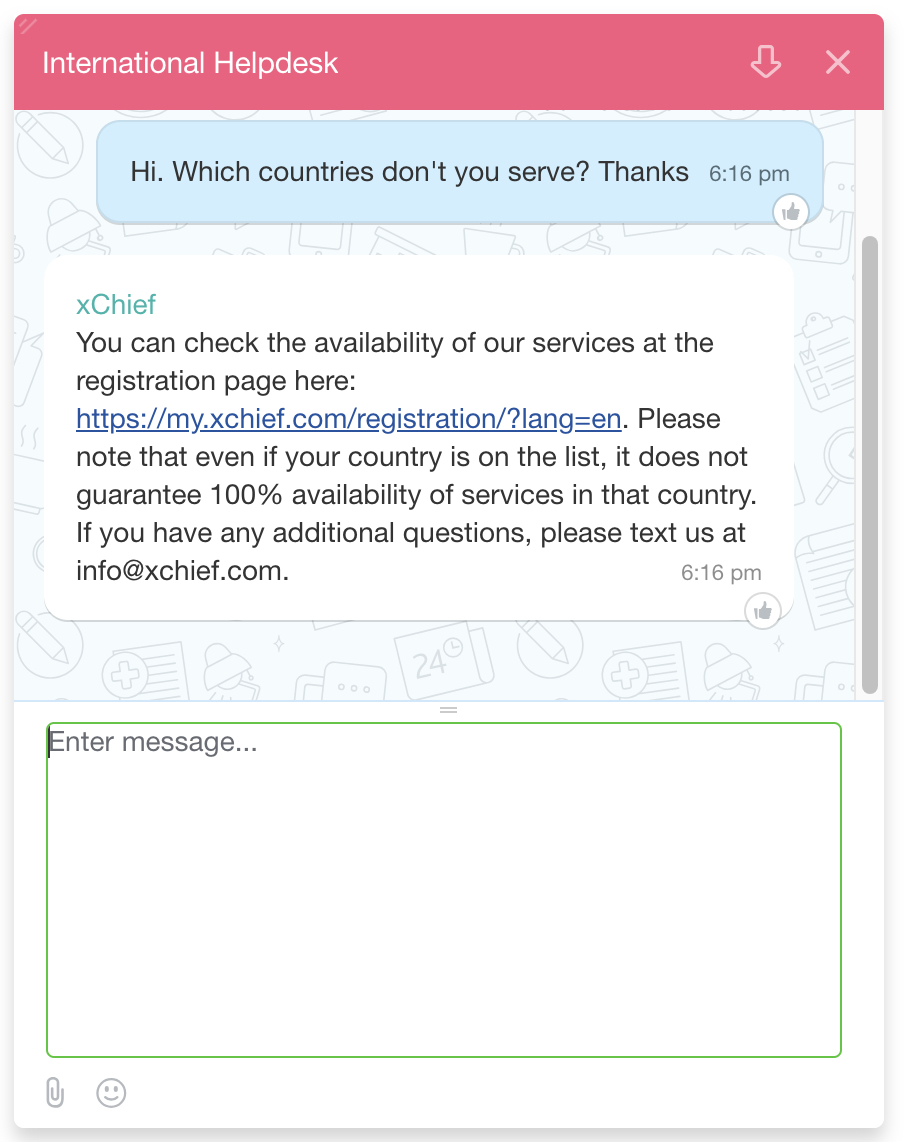
Testing the live chat during London daytime hours showed extremely responsive engagement — replies arrived within seconds of sending queries. The catch: these responses were mainly automated, with a chatbot handling intake and delivering templated answers to common questions about account types, deposit methods, and platform downloads.
The automated system works efficiently for straightforward queries but creates friction when questions move beyond its script. Ask about bonus eligibility conditions, withdrawal processing times during disputes, or how negative balance protection applies in edge cases, and the bot either loops back to generic FAQs or promises “a specialist will contact you shortly.”
The hand-off from bot to human agent introduces significant delays — what starts as instant automated replies turns into 10 to 15 minute waits for actual human engagement, and sometimes the human response is just another deflection to “contact your account manager” or “submit a ticket for review.” That shift in responsiveness when the question involves broker discretion or potential liability isn’t unique to xChief, but the automated front-end creates an illusion of support availability that doesn’t extend to complex issues.
xChief’s live chat gives no indication you’re talking to a bot until it becomes obvious from the scripted loops, and there’s no published timeline for when a human will take over or resolve escalated issues. The support ticket system provides a reference number and tracking, but there’s no published escalation path or resolution timeframe.
If the bot can’t resolve your question and the first-line human agent punts to a ticket, there’s no clear procedure for what happens next or timeline for when you’ll get a final answer — just assurances that “the team will review” without commitment to when or what criteria they’ll use.
| xChief | Interactive Brokers | FOREX.com | |
|---|---|---|---|
| Customer Support Rating | |||
| Visit | Visit | Visit | Visit |
| Review | Review | Review | Review |
Community Sentiment
Building an accurate picture of how xChief is perceived meant going beyond our own testing. We gathered sentiment from Trustpilot, Forex Peace Army, and Myfxbook — pulling several hundred data points. The picture that emerges is genuinely split.
xChief’s 105 Trustpilot reviews divide along predictable lines. Positive reviews highlight fast withdrawals (two to three days), stable execution, and responsive support. Negative reviews center on liquidity issues in the CENT account, unexplained compliance suspensions, and contest prize disputes. The split maps to which account type traders used and whether they engaged with promotional offers.
Positive sentiment stems from traders using Classic+ or DirectFX accounts with straightforward deposit, trade, and withdrawal activity. Several mention multi-year relationships and consistent withdrawal success. Negative sentiment clusters around three issues: CENT accounts experiencing repeated “off quote” messages suggesting liquidity depth problems, compliance suspensions without disclosed reasons even after completing KYC, and contest winners reporting unpaid prizes with retroactive disqualifications for undocumented “rule violations.”
The fault line isn’t execution quality — it’s what happens when activity intersects with promotional terms or compliance thresholds. Traders who avoid CENT accounts, ignore bonuses and contests, and stick to standard trading report smooth experiences. Those engaging with promotional mechanics or triggering compliance flags face disputes in which xChief exercises discretion with minimal transparency, and support shifts from helpful to unresponsive.
For self-sufficient traders avoiding promotional offers, sentiment supports xChief as functional. For anyone using CENT accounts for serious volume, pursuing contest prizes, or expecting transparency when disputes arise, offshore brokers exercise discretion without the accountability structures Tier-1 regulation provides.
Is xChief A Good Broker?
xChief delivers functional STP execution, competitive spreads on major pairs, and reliable withdrawals for straightforward trading activity. The decade-long operating history and stable MT4/MT5 infrastructure work fine if you deposit your own capital, avoid promotional offers, and don’t need the broker’s help when problems arise.
MISA Comoros regulation means no deposit insurance, no formal complaint mechanism, and broker discretion in disputes without external review. It’s adequate for experienced traders who accept offshore risk and maintain strict withdrawal discipline, but unsuitable for anyone learning, testing strategies with protected capital, or expecting regulatory safeguards when disagreements arise.
The marginal spread savings don’t compensate for the structural protection gap compared to FCA, CySEC, or ASIC-regulated alternatives.
How We Tested xChief
- We tested xChief on live DirectFX and Classic+ accounts using the broker’s published spread schedules, contract specifications, and disclosed regulatory framework as reference points. We examined how orders route through the STP/NDD model across forex majors, minor pairs, metals, indices, and crypto CFDs, and reviewed available deposit and withdrawal methods via card, bank transfer, and USDT.
- We ran hands-on checks across MT4, MT5 desktop platforms, web terminals, and the xChief mobile app. We opened and closed positions on EUR/USD, GBP/USD, XAU/USD, and selected index CFDs; monitored execution behavior during London/New York overlap and high-impact news releases (NFP, FOMC, BOE rate decisions); compared actual fill prices against quoted spreads to verify slippage and commission accuracy; and tested how pending orders, stop-loss placement, and margin management handled both scalping setups and multi-day swing positions.
- We cross-referenced xChief’s published claims on spreads, withdrawal processing times, bonus requirements, and account type benefits with community feedback from Trustpilot, Forex Peace Army, and Myfxbook. That process helped us identify where the broker delivers reliable execution and competitive costs on major pairs during normal hours — and where factors like bonus turnover mechanics, Cent account liquidity constraints, compliance discretion, or the offshore MISA regulatory structure create friction for traders expecting transparency when disputes arise.
FAQ
Is xChief Broker Legit?
xChief is a legitimate operating broker established in 2014 with over a decade of trading history and no major fraud scandals. The company processes withdrawals, maintains functional trading infrastructure, and operates offices in multiple jurisdictions. However, “legitimate” doesn’t mean “well-regulated” — the broker operates primarily under MISA in Comoros, an offshore regulator with minimal oversight compared to FCA or ASIC standards.
Is xChief Broker Regulated?
xChief operates under three licenses: MISA (Mwali International Services Authority) in Comoros as the primary trading entity, FSCA authorization in South Africa (intermediary services only, doesn’t protect typical retail accounts), and AFSA in Kazakhstan. The MISA license provides basic registration but no deposit insurance, investor compensation scheme, or MiFID II protections that Tier-1 regulators require. Governing law falls under Union of Comoros, with no practical recourse for traders when disputes arise.
How To Withdraw From xChief?
Withdrawals must return to your original deposit method (AML requirement). The minimum withdrawal is USD 30 for most methods and USD 60 for SWIFT. Processing takes one to five business days, depending on the method — card and e-wallet withdrawals typically clear faster than bank transfers. Fees range from 0-2% per transaction, with USDT withdrawals costing USD 2-25 and card withdrawals up to 2%. Bonus-funded accounts are subject to turnover requirements that must be met before withdrawals, and xChief reserves the right to reject withdrawals it deems to be an abuse of negative-balance protection.
Is xChief Safe?
xChief segregates client funds from operational capital and offers negative balance protection, but safety depends on your definition. The broker has operated for 10+ years without major collapse or widespread fraud, suggesting operational stability. However, MISA regulation provides no deposit insurance or compensation scheme if the broker fails, no external dispute-resolution mechanism, and Comoros law as the governing law, with no practical enforcement for international retail traders. It’s “safe” for experienced traders treating it as a utility with capital they can afford to lose entirely, but unsuitable for protected savings or traders who need regulatory recourse when disputes arise.
Best Alternatives to xChief
Compare xChief with the best similar brokers that accept traders from your location.
- Interactive Brokers – Interactive Brokers (IBKR) is a premier brokerage, providing access to over 170 markets across 40 countries, along with a suite of comprehensive investment services. With over 40 years of experience, this Nasdaq-listed firm adheres to stringent regulations by the SEC, FCA, CIRO, and SFC, amongst others, and is one of the most trusted brokers for trading around the globe.
- FOREX.com – Founded in 2001, FOREX.com is now part of StoneX, a financial services organization serving over one million customers worldwide. Regulated in the US, UK, EU, Australia and beyond, the broker offers thousands of markets, not just forex, and provides excellent pricing on cutting-edge platforms.
xChief Comparison Table
| xChief | Interactive Brokers | FOREX.com | |
|---|---|---|---|
| Rating | 3 | 4.3 | 4.5 |
| Markets | CFDs, Forex, Metals, Commodities, Stocks, Indices | Stocks, Options, Futures, Forex, Funds, Bonds, ETFs, Mutual Funds, Cryptocurrencies | Forex, Futures and Options on Metals, Energies, Commodities, Indices, Bonds, Crypto |
| Demo Account | Yes | Yes | Yes |
| Minimum Deposit | $10 | $0 | $100 |
| Minimum Trade | 0.01 Lots | $100 | 0.01 Lots |
| Regulators | MISA | SEC, FINRA, CFTC, NFA, CIRO, FCA, CBI, ASIC, SFC, SEBI, JFSA, MAS | NFA, CFTC |
| Bonus | $100 No Deposit Bonus | – | VIP status with up to 10k+ in rebates – T&Cs apply. |
| Platforms | MT4, MT5 | Trader Workstation (TWS), IBKR Desktop, GlobalTrader, Mobile, Client Portal, AlgoTrader, OmniTrader, TradingView, eSignal, TradingCentral, ProRealTime, Quantower | WebTrader, Mobile, MT4, MT5, TradingView |
| Leverage | 1:1000 | 1:50 (major forex pairs), 1:2-1:4 (equities) | 1:50 |
| Payment Methods | 12 | 5 | 9 |
| Visit | – | Visit | Visit |
| Review | – | Interactive Brokers Review |
FOREX.com Review |
Compare Trading Instruments
Compare the markets and instruments offered by xChief and its competitors. Please note, some markets may only be available via CFDs or other derivatives.
| xChief | Interactive Brokers | FOREX.com | |
|---|---|---|---|
| CFD | Yes | No | No |
| Forex | Yes | Yes | Yes |
| Stocks | Yes | Yes | Yes |
| Commodities | Yes | Yes | Yes |
| Oil | Yes | No | Yes |
| Gold | Yes | Yes | Yes |
| Copper | No | No | No |
| Silver | Yes | No | Yes |
| Corn | No | No | No |
| Crypto | Yes | Yes | No |
| Futures | No | Yes | Yes |
| Options | No | Yes | Yes |
| ETFs | No | Yes | No |
| Bonds | No | Yes | No |
| Warrants | No | Yes | No |
| Spreadbetting | No | No | No |
| Volatility Index | No | No | No |
xChief vs Other Brokers
Compare xChief with any other broker by selecting the other broker below.
Customer Reviews
4.6 / 5This average customer rating is based on 11 xChief customer reviews submitted by our visitors.
If you have traded with xChief we would really like to know about your experience - please submit your own review. Thank you.
Hey everyone! Just wanted to share that I made my first withdrawal today. It was processed in no time, and I couldn’t be happier with how efficient it was. Really impressed with this company!