

Some retail investors are interested in 24-hour trading to access more market opportunities and trade around other time commitments or from a non-major time zone. This guide will cover 24/7, 24/5 and extended-hours markets, the advantages and disadvantages of trading around the clock, and lists the best brokers for 24-hour trading online.
24-hour trading is evolving quickly. Major US exchanges, including the Nasdaq, NYSE, and Cboe, have filed plans to extend equity trading to near round-the-clock hours. The 24X National Exchange launched in October 2025 as the first SEC-approved exchange designed for 23-hour weekday trading. These developments signal a fundamental shift in how traders worldwide will access US markets, and potentially markets beyond American borders.
Brokers With 24-Hour Trading
We logged into these platforms and confirmed they offer around-the-clock trading markets with excellent conditions:
-
- GBPUSD Spread: 1.5
- EURUSD Spread: 0.9
- EURGBP Spread: 1.5
341 readers visited AvaTrade in the last 30 days -
- GBPUSD Spread: Variable
- EURUSD Spread: 0.1
- EURGBP Spread: Variable
74 readers visited PrimeXBT in the last 30 days -
- GBPUSD Spread: 0.8
- EURUSD Spread: 0.8
- EURGBP Spread: 1.5
691 readers visited XM in the last 30 days, 1 of them from Malawi76.15% of accounts lose money when trading CFDs with this provider. -
- GBPUSD Spread: 0.1
- EURUSD Spread: 0.0
- EURGBP Spread: 0.1
88 readers visited Eightcap in the last 30 days71.28% of retail traders lose money when trading CFDs -
- GBPUSD Spread: 0.23
- EURUSD Spread: 0.1
- EURGBP Spread: 0.27
122 readers visited IC in the last 30 days -
- GBPUSD Spread: 0.4
- EURUSD Spread: 0.1
- EURGBP Spread: 0.4
104 readers visited RoboForex in the last 30 days






Learn how we test brokers and why you can trust our ratings.
Here is a short summary of why we think each broker belongs in this top list:
- AvaTrade 4.9/5 Regulated in five continents, AvaTrade offers a secure way to access crypto markets. There's a growing range of digital currencies including Bitcoin, Ethereum and Ripple, plus more unusually, a crypto index for diversified exposure. You can also access competitive crypto spreads in the broker's three platforms as well as 1:2 leverage.
- PrimeXBT 4.2/5 Traders can speculate on popular cryptos with commissions as low as 0.05%. Additionally, the broker continues to improve its offering by introducing Crypto Futures, with 101 new tokens added in 2025, as well as trading contests with real prizes.
- XM 4.8/5 XM offers a handful of cryptocurrencies against the USD to clients in some regions. These are tradable via CFDs with very high leverage up to 1:500, amplifying potential returns but also losses. You can day trade major tokens like Bitcoin, Ethereum and Ripple, though the suite of tokens trails the 100+ crypto derivatives at some category leaders.
- Eightcap 4.6/5 Eightcap’s crypto offering is best-in-class with 120+ crypto derivatives, surpassing that of almost every alternative. Testing also reveals Bitcoin spreads of 12 pips, coming in lower than most competitors. Add in convenient deposits and withdrawals in digital currencies, and Eightcap offers the complete package for serious crypto traders.
- IC 4.8/5 IC offers 20+ cryptocurrencies which are tradable via CFDs, including lesser-known tokens such as Avalanche, Kusama and Uniswap. Commission-free trading is available, and experienced crypto traders can access leverage in the MetaTrader platforms.
- RoboForex 4.3/5 RoboForex has launched 24/7 CFD crypto trading for popular tokens, including Bitcoin, Ethereum, and Cardano. Transparent fees, margin trading opportunities, and the reliable RoboForex execution make it suited to active crypto traders. Crypto trading is on select accounts like Pro, ProCent, and ECN accounts, alongside leverage up to 1:500 for BTC/ETH.
Community Sentiment
See how users rate these brokers based on the average customer ratings submitted on DayTrading.com, plus ratings from Trustpilot, the Apple App Store and Google Play.
| Broker | Our Users' Rating | Trustpilot Score | Trustpilot Reviews | iOS App Rating | Android App Rating |
|---|---|---|---|---|---|
| AvaTrade | 13808 | ||||
| PrimeXBT | 417 | ||||
| XM | 3100 | ||||
| Eightcap | 3913 | ||||
| IC | 4 | ||||
| RoboForex | 776 |
AvaTrade
Celebrating 20 Years in the industry, AvaTrade offers active traders everything they need: an intuitive WebTrader, powerful AvaProtect risk management, a smooth 5-minute sign-up process, and dependable support you can rely on in fast-moving markets.
 Jemma Grist, Reviewer
AvaTrade quick facts
- GBPUSD Spread
- 1.5
- EURUSD Spread
- 0.9
- EURGBP Spread
- 1.5
- Total Assets
- 50+
- Platforms
- WebTrader, AvaTradeGO, AvaOptions, AvaFutures, MT4, MT5, AlgoTrader, TradingView, TradingCentral, DupliTrade
- Coins
- BCH, BTC, BTG, ETH, LTC, XRP, EOS, DASH
- Crypto Mining
- ✘No
- Auto Market Maker
- ✘No
- Crypto Spread
- BTC <1%, ETH 2%
- Crypto Lending
- ✘No
- Crypto Staking
- ✘No
- Minimum Deposit
- $100
- Regulator
- ASIC, CySEC, FSCA, ISA, CBI, JFSA, BVI, FSRA/ADGM, AFM, CMA-Kenya, CIRO (via Friedberg Direct)
- Account Currencies
- USD, EUR, GBP, CAD, AUD, ZAR
Pros
- Support at AvaTrade performed excellently during testing, with response times of 3 minutes and localized support in major trading jurisdictions, including the UK, Europe and the Middle East.
- AvaTrade launched AvaFutures to offer low-margin access to global markets, then expanded in 2025 as one of the first brokers to add CME’s Micro Grain Futures.
- The WebTrader excelled in our hands-on tests, sporting a user-friendly interface for beginners, complete with robust charting tools like 6 chart layouts and 60+ technical indicators.
Cons
- The AvaSocial app is good but not great – the look and feel, plus the navigation between finding strategy providers and account management needs upgrading to rival category leaders like eToro.
- AvaTrade’s WebTrader has improved, but work is still needed in terms of customizability – frustratingly widgets like market watch and watchlists can’t be hidden, moved, or resized.
- While signing up is a breeze, AvaTrade lacks an ECN account like Pepperstone or IC Markets, which provides the raw spreads and ultra-fast execution many day traders are looking for.
PrimeXBT
PrimeXBT is suited to aspiring traders looking for crypto derivatives alongside traditional markets like forex and indices, all tradable on an intuitive, web-based platform. The copy trading solution is also ideal for hands-off traders with 5-star ratings and performance graphs to help you find traders that align with your preferences and risk appetite.
 William Berg, Reviewer
PrimeXBT quick facts
- GBPUSD Spread
- Variable
- EURUSD Spread
- 0.1
- EURGBP Spread
- Variable
- Total Assets
- 45+
- Platforms
- PXTrader 2.0, MT5, TradingCentral
- Coins
- BTC, LTC, ETH, XRP, EOS, ADA, DOT, SOL, UNI, LINK, DOGE, BNB, ICP, SAND, PAXG, etc
- Crypto Mining
- ✘No
- Auto Market Maker
- ✘No
- Crypto Spread
- 0.05% BTC, 0.05% ETH
- Crypto Lending
- ✘No
- Crypto Staking
- ✘No
- Minimum Deposit
- $0
- Regulator
- FSCA, FSC, FSA, CNAD
- Account Currencies
- USD, EUR, GBP
Pros
- Ultra-fast execution speeds, averaging 7.12ms, make PrimeXBT an excellent option for day traders looking to secure the best prices in volatile markets.
- 24/7 customer support, available via live chat, proved excellent during testing, while the extensive help centre is perfect for self-help.
- PrimeXBT seriously bolstered its suite of Crypto Futures in 2025, now offering over 200 tokens spanning AI, NFTs, Metaverse, Layer 1 &2, and more.
Cons
- Despite licenses from agencies like the FSCA, FSC, CNAD, and FSA, PrimeXBT lacks authorization from a top-tier body, making it higher risk than some other top-rated crypto exchanges and brokers.
- Support response times and the choice of channels could be improved to provide active traders with quicker, more comprehensive assistance.
- Despite improvements like 7 metal additions, the around 350+ instruments still trails competitors, notably OKX with its 400+ assets.
XM
With a low $5 minimum deposit, advanced charting platforms in MT4 and MT5, expanding range of markets, and a Zero account offering spreads from 0.0, XM provides all the essentials for active traders.
 Christian Harris, Reviewer
XM quick facts
- GBPUSD Spread
- 0.8
- EURUSD Spread
- 0.8
- EURGBP Spread
- 1.5
- Total Assets
- 55+
- Platforms
- MT4, MT5, TradingCentral
- Coins
- BTC, ETH, LTC, XRP, BCH
- Crypto Mining
- ✘No
- Auto Market Maker
- ✘No
- Crypto Spread
- Variable
- Crypto Lending
- ✘No
- Crypto Staking
- ✘No
- Minimum Deposit
- $5
- Regulator
- CySEC, DFSA, FSCA, SCA, FSA, FSC-Belize, FSC-Mauritius, CMA-Kenya, CMA-UAE
- Account Currencies
- USD, EUR, GBP, JPY, ZAR
Pros
- XM’s customer support has delivered over years of testing, with 24/7 assistance in 30 languages, response times of under 2 minutes and a growing Telegram channel.
- XM’s growing roster of 1,400+ instruments provides diverse short-term trading opportunities, with unique turbo stocks, fractional shares, and more recently thematic indices.
- XM’s Zero account is ideal for day trading with spreads from 0.0 pips, 99.35% of orders executed in <1 second, and no requotes or rejections.
Cons
- Although trusted and generally well-regulated in some regions, XM also has global entities registered with the weak regulators like FSC (Belize) and FSA (Seychelles), whilst UK clients are no longer accepted, reducing its market reach.
- While the XM app stands out for its usability and exclusive copy trading products, the selection of technical analysis tools needs to be improved to meet the needs of advanced traders.
- XM relies solely on the MetaTrader platforms for desktop trading, so there’s no in-house downloadable solution for a more beginner-friendly user experience with unique features.
Eightcap
Eightcap delivers in every area for day traders with a growing selection of charting platforms, education via Labs, and AI-powered tools. Now sporting 120+ crypto CFDs, it's also become a stand-out choice for crypto trading, winning our 'Best Crypto Broker' award two years in a row.
Christian Harris, Reviewer
Eightcap quick facts
- GBPUSD Spread
- 0.1
- EURUSD Spread
- 0.0
- EURGBP Spread
- 0.1
- Total Assets
- 50+
- Platforms
- MT4, MT5, TradingView, TradeLocker
- Coins
- BTC, ETH, LTC, BCH, XRP, XMR, DSH, EOS, XLM, ADA, TRX, DOGE, BNB, DOT, MATIC, VET, AXS, NEO, SOL, UNI, AAVE, KSM, THETA, CAKE, SUSHI, ATOM, XTZ, SNX, COMP, FLOW, EGLD, PUNDIX, RAY, ZIL, QTUM, BAND, OMG, FIDA, BADGER, NEAR and many more
- Crypto Mining
- ✘No
- Auto Market Maker
- ✘No
- Crypto Spread
- $12 (BTC)
- Crypto Lending
- ✘No
- Crypto Staking
- ✘No
- Minimum Deposit
- $100
- Regulator
- FCA, ASIC, CySEC, FSC, SCB, FSA
- Account Currencies
- USD, EUR, GBP, CAD, AUD, NZD, SGD
Pros
- Eightcap has brought in GOLD247 for 24/7 trading opportunities on a gold/USD CFD with leverage up to 1:20, minimum trade size of 0.01 lots, and no commission, appealing to weekend traders interested in the precious metal.
- Eightcap Challenges, the broker's prop trading firm, comes with less of the third-party risks we commonly see with white-label prop firms, and its tailoring its funded accounts to crypto traders with around 150 crypto pairs, plus it's integrated into the TradingView interface.
- Having excelled across all key areas for day traders, Eightcap outperformed every competitor to win our 'Best Overall Broker' award for 2024, also securing our 'Best Crypto Broker' title for 2025 and 'Best TradingView Broker' for 2025.
Cons
- Despite a useful library of educational guides and e-books in Labs, Eightcap still trails IG’s comprehensive toolkit for aspiring traders with its dedicated IG Academy app and 18 course categories.
- Eightcap needs to continue bolstering its suite of 800+ instruments to match category leaders like Blackbull Markets with its 26,000+ assets, featuring a particularly weak selection of commodities.
- The demo account expires after 30 days and can only be extended upon request - a notable inconvenience compared to the likes of XM with its unlimited demo mode.
IC
IC (formerly IC Markets) offers superior pricing, exceptionally fast execution and seamless deposits. The introduction of advanced charting platforms, notably TradingView, and the Raw Trader Plus account, ensures it remains a top choice for intermediate to advanced day traders.
Christian Harris, Reviewer
IC quick facts
- GBPUSD Spread
- 0.23
- EURUSD Spread
- 0.1
- EURGBP Spread
- 0.27
- Total Assets
- 75
- Platforms
- MT4, MT5, cTrader, TradingView, TradingCentral, DupliTrade, Quantower
- Coins
- BTC, BCH, DOT, DSH, EMC, EOS, ETH, LNK, LTC, NMC, PPC, XLM, XRP, ADA, BNB, DOG, UNI, XTZ
- Crypto Mining
- ✘No
- Auto Market Maker
- ✘No
- Crypto Spread
- BTC 42.036
- Crypto Lending
- ✘No
- Crypto Staking
- ✘No
- Minimum Deposit
- $200
- Regulator
- ASIC, CySEC, FSA, SCB, CMA-Kenya
- Account Currencies
- USD, EUR, GBP, CAD, AUD, NZD, JPY, CHF, HKD, SGD
Pros
- For active traders interested in hotly anticipated IPOs, IC is a contender, for instance offering pre-IPO stock CFDs on Anthropic (ANT) in November 2026 before it moved to a standard listing.
- IC secured DayTrading.com's 'Best MT4/MT5 Broker' in 2025 for its seamless, industry-leading MetaTrader integration, refined over years to maximize the platform experience.
- IC offers among the tightest spreads in the industry, with 0.0-pip spreads on major currency pairs, making it especially cost-effective for day traders.
Cons
- While IC offers a selection of metals and cryptos for trading via CFDs, the range is not as extensive as brokers like eToro, limiting opportunities for traders interested in these asset classes.
- There are fees for certain withdrawal methods, including a $20 wire charge, which can eat into profits, especially for frequent withdrawals.
- Interest isn't paid on unused cash, an increasingly popular feature found at alternatives like Interactive Brokers.
RoboForex
RoboForex is great if you want a vast range of 12,000+ day trading markets with ECN accounts, powerful charting and loyalty promotions. It also stands out for stock traders with its user-friendly R StocksTrader platform, featuring 3,000+ shares, fees from $0.01 and sophisticated watchlists.
Christian Harris, Reviewer
RoboForex quick facts
- GBPUSD Spread
- 0.4
- EURUSD Spread
- 0.1
- EURGBP Spread
- 0.4
- Total Assets
- 30+
- Platforms
- R StocksTrader, MT4, MT5, TradingView
- Coins
- BTC, ETH, XRP, SOL, DOGE, ADA
- Crypto Mining
- ✘No
- Auto Market Maker
- ✘No
- Crypto Spread
- Variable
- Crypto Lending
- ✘No
- Crypto Staking
- ✘No
- Minimum Deposit
- $10
- Regulator
- FSC
- Account Currencies
- USD, EUR
Pros
- The R Stocks Trader platform rivals leading solutions like MT4, with netting and hedging capabilities, comprehensive backtesting, Level II pricing, and a flexible workspace.
- RoboForex is known for its tight spreads starting from 0 pips and low minimum deposits from $10, making it accessible to those on a budget. The ability to trade with micro lots further lowers the barrier to entry for new traders.
- The broker offers three commission-free withdrawals each month in the Free Funds Withdrawal program, helping day traders to minimize transaction costs.
Cons
- RoboForex provides a variety of account types, which, while offering flexibility, can be overwhelming for newer traders trying to choose the most suitable option for their trading style. Alternatives, notably eToro, provide a smoother entry into online trading with one retail account.
- Despite 15+ years in the industry and registering with the Financial Commission, RoboForex is authorized by one ‘Red-Tier’ regulator – the FSC in Belize, lowering the level of regulatory protections for traders.
- While RoboForex offers competitive spreads, some of its account types come with high trading commissions up to $20 per lot, trailing the cheapest brokers, such as IC Markets.
Key Takeaways – 24-Hour Trading
- True round-the-clock access varies by market.
- Forex trades 24/5.
- Crypto trades 24/7.
- US stocks are moving toward near-continuous trading.
- Liquidity tends to drop sharply outside core hours. In such conditions, wider spreads, thinner order books, and limit-only order restrictions (i.e., no market orders) are common. This mean trades cost more and may not fill at your price.
- Major US exchanges (Nasdaq, NYSE) have filed to extend stock trading to 22-23 hours per weekday. The 24X National Exchange is already live with extended hours.
- Futures already trade 23 hours on weekdays. They also weren’t subject to the legacy $25,000 pattern day trading rule. This makes futures accessible for smaller active accounts, but their high leverage makes risk management extremely important.
- More hours doesn’t mean more profits. Most retail traders lose money, and always-on markets tends to increase the temptation to overtrade.
- What matters more than access is discipline, risk management, and realistic expectations.
24-Hour Trading Explained
24-hour trading is a quality of select markets that allows investors to trade around the clock. Traditional stock markets operate in a time window close to the working hours of the jurisdiction in which they are based. But due to the global aspect of modern online trading, investors from regions with a significant time difference can be subject to inconvenient market opening times.
As a result, some markets operate around the clock to allow global investors to trade at reasonable hours. These markets include forex and crypto. However, some more traditional markets, such as stock trading and options, operate under extended “global trading hours” (GTH) to provide limited trading opportunities for international investors.
It’s worth noting that “24-hour trading” is still often used as a marketing term. Very few markets operate continuously without any breaks. And even those that do (such as crypto) can undergo halts, maintenance windows, and periods of extremely thin liquidity (that in turn make such windows difficult to use for trading). Traders should verify actual tradeable hours for specific instruments rather than relying on headline claims.
Markets & Instruments
At this point, you may be asking, “what can I trade 24 hours a day?”. To help you discover 24-hour trading opportunities, our experts have analyzed the around the clock trading potential of significant markets.
Forex
Forex, or foreign exchange, markets pitch currencies from across the globe against each other. As a result, a 24-hour trading market is necessary for forex.
The forex markets operate 24/5 from Monday to Friday, using three (sometimes described as four) overlapping regional market periods to allow this around the clock function to operate. The first market to open is the Sydney session, which runs from approximately 9 PM UTC to 6 AM UTC (times shift with daylight saving changes). The Tokyo session follows, running from approximately 12 AM UTC to 9 AM UTC.
The next session to take over is London-based, covering Europe. This session runs from 7 AM UTC to 4 PM UTC. The third and final session is the New York market, running from 12 PM UTC to 9 PM UTC. Note that these times are approximate and shift by one hour during daylight saving transitions in the US, UK, and Australia, which occur on different dates. (Roughly one-third of the countries in the world use daylight savings times, concentrated in North America, Europe, and certain parts of South America, Oceania, and the Middle East.)
Traders should always verify current session times against a live forex market hours tracker. The London-New York overlap (approximately 12 PM to 4 PM UTC) is widely considered the most liquid and volatile trading window. Even though it runs for only ~17% of the trading, it accounts for more than 50% of daily forex volume according to FOREX.com.
Cryptocurrency
Crypto trading is the newest form of speculation on this list and trades around the clock, seven days a week. This complete 24-hour trading schedule is due to the decentralized nature of blockchains, with crypto designed to eliminate the traditional difficulties associated with international currency and data exchange.
As a result, 24/7 digital currency trading is a widely used approach, with many investors using crypto bots to attempt to capitalize on additional opportunities via algorithms. However, investors should note that these hours normally only apply to trading spot crypto through an exchange. Crypto derivatives such as CFDs and binary options will sometimes have reduced trading hours, such as 24/5 hours.
Traders should also be aware that while crypto markets technically never close, liquidity still heavily depends on the time of day. Weekends and overnight hours (relative to US and European business hours) generally see lower volumes. As such you can expect wider spreads and more volatile price swings if orders are still pushed through. Flash crashes during low-liquidity periods are a documented risk. Also note that exchanges themselves may undergo scheduled (or unscheduled) maintenance and this can temporarily halt trading.
Options
Most options contracts follow the regular market hours of their local exchanges and do not operate on a 24-hour basis. These market hours can make effective day trading or swing trading of options contracts difficult for investors based overseas from the traded market.
However, several key US options markets, such as the VIX, XSP, RUT, and SPX indices on the CBOE exchange, are subject to global trading hours (GTH). These were introduced in 2021 and extended the daily trading hours to almost 24 hours, five days a week. These extended periods allow investors from around the globe to trade options contracts at reasonable local times.
Cboe expanded its GTH lineup to include Russell 2000 Index (RUT) options. These now trade nearly 24/5. GTH sessions experienced record volumes in 2025, up 27% compared to 2024. GTH for Cboe index options typically runs from 8:15 PM ET to 9:15 AM ET the following morning (overnight), then through the regular US session close at 4:15 PM ET, with a brief curb session afterward. That said, these extended-hours options products are complex and generally suitable only for sophisticated traders with ample capital/assets under management. Liquidity during overnight GTH sessions can be a lot thinner than during regular hours. Watch for wider bid-ask spreads and higher execution costs.
Futures
As with options markets, futures follow their local exchange hours. As futures are a global product based in many different jurisdictions in the US, UK, Europe and Asia, the lack of a 24-hour futures market makes foreign instruments challenging to trade for global investors.
But unlike options, many major futures contracts already trade on a near 24-hour basis. CME Group futures, including the E-mini S&P 500 (ES), Micro E-mini Nasdaq (MNQ), crude oil (CL), and gold (GC), trade from 6:00 PM ET Sunday through 5:00 PM ET Friday. They have a daily one-hour maintenance break from 5:00 to 6:00 PM ET.
This 23-hours-a-day trading feature makes futures one of the most accessible markets for around-the-clock trading. And futures are a practical alternative for traders who want overnight exposure to equity indices, commodities, or currencies without waiting for normal stock market hours. Futures also aren’t subject to the pattern day trading (PDT) rule that applies to US equities. This makes them accessible to smaller accounts that want to day trade frequently.
But they can also be dangerous to smaller accounts because of their leverage, so impeccable risk management is important for those who use them to leverage notional exposure in excess of their account size.
Stocks & ETFs
Traders who wish to speculate on stocks in the Nasdaq, the SPY ETF and other global stock and ETF offerings will want to know if these instruments support 24-hour trading. Unfortunately, most stocks and ETFs cannot be traded around the clock and follow various stock exchange trading hours worldwide, but this is changing.
Many major exchanges from the US, UK and Europe operate extended “after-hours” markets. These consists of pre-market sessions, which can last up to 5 hours before the market opens, and after-hours sessions extending the trading day by up to 4 hours.
For example, the Nasdaq operates its pre-market from 4 am ET to 9:30 am ET, its regular market from 9:30 am ET to 4 pm ET, and after-hours from 4 pm ET to 8 pm ET.
While these extended hours offer international investors the chance to get involved in day trading stocks and ETFs, there are limitations on the types of trade that can occur during these hours. For example, traders must place limit, rather than market orders, and lower trading volumes can mean volatile prices. Some stock trading brokers, websites and apps have taken this further and offered 24/5 trading on hundreds of popular securities.
Interactive Brokers began offering better extended hours to its client base in 2022-23. This levels the playing field for global investors and allows US-based ETFs targeting global or non-US markets to trade during relevant news cycles.
Looking ahead, we see major structural changes on the horizon. In December 2025, Nasdaq filed with the SEC to operate 23-hour weekday trading – 4 AM to 8 PM ET day session (standard market day including traditional after hours), then 9 PM to 4 AM ET night session, with a one-hour maintenance break. The NYSE has received initial SEC approval to extend NYSE Arca (trades US-listed equities and ETFs) to 22 hours daily. The 24X National Exchange, which launched in October 2025, currently trades from 4 AM to 8 PM ET and plans to expand to full 23/5 hours in the second half of 2026, pending infrastructure alignment and back-office readiness.
If these changes are approved and implemented, they would transform US equity trading from a segmented structure into a near-continuous global model. The main drawbacks are concerns over thin overnight liquidity, increased volatility, overtrading behavior, and the removal of natural breaks that currently help companies release material news and manage investor relations. Many institutional trading desks already concentrate their activity during certain trading windows during the day (right after market open and near market close) to take advantage of the highest spreads.
CFDs
In addition to forex, plenty of other CFD markets are available to investors. CFDs are marketed as having 24 hours trading capabilities due to their 24-hour platforms and forex markets, but this varies depending on the specific asset and sometimes the broker.
For example, while some brokerage groups offer cryptocurrency CFDs 24/5, others provide a full 24/7 crypto CFD trading experience. Furthermore, while most index and commodities CFDs trade 24 hours, daily trading breaks are often included in this period. These range from single, 1-hour breaks to multiple intervals of up to 3 hours each, depending on the asset.
As a result, traders must research the specific market hours offered on each supported asset with a broker. This ensures that investors who favor 24-hour trading get as close as possible to their needs.
CFDs aren’t available to US residents due to regulatory restrictions. These are leveraged products that carry a high risk of loss, and the majority of retail CFD accounts lose money. If you’re in a jurisdiction where CFDs are legal, be sure to verify broker regulation and understand the specific risks of leveraged trading before opening positions.
Binary Options
The final product we cover in this 24-hour trading guide is binary options. The possibility of 24-hour binary options trading is one of the reasons investors may be drawn to these instruments.
Most of the binary options providers that our experts tested followed 24/5 forex trading hours. While using binary options platforms, we also discovered that some brokers offer extended OTC trading hours for stocks and commodities, covering weekend trading. However, these prices do not reflect actual market value, so investors should be cautious when speculating on OTC markets.
Binary options are banned or heavily restricted in many jurisdictions, including the EU, UK, and Australia, due to their high-risk, all-or-nothing payout structure. Fraud has been prevalent in the binary options industry. Traders should verify that any binary options platform is properly regulated before depositing funds.
| Market | Trading Hours | Key Details |
|---|---|---|
| Forex | 24/5 (Mon-Fri) | Four overlapping sessions (Sydney, Tokyo, London, New York) create fairly continuous coverage throughout the weekdays. The London-New York overlap (approx. 12-4 PM UTC) carries over half of daily volume. Note that times shift with daylight saving changes. |
| Cryptocurrency | 24/7 | Truly around-the-clock, including weekends. But liquidity drops sharply outside US/European business hours. This means widened spreads, which increase transaction costs. Exchanges can halt for maintenance without warning. |
| Options | Mostly regular hours. Select indices near 24/5 | SPX, VIX, XSP, and RUT trade nearly 24/5 on Cboe via Global Trading Hours. Most equity and ETF options are still limited to standard exchange hours. Overnight liquidity is thin. |
| Futures | ~23 hours/day, 5 days | CME Group contracts (ES, MNQ, CL, GC, and others) trade Sunday 6 PM ET through Friday 5 PM ET with a one-hour daily break. No PDT rule in effect. Leverage cuts both ways, so both a benefit to smaller accounts and risky. |
| Stocks & ETFs | Up to 16 hrs/day now; 22-23 hrs expected in the near-future | Pre-market and after-hours extend the day. Nasdaq, NYSE, and 24X Exchange are all pushing toward near round-the-clock equity trading. |
| CFDs | Varies by asset and broker | Forex CFDs trade 24/5. Index and commodity CFDs often include daily breaks of 1-3 hours. Crypto CFDs range from 24/5 to 24/7. Not available to US residents. |
| Binary Options | Mostly 24/5 | Follow forex hours. Some brokers offer OTC weekend trading, but prices in these cases don’t reflect real market value. Binaries are banned or restricted in the EU, UK, and Australia due to widespread fraud and high-risk structure. |
Advantages Of 24-Hour Trading
- Broader access for global investors – Extended or longer market hours mean that traders outside of a market’s home time zone do not need to trade at inconvenient hours to participate.
- More trading opportunities – Extended or longer market hours lead to more actionable trading signals for day traders to speculate on.
- Global trading – Having a 24-hour market means that investors from around the globe have the chance to trade popular financial assets.
- Additional price history and data – A market that trades for greater periods each day has more trading data that traders can use to build evidence-based strategies.
- Unique dynamics – 24-hour markets such as forex and crypto have unique dynamics allowing for alternative trading strategies.
- Real-time reaction to news – Earnings reports and economic data releases often occur outside regular market hours (as do many geopolitical events). Around-the-clock access allows traders to respond to developments as they happen rather than waiting for a market open, where gaps can result in worse fills.
Disadvantages Of 24-Hour Trading
- Missed events – Investors can miss out on trading opportunities on 24-hour markets while away from their computers or trading apps.
- Risky strategies – For full 24-hour market monitoring, investors often need tools like expert advisors (EAs) or automated trading bots. Running these programs unsupervised is risky.
- Trading/life balance – Traditional market hours allow investors to disconnect from the global markets. 24-hour trading markets can make it more difficult for retail traders to create firm boundaries.
- Lower liquidity and wider spreads – Trading outside of core market hours often means fewer participants, thinner order books, and wider bid-ask spreads. This increases execution costs and the risk of slippage, particularly for larger orders.
- Overtrading risk – Continuous market access can encourage impulsive, emotion-driven trades. Without natural breaks, traders may struggle to step away, leading to fatigue, poor decision-making, and larger cumulative losses. Research from behavioral finance consistently shows that more frequent trading tends to reduce net returns for retail investors.
- Operational risk – Markets that run continuously place greater demands on broker infrastructure, internet connectivity, and exchange systems. Outages, delayed data feeds, or failed order routing during off-peak hours can leave traders unable to manage open positions.
24-Hour Trading Strategies
If you are keen to start round-the-clock trading, our experts have put together several 24-hour trading strategies for beginners.
Important: No trading strategy guarantees profits. The strategies described below are educational overviews, not recommendations. Most retail traders lose money, and extended trading hours introduce additional risks, including lower liquidity and the risk of higher volatility. Traders should practice with demo accounts and develop strong risk management plans before committing real capital.
Trading The News
Trading the news is a universal strategy, but it can be particularly effective when trading on a global market with extended hours such as forex, crypto or energies and precious metals CFDs.
Whether you wish to “buy the rumour, sell the news”, as many advise or trade on breaking news, 24-hour markets allow investors to watch and react to events at any time. It also gives traders a head start on what may affect the NYSE’s opening price, for example.
A downside of this strategy is that it is hard to automate, so bots may have difficulty pre-empting the market.
News-based trading also necessitates fast execution and reliable data feeds. During off-peak hours, spreads may widen around news events. Accordingly, price movements can be exaggerated by low liquidity, which increases the risk of losses.
Forex Session Overlaps
Another 24-hour trading strategy is utilizing the higher liquidity and volume when two forex sessions overlap. These periods can amplify price movements based on global events, regional economic developments and other factors.
Historically, the period with the most volume is during the overlap of the London (European) and New York (US) sessions, which runs from approximately 12 PM to 4 PM UTC (8 AM to 12 PM ET). This window accounts for a disproportionate share of daily forex volume and typically offers the tightest spreads on major pairs like EUR/USD, GBP/USD, and others.
Trading Bots
Using a 24-hour trading bot or expert advisor (EA) when trading CFDs or crypto can allow investors to attempt to trade around the clock automatically. These bots have to be programmed with patterns or can be purchased using preset signals.
Most CFD platforms support EAs through platforms like MetaTrader 4 and MetaTrader 5, while crypto platforms such as Pionex allow clients to use over 16 integrated trading bots for free.
However, automated trading carries important risks to know ahead of time. Bots execute predefined logic. They can’t adapt to unexpected market conditions, black swan events, or technical failures. Poorly configured bots can result in large losses quickly, especially during volatile or illiquid periods. Bots that have done well looking backward isn’t indicative of future results. Many retail traders lose money using automated strategies. Bots should be monitored regularly and backtested, stress-tested, and forward tested thoroughly in simulated environments before live use.
Crypto Spot / Futures Arbitrage
The 24/7 function of the crypto markets means that futures are traded as perpetual contracts across major tokens such as Bitcoin and Ethereum. Investors can use these perpetual contracts in combination with spot markets for the spot / futures arbitrage strategy.
In this strategy, a trader holds a long spot position while at the same time shorting a perpetual futures contract on the same asset. They’re essentially collecting the funding rate paid by the futures market.
Traders receive a premium for holding both a futures position and a spot position. Historical yields have varied widely depending on market conditions, and returns aren’t guaranteed. Funding rates can turn negative during bearish periods, which can result in losses rather than income.
Of course, it is possible to do this manually, but traders can use pre-made bots on platforms like Pionex in 24-hour trading to automate the process. This strategy also carries exchange counterparty risk. If the exchange holding your funds is hacked, becomes insolvent, or freezes withdrawals, both the spot and futures positions could be lost regardless of whether the trade itself was profitable.
Risks Of 24-Hour Trading
Beyond the strategy-specific risks outlined above, 24-hour trading introduces several structural risks that traders should understand before participating:
- Liquidity fragmentation – As trading spreads across more hours, you don’t necessarily get a big uptick in volume. Instead, roughly the same daily volume is distributed more thinly. Research from Sodali & Co suggests that over 40% of daily equity volatility already occurs overnight. Extending formal trading hours may increase this proportion. Thin markets make accurate price discovery more difficult. Because of wider bid-ask spreads, it increases the cost of entering and exiting positions.
- Gap risk is replaced by continuous exposure – Traditional markets allow traders to step away knowing their positions won’t be actively traded. With continuous markets, a position that might have gapped at the open now moves against the holder in real time during the night. What this means is that it can potentially trigger margin calls or stop losses during illiquid periods, right when execution quality is poor.
- Psychological and health costs – A market that never closes creates pressure in some traders to always be watching. For retail traders especially, this can lead to sleep disruption, feeling the need to check positions in the middle of the night, increased stress, and compulsive gambling-like trading behaviors. Multiple studies have linked frequent trading to lower long-term returns and impaired financial well-being, so it’s important keep this in mind.
- Regulatory complexity – Trading across extended hours can create complications around trade date accounting. Nasdaq’s proposal, for instance, would assign trades between 9 PM and midnight to the following calendar day. Moreover, there are matters to consider related to tax reporting, and compliance with rules like the PDT designation.
24-Hour Trading Brokers
When it comes to 24-hour trading online, investors need to trade with a broker that supports around the clock trading with a 24-hour compatible platform. With this in mind, we have put together a guide on checking a broker’s trading hours and how to compare 24-hour brokers.
Checking Trading Hours
Checking the trading hours of assets with a particular broker is usually straightforward. For example, most forex, stocks and binary options brokers will display their trading hours on their homepage or in their “about us” section.
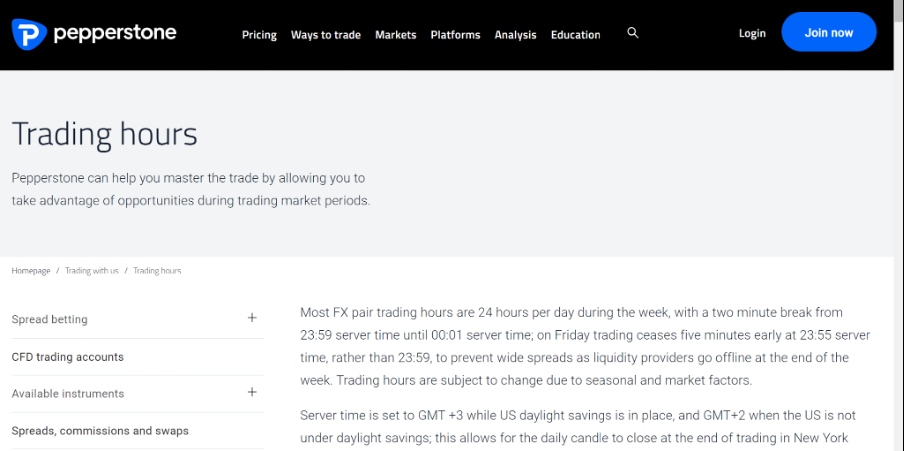
If investors cannot find this on the site, it is worth checking whether our experts at DayTrading.com have reviewed them, as we cover trading hours in our comprehensive broker reviews.
However, some sites may not have this section and finding whether an asset is traded 24 hours may require some detective work. For instance, some binary options platforms will need to be inspected manually to see which assets are available on weekends or outside traditional trading hours.
Comparing Brokers With Access To 24-Hour Trading
When comparing 24-hour brokers, there are several key aspects to consider:
Regulation & Security
A broker regulated by a reputable body such as the FCA or CFTC is highly desirable. These regulators ensure that brokers provide adequate protection to client funds and significantly reduce the chance of fraud.
In addition, additional security measures such as two-factor authentication (2FA) can enhance login security at 24-hour trading brokers.
Traders should verify a broker’s regulatory status directly on the regulator’s website rather than relying solely on the broker’s claims. Unregulated or offshore brokers may advertise 24-hour access, but still offer little recourse if funds are lost or mishandled.
Trading Platforms
Another significant factor when choosing a 24-hour trading broker is the platform(s) supported by the operator. Around the clock investors typically need their platforms to offer expert advisor (EA) or bot integration and be dependable and reliable.
Our experts recommend brokers that support the MetaTrader 4 or 5 platforms, though brokers with 24/7 trading hrs apps can also enable clients to trade around the clock.
Note, the top brokers also offer demo accounts or simulator profiles where you can test a new 24-hour trading platform.
Trading Fees
Trading around the clock should be low-cost through all good brokers, but ensure that there are no additional fees for trading after hours or on weekends. Swaps, or overnight charges, will be a consideration for CFD traders.
In addition, traders should check that a broker’s general fee structure is competitive, with tight spreads and low or zero commissions.
Be aware that spreads often widen by quite a bit during off-peak hours, even if the broker’s headline spread is tight. You see this in futures markets – a 23/5 market – where they widen a lot during low-liquidity hours. The effective cost of trading at 3 AM may be a lot higher than during standard market hours. Also note that some brokers also charge inactivity fees (or impose minimum withdrawal thresholds) that can affect smaller accounts.
Order Types And Execution
Most extended-hours and overnight sessions restrict order types to limit orders only. Market orders are generally not accepted. This means traders need to specify a price and may not get filled if the market moves away. Stop-loss and trailing stop orders also may not execute during overnight sessions on some platforms. This can leave positions unprotected. Be sure to verify which order types are supported during each session before relying on any risk management plan or strategy that depends on automatic execution.
Additional Considerations
Before starting with 24-hour trading, traders should consider several additional things:
Education
While there are no massive differences while trading on a 24-hour market, some 24-hour-specific strategies require additional education. Traders can learn more about the dynamics of around-the-clock markets from books or a 24/7 trading academy.
Day Trading Rules
In certain jurisdictions, there are rules around intra-day trading. Investors that buy and sell in extended or 24-hour markets will want to take note of these regulations.
For example, in the US, the pattern day trading (PDT) rule under FINRA Rule 4210 has historically designated traders who execute four or more day trades within five business days (where those trades represent more than 6% of total trades in the period) as pattern day traders, requiring a minimum account equity of $25,000. Note that this doesn’t apply to markets such as crypto or forex, or to futures trading.
Importantly, the PDT framework is being replaced. In April 2026, the SEC approved FINRA’s overhaul, replacing the fixed $25,000 threshold and PDT designation with a risk-based intraday margin framework. The new rules take effect on 4 June, 2026, although brokerages that need more time have until 20 October, 2027 to fully transition their systems.
This is the first fundamental change to the PDT rule since its adoption in 2001. That said, the existing PDT controls may still apply until a broker has implemented the new framework. Day trades executed during extended or overnight sessions may still affect margin treatment, so traders using 24-hour brokers should check how their platform calculates intraday margin across all sessions.
Bottom Line
Around the clock trading can offer traders several advantages. These significantly benefit investors that live in jurisdictions far away from major trading centres. Instruments such as forex, CFDs, cryptos, and popular options contracts benefit from 24-hour or extended hours.
However, more trading hours doesn’t necessarily mean better outcomes. The drawbacks of lower liquidity, wider spreads, operational risks, and the psychological pressure of a market that never closes are real drawbacks. The majority of retail traders lose money, and longer trading hours may worsen rather than reduce those losses – if not approached with discipline and proper risk management.
Traders often use bots to automate their 24/7 trading strategies, given they can only monitor during certain time windows. However, allowing systems to run unsupervised can be risky.
Another drawback of 24-hour trading is potentially missing market movements outside of your time zone. The US equity market is moving toward near-continuous trading, with Nasdaq, NYSE, and Cboe all pursuing expanded hours. The 24X National Exchange is already operational. This will improve global access. At the same time, traders should approach these changes with realistic expectations about liquidity, execution quality, and the costs of being an active participant in a market that never sleeps.
Use this guide to get started trading around the clock. And head to our list of the best 24-hour trading brokers to find the right platform for your financial goals.
FAQs
Can You Trade Forex 24 Hours A Day?
The forex markets use four overlapping global sessions (three if you combine Asia and Australia into one) to provide 24-hour trading to investors worldwide. Forex trading is possible 24/5 as the markets don’t run on weekends.
The most active trading window is during the London-New York session overlap, approximately 12 PM to 4 PM UTC.
Can You Trade Stocks 24 Hours A Day?
Not yet on traditional exchanges, but this is changing. Major exchanges in the US, UK, Europe and Asia run long pre-market and after-hours sessions, which allows market participants who trade with supporting brokers to trade up to 16 hours per day. Nasdaq has filed with the SEC to launch 23-hour weekday trading, and the NYSE and 24X National Exchange are pursuing similar expansions. If approved, near round-the-clock equity trading could become widely available soon and a normal part of markets.
Is 24-Hour Trading Possible For Options?
Some options markets are available nearly 24 hours a day. Cboe currently offers near 24/5 trading on SPX, VIX, XSP, and RUT index options through its Global Trading Hours (GTH) sessions. That said, the majority of equity and ETF options still trade only during regular exchange hours.
The main criticism is the lack of liquidity makes trading difficult outside market hours. Some of the world’s most liquid stocks have thin liquidity outside market hours, and options are much less liquid.
Can 24-Hour Trading Markets Get Halted?
A trading halt can occur on the 24-hour forex or others markets due to high volatility or additional market circumstances. Crypto markets can also be halted due to blockchain updates, maintenance or unexpected outages. For US equities, market-wide circuit breakers (which pause trading after large index declines based on certain rules) would apply during extended hours. Individual stock halts for news or volatility can also occur during any trading session.
Is A Day Trade Within 24 Hours?
Per FINRA rules, a day trade is defined as a security purchased and sold within the same trading day. This definition is generally accepted in most major trading jurisdictions. Trades executed during extended or overnight sessions still count as day trades if the buy and sell occur on the same trade date. Note that under Nasdaq’s proposed overnight session structure, trades placed between 9 PM and midnight would be recorded as the following calendar day’s transactions.
Can I Trade Futures 24 Hours A Day?
Most major futures contracts on the CME Group, including equity index futures (ES, NQ, YM), commodities (crude oil, gold, natural gas, and various others), bond futures (mostly sovereign debt, though some corporate debt exists here too), and currency futures, trade nearly 24 hours a day from Sunday 6 PM ET through Friday 5 PM ET. They have a one-hour daily maintenance break from 5 PM ET to 6 PM ET on weekdays.
This makes futures one of the best ways to access around-the-clock trading. Futures are also exempt from the pattern day trading rule, so this makes them an option for active traders with smaller accounts.
Is 24-Hour Trading Riskier Than Regular Hours Trading?
Trading outside of core market hours carries additional risks. Liquidity is typically lower, bid-ask spreads are wider, and price volatility can be higher. Most extended-hours sessions only accept limit orders, which may not fill at desired prices. Stop-loss orders may not execute on some platforms during overnight sessions. The extended market access also makes it easier to overtrade, which behavioral finance research consistently links to lower net returns for retail investors. Traders should approach extended-hours trading with clear risk management rules and realistic expectations.
Watching transaction costs due to wider spreads is critical.
What Is The 24X National Exchange?
The 24X National Exchange is the first national securities exchange approved by the SEC to offer 23-hour weekday trading of US equities. It launched on October 14, 2025, initially offering trading from 4 AM to 8 PM ET. The exchange plans to expand to full 23/5 hours (8 PM ET Sunday through 8 PM ET Friday, with a daily one-hour maintenance break) in the second half of 2026. It’s pending final regulatory approvals and market infrastructure alignment. The platform is powered by MEMX Technologies and operates under full SEC oversight.