




Are you an Aussie looking for a secure online trading environment? If so, choosing a broker regulated by the Australian Securities & Investments Commission (ASIC) is a vital first step.
Since launching in 1991, it’s proven a robust financial regulator, increasingly holding brokers to a high standard, adding an Investor Alert List, and securing ‘green tier’ status in DayTrading.com’s Regulation & Trust Rating.
Day trade with an ASIC-regulated broker and you can expect:
- Segregation of client funds through firms like Commonwealth Bank of Australia to prevent brokerage misuse.
- Risk transparency for informed decision-making, including the percentage of losing clients CFD trading.
- Execution transparency for competitive and fair deal execution that’s essential for short-term trading.
- Negative balance protection to prevent losses for retail investors beyond their initial investment.
- Strict leverage limits to minimize risk, notably 1:30 for major forex pairs like AUD/USD.
- Dispute resolution through the Australian Financial Complaints Authority (AFCA).
Best ASIC Brokers
Since evaluating AvaTrade, our first ASIC-regulated broker in 2017, we’ve personally tested 143 trading platforms, and these 6 stand out as the superior options if you want an ASIC broker in October 2026:
-
- Demo account
- Regulator: ASIC, VFSC, FSA
- Platforms: MT4, MT5, cTrader, TradingView, DupliTrade
-
- Demo account
- Instruments: CFDs, Forex, Indices, Shares, Commodities
- Regulator: ASIC, CySEC, FSCA, FSC
-
- Demo account
- Regulator: ASIC, CySEC, FSCA, BVI FSC
- Platforms: Web Platform, MT4, MT5, TradingCentral
-
- Demo account
- Regulator: FCA, ASIC, FSCA, VFSC, CIMA
- Min. deposit: $50
-
- Demo account
- Regulator: ASIC, CySEC, FSA, FSCA, FSC, SCB, CMA-Kenya
- Min. deposit: $0
-
- Demo account
- Regulator: ASIC, CySEC, JSC, FSA, CMA-Kenya
- Platforms: MT4, MT5






Learn how we test brokers and why you can trust our ratings.
Here is a summary of why we recommend these brokers in October 2026:
- Fusion Markets 4.6/5 Fusion Markets is an online broker established in 2017 and regulated by the ASIC, VFSC and FSA. It is best known for its low-cost forex and CFD trading, although its multiple account types and copy trading solutions cater to a range of traders. New clients can sign up and start trading in 3 easy steps.
- FBS 4.3/5 Founded in 2009, FBS is an award-winning CFD broker operating in over 150 countries with a client base exceeding 27 million traders. Traders are supported at every stage of their journey with 24/7 assistance, market analytics, trading calculators, and competitive pricing with zero commissions.
- Markets.com 4.4/5 Established in 2008, Markets.com is a long-standing, multi-regulated broker with oversight from the CySEC and FSCA. It offers unique features to track hedge fund moves and insider trades, while providing stock signals to alert traders to market opportunities. Its choice of accounts (Classic to Professional) caters to all levels of active trader. 72.3% of retail accounts lose money.
- Vantage 4.7/5 Founded in 2009, Vantage offers trading on 1000+ short-term CFD products to millions of clients. You can trade Forex CFDs from 0.0 pips on the RAW account through TradingView, MT4 or MT5. Vantage is ASIC-regulated and client funds are segregated. Copy traders will also appreciate the range of social trading tools.
- FP Markets 4.2/5 Established in 2005 in Australia, FP Markets is an ASIC- and CySEC-regulated broker boasting an extensive suite of tradable assets. Its Standard and Raw accounts cater to day traders at every level, while it packs a punch in the tooling department, from the MetaTrader suite and intuitive TradingView to actionable trading ideas from Trading Central and AutoChartist.
- Ingot Brokers 4.3/5 Ingot Brokers is a multi-regulated brokerage established in 2006. The broker offers CFD trading opportunities on 1000+ instruments including forex, stocks, indices, commodities and cryptocurrencies. The broker supports the MetaTrader 4 and MetaTrader 5 platforms and offers both raw spreads and commission-free account options.
ASIC Brokers Comparison
| Broker | ASIC Regulated | AUD Account | Minimum Deposit | Markets | Platforms | Leverage |
|---|---|---|---|---|---|---|
| Fusion Markets | 1 | ✔Yes | $0 | CFDs, Forex, Stocks, Indices, Commodities, Crypto | MT4, MT5, cTrader, TradingView, DupliTrade | 1:500 |
| FBS | 1 | ✔Yes | $5 | CFDs, Forex, Indices, Shares, Commodities | FBS App, MT4, MT5 | 1:3000 |
| Markets.com | 1 | ✔Yes | $200 | CFDs, Forex, Stocks, Commodities, Indices, Crypto, ETFs, Bonds | Web Platform, MT4, MT5, TradingCentral | 1:500 |
| Vantage | 1 | ✔Yes | $50 | CFDs, Forex, Stocks, Indices, Commodities, ETFs, Bonds | ProTrader, MT4, MT5, TradingView, TradingCentral, DupliTrade | 1:500 |
| FP Markets | 1 | ✔Yes | $0 | CFDs, Forex, Stocks, Indices, Commodities, Bonds, ETFs, Crypto | Iress, MT4, MT5, cTrader, TradingView, AutoChartist, TradingCentral | 1:30 (UK), 1:500 (Global) |
| Ingot Brokers | 1 | ✔Yes | $10 | CFDs, Commodities, Stocks, Indices, ETFs, Forex, Cryptocurrencies | MT4, MT5 | 1:500 |
Community Sentiment
See how users rate these brokers based on the average customer ratings submitted on DayTrading.com, plus ratings from Trustpilot, the Apple App Store and Google Play.
| Broker | Our Users' Rating | Trustpilot Score | Trustpilot Reviews | iOS App Rating | Android App Rating |
|---|---|---|---|---|---|
| Fusion Markets | 9999 | ||||
| FBS | 10166 | ||||
| Markets.com | 1257 | ||||
| Vantage | 15581 | ||||
| FP Markets | 10349 | ||||
| Ingot Brokers | 56 |
Fusion Markets
Fusion Markets is a standout option for forex traders looking for excellent pricing with spreads near zero, industry-low commissions and recently TradingView integration. It’s a particularly good broker for Australian traders where the company is headquartered and regulated by the ASIC.
 Jemma Grist, Reviewer
Fusion Markets quick facts
- Demo Account
- ✔Yes
- Instruments
- CFDs, Forex, Stocks, Indices, Commodities, Crypto
- Regulator
- ASIC, VFSC, FSA
- Platforms
- MT4, MT5, cTrader, TradingView, DupliTrade
- Minimum Deposit
- $0
- Minimum Trade
- 0.01 Lots
- Account Currencies
- USD, EUR, GBP, CAD, AUD, NZD, JPY, CHF, HKD, SGD
Pros
- Fusion Markets offers best-in-class support with very fast, friendly and helpful responses during tests and no frustrating automated chatbot to navigate.
- The range of charting platforms and social trading features is excellent, with MT4, MT5, cTrader and more recently TradingView, catering to a wide range of trader preferences.
- Fusion Markets is set up to support algo traders with a sponsored VPS solution and a 25% discount if you opt for the NYC Servers VPS for MT4 or cTrader.
Cons
- There is no proprietary trading platform or app built with beginners in mind, a notable drawback compared to AvaTrade.
- Traders outside of Australia must sign up with weakly regulated global entities with limited safeguards, though in August 2026 they made negative balance protection available to all eligible accounts.
- Fusion Market trails alternatives, notably IG, in the education department with limited guides and live video sessions to upskill new traders.
FBS
FBS is an excellent choice for day traders at every level and budget, with just a $5 minimum deposit and intensive academy for aspiring traders alongside access to MT4 and MT5.
 Christian Harris, Reviewer
FBS quick facts
- Demo Account
- ✔Yes
- Instruments
- CFDs, Forex, Indices, Shares, Commodities
- Regulator
- ASIC, CySEC, FSCA, FSC
- Platforms
- FBS App, MT4, MT5
- Minimum Deposit
- $5
- Minimum Trade
- 0.01 Lots
- Account Currencies
- USD, EUR, AUD, JPY
Pros
- The introduction of the FBI Assistant has given active traders useful, AI-powered intelligence to assess charts and patterns with potential trade ideas that can be executed in one click.
- 24/7 customer support that performed excellently during testing is available, alongside a $5 minimum deposit, and a huge variety of 200+ funding options, making it ideal for traders with small accounts.
- FBS offers lightning-fast execution speeds from just 10 milliseconds, placing it among the industry leaders for highly active traders like scalpers who demand rapid order processing.
Cons
- Although the FBS app offers a terrific mobile trading experience for aspiring traders and MT4/MT5 cater to advanced traders, the absence of cTrader and TradingView, which are increasingly offered by alternatives like Pepperstone, will deter day traders familiar with these platforms.
- There are only four base currencies available - EUR, USD, AUD and JPY (region dependant) - which isn't practical for minimizing currency conversion fees for many global traders, and is especially striking given the broker’s user base spans over 150 nations.
- Despite enhancing the selection of currency pairs, now providing over 70, FBS still trails industry leaders like BlackBull Markets in its market offering with a particularly narrow selection of commodities and indices.
Markets.com
Markets.com is best suited to retail investors who trade frequently but don’t want to calculate commissions, thanks to its spread-only pricing (EUR/USD around 1.3 pips). It especially appeals to short-term traders who value fast execution, flexible asset choice spanning 2,200+ instruments and proprietary tools like hedge fund confidence indices and insider trade alerts.
Christian Harris, Reviewer
Markets.com quick facts
- Demo Account
- ✔Yes
- Instruments
- CFDs, Forex, Stocks, Commodities, Indices, Crypto, ETFs, Bonds
- Regulator
- ASIC, CySEC, FSCA, BVI FSC
- Platforms
- Web Platform, MT4, MT5, TradingCentral
- Minimum Deposit
- $200
- Minimum Trade
- 0.01 Lots
- Account Currencies
- USD, EUR, GBP, AUD, ZAR, SEK, NOK, DKK, CHF, PLN, CZK
Pros
- Markets.com provides commission-free trading on most assets with spreads starting from around 0.6 pips on major forex pairs, making it cost-effective for casual traders.
- Within the 2,200+ CFDs, Markets.com offers thematic baskets like the Warren Buffett Blend and Cannabis Blend, which behaved like ready-made mini-ETFs during testing, saving the work of balancing weights manually.
- Switching between the proprietary web platform (great for alerts and quick analysis) and MT5 (strong for algorithmic EAs) was smooth in our tests; positions synced across desktop, web, and mobile without gaps or re-quotes.
Cons
- The proprietary web platform felt a bit basic once we pushed into advanced charting with fewer drawing/indicator options than full TradingView or MetaTrader.
- While CySEC and FSCA oversight is solid, the SVGFSA and BVIFSC entities offers 1:500 leverage under a light-touch framework, meaning protections like compensation schemes and strict conduct rules lag behind the strictest regulatory standards.
- During sign-up, we hit unclear account type explanations and got stuck in an email verification loop that locked us out for an hour - way less streamlined than other brokers we’ve tested.
Vantage
Vantage remains an excellent option for CFD traders seeking a tightly-regulated broker with access to the reliable MetaTrader platforms. The fast sign-up process and $50 minimum deposit make it very straightforward to start day trading quickly.
Jemma Grist, Reviewer
Vantage quick facts
- Demo Account
- ✔Yes
- Instruments
- CFDs, Forex, Stocks, Indices, Commodities, ETFs, Bonds
- Regulator
- FCA, ASIC, FSCA, VFSC, CIMA
- Platforms
- ProTrader, MT4, MT5, TradingView, TradingCentral, DupliTrade
- Minimum Deposit
- $50
- Minimum Trade
- 0.01 Lots
- Account Currencies
- USD, EUR, GBP, CAD, AUD, NZD, JPY, HKD, SGD, PLN
Pros
- The app was upgraded in 2026 with wider asset visibility bringing together balances across Contract, Copy, and Funding accounts on one screen
- The broker has made efforts to expand its suite of CFDs providing further trading opportunities
- It’s quick and easy to open a live account – taking less than 5 minutes
Cons
- It's a shame that some clients will need to register with the offshore entity, which offers less regulatory protection
- A steep $10,000 deposit is needed for the best trading conditions, which include the $1.50 commission per side
- The average execution speeds of 100ms to 250ms are slower than alternatives based on tests
FP Markets
FP Markets strikes an ideal balance between affordability and quality for active traders. They’ve managed to keep trading costs low while expanding their investment offering, charting tools, and research features, all while providing excellent support you can rely on for urgent trading queries.
Christian Harris, Reviewer
FP Markets quick facts
- Demo Account
- ✔Yes
- Instruments
- CFDs, Forex, Stocks, Indices, Commodities, Bonds, ETFs, Crypto
- Regulator
- ASIC, CySEC, FSA, FSCA, FSC, SCB, CMA-Kenya
- Platforms
- Iress, MT4, MT5, cTrader, TradingView, AutoChartist, TradingCentral
- Minimum Deposit
- $0
- Minimum Trade
- 0.01 Lots
- Account Currencies
- USD, EUR, GBP, CAD, AUD, NZD, JPY, CHF, HKD, SGD
Pros
- FP Markets offers a superb selection of tradable assets, especially since expanding its suite of commodities and supporting over 10,000 stocks.
- With MetaTrader, cTrader, Iress and more recently TradingView, FP Markets is one of the most accommodating brokers in terms of platform choice.
- FP Markets delivers fast and dependable support, available 24/5 with average response times of less than 1 minute during testing.
Cons
- FP Markets’ Iress platform is only available to clients in Australia. It also primarily emphasizes stock trading over forex trading, and data fees can accumulate rapidly unless you're an active trader or maintain a high-balance account.
- Although Traders Hub provides rich research, notably the Daily Report, Technical Report, Market Insights, and Fundamental Analysis, it needs to widen its daily content variety and keep its forex news updated to match category leaders like IG.
- While pricing in the Raw account is excellent, spreads in the Standard account trail the cheapest brokers with a 1.1-pip average spread on the EUR/USD compared to the 0.8-pip average at IC Markets.
Ingot Brokers
Ingot Brokers is a good choice for day traders looking for a no-frills broker with a wide range of instruments. Experienced traders will appreciate access to the advanced MT5 platform, although beginners may be disappointed in the lack of educational resources.
 William Berg, Reviewer
Ingot Brokers quick facts
- Demo Account
- ✔Yes
- Instruments
- CFDs, Commodities, Stocks, Indices, ETFs, Forex, Cryptocurrencies
- Regulator
- ASIC, CySEC, JSC, FSA, CMA-Kenya
- Platforms
- MT4, MT5
- Minimum Deposit
- $10
- Minimum Trade
- 0.01 Lots
- Account Currencies
- USD, EUR, GBP, AUD
Pros
- Traders can access the market-leading MT4 and MT5 platforms, collectively offering dozens of advanced technical indicators and charting tools for detailed analysis
- Ingot Brokers holds multiple regulatory licenses, including two from the top-tier regulators, ASIC and CySEC
- Ingot Brokers offers a copy trading service with passive income opportunities for experienced strategy providers
Cons
- The ECN account offers fewer assets than the other account types
- The range of 30+ currency pairs is below the industry average and won’t be sufficient for serious forex traders
- Despite improvements in the Resources Hub, the broker’s education and market research still trail many competitors
Methodology
To pinpoint the top trading platforms regulated by the ASIC, we:
- Took our evolving directory of 143 brokers to find those claiming ASIC authorization.
- Ran their details through ASIC Connect to confirm they are indeed authorized.
- Combined the results with findings from our own tests and 200+ data entries to rank the best ASIC brokers.
How Can I Check If My Broker Is Regulated By ASIC?
To confirm if your brokerage is ASIC-regulated, follow these simple steps:
- Visit the ASIC Connect Website: Go to ASIC Connect and click “Search our registers.”
- Choose the prompt “Search ASIC’s registers”: This option opens a new window which allows you to search specifically for brokers and financial services providers authorized to operate in Australia.
- Identify the brokerage: In the new page/window below enter the broker’s name, company name, or AFS licence number if you have it. This will help you pull up the provider’s details.
- Verify their status and details: Check that the broker’s name matches and that their licence status is “Registered” or “Active.” This indicates they are currently regulated by ASIC. You’ll also see their licence conditions and any disciplinary actions, if applicable.
- Check the details on your broker’s website: A legitimate ASIC-regulated broker will often display their licence number on their website (usually in the footer). Cross-reference this number with the ASIC register to make sure it’s valid and active.
Broker Verification Example
I’ll walk you through how I searched IC Markets.
Established in 2007, IC Markets has a reputation as one of Australia’s longest-serving and most reputable brokers. Still, it only took a few minutes to verify they were ASIC-regulated and immediately delivered peace of mind.
I visited ASIC Connect and clicked “Search our registers”. Then I selected the “Australian Financial Services Licensee” Register to ensure I was definitely searching for financial services providers licensed to operate in Australia.
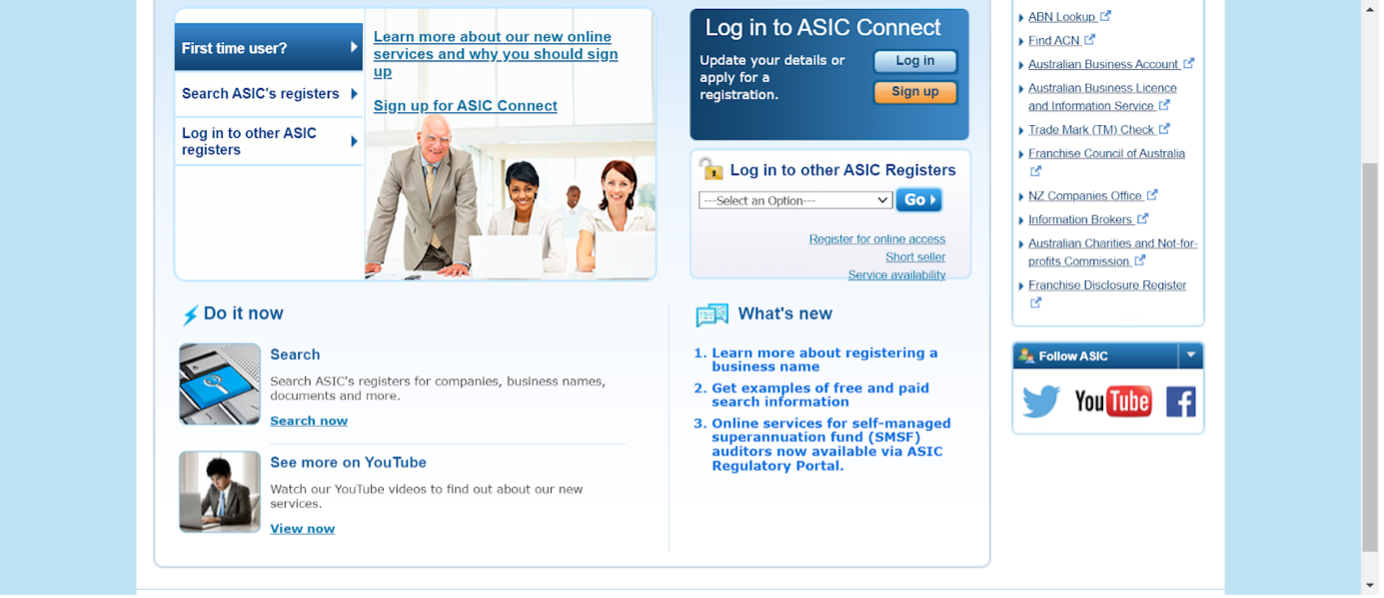
A new website window opened. I searched for IC Markets by entering “IC Markets” or their legal name, “International Capital Markets Pty Ltd,” into the search bar.
I could have also used their Australian Financial Services (AFS) licence number, which is 335692.
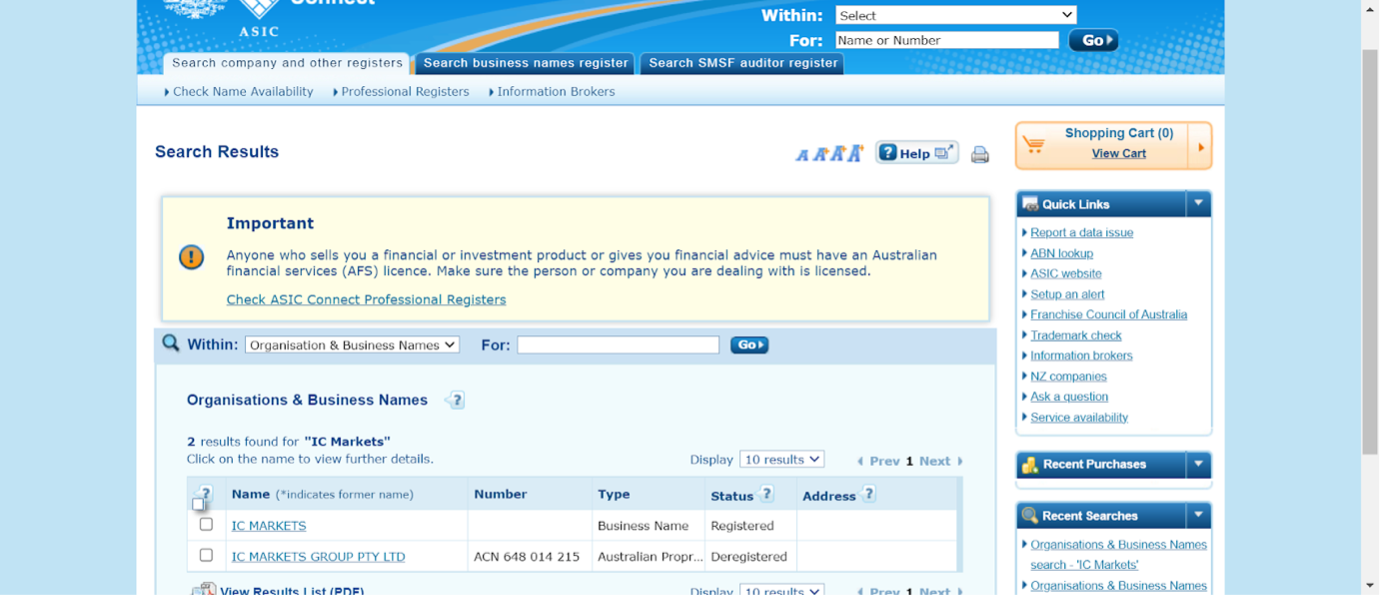
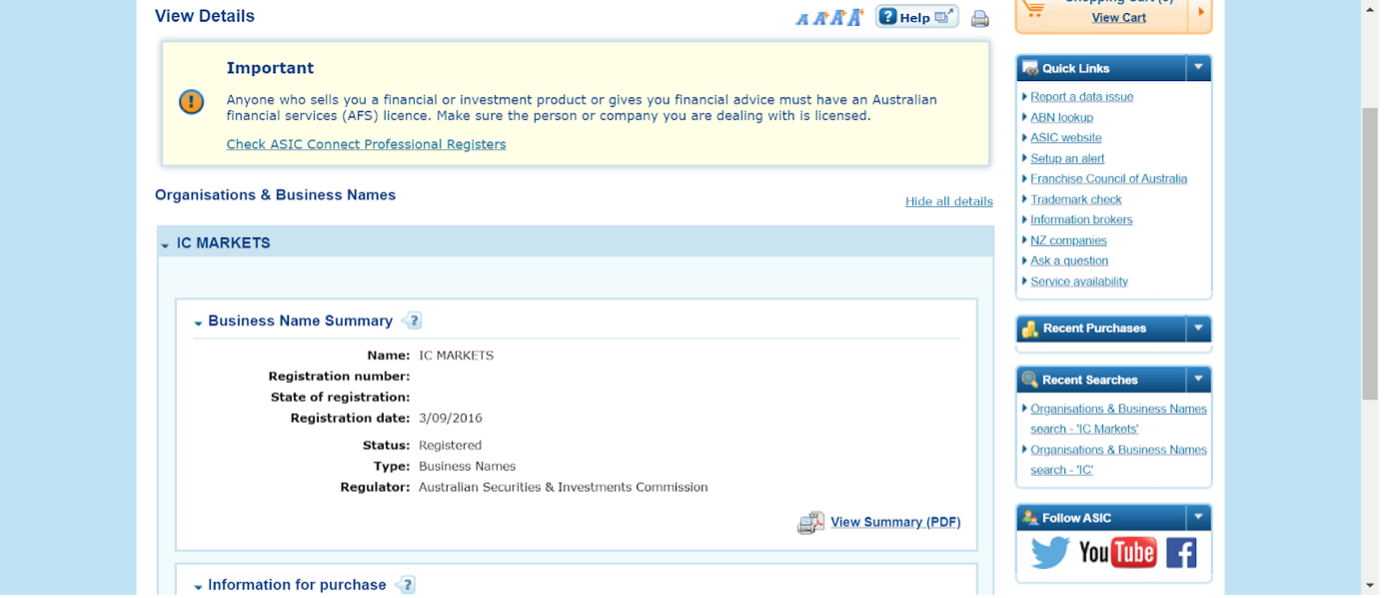
I checked the registration status and saw that International Capital Markets Pty Ltd is registered with ASIC. I verified the licence status to ensure it was “Registered” or “Active,” confirming that ASIC regulates them.
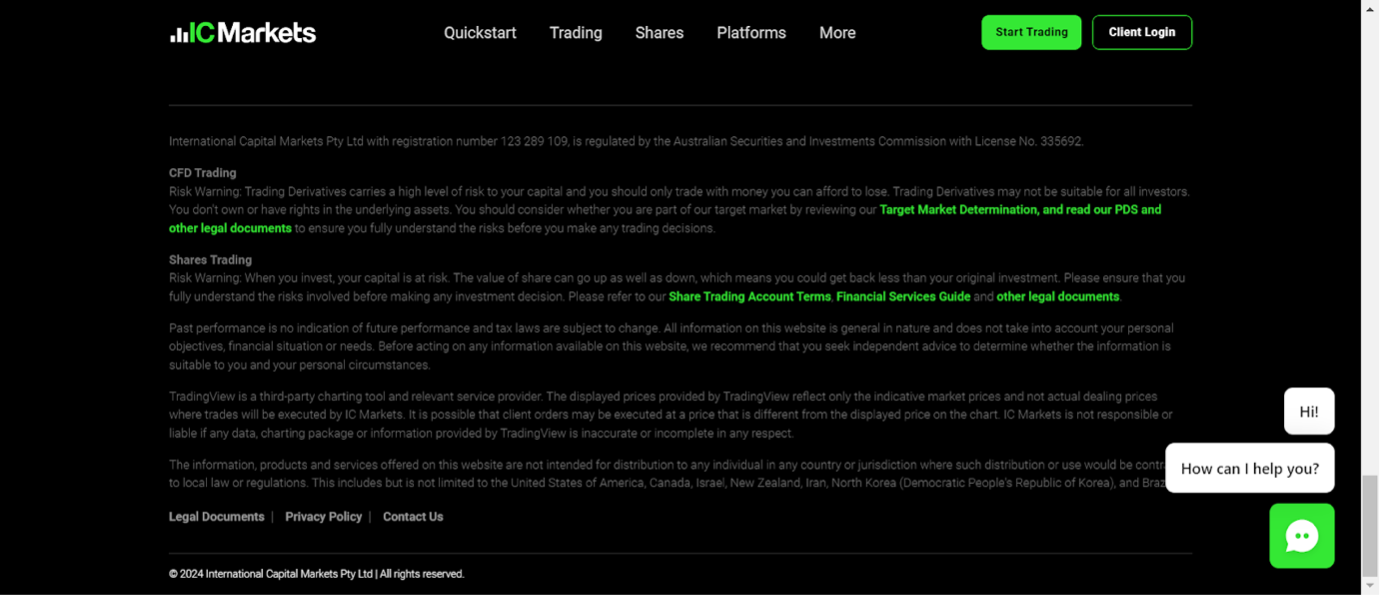
Finally, I cross-checked the Information on IC Markets’ website by scrolling to the footer, where they display their ASIC licence number.
I verified that the number matched the one I found on the ASIC register (335692), ensuring the broker I’m dealing with is indeed the one regulated by ASIC.
What Is The ASIC?
The Australian Securities and Investments Commission (ASIC) was established in 1991 under the Australian Securities and Investments Commission Act to promote fair and transparent financial markets across Australia.
Following a string of corporate collapses and rising financial misconduct, Australia needed a single body with comprehensive regulatory powers to oversee financial markets. ASIC was born to fill that gap.
ASIC’s powers are broad. It licences financial services businesses and enforces compliance with the Corporations Act, which regulates how companies operate, report, and engage with investors.
ASIC also investigates complaints, such as those from retail traders, and has the authority to prosecute misconduct, impose fines, and even deregister businesses that break the rules.
ASIC’s core mission is consumer protection, ensuring everyone, from individual investors to large corporations, have a fair shot in a secure financial system.
By holding companies like online brokers accountable, ASIC aims to protect consumers, prevent fraud, and maintain trust in the Australian financial market.
 Paul HolmesAuthor
What Powers Does ASIC Have?
ASIC has a range of powerful tools to enforce financial laws and keep Australia’s markets in check:
- Licensing Power: ASIC issues licences to financial service providers and credit providers, ensuring that only qualified and compliant businesses can operate. Brokers cannot legally provide financial services in Australia without an ASIC licence.
- Investigative Power: ASIC has the authority to investigate any suspected misconduct or breach of financial laws. It can gather evidence, interview witnesses, and demand records from individuals or businesses if there’s reasonable suspicion of wrongdoing.
- Enforcement Power: If ASIC finds misconduct, it can take several actions: issuing fines, suspending or revoking a licence, and imposing penalties. In more serious cases, it can pursue civil or criminal charges, leading to court proceedings.
- Regulatory Power: ASIC sets and enforces standards for company conduct, corporate governance, financial reporting, and disclosures. It can impose conditions on business operations and make sure companies follow ethical and legal guidelines.
- Banning and Disqualification: ASIC can ban individuals from managing companies or providing financial services if they’re found to be dishonest or unethical. This prevents repeat offenders from staying in the industry.
- Consumer Protection Initiatives: ASIC actively creates and enforces policies to protect consumers. It can demand that brokers improve their practices, disclose clearer information, and stop offering risky or misleading products.
What Rules Must An ASIC Broker Follow?
Brokers regulated by ASIC must follow strict rules to maintain transparency, protect consumers, and ensure ethical behaviour in the financial markets.
- Licensing and Authorization: Brokers must hold an Australian Financial Services (AFS) licence to operate legally. To obtain and maintain this licence, they must meet ASIC’s criteria, including financial stability, qualifications, and competency standards.
- Client Money Handling: Brokers are required to keep client funds separate from company funds, holding them in segregated accounts. This helps protect client funds from being used for business operations or other improper purposes.
- Disclosure Obligations: Brokers must provide clients with clear, upfront information about their products, services, fees, and potential risks. This includes issuing a Product Disclosure Statement (PDS) so clients understand what they’re getting into.
- Compliance With Market Conduct Standards: ASIC trading platforms must operate honestly and fairly, avoiding deceptive practices like price manipulation, insider trading, or false advertising. They’re expected to follow high ethical standards and maintain market integrity.
- Risk Warnings: Brokers must provide transparent risk warnings, especially for high-risk products like CFDs which are popular with day traders. This means clients are informed of potential losses, not just potential gains before they start trading.
- Financial Reporting and Auditing: ASIC requires brokers to submit regular financial reports, proving their financial health and compliance. ASIC may also conduct audits to verify the broker’s practices and ensure ongoing adherence to rules.
- Client Dispute Resolution: ASIC mandates that brokerages have a transparent dispute resolution process in place. They must be part of an external dispute resolution scheme, such as the Australian Financial Complaints Authority (AFCA), to address client complaints promptly.
- Ongoing Training and Development: Brokers must ensure their representatives are properly trained and qualified to give financial advice. This rule ensures that clients receive reliable and accurate information and advice.
How Does ASIC Protect Active Traders?
CFD trading in Australia is very popular with active traders, and ASIC has stepped up its restrictions on brokers offering these products in recent years to protect retail investors:
- Leverage Limits: ASIC limits the amount of leverage brokers can offer retail traders. For example, the maximum leverage for major forex pairs is capped at 1:30. For cryptocurrencies, it’s 1:2. This reduces the risk of significant losses by preventing traders from borrowing excessively to fund their trades.
- Negative Balance Protection: ASIC mandates that brokers provide negative balance protection, meaning traders can’t lose more money than initially invested. If a trade goes against a client significantly, their account won’t fall into a negative balance, preventing debt above the initial investment.
- Standardised Risk Warnings: ASIC requires brokers to display clear, standardized risk warnings on CFD products. This ensures that traders know the risks involved, including the high probability of losses, and can make informed decisions before entering the market.
- Margin Close-Out Rules: To prevent excessive losses, ASIC enforces a margin close-out rule. If a trader’s funds fall to 50% of the required margin, the broker must close out the trade automatically. This helps prevent traders from sustaining more substantial losses than necessary.
- Ban on Inducements: ASIC prohibits brokers from offering incentives like bonuses, cash rebates, or “free” trading schemes to attract CFD traders. This discourages brokers from using high-pressure sales tactics or enticing promotions to bring in less-informed traders.
- Enhanced Disclosures: ASIC requires brokers to provide detailed disclosures on CFD products, including information on trading fees, spreads, risks, and how CFDs work. This transparency helps traders understand all aspects of CFD trading, not just the potential rewards.
Has ASIC Fined Any Brokers?
While ASIC may occasionally be criticised for not acting fast enough in some cases, it has a strong track record of enforcement and has acted against several brokers for various regulatory breaches over the years. Essentially, ASIC has increasingly big teeth.
Here are some notable examples where it has flexed its regulatory muscles:
- Interactive Brokers (2023): ASIC took action against the Australian branch of Interactive Brokers, levying a $832,500 fine for negligent and reckless conduct related to suspicious trading by a client.
- Openmarkets (2023): ASIC handed out a $4.5 million fine to Openmarkets for failing to have suitable systems for identifying whether the orders of a client were intended to manipulate prices or create a false impression of active trading.
- Forex Capital Trading (2020): ASIC fined Forex CT $20 million for various breaches, notably unconscionable conduct, conflicted remuneration for sales staff, and failure to act in its clients’ best interests.
Bottom Line
Year after year, ASIC introduces and enforces strict safeguards that online brokers must follow, with the aim of protecting retail investors.
Verifying that a broker is ASIC-regulated is a crucial step to protect your investments and ensure you’re dealing with a reputable and compliant company.
To get started, check out DayTrading.com’s pick of the best ASIC-regulated day trading brokers.
Article Sources
- Australian Securities & Investments Commission (ASIC)
- Australian Financial Complaints Authority (AFCA)
- Australian Securities and Investments Commission Act
- Australian Financial Services (AFS) Licence
- Product Disclosure Statement (PDS)
- ASIC Warns Brokers Considering High-Risk Offers To Retail Investors
- Corporations Act
- Investor Alert List
- ASIC Connect
- Interactive Brokers - ASIC Fine
- Openmarkets - ASIC Fine
- Forex CT - ASIC Fine
The writing and editorial team at DayTrading.com use credible sources to support their work. These include government agencies, white papers, research institutes, and engagement with industry professionals. Content is written free from bias and is fact-checked where appropriate. Learn more about why you can trust DayTrading.com