


NAGA Review 2026


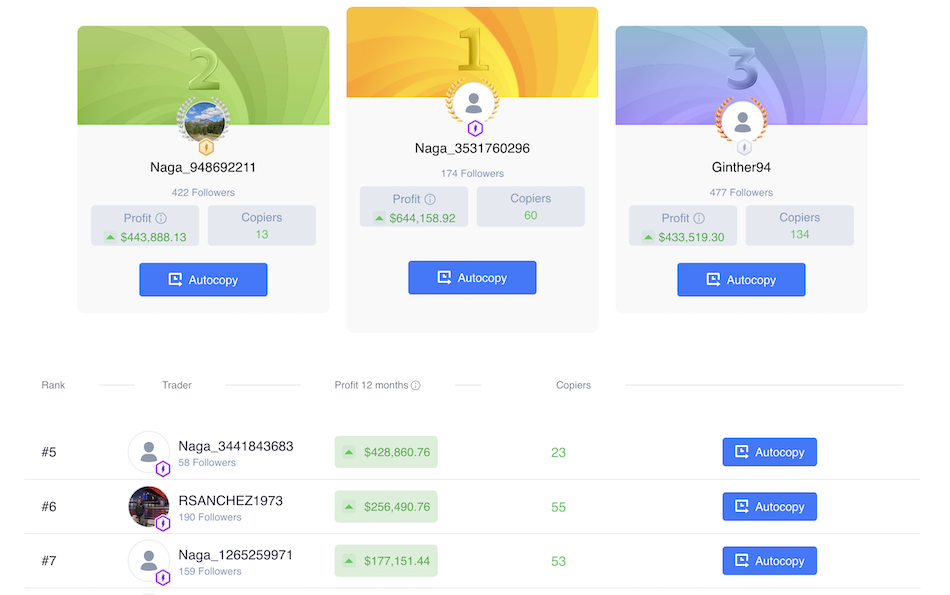
NAGA is a snug fit for beginners who like to learn by watching others, delivering a more advanced social trading network than the majority of CFD brokers, featuring a leaderboard with top traders by profit and win rate, and a one-tap autocopy function in the platform and app that’s a standout.
Rating breakdown
Key facts
- Minimum deposit
- $10-$250 (location and tier dependent)
- Regulators
- CySEC, FSCA, FSA, ADGM/FRSA
- Trading platforms
- NAGA Platform, NAGA App, MT4, MT5, TradingView, TradingCentral
- Instruments
- CFDs on Forex, Indices, Shares, Commodities, Crypto, Real Stocks and Futures
- Account currencies
- USD, EUR, GBP, PLN
- Payment options
- 20+ payment methods depending on country of residence
Pros
- The copy-trading feature is the main reason to open a NAGA account, and it’s more advanced than what most CFD brokers offer. You can check a leaderboard of top traders by profit and win rate, then automatically copy their trades in the same app - only eToro offers something similar.
- NAGA Group AG, the parent company, is listed on the Frankfurt Stock Exchange and publishes audited financial statements. This level of transparency is not available with privately held offshore brokers.
- During testing, we were approved to begin trading very quickly; after we provided our ID and proof of address, approval was granted the next business day, and the onboarding process included a suitability questionnaire — a responsible step that some brokers fail to include.
- NAGA stands out among social brokers for its wide range of assets, offering over 4,000 tradable options. These include forex pairs, stock, ETF, and index CFDs, commodity CFDs, crypto, and even exchange-traded futures, which are rare for retail clients.
Cons
- NAGA’s pricing structure is tough on smaller accounts. There’s only one account type, but it has six tiers based on your deposit. The EUR/USD spread is about 1.7 pips at the Iron tier and drops to a competitive 0.9 pips at Diamond ($50,000 deposit) or 0.7 pips at Crystal ($100,000 deposit).
- The $50 monthly inactivity fee is on the high end of the scale. It kicks in after two months of no activity, not every quarter like some brokers. If your balance falls below $50 while your account is inactive, NAGA takes whatever is left and closes your account.
- There are neither Raw nor ECN accounts available; the only means of securing competitive spreads is to advance through the VIP ladder by making a deposit of five figures, so traders who are sensitive to costs or who trade frequently must commit a large sum.
- The 1:30 leverage limit only applies to clients in the EU (under CySEC) and the GCC (through Abu Dhabi’s ADGM). Clients from LATAM, Asia, and Africa use the Seychelles or FSCA entities, where leverage can go up to 1:1000 and there’s no compensation scheme. This mix of high leverage and little protection is a risk, along with concerns about its suspended Trustpilot score in 2026.
NAGA review
This NAGA review goes beyond the marketing – we opened a live account and traded major forex pairs, gold, indices, and stock CFDs during key sessions. These included the London/New York overlap, times when US economic data is released, and the quieter Asian hours when spreads tend to widen.
We also tested the features NAGA promotes most: the social feed and the copy trading tool, which lets you copy trades from other members. Here’s what we found and how its offering shapes up to competitors with similar offerings and copy trading tools.
Regulation & Trust
NAGA is averagely trusted. One positive aspect is that the parent company is listed on the Frankfurt Stock Exchange and publishes audited financial statements, which gives it a real advantage in terms of transparency.
However, the European division reached an agreement with CySEC for €150,000, announced at the end of 2023, regarding possible deficiencies between January 2021 and April 2022 in the areas of authorization criteria, client disclosure, suitability and appropriateness checks, best execution, and product intervention rules. However, it’s worth noting this was under previous management.
The current form of NAGA is the result of a 2024 reverse merger in which the owners of the parent company of Capex.com, Key Way Group, acquired about 75% of the merged company.
Regulatory Entities and Safeguards
NAGA includes a number of regulated branches, and, just as with any broker with several entities, the one that holds your account determines the extent of the protection you have. The green to red classifications below are based on DayTrading.com’s regulator bandings.
NAGA Markets Europe Ltd (CySEC)
- Entity URL: https://naga.com/eu
- Verify License: 204/13
- Regulator Classification: Cyprus Securities and Exchange Commission (CySEC) (green-tier — strong safeguards)
- Protections: Operating under MiFID II, this entity provides EEA clients with segregated funds, negative-balance protection, and Investor Compensation Fund coverage of up to €20,000. Leverage is capped in line with ESMA — 1:30 on major FX, scaling down by asset class.
- Who Gets Signed Up Under This Entity: EEA-based clients, excluding Belgium
Key Way Markets Ltd (ADGM/FSRA)
- Entity URL: https://naga.com/ae
- Verify License: 190005
- Regulator Classification: Abu Dhabi Global Market Financial Services Regulatory Authority (FSRA) (yellow-tier — moderate safeguards)
- Protections: The FSRA is a credible regulator with meaningful conduct and capital requirements. Retail leverage is capped at 1:30 on major FX in line with ESMA-style limits, with elected professional clients able to reach up to around 1:300. Segregated funds and negative balance protection apply. There’s no investor compensation fund, so clients have no defined payout ceiling if the firm becomes insolvent, but operational standards sit above offshore-light regulators. This is NAGA’s home for GCC traders: it carries ADGM-regulated UAE and Saudi regional stocks and puts swap-free Islamic accounts front and center.
- Who Gets Signed Up Under This Entity: UAE and, across the GCC and wider Middle East, clients served under the Abu Dhabi entity
JME Financial Services (Pty) Ltd (FSCA, South Africa)
- Entity URL: https://naga.com
- Verify License: 37166
- Regulator Classification: Financial Sector Conduct Authority (FSCA) (yellow-tier — moderate safeguards)
- Protections: Held via the CAPEX side of the group, the FSCA authorization provides conduct oversight and segregated funds for South African clients, without a retail compensation scheme. The FSCA imposes no ESMA-style cap, and NAGA’s own South Africa policy sets default leverage at up to 1:1000 — the high-leverage end of the group.
- Who Gets Signed Up Under This Entity: South Africa-based clients
NAGA Capital Ltd (FSA Seychelles)
- Entity URL: https://naga.com/en
- Verify License: SD026
- Regulator Classification: Seychelles Financial Services Authority (FSA) (red-tier — limited safeguards)
- Protections: The FSA license is genuine but represents the lightest tier in NAGA’s structure. There’s no investor compensation fund and no ESMA-equivalent leverage cap — forex leverage can reach 1:1000. Segregation and negative balance protection apply, but the enforcement framework behind them is materially weaker than under CySEC.
- Who Gets Signed Up Under This Entity: LATAM clients plus most of Asia, Africa, and other international clients outside the EEA, GCC, and other served markets
Historical Experience When NAGA Operated In The UK
There’s a personal note that influenced how I viewed NAGA’s coverage of countries. When NAGA withdrew its retail service from the UK at the end of 2021 — a result of Brexit, as the arrangement that had allowed EU-licensed firms to serve UK clients had expired — the company also exited several other markets at about the same time.
I was also one of NAGA’s active clients back then, trading manually and managing copy positions, and the exit was neither smooth nor gradual. I had to close all my open positions myself by the deadline, since any positions still open would have been closed automatically at the market price then. My main concern was making sure I could get my money out in time, and, fortunately, to NAGA’s credit, the withdrawal was completed successfully and well within the allowed period.
 Christian HarrisAuthor
Important: Verify Your Entity & URL
Before you register, make sure you are on the official NAGA domain and that the documentation provided for your account names the correct entity for your region, along with its license number. European Economic Area clients should see NAGA Markets Europe Ltd and license number 204/13 from CySEC; international clients should see NAGA Capital Ltd and license SD026 from the Seychelles FSA.
If the entity name or license number in your account documents does not match the one on the register, you should stop and contact NAGA using the information on the verified domain.
Since NAGA operates in a number of jurisdictions and has rebranded its previous Capex operations, a fraudulent website could, in principle, mimic the appearance of a regional onboarding process — that is, present a convincing sign-up page that leads to neither a genuine company nor a valid license.
When checking the license number that appears during registration, it is necessary to verify it against the regulator’s official register, not merely the branding. Logos are easy to replicate; it is not easy to fake a current entry in the register.
Watch For Clone Scams
Fraudsters choose well-known broker names because familiarity can cause people to relax their vigilance, and because NAGA has a listing in Frankfurt and is active in multiple markets, it is a more plausible target for impersonation than a broker new to just one market. The variations between an authentic site and a fake one are usually just a different domain extension, an extra word, or a single character that has been reversed:
- naga.io or naga.co (different extension)
- naga-markets.com or nagatrade.com (added word)
- naga.net or naga-fx.com (alternative TLD or appended term)
- nagaa.com or naaga.com (doubled letter)
These websites often exist to collect deposits, KYC documents, or login details. One point worth remembering is that NAGA does not provide retail deposit bonuses under its CySEC licence since EU regulations ban such bonuses; therefore, any page that promotes a “NAGA welcome bonus” or a deposit match under European regulation must by definition be offering from a fake broker operating at that level and should be treated as an immediate disqualifier; in the same way, any unsolicited contact via Telegram, WhatsApp or social media pushing NAGA-branded offers should be treated. The official domain is the only thing that cannot be easily faked — make sure you check it before you enter any information.
| NAGA | Bullwaves | TabTrade | |
|---|---|---|---|
| Regulation & Trust Rating | |||
| Regulators | CySEC, FSCA, FSA, ADGM/FRSA | FSA | FSC |
| Segregated Client Accounts | Yes | Yes | Yes |
| Negative Balance Protection | Yes | Yes | No |
| Visit | Visit | Visit | Visit |
| Review | Review | Review | Review |
Accounts & Banking
Live Accounts
NAGA provides just a single kind of live trading account, not having both Standard and Raw types, and it has six VIP levels: Iron, Bronze, Silver, Gold, Diamond, and Crystal. The tier is not something you choose — it is determined by your net deposit or account equity, and it influences your spreads, the withdrawal fee, the number of daily trading signals you receive, and the amount you earn when other members copy you.
You can start off by making a minimum deposit of $250 for the lowest VIP level, but the amounts then increase steeply: Bronze requires $2,500, Silver $5,000, Gold $25,000, Diamond $50,000, and Crystal $100,000. The problem is that the trading conditions necessary for NAGA to be cost-competitive are set at the top end of this scale.
The EUR/USD spread in the real world is approximately 1.7 pips on Iron, Bronze, and even Silver, and reduces to about 1.2 pips on Gold, 0.9 pips on Diamond, and 0.7 pips on Crystal. In other words, you need to deposit $50,000 before your forex spread reaches what several rivals offer at their entry level, and $100,000 before it becomes genuinely tight.
The fact that there is only one account type has one benefit for new traders, since there is no confusion about account models or hidden commission rates. On the other hand, because of its simple structure, an active trader who has made a standard deposit is still obliged to pay the spreads available to smaller scale hobby traders, and thus gains no advantage.
For traders who cannot hold positions overnight to pay or earn interest, it is possible to obtain an account without swaps upon request.
Demo Accounts
On signing up, you are given a free demo account that opens up automatically while you are deciding whether to open a real account or completing your full KYC. The demo account uses current market prices, gives you access to the full range of financial instruments, and lets you use the social feed and copy trading alongside your own manually executed trades on the NAGA proprietary Web App or the third-party MetaTrader 5 (MT5).
A virtual balance of $10,000 (or the equivalent in other local currencies, for example €10,000) is already in place and can be increased if necessary. This is an advantage since it allows the balance to be set to the amount you actually intend to deposit, rather than being forced to use an unrealistic buffer. The demo account does not have a fixed expiry date; instead, it will close automatically after about three months of inactivity.
The demonstration accurately illustrates both the appearance and feel of the platform and is a helpful way to learn about the mechanics of copy trading without taking any risk. Yet it cannot replicate the psychological experience that occurs when a live copied position moves against you in real time, and it also cannot reproduce the margin pressure that arises when a small live account is traded at high leverage through the Seychelles entity.
Deposits & Withdrawals
The different payment methods available depend on the region: the transfer methods in Europe are intended for customers in the EU, those in Latin America are shown options that are local to their area such as Brazil’s Boleto and PIX, and customers in the GCC region are given bank transfers which are used in the Gulf countries—thus the specific list you see will depend on both the region where you sign up and on one of the base currencies of your account.
NAGA takes as the lowest possible deposit amount of just $10 and accepts payments by credit debit cards and (such as Visa, Mastercard, Maestro, and Diners Club), by bank wire transfer PayPal Skrill , through a number of e-wallets including, and by European transfer options such as Giropay, EPS, P24, Neteller, Sofort, iDEAL, and Trustly, and also a few major crypto deposit methods like BTC, ETH, LTC, and USD.
In testing, deposits made with cards and e-wallets are usually processed immediately, whereas those made by bank transfer take longer. NAGA does not charge a deposit fee itself — even though your bank or the third party concerned might.
The lowest amount you can withdraw is $10, and, as I’ve found, withdrawals are generally processed within 48 hours, after which the money takes anywhere from the same day if you use an e-wallet to as long as 5 business days if it is sent via international bank wire.
NAGA adheres to a back-to-source anti-money-laundering policy by returning the funds to the original method of deposit up to the amount you originally deposited, and it pays out any amount exceeding that — which is your profit — by using a different method.
Should you deposit using a card and, at the same time, make a profit, and then wish to withdraw by bank transfer, an intermediary bank might charge a fee. Even though this is a standard requirement under AML rules, I was disappointed that the actual cost was not clearly indicated at the time of the deposit.
| NAGA | Bullwaves | TabTrade | |
|---|---|---|---|
| Accounts & Banking Rating | |||
| Payment Methods | Bitcoin Payments, Boleto, Credit Card, Debit Card, Diners Club, Ethereum Payments, iDeal, Maestro, Mastercard, Neteller, PayPal, PIX Payment, Skrill, Sofort, Trustly, Vietcombank Transfer, Visa, Wire Transfer | Bitcoin Payments, Credit Card, Debit Card, Ethereum Payments, Mastercard, Neteller, Visa, Wire Transfer | Apple Pay, Bitcoin Payments, Credit Card, Debit Card, Ethereum Payments, Google Pay, Mastercard, Neteller, Skrill, UnionPay, Visa, Wire Transfer |
| Minimum Deposit | $10-$250 (location and tier dependent) | $100 | $0 |
| Fast Withdrawals | Yes | No | No |
| Islamic Account | Yes | No | Yes |
| Demo Account | Yes | Yes | Yes |
| Demo Competitions | No | No | No |
| Visit | Visit | Visit | Visit |
| Review | Review | Review | Review |
Assets & Markets
NAGA has more than 4,000 tradable assets, and the wide variety of these assets is one of its advantages. In foreign exchange, it offers about 49 pairs, including major, minor, and exotic currencies — a sensible selection rather than the 70 or more that some specialist forex brokers have. There are more than 2,000 stock CFDs from exchanges in the US, Europe, the UAE, and KSA.
The different types of assets that you can actually hold represent one of the most clear geographical distinctions within the offering: EU clients get actual shares as well as CFDs; GCC clients who are operating through the Abu Dhabi entity have access to a particular range of stocks from the UAE and Saudi Arabia which are regulated by ADGM and that are not available to traders in other regions — such as Emirates Telecom, First Abu Dhabi Bank, Riyad Bank and Saudi Arabian Mining; and international clients in LATAM and other regions, who are served by the Seychelles entity, can only trade CFDs and have no ownership of actual shares at all.
The extent of the range is especially clear if you look beyond equities. There are about 13 index CFDs for the main US indices (for example, the S&P 500, the Nasdaq 100 and the Dow Jones Industrial Average), 15 or so commodity CFDs for metals (for example, gold, silver and copper), energy (for example, oil and natural gas) and agriculturals (for example, coffee, wheat and soybeans), and more than 70 ETF CFDs covering over 15 global exchanges (for example, the SPDR S&P 500, the SPDR DJIA and the ProShares Ultra Silver).
Two categories are less common at this type of broker: 30 of the top cryptocurrencies and crypto-fiat pairs (for example, major coins against the USD such as BTC/USD, ETH/USD, and SOL/USD) and about 32 exchange-traded futures contracts.
The group obtained a MiCA authorization in 2026, under which NAGA’s activities in the field of cryptocurrencies in Europe are now carried out, representing a real improvement over the unregulated crypto services offered by many of its competitors.
Leverage
The amount of leverage offered by NAGA is not fixed and varies considerably depending on which entity holds your account.
In the region over which CySEC has jurisdiction, the level of leverage available to retail customers in the EU and the EEA is set by ESMA and is 1:30 for major FX pairs, 1:20 for minor FX and gold, 1:10 for other commodities and non-major indices, and 1:5 for individual stock CFDs.
GCC clients who are protected by the Abu Dhabi ADGM entity also benefit from the same 1:30 retail limit for major FX, since the FSRA applies ESMA-style restrictions — only professionally designated clients in that jurisdiction are permitted higher leverage, up to about 1:300.
The South African clients who are dealt with by the FSCA-regulated company, and the LATAM and other international clients who are dealt with by the Seychelles entity, are in a completely different position since there is no cap similar to that of ESMA, foreign exchange leverage reaching as high as 1:1000, approximately 1:500 for commodities and indices, 1:50 for futures, 1:20 for cryptocurrencies, 1:10 for stock CFDs and 1:5 for ETFs.
The ceiling at a ratio of 1:1000 should be considered carefully, since high leverage magnifies losses just as rapidly as gains and, when coupled with an offshore license, creates the kind of environment in which retail accounts can frequently fail.
In the case of individual stock CFDs, the relatively low level of leverage — ranging from 1:5 to 1:10 — together with the overnight funding charges implies that it is rarely more efficient to hold leveraged equity positions for several days than it is just to own the actual shares; for EU customers, NAGA does allow you to do this directly.
| NAGA | Bullwaves | TabTrade | |
|---|---|---|---|
| Assets & Markets Rating | |||
| Trading Instruments | CFDs on Forex, Indices, Shares, Commodities, Crypto, Real Stocks and Futures | CFDs, Forex, Commodities, Stocks, Indices, ETFs, Crypto | CFDs on Forex, Stocks, Indices, Commodities, Metals, Crypto, ETFs |
| Extended Hours Trading | No | No | No |
| Fractional Shares | Yes | No | No |
| Margin Trading | Yes | Yes | Yes |
| Maximum Leverage | 1:30 (EU and Middle East, 1:1000 (Global) | 1:500 | 1:1000 |
| Visit | Visit | Visit | Visit |
| Review | Review | Review | Review |
Fees & Costs
The cost structure of NAGA is more complicated than that of a simple spread broker, since none of its components are cheap for a typical account. In the case of foreign exchange and most CFDs, the margin is taken from the spread, while for stocks, a fixed commission is charged on top.
Spreads are the headline problem. EUR/USD runs around 1.7 pips on the entry tiers and only reaches a competitive 0.9 pips at Diamond ($50,000 deposit) or 0.7 pips at Crystal ($100,000). Set against a Raw or ECN account elsewhere that delivers EUR/USD at 0.0 to 0.3 pips plus a small commission, the Iron-tier cost is several times higher on a round trip. For a trader placing more than a handful of positions a week on a few-hundred-dollar balance, that gap compounds fast.
In addition to spreads, NAGA charges commissions, though many of its competitors offer these completely free of charge. Each opening and closing of a stock CFD costs €2.50, which makes the total cost for a round trip €5.00. Trading in real stocks is even more expensive at €3.00 per transaction, or €6 for a round trip, and NAGA no longer offers commission-free trading in real stocks.
A fee equal to 0.10% of the notional value is applied to ETF positions. Copied positions too have their own fee: if the profits are less than €10 then the fee is a flat €0.99, but if the copied profits are higher then the fee is €0.99 plus a performance charge that ranges from 5% to 20%, the exact percentage depending on the lead trader’s VIP status.
For leveraged positions held past 23:59 GMT, a fee is applied, the amount determined by the difference between interbank rates and NAGA’s markup, which may appear as either a debit or a credit. The swap rates offered by NAGA are relatively low, which is an advantage for swing traders.
There is a $50-per-month inactivity charge. It starts after two months of inactivity. If your balance is below $50, the fee is applied to the remaining balance, and the account is then closed. NAGA also has the right to apply this fee retroactively.
The fee system works well for a particular type of trader — namely, one who trades less frequently and either uses the copy-trading feature or has put up a sufficient deposit so as to end up high on the VIP ladder. On the other hand, for an active trader with a small account, the combined effect of wide spreads, stock commissions, and the risk of inactivity makes trading at NAGA a more costly option.
| NAGA | Bullwaves | TabTrade | |
|---|---|---|---|
| Fees & Costs Rating | |||
| Fixed Spreads | No | No | No |
| Inactivity Fee | $50 | $10 | $0 |
| EUR/USD Spread | 1.7 | Variable | 0.03 |
| Visit | Visit | Visit | Visit |
| Review | Review | Review | Review |
Trade Execution
In testing, NAGA reliably filled my orders for EUR/USD and GBP/USD on both the NAGA Web Trader platform and on MT5 during normal market hours. In calm market conditions, market orders for the major currency pairs were executed at or very close to the quoted price, although, as expected, slippage increased during high-impact events, when liquidity fell, and quotes were revised in real time.
Since NAGA does not publish a figure relating to the speed at which headlines are executed, it is not possible for outside parties to directly compare its performance with that of a co-located ECN broker, which are popular with active, short-term traders. However, my testing shows that normal retail trading volume in the major markets incurs no significant delay during active sessions.
While it will not be equivalent to the performance of a Raw account directed to a group of liquidity providers, it can manage standard volumes without issue for directional and copy-driven orders when markets are orderly.
The key challenge is that NAGA runs a dealing-desk market-maker system – instead of forwarding orders directly to external liquidity in real time, the orders are priced internally. Although the European entity is required by CySEC to ensure the best possible execution, the conflict inherent in a market-maker setup persists and is more pronounced for the Seychelles entity.
In the case of the copy-trading facility, there is yet another aspect: a position that you copy has to be opened on your account after the lead trader has opened theirs, which means that the fill you receive may differ from that of the trader you are copying, especially during rapid price movements.
Total latency breaks into four stages:
- Local processing latency. Starts with your own setup. A modern CPU, an SSD, and a wired connection keep this close to zero; older hardware, Wi-Fi, or a VPN add drag before the order leaves the platform.
- Network latency. The round trip to NAGA’s servers. With group operations run out of Europe, EU-based traders see low baseline latency, while traders connecting from Asia, Africa, or Latin America see higher latency, with no regional server nodes advertised to close the gap.
- Dealing-desk processing latency. Because NAGA prices internally, fills are quick under normal conditions but widen in the seconds around major data as the internal quote adjusts to deteriorating liquidity. Orders still fill; they fill at a wider spread.
- Copy-execution lag. Unique to the social side. When you mirror a lead trader, your entry is a fresh order triggered by theirs, so during volatile windows the price you get can differ measurably from the price the trader you’re copying achieved.
The round-trip performance for EUR/USD, GBP/USD, and gold is sufficient for both ordinary retail traders and those who copy trades. However, algorithmic traders should be aware that NAGA does not provide free VPS hosting. If you are using EAs on MT5, you will need to obtain your own VPS and fund it, preferably one that is located close to NAGA’s European infrastructure.
Live Trading Test
Testing on the majors during the London/New York overlap, market orders on EUR/USD and GBP/USD filled cleanly against the quote on standard sizes, with no meaningful gap between displayed and executed price under normal flow. Given NAGA’s spread-inclusive model on forex, the relevant question isn’t commission accuracy, but whether the quoted spread at order entry reflects the real cost of the fill — and under orderly conditions, it did, albeit at the wide Iron-tier level.
The fiber connection remained stable throughout, and CFD trades were swift during all the active sessions on both NAGA Trader and MT5. However, the situation changed when a US data release caused GBP/USD to move sharply within a minute, at which point the fills moved away from the pre-order quote — behavior consistent with a dealing desk adjusting its prices under pressure rather than indicating a platform fault. The copied positions opened during that period showed the greatest divergence from the lead trader’s entries, which shows that the copy engine is working as it should rather than having a defect, although it does represent a cost that must be taken into account.
When latency was increased to simulate a connection from overseas or via a VPN, orders slowed as expected, but the platforms remained stable, with no freezes or requotes during the tests. I can therefore conclude that in fast markets execution certainty is given greater priority than price precision — you end up filled at a wider spread rather than missing the price movement.
| NAGA | Bullwaves | TabTrade | |
|---|---|---|---|
| Passed Execution Benchmark | Yes | No | Yes |
| Visit | Visit | Visit | Visit |
| Review | Review | Review | Review |
Slippage Analysis
Slippage on EUR/USD and GBP/USD remained tight during peak hours — fills on the majors tracked quoted prices closely for standard retail sizes. That changed around high-impact releases and sharp risk moves, when the internal quote repriced to reflect thinning liquidity and market-order fills landed off the pre-click price.
On the EUR/USD pair, I saw slippage ranging from about 0.5 to 1.5 pips during periods of volatility. As the Iron-tier spread at NAGA is already nearly 1.7 pips, this slippage makes the spread even wider, and so the real cost of entering the market in response to a news event is much higher than the headline spread indicates — except in the case where you have moved up to the upper VIP levels, since there is no lower pricing tier available to absorb the slippage.
In the case of gold, the effect was more pronounced, with slippage increasing even further in the moments after a hawkish surprise, consistent with how XAU/USD liquidity behaves under stress.
The copy-trading facility also has its own slippage. As the mirrored position is set up after the original trader has opened their position, in rapidly moving markets, the price at which the copier’s order is executed can differ by several pips from the price at which the trader being copied executed their trade. This sort of divergence, which builds up over a large number of small copied trades, amounts to a constant and ongoing expense that is not shown in any spread table.
Platforms & Tools
One of NAGA’s key features is its choice of platforms. NAGA’s own TradingView-powered Web Trader — available both as a web terminal and a mobile app — serves as the social hub and, at the same time, functions as a front end that links to MT5. Since newer traders will likely prefer NAGA Web Trader for its clean interface and copy feed, those already familiar with MetaTrader can trade using the same account in MT5 without retraining.
NAGA Web Trader has been designed with accessibility in mind. I found that the instruments are clearly categorized, the charts are integrated, and the platform now supports TradingView charts — featuring fast rendering, more than 100 indicators, and all the drawing tools — on both the web and mobile.
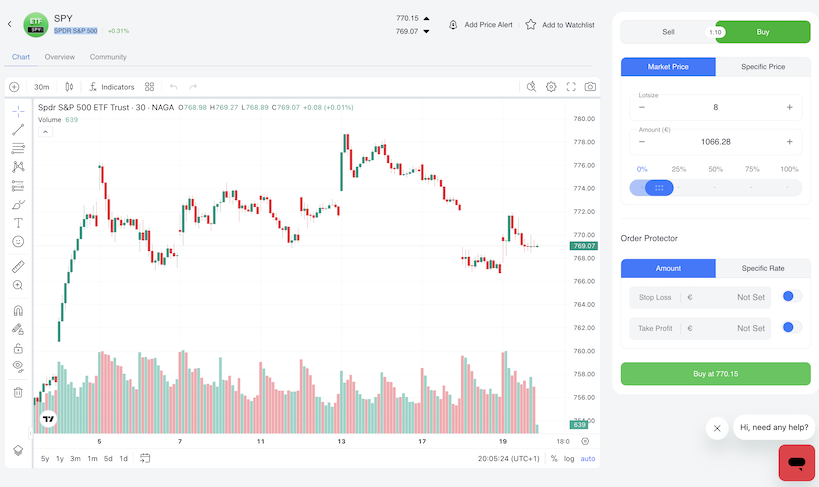
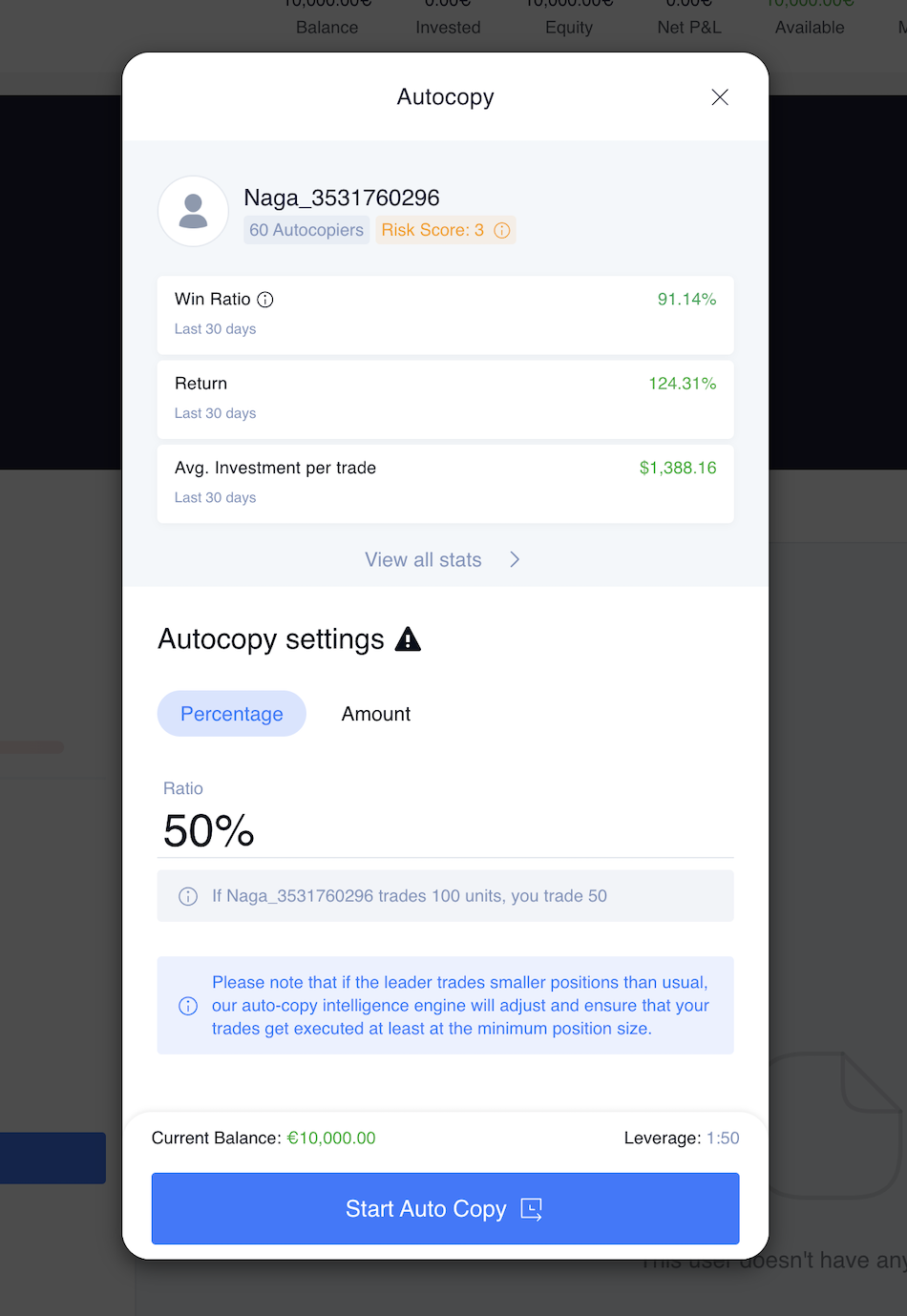
Functions such as take-profit, stop-loss, and pending orders are available and clearly labeled, along with one-click execution. The key feature is the social element: a live feed showing members’ trades and comments, and the Autocopy engine, which allows you to copy a selected leading trader’s positions with one action, according to a portion of your balance that you have set.
Next to it is MT5 for traders who wish to take advantage of MetaTrader’s analytical capabilities and automation features — such as over 30 indicators, the ability to use custom timeframes, and full support for Expert Advisors (EAs) for algorithmic strategies — none of which are available in NAGA Web Trader.
The fact that MT5 is offered together with a capable proprietary platform gives traders a wider range of choices than is typically available from social trading brokers, and this is a clear advantage over eToro, which confines users to its own platform and provides no access to MetaTrader at all.
Mobile Apps
The NAGA platform is designed with a mobile focus, and the NAGA app represents the platform at its most effective — offering the social feed, the copy-trading leaderboard, TradingView charts, watchlists, push alerts, and full account management featuring deposits and withdrawals.
For a copy trader, the ability to browse top traders and manage these features on a mobile phone is the product’s primary purpose, and I found that it functions smoothly.
The mobile MT5 application is also available to traders who want to trade on the go. The mobile version retains the stability of the well-established third-party software, but, as is the case with all mobile versions, it loses some of the features compared to the desktop version — there are fewer timeframes, fewer charting options, and no execution of EAs, which is something that only takes place on the desktop.
Although it can be relied upon to check positions and manage orders when away from your desk, I find that MT5 mobile is not ideal for everyday analysis, and the desktop version is still the best choice.
| NAGA | Bullwaves | TabTrade | |
|---|---|---|---|
| Platforms & Tools Rating | |||
| Platforms | NAGA Platform, NAGA App, MT4, MT5, TradingView, TradingCentral | MT5 | WebTrader, MT5 |
| Mobile App | iOS & Android | iOS & Android | iOS & Android (MT5) |
| Automated Trading | Yes | Expert Advisors (EAs) on MetaTrader | Expert Advisors (EAs) on MetaTrader, FIX API |
| Copy Trading | Yes | Yes | Yes |
| Guaranteed Stop Loss | No | No | No |
| Visit | Visit | Visit | Visit |
| Review | Review | Review | Review |
Research
NAGA’s research is practical rather than in-depth and is designed primarily to support social aspects rather than function on its own. A team of analysts within the company prepares a daily technical analysis, a ‘latest news’ feed and an economic calendar complete with filterable impact ratings — sufficient to help structure a trading session but not enough to take the place of a dedicated research service.
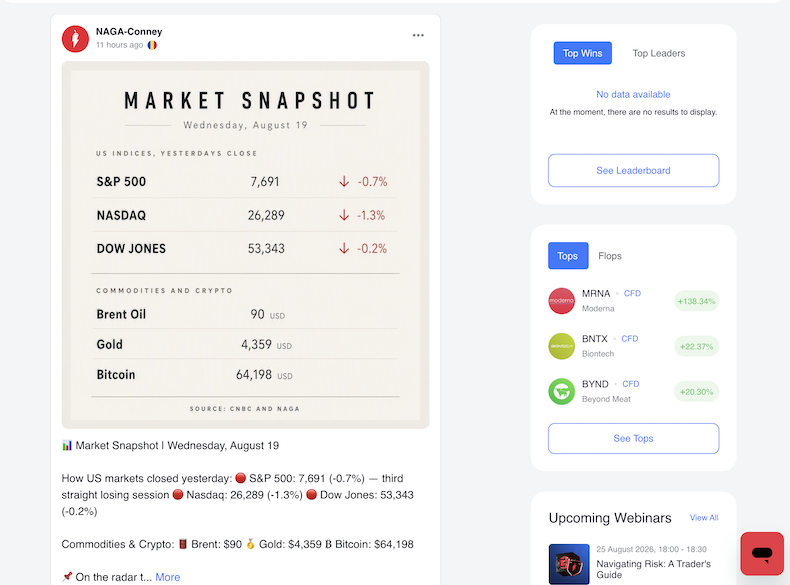
The standout feature is Trading Central, which is offered free of charge to customers with a live account across all platforms. It offers automated recognition of chart patterns, directional signals, target and pivot levels, and analyst scenarios for the major asset classes, thus providing a degree of structured technical insight that the company’s own content does not.
Additionally, NAGA sends out a number of daily trading signals that increase with your account level — starting at five per day on the entry tiers and reaching ‘unlimited’ (i.e, over 20) at the highest level.
The social feed acts as a kind of crowdsourced research, since you can observe what lead traders are up to, read their comments, and get trade ideas from traders ranked by performance. It is indeed helpful for generating ideas, but the content is produced by the community rather than by the analysis that NAGA supports, and from hands-on experience I can definitely say that a lead trader’s past performance doesn’t indicate what the results will be in the future — a fact made clear in NAGA’s own risk disclosure.
For a broker of this kind, such limitations are nothing new. The written analysis is mostly technical and brief. Even though there are 2,000 different stocks available through CFDs, fundamental or equity research is fairly limited.
| NAGA | Bullwaves | TabTrade | |
|---|---|---|---|
| Research Rating | |||
| Autochartist | No | No | No |
| Trading Central | Yes | No | No |
| Visit | Visit | Visit | Visit |
| Review | Review | Review | Review |
Education
The educational material offered by NAGA is suitable for someone just getting started but becomes too basic for those who have moved beyond that level.
At its heart is a collection of short articles on trading psychology, the basics of forex and crypto, and how to use the NAGA platform, along with a video section featuring introductory clips on forex and technical analysis, as well as walkthroughs of the platform.
There are e-books available — covering subjects such as Japanese candlesticks, moving averages, and general trading advice — but the entire library is available only to people with a live account, as are the webinars, which cover more advanced topics such as Fibonacci tools and Ichimoku.
The most important aspect is the depth of coverage specific to each instrument. Although NAGA offers a range of instruments — futures, ETF CFDs, real stocks, and crypto — each with its own mechanics, the education provided does not adequately explain how any of these instruments operate.
The aspect of NAGA’s education that is strongest is its informality rather than formality. The social feed enables newcomers to watch experienced members trade in real time and ask questions, a feature that, for some learners, is more valuable than a static article. This is the model on which NAGA is based, and it can serve as a reasonable alternative to a structured course — provided that you realize the members whom you are learning from are not officially certified educators.
| NAGA | Bullwaves | TabTrade | |
|---|---|---|---|
| Education Rating | |||
| Visit | Visit | Visit | Visit |
| Review | Review | Review | Review |
Customer Support
Support is available via live chat, email, and phone, with staff on duty around the clock over extended hours — opening hours cover Monday to Friday, from about 07:30 to 02:00 EEST — and includes multilingual assistance that takes into account the group’s offices in Europe, the Middle East, Africa and Latin America: Arabic support for clients in the GCC, Spanish and Portuguese for those in LATAM, and the major European languages as well.
During those hours, for simple questions about the platform and accounts, I’ve found that the first-line team responds promptly, and my live-chat inquiries were met with politeness and competence.
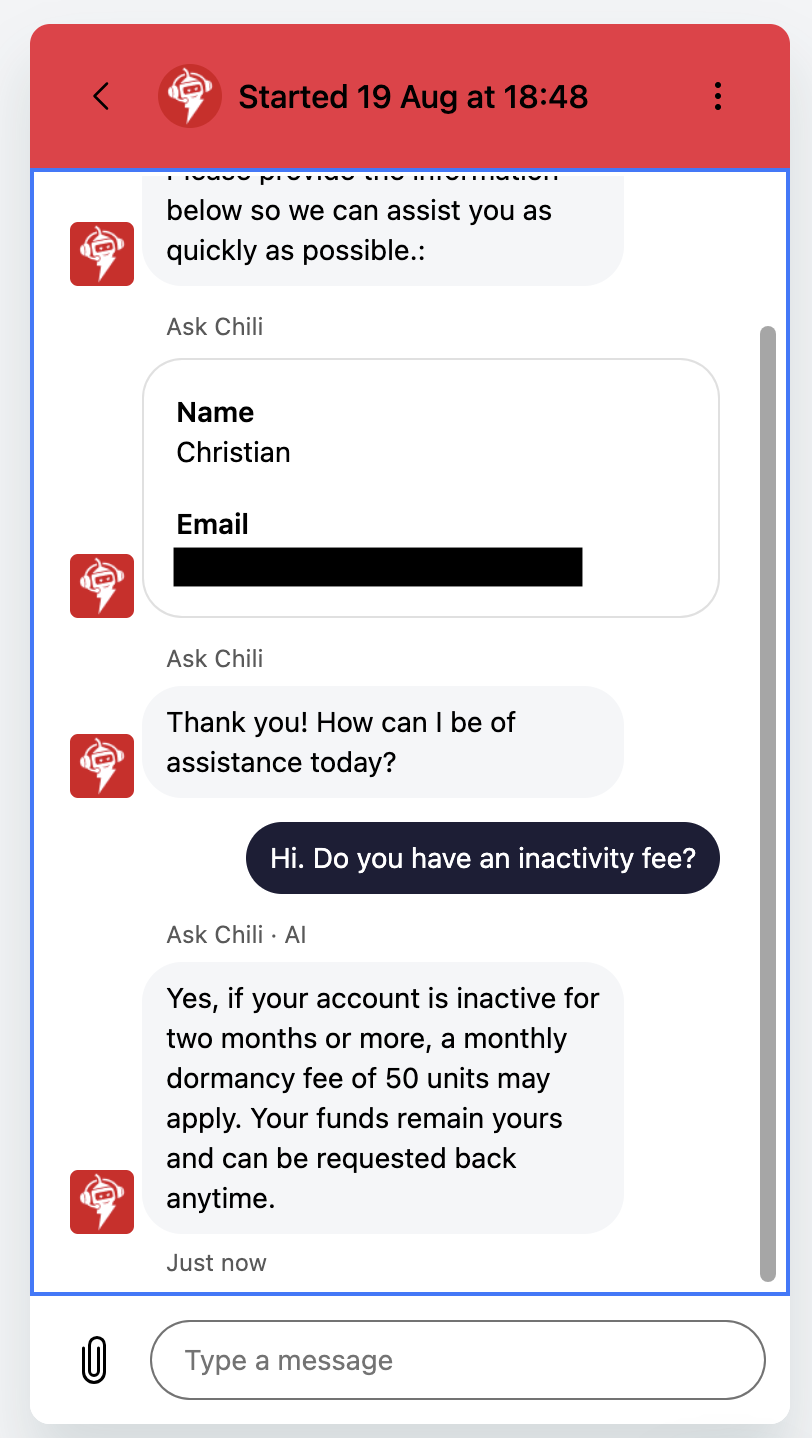
One thing I’ve noticed is the proactive, direct contact — my account manager makes frequent phone calls to encourage me to make deposits and execute trades.
Just like in the case of any broker that is regulated, support will not provide investment advice, and the process of escalating a dispute largely depends on which entity holds your account. Clients whose account is with a CySEC entity have access to the Cypriot regulator’s complaints procedure as well as the ICF; those whose account is with a Seychelles entity have neither, and therefore the route from a blocked withdrawal to one that is finally processed is much less clear.
| NAGA | Bullwaves | TabTrade | |
|---|---|---|---|
| Support Rating | |||
| Visit | Visit | Visit | Visit |
| Review | Review | Review | Review |
Community Sentiment
This NAGA review has an element of caution because, by June 2026, Trustpilot had suspended the public display of NAGA’s TrustScore after identifying non-compliant practices in the acquisition of reviews and had deleted a number of reviews it considered fake.
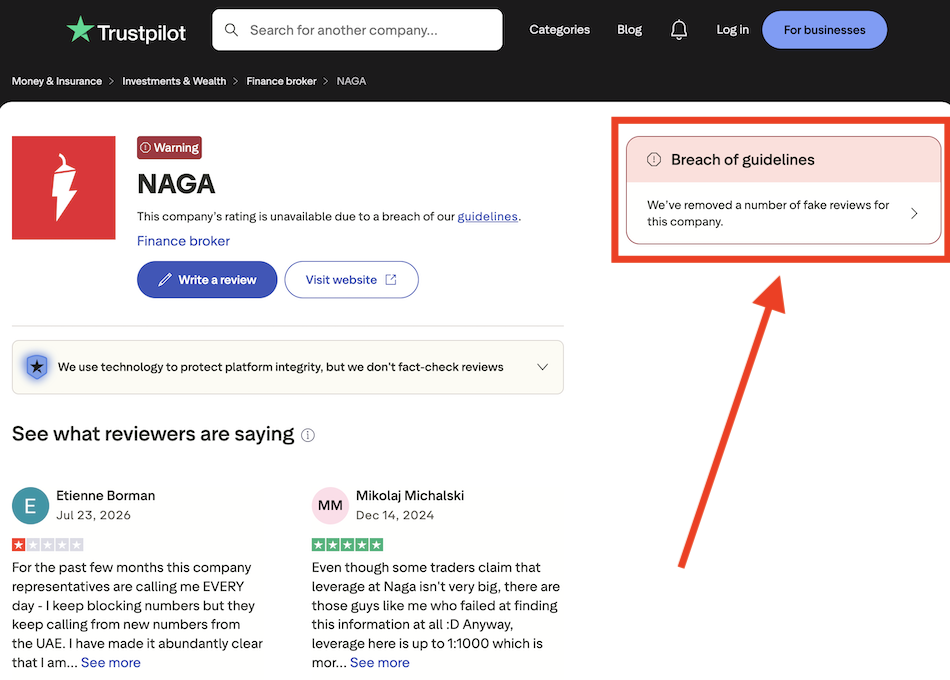
The distribution of Trustpilot reviews is sharply barbell-shaped — the majority five-star and a chunk of one-star, with very little in the middle.
The positive reviews are genuine and share a consistent theme: new users praise the Autocopy feature and the social community, while many also point out helpful onboarding and the availability of account managers. The copy-trading feature and the mobile app are particularly popular among newer traders, and some mention NAGA’s status as a listed company as a source of confidence.
The negative comments are also consistent and focus on a particular number of problems. The most frequently mentioned one is aggressive telephone contact – customers explaining that they were called repeatedly to deposit money and to open trades, sometimes with the telephone number changing after they had asked it to stop.
Others mention bonuses being taken away after a withdrawal had been requested, withdrawals being delayed beyond the stated time periods, and accounts being placed in read-only or frozen states, making the funds inaccessible while an internal department handled the issue.
Two things need to be kept in mind when reading the raw reviews. First, a meaningful share of the angriest posts appear to come from clients under the Seychelles entity, where there’s no compensation scheme and no ombudsman, so the path from complaint to resolution is thinnest exactly where the grievances concentrate.
Second, dissatisfied traders tend to review more readily than satisfied ones, and a losing CFD position is a common trigger for a one-star review regardless of the broker. But a suspended Trustpilot score, removed supposed fake reviews, and an odd barbell distribution are a reason to pause.
Is NAGA A Good Or Bad Broker?
NAGA is suitable for a particular type of trader — that is, one who places importance on the social network and the SuperApp ecosystem, including the wallet, the card, and crypto — rather than on cost efficiency, and trades at a moderate frequency.
For active traders, those using spread-sensitive strategies or scalpers, you may want to consider an alternative broker.
FAQ
Is NAGA Legit Or A Scam?
NAGA is legit — it’s run by regulated companies — namely, CySEC in the EU (license 204/13), the Seychelles FSA worldwide (SD026), the ADGM’s FSRA in the UAE, and the FSCA in South Africa — all of which can be verified publicly, and its parent company is one that is listed in Frankfurt and produces audited financial statements.
The company does, though, have a settlement with CySEC, and its Trustpilot rating was suspended in 2026, so the terms ‘legit’ and ‘low-risk’ are not interchangeable in this case.
What Is NAGA?
NAGA is a German fintech company established in 2015 ,whose shares are traded on the Frankfurt Stock Exchange. It provides multi-asset trading in forex, CFDs on shares, indices, commodities, ETFs, futures, and cryptocurrencies, as well as actual shares, across more than 4,000 instruments.
The company’s main characteristic is its social copy-trading network, and it is part of a broader “SuperApp” that includes a wallet and a card.
How To Delete A NAGA Account?
Close all open positions, withdraw the balance that is left with you, and then ask for your account to be closed through live chat, email, or by phone. NAGA may ask you to verify your identity before carrying out the closure.
Closing an unused account will prevent you from paying the monthly inactivity fee, a charge that might otherwise eat up a small dormant balance.
How To Use NAGA?
You should register on the official website, finish the KYC process, fill out the suitability questionnaire, make a deposit of at least $250 for the Iron tier, and then trade via NAGA Trader or MT5. In order to copy a trader, visit the leaderboard, select a top trader, decide how much of your balance you want to allocate, and then activate Autocopy.
If you would like to practice first, a free demo is available upon registration.
Is NAGA Safe?
Safety is entity-dependent:
- For EEA clients regulated by CySEC, there are important safeguards, including segregated funds, negative balance protection, and ICF coverage of €20,000.
- GCC clients under the Abu Dhabi ADGM entity enjoy the same 1:30 leverage limit as protection but have no compensation fund.
- For LATAM, South African, and other international clients under Seychelles or FSCA entities, protection is lighter: segregation and negative balance protection apply, but there’s no compensation scheme, and leverage can reach 1:1000.
How To Trade On NAGA?
First, fund your account, then select an instrument in NAGA Trader or MT5. Decide on the position size, set your stop-loss and take-profit levels, and then execute the trade or copy another member’s positions using Autocopy.
Since most of the instruments are CFDs, you are speculating on the price rather than actually owning the asset; the only exception being real shares, which are available to EU clients.
How To Withdraw Money From NAGA?
Log in, go to the money management section, select your method, and submit the request. NAGA usually handles the request within about 24 hours, after which the funds will take between the same day and five business days, depending on the route taken.
The funds are returned to the original deposit account in accordance with AML rules up to the amount deposited, profits are paid by an alternative method, and a small withdrawal fee per tier may apply.
Best alternatives to NAGA
The highest rated brokers that are most similar to NAGA in United States are Interactive Brokers and Plexytrade. Here is an overview of what makes them great options:
-
1

Interactive Brokers (IBKR) is a premier brokerage, providing access to over 170 markets across 40 countries, along with a suite of comprehensive investment services. With over 40 years of experience, this Nasdaq-listed firm adheres to stringent regulations by the SEC, FCA, CIRO, and SFC, amongst others, and is one of the most trusted brokers for trading around the globe.
-
2

Established in 2024 and headquartered in Saint Lucia, Plexytrade is an ECN/STP broker. Geared towards active traders, it supports four account options, crypto deposits and withdrawals, plus very high leverage up to 1:2000 made possible by its unregulated status.
NAGA comparison table
| NAGA | Interactive Brokers | Plexytrade | |
|---|---|---|---|
| Rating | 4.1 | 4.3 | 3.9 |
| Markets | CFDs on Forex, Indices, Shares, Commodities, Crypto, Real Stocks and Futures | Stocks, Options, Futures, Forex, Funds, Bonds, ETFs, Mutual Funds, Cryptocurrencies | CFDs, Forex, Indices, Stocks, Commodities, Crypto |
| Demo Account | Yes | Yes | Yes |
| Minimum Deposit | $10-$250 (location and tier dependent) | $0 | $50 |
| Minimum Trade | 0.01 Lots | $1 | 0.01 |
| Regulators | CySEC, FSCA, FSA, ADGM/FRSA | SEC, FINRA, CFTC, NFA, CIRO, FCA, CBI, ASIC, SFC, SEBI, JFSA, MAS | – |
| Platforms | NAGA Platform, NAGA App, MT4, MT5, TradingView, TradingCentral | Trader Workstation (TWS), IBKR Desktop, GlobalTrader, Mobile, Client Portal, AlgoTrader, OmniTrader, TradingView, eSignal, TradingCentral, ProRealTime, Quantower | MT4, MT5, TradeLocker |
| Leverage | 1:30 (EU and Middle East, 1:1000 (Global) | 1:50 (major forex pairs), 1:2-1:4 (equities) | 1:2000 |
| Payment Methods | 18 | 5 | 2 |
| Visit | – | Visit | Visit |
| Review | – | Read review | Read review |
Compare trading instruments
Compare the markets and instruments offered by NAGA and its competitors. Some markets may only be available via derivatives, and availability may vary by region and entity.
| NAGA | Interactive Brokers | Plexytrade | |
|---|---|---|---|
| CFD | Yes | No | Yes |
| Forex | Yes | Yes | Yes |
| Stocks | Yes | Yes | Yes |
| Commodities | Yes | Yes | Yes |
| Oil | Yes | No | Yes |
| Gold | Yes | Yes | Yes |
| Copper | Yes | No | No |
| Silver | Yes | No | Yes |
| Corn | No | No | No |
| Crypto | Yes | Yes | Yes |
| Futures | Yes | Yes | No |
| Options | No | Yes | No |
| ETFs | Yes | Yes | No |
| Bonds | No | Yes | No |
| Warrants | No | Yes | No |
| Spreadbetting | No | No | No |
| Volatility Index | Yes | No | No |
NAGA vs other brokers
Compare NAGA with any other broker:
Customer reviews
There are no customer reviews of NAGA yet. Will you be the first to help fellow traders decide whether to trade with NAGA?