



Managed trading accounts are investment vehicles that are typically overseen by experienced traders. These individuals will monitor the portfolio’s performance, and buy and sell assets on your behalf. Managed accounts are best if you want a hands-off approach to trading.
In this guide, we share our pick of the best managed trading accounts and explain the key things to consider when deciding which broker to use.
Top Managed Trading Account Providers 2026
These 6 brokers offer managed trading accounts and received the highest overall ratings in our in-depth reviews. All 6 managed trading account brokers are available in Spain.
-
- Demo account
- Regulator: FCA, ASIC, CMVM , FSCA, SCB, FSA
- Platforms: TN Trader, MT4, TradingView
-
- Demo account
- Regulator: ASIC, VFSC, FSA
- Platforms: MT4, MT5, cTrader, TradingView, DupliTrade
-
- Demo account
- Regulator: FMA, FSA
- Min. deposit: $0
-
- Demo account
- Min. deposit: $0
- Min. trade: 0.01 Lots
-
- Demo account
- Regulator: FCA, CySEC, FSCA, SCB, FSA
- Min. deposit: $100
-
- Demo account
- Regulator: BVI FSC
- Platforms: NetTradeX, MT4, MT5






Learn how we test brokers and why you can trust our ratings.
Here is a short summary of why we think each broker belongs in this top list:
- Trade Nation 4.4/5 During our evaluations, Trade Nation offered no native managed account solution. However, third-party integrations allowed basic mirroring setups. Transparency and reporting were solid via the main platform, but personalization and admin controls were absent. Fixed spreads applied - 1 pip on major pairs, with no commissions or performance fees.
- Fusion Markets 4.6/5 During our latest tests, Fusion Markets’ managed account solution delivered strong transparency and clean reporting, with detailed trade stats and live performance tracking. Allocation models were flexible, but personalization relied on the manager’s setup. Administration was smooth. Spreads averaged 0.2–0.4 pips on majors, with a low $2.25 commission per lot.
- BlackBull 4.5/5 When we used BlackBull’s managed account solution, we found excellent transparency and reliable reporting - real-time metrics, equity tracking, and trade history were all accessible. Customization included multiple allocation methods and investor control over deposits. Admin tools were robust. Spreads on majors averaged 0.2–0.4 pips, plus $3 commission per lot traded.
- IG 4.8/5 When we tested IG’s managed account setups, access was via approved third-party money managers rather than a built-in PAMM/MAM system. Transparency was great - performance, reporting, and trade analytics were easy to track. Spreads on majors averaged 0.6–0.8 pips, with no extra commissions.
- FxPro 4.4/5 During our analysis, FxPro’s PAMM/MAM platforms offered solid transparency with detailed performance metrics and risk stats. Customization options for lot allocation and profit-sharing were flexible. Reporting was comprehensive and user-friendly. Administration tools were efficient. Spreads averaged 0.6–0.8 pips on majors, with commissions starting at $4 per lot.
- IFC Markets 2.9/5 Established in 2006, IFC Markets is an STP/ECN broker that stands out with unique synthetic indices, a choice of fixed and floating spread accounts, and a smooth sign-up process that took minutes during testing.
Best Managed Trading Accounts in 2026 Comparison
| Broker | Copy Trading | MAM Account | PAMM Account | Minimum Deposit |
|---|---|---|---|---|
| Trade Nation | ✔Yes | ✘No | ✘No | $0 |
| Fusion Markets | ✔Yes | ✔Yes | ✔Yes | $0 |
| BlackBull | ✔Yes | ✔Yes | ✔Yes | $0 |
| IG | ✘No | ✘No | ✘No | $0 |
| FxPro | ✘No | ✔Yes | ✔Yes | $100 |
| IFC Markets | ✔Yes | ✘No | ✔Yes | $1 |
Community Sentiment
See how users rate these brokers based on the average customer ratings submitted on DayTrading.com, plus ratings from Trustpilot, the Apple App Store and Google Play.
| Broker | Our Users' Rating | Trustpilot Score | Trustpilot Reviews | iOS App Rating | Android App Rating |
|---|---|---|---|---|---|
| Trade Nation | 2147 | ||||
| Fusion Markets | 10051 | ||||
| BlackBull | 3515 | ||||
| IG | 10134 | ||||
| FxPro | 726 | ||||
| IFC Markets | - | 566 |
Trade Nation
Trade Nation suits discretionary traders who want to speculate on major indices like the US 500 or liquid FX pairs, and want the predictable all-in costs of fixed spreads. In tests, we found the fixed-spread TN Trader environment particularly useful for trading around scheduled economic releases owing to its reliable charting environment and because published spreads stayed capped.
 Christian Harris, Reviewer
Trade Nation quick facts
- Demo Account
- ✔Yes
- Instruments
- CFDs, Forex, Indices, Shares, Commodities, Futures, Bonds, Spread Betting (UK and Ireland only), Cryptos (Bahamas entity only)
- Regulator
- FCA, ASIC, CMVM , FSCA, SCB, FSA
- Platforms
- TN Trader, MT4, TradingView
- Minimum Deposit
- $0
- Minimum Trade
- 0.1 Lots
- Account Currencies
- USD, EUR, GBP, AUD, ZAR, SEK, NOK, DKK
Pros
- Trade Nation's 2026 partnership with Volt has sped up payments for Australian traders, who can now make instant deposits and withdrawals using PayID, with the faster payout capabilities planned for clients in the UK and EU.
- The demo comes with a $5,000 practice account and you can request a one-on-one platform walkthrough by callback - this level of personal help is rare.
- Trade Nation accounts can now be linked with TradingView, providing advanced multi-charts and the ability to execute trades directly.
Cons
- Withdrawals can take up to five business days, which is around the industry average but slower than the 1-3 days we’re increasingly seeing brokers offer in an attempt to quash withdrawal complaints from retail investors.
- There is no raw or ECN pricing tier, which are often prefered by day traders. No matter how much you deposit or trade, you use the same fixed (or variable on MT4) pricing as beginners, making it unsuitable for scalpers especially.
- The 2–20% rebate scheme is closed to FCA, CMVM, and ASIC clients, meaning active day traders in these regions who would benefit from transaction rebates cannot claim them.
Fusion Markets
Fusion Markets is a standout option for forex traders looking for excellent pricing with spreads near zero, industry-low commissions and recently TradingView integration. It’s a particularly good broker for Australian traders where the company is headquartered and regulated by the ASIC.
 Jemma Grist, Reviewer
Fusion Markets quick facts
- Demo Account
- ✔Yes
- Instruments
- CFDs, Forex, Stocks, Indices, Commodities, Crypto
- Regulator
- ASIC, VFSC, FSA
- Platforms
- MT4, MT5, cTrader, TradingView, DupliTrade
- Minimum Deposit
- $0
- Minimum Trade
- 0.01 Lots
- Account Currencies
- USD, EUR, GBP, CAD, AUD, NZD, JPY, CHF, HKD, SGD
Pros
- The market analysis features, Market Buzz and Analyst Views, are great tools for discovering opportunities and conveniently integrated into the client dashboard.
- Withdrawal processing times have been slashed to under an hour and can be processed 24/7, making it faster and easier for active traders to withdraw any gains.
- The range of charting platforms and social trading features is excellent, with MT4, MT5, cTrader and more recently TradingView, catering to a wide range of trader preferences.
Cons
- The demo account expires after 30 days, limiting its potential as a useful trading tool alongside a real-money account.
- Fusion Market trails alternatives, notably IG, in the education department with limited guides and live video sessions to upskill new traders.
- There is no proprietary trading platform or app built with beginners in mind, a notable drawback compared to AvaTrade.
BlackBull
After improving its trading infrastructure with Equinix servers in London, reducing latency for traders, BlackBull is an obvious choice if you want to day trade stock CFDs with ECN pricing. With competitive spreads and no commission on a growing roster of digital tokens paired with USD, BlackBull also works for active crypto traders.
Christian Harris, Reviewer
BlackBull quick facts
- Demo Account
- ✔Yes
- Instruments
- CFDs, Stocks, Indices, Commodities, Futures, Crypto
- Regulator
- FMA, FSA
- Platforms
- BlackBull Invest, BlackBull CopyTrader, MT4, MT5, cTrader, TradingView, AutoChartist
- Minimum Deposit
- $0
- Minimum Trade
- 0.01 Lots
- Account Currencies
- USD, EUR, GBP, CAD, AUD, NZD, JPY, ZAR, SGD
Pros
- BlackBulls’s research is superb, especially the daily ‘Trading Opportunities’ articles that break down complex market movements into easy-to-understand insights, making it simpler to capitalize on emerging trends.
- After partnering with ZuluTrade and Myfxbook, alongside improvements to its own CopyTrader, and finally enabling cTrader Copy, BlackBull offers one of the most comprehensive copy trading experiences we've seen.
- BlackBull is a much greater fit for aspiring traders following the overhaul of its ECN Prime account, now featuring improved spreads averaging 0.16 on EUR/USD and a more accessible minimum deposit of $0 compared to the old $2,000.
Cons
- Unlike most top brokers, BlackBull charges an irritating $5 withdrawal fee, which can detract from the overall cost-effectiveness, especially for active traders who frequently move funds.
- Although the Education Hub now features improvements like webinars and tutorials, the courses we’ve explored need more focus on explaining the wider economic factors influencing prices.
- Despite a growing selection of 2,180+ assets, including additions to its Asia Pacific indices, they are mainly stocks with an average selection of currency pairs and indices.
IG
IG continues to provide a comprehensive package with an intuitive web platform, best-in-class education for beginners, advanced charting tools bolstered by its recent TradingView integration, real-time data, and robust trade execution for experienced day traders.
Christian Harris, Reviewer
IG quick facts
- Demo Account
- ✔Yes
- Instruments
- CFDs (not in US), Forex, Stocks, Indices, Commodities, ETFs, Futures, Options, Crypto, Spread Betting (UK only)
- Regulator
- CFTC, NFA, FCA, BaFin, ASIC, FINMA, MAS, JFSA, FMA, DFSA, BMA
- Platforms
- Web, L2 Dealer, MT4, TradingView, AutoChartist, TradingCentral, ProRealTime
- Minimum Deposit
- $0
- Minimum Trade
- 0.01 Lots
- Account Currencies
- USD, EUR, GBP, CAD, AUD, JPY, ZAR, SEK, DKK, CHF, HKD, SGD
Pros
- IG offers an extensive collection of professional and engaging educational resources, including webinars, articles, and analysis.
- IG is amongst the best in terms of its range of instruments, which includes stocks, forex, indices, commodities, and cryptocurrencies, plus added US-listed futures and options as well as an AI Index, providing diversification opportunities.
- IG obtained a crypto asset license from the FCA, allowing it to re-enter the UK market to provide buying, selling and storing opportunities on 55+ digital tokens with fees from 1.49%, and all within an FCA-licensed environment.
Cons
- IG applies an inactivity fee of $12-$18 per month after 2 years, deterring casual investors.
- Beginners might find IG’s fee structure complex, with various fees for different types of trades or services, potentially leading to confusion or unexpected charges.
- IG has discontinued its swap-free account, reducing its appeal to Islamic traders.
FxPro
FxPro is a stellar option for day traders, sporting exceptionally fast execution speeds under 8ms, competitive fees that were lowered in 2022, and terrific charting platforms in MT4, MT5, cTrader and FxPro Edge.
Christian Harris, Reviewer
FxPro quick facts
- Demo Account
- ✔Yes
- Instruments
- CFDs, Forex, Stocks, Indices, Commodities, Futures, Spread Betting
- Regulator
- FCA, CySEC, FSCA, SCB, FSA
- Platforms
- FxPro Edge, MT4, MT5, cTrader, AutoChartist, TradingCentral, DupliTrade, Quantower
- Minimum Deposit
- $100
- Minimum Trade
- 0.01 Lots
- Account Currencies
- USD, EUR, GBP, AUD, JPY, ZAR, CHF, PLN
Pros
- FxPro operates under a 'No Dealing Desk' (NDD) model, ensuring fast and transparent order execution, often under 12 milliseconds, ideal for short-term trading strategies.
- The FxPro app undergoes regular improvements, from expanding the range of assets and tightening spreads to minor UX tweaks like the addition of Colour Adjust in 2026 to better configure mobile charts and other features.
- FxPro offers four reliable charting platforms, notably the intuitive FxPro Edge, with over 50 indicators, 7 chart types and 15 chart timeframes.
Cons
- While FxPro provides 24/5 customer support through multiple channels that performed well during testing, it lacks 24/7 availability, which can disadvantage traders needing assistance outside traditional market hours.
- Despite a growing Knowledge Hub and a $10M funded demo account, FxPro is geared towards advanced traders, with beginners potentially finding the account and fee structure complex.
- There are limited passive investment tools like interest paid on cash or interactive social trading networks. While active traders may not miss these, competitors like eToro catering to active and passive investors have more comprehensive offerings.
IFC Markets
IFC Markets is best suited to active traders who want flexibility, with a choice of micro and standard accounts, minimum deposits from just $1, plus the ability to blend multiple assets into a single synthetic instrument on the user-friendly NetTradeX platform – a feature we’ve not seen elsewhere.
Christian Harris, Reviewer
IFC Markets quick facts
- Demo Account
- ✔Yes
- Instruments
- CFDs, Forex, Stocks, Indices, Commodities, Crypto, ETFs, Synthetics
- Regulator
- BVI FSC
- Platforms
- NetTradeX, MT4, MT5
- Minimum Deposit
- $1
- Minimum Trade
- 0.01 Lots
- Account Currencies
- USD, EUR, JPY
Pros
- The NetTradeX platform’s PCI feature lets you build your own synthetic instruments – a truly standout feature enabling you to trade complex macro views or hedged positions as a single chartable asset.
- We’ve seen meaningful improvements over time, including the addition of a Standard ECN account on MT5 and expanded synthetic instruments on NetTradeX, showing IFC Markets is evolving to better serve active traders.
- With leverage up to 1:400 and $1 account minimums, IFC Markets offers easy entry for beginners and high-leverage traders. Unlike brokers under stricter ESMA or ASIC rules, its offshore regulation allows more flexible margin and account options.
Cons
- With 10+ account types across 3 platforms, it’s hard to know what suits you initially, potentially confusing beginners. During setup, we had to cross-check multiple account specs to avoid mismatches.
- While ECN spreads on MT5 were tight in our tests, fixed spreads on MT4 are wide (1.8 pips on EUR/USD), and crypto spreads are very high (500+ pips on ETH/USD).
- There is a notable lack of third-party technical analysis tools and news feeds from providers like Trading Central, Autochartist, Reuters, or Dow Jones, relying solely on in-house research, which do not match the depth or automation of these external services.
What Are Managed Trading Accounts?
Managed trading accounts are portfolios that are owned by an individual but managed by a third party.
You give control – usually to a money manager – to trade assets such as forex without your prior approval. They should make decisions based on your risk appetite, personal wealth and financial goals.
Managers are usually compensated by a fee, often calculated as a percentage of assets under management (AUM). Alternatively, you may pay a routine subscription fee, for example monthly, and/or a percentage of any profits.
Importantly, they require you to take a leap of faith and put your trust (and money) in the lap of an external party. This can be uncomfortable for many individuals.
Managed account brokers should provide you with regular reports on your account, including a list of its holdings and its performance.
 Royston WildAuthor
Types Of Managed Trading Accounts
These trading vehicles fall into several categories:
- Copy trading: This is the most straightforward managed account solution that has become increasingly popular in recent years. Copy trading platforms allow you to mirror the strategies of a wide range of experienced traders, with the best brokers providing performance leaderboards and risk ratings to help you find suitable strategy providers.
- Multi-account manager (MAM) accounts or percentage allocation management module (PAMM) accounts: PAMM accounts distribute profits or losses among traders based on their initial deposit. MAM, a variant of PAMM, offers flexibility by allowing non-proportional trade allocations, enabling traders to assume varying levels of risk, leading to potentially different returns.
- Separately managed accounts (SMAs): These are actively supervised by a human portfolio manager (or team of managers) who will monitor your account’s performance, conduct research, and buy or sell securities based on your preferences. These are popular with longer-term investors and high-net-worth individuals.
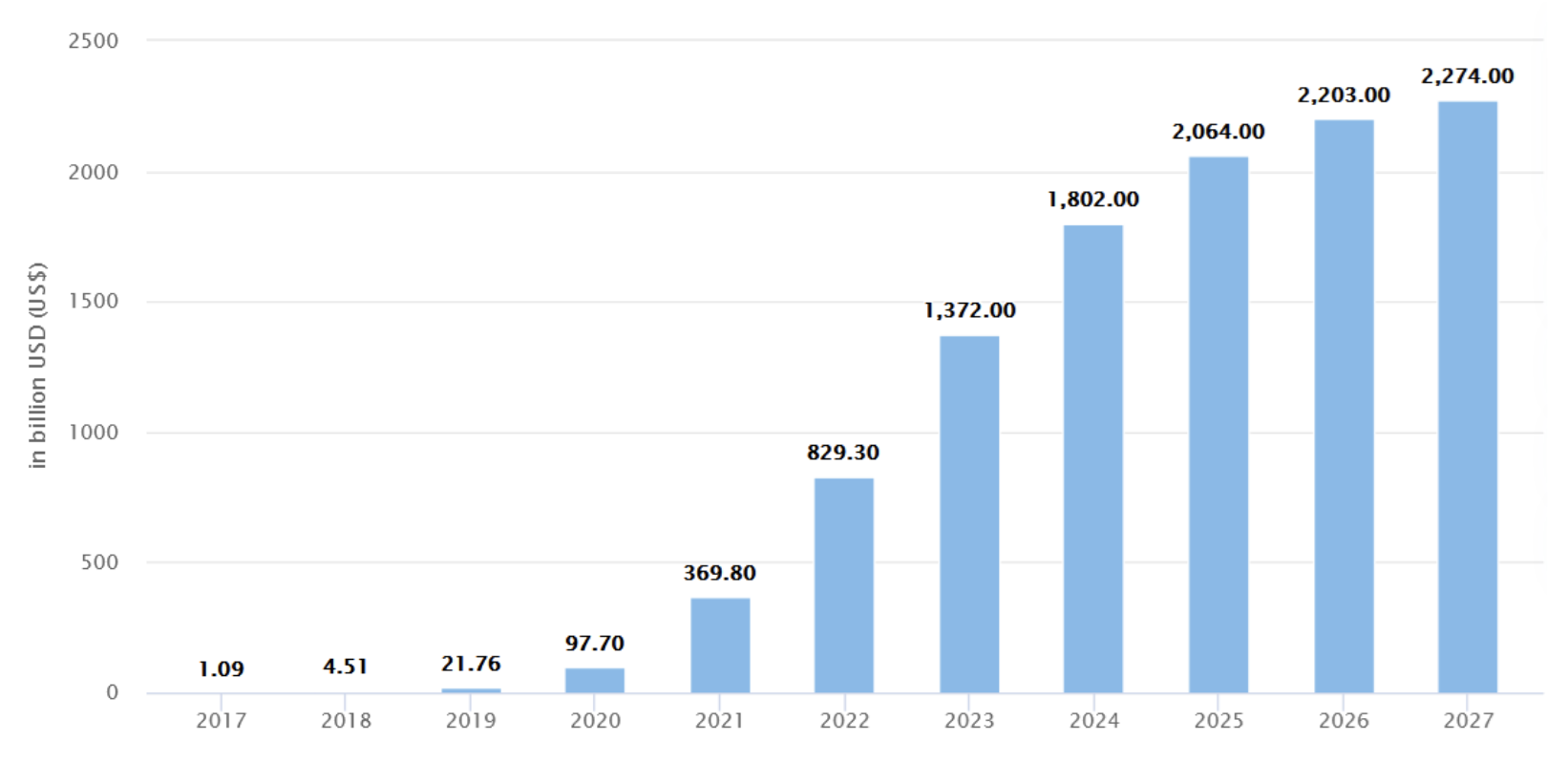
- Robo advisors: These are digital platforms that use algorithms to manage the portfolio. These automated systems are much cheaper to employ than human-managed SMAs, meaning that they have grown rapidly in popularity since being introduced in 2008. The downside is that the level of portfolio customization that you enjoy tends to be lower.
Analysts at Statista expect assets under management (AUMs) in the robo advisor market to continue growing steadily, as the chart below shows.
How To Compare Managed Trading Accounts
You have plenty of choice when it comes to deciding which managed account provider to go with. However, there are multiple factors we, and you, should consider:
Trading Performance
Reputable managed account brokers supply a wide range of information on who makes trading decisions, their philosophy, and other elements that influence their decision-making.
You should choose a company that provides comprehensive reports showing the historical performance of the accounts they supervise.
Total return, risk-adjusted return, volatility, and performance against key benchmarks are critical criteria that you should pore over carefully.
Capital Requirements
Managed account providers typically demand that you meet minimum investment amounts. The exact value differs from brokerage to brokerage, although they can be high (sometimes running into six-figure amounts).
If you want an accessible option, IG Smart Portfolios are available with a $500 minimum investment.
Commission and Fee Structure
Employing the expertise of a market professional involves taking on extra cost. In fact, the expense of using a managed account can be high.
Fees may be applied on an annual basis and charged as a percentage of total assets under administration (AUMs). These can vary considerably amongst account providers, but most charge between 1% and 3% of AUM.
Alternatively, some providers charge a monthly subscription fee and a cut of any profits, known as a performance fee.
That said, eToro is popular because it does not charge any additional fees to copy trades beyond the usual spreads and transaction fees. The downside is that the expertise and performance of master traders can vary dramatically.
Importantly, large fees can significantly erode investment returns. Keeping costs to a minimum is essential, although you may be willing to accept higher expenses if you expect to make a better return with a specific provider, for example.
Robo advisors tend to charge lower fees than account providers that employ money managers. I think these can be a good option for traders operating on a low budget.
Royston WildAuthorCustomer Support
The extra fees that you often pay for managed accounts should (in theory) guarantee a good level of customer service. You will want to be able to contact your provider quickly and easily, and to receive regular updates on your holdings and the performance of your portfolio.
You can consult user feedback on review websites like Trustpilot to assess the quality of a provider’s customer support.
Alternatively, we test the customer support of managed account brokers as part of our review process, with IG standing out for its 24/7 reliable assistance.
Technology and User Interface
Some money managers operate sophisticated in-house trading platforms, while others outsource their non-core functions to third-party providers.
It is important to select an account provider which has stable online technology and offers a user-friendly interface. After all, if you cannot understand any of the reports or information provided to you, how can you tell how close you are to meeting your financial goals?
FxPro offers a MAM account through the industry’s most popular platform – MetaTrader 4, so if you are already familiar with this forex trading software you can skip a steep learning curve.
I also recommend that you check that the managed account provider you are planning to use is recognized and approved by your local regulator.
In the UK, for example, clients can ascertain an account provider’s regulatory status through the Financial Conduct Authority (FCA).
Royston WildAuthorBottom Line
Managed trading accounts can be extremely useful if you have little time or energy to build and supervise your portfolio. They can also provide tax benefits, and allow you to benefit from the expertise of a professional.
However, these accounts may require high investment amounts and can attract elevated fees (though cheaper options are often provided by robo advisors).
When comparing brokers with managed trading accounts, it is important to consider customer support, interfaces and fees. It is also critical to evaluate the skill of the investment manager by considering past trading performance.
FAQ
What Is A Managed Trading Account?
A managed trading account is a financial product where a human (or automated) advisor is delegated day-to-day management of your portfolio.
This third party should execute transactions based on your risk tolerance, financial goals and economic circumstances, and closely monitor the portfolio’s performance.
What Is The Difference Between A Managed And Unmanaged Trading Account?
Managed trading accounts provide a hands-off approach to trading. You give control to a manager who will buy or sell securities and assets on your behalf.
Conversely, unmanaged accounts require you to take action and make trading decisions.
Are Managed Trading Accounts Worth The Fees?
Managed trading accounts may be worth it if you do not want to actively trade and have the capital to meet the sometimes large minimum investment requirements.
However, these accounts do not necessarily beat the market and returns can be below average due to the fees incurred.