



Managed trading accounts are investment vehicles that are typically overseen by experienced traders. These individuals will monitor the portfolio’s performance, and buy and sell assets on your behalf. Managed accounts are best if you want a hands-off approach to trading.
In this guide, we share our pick of the best managed trading accounts and explain the key things to consider when deciding which broker to use.
Top Managed Trading Account Providers 2026
These 6 brokers offer managed trading accounts and received the highest overall ratings in our in-depth reviews. All 6 managed trading account brokers are available in Canada.
-
- Demo account
- Regulator: ASIC, VFSC, FSA
- Platforms: MT4, MT5, cTrader, TradingView, DupliTrade
-
- Demo account
- Min. deposit: $300
- Min. trade: 0.01 Lots
-
- Demo account
- Regulator: BVI FSC
- Platforms: NetTradeX, MT4, MT5
-
- Demo account
- Platforms: InstaTrade Gear, MT4
- Min. deposit: $1
-
- Demo account
- Platforms: MT4, MT5
- Min. deposit: $0
-
- Demo account
- Platforms: X Open Hub, Match-Trader, MT4, MT5, ActTrader
- Min. deposit: Broker Dependant





Learn how we test brokers and why you can trust our ratings.
This is why we think these brokers are the best in this category in 2026:
- Fusion Markets 4.6/5 During our latest tests, Fusion Markets’ managed account solution delivered strong transparency and clean reporting, with detailed trade stats and live performance tracking. Allocation models were flexible, but personalization relied on the manager’s setup. Administration was smooth. Spreads averaged 0.2–0.4 pips on majors, with a low $2.25 commission per lot.
- AvaTrade 4.9/5 When we tested AvaTrade’s managed account offering via MAM, we found high transparency and reliable reporting, with performance metrics updated frequently. Customization was solid - allocation methods and risk settings were flexible. However, personalization depended on the money manager. Spreads on EUR/USD averaged 0.9 pips, plus a standard commission per lot.
- IFC Markets 2.9/5 Established in 2006, IFC Markets is an STP/ECN broker that stands out with unique synthetic indices, a choice of fixed and floating spread accounts, and a smooth sign-up process that took minutes during testing.
- InstaTrade 3.0/5 When we tested InstaTrade’s managed account set up, transparency was solid - detailed stats on trader performance, drawdowns, and history were available. Customization options included flexible deposit terms and profit-share settings. Reporting was timely and easy to interpret. Administration tools worked smoothly. Spreads averaged 1.2 pips on EUR/USD, with no hidden management fees.
- xChief 3.0/5 When we tested xChief’s managed account setup, we found strong transparency in performance stats and allocation methods. Reporting was detailed and updated in real time. Customization options for risk levels and investor terms added flexibility. Administration tools were intuitive. Spreads on majors averaged 0.4–0.6 pips, plus commission of $3 per side, per lot.
- ZuluTrade 3.1/5 ZuluTrade is a renowned social-wealth management platform that allows investors to trade by copying the trades of experienced traders, also known as leaders. This award-winning platform supports social trading and copy trading across multiple assets and has a network of more than 90,000 Leaders and 1,000+ brokers. ZuluTrade is part of the Finvasia Group and is regulated in the EU, South Africa, Japan and Mauritius.
Best Managed Trading Accounts in 2026 Comparison
| Broker | Copy Trading | MAM Account | PAMM Account | Minimum Deposit |
|---|---|---|---|---|
| Fusion Markets | ✔Yes | ✔Yes | ✔Yes | $0 |
| AvaTrade | ✔Yes | ✔Yes | ✔Yes | $300 |
| IFC Markets | ✔Yes | ✘No | ✔Yes | $1 |
| InstaTrade | ✔Yes | ✘No | ✘No | $1 |
| xChief | ✔Yes | ✘No | ✔Yes | $0 |
| ZuluTrade | ✔Yes | ✘No | ✘No | Broker Dependant |
Community Sentiment
See how users rate these brokers based on the average customer ratings submitted on DayTrading.com, plus ratings from Trustpilot, the Apple App Store and Google Play.
| Broker | Our Users' Rating | Trustpilot Score | Trustpilot Reviews | iOS App Rating | Android App Rating |
|---|---|---|---|---|---|
| Fusion Markets | 10051 | ||||
| AvaTrade | 13567 | ||||
| IFC Markets | - | 566 | |||
| InstaTrade | 16 | ||||
| xChief | 138 | ||||
| ZuluTrade | - | 94 |
Fusion Markets
Fusion Markets is a standout option for forex traders looking for excellent pricing with spreads near zero, industry-low commissions and recently TradingView integration. It’s a particularly good broker for Australian traders where the company is headquartered and regulated by the ASIC.
 Jemma Grist, Reviewer
Fusion Markets quick facts
- Demo Account
- ✔Yes
- Instruments
- CFDs, Forex, Stocks, Indices, Commodities, Crypto
- Regulator
- ASIC, VFSC, FSA
- Platforms
- MT4, MT5, cTrader, TradingView, DupliTrade
- Minimum Deposit
- $0
- Minimum Trade
- 0.01 Lots
- Account Currencies
- USD, EUR, GBP, CAD, AUD, NZD, JPY, CHF, HKD, SGD
Pros
- The market analysis features, Market Buzz and Analyst Views, are great tools for discovering opportunities and conveniently integrated into the client dashboard.
- Fusion Markets is set up to support algo traders with a sponsored VPS solution and a 25% discount if you opt for the NYC Servers VPS for MT4 or cTrader.
- Average execution speeds of around 37 milliseconds are noticeably faster than many rivals and can help day traders secure optimal prices in fast-moving markets.
Cons
- Traders outside of Australia must sign up with weakly regulated global entities with limited safeguards, though in August 2026 they made negative balance protection available to all eligible accounts.
- There is no proprietary trading platform or app built with beginners in mind, a notable drawback compared to AvaTrade.
- While the selection of currency pairs trumps most rivals, the broker's alternative investment offering is average with no stock CFDs beyond the US.
AvaTrade
AvaTrade offers active traders everything they need: an intuitive WebTrader, powerful AvaProtect risk management, a smooth 5-minute sign-up process, and dependable support you can rely on in fast-moving markets.
Jemma Grist, Reviewer
AvaTrade quick facts
- Demo Account
- ✔Yes
- Instruments
- CFDs, Forex, Stocks, Indices, Commodities, ETFs, Bonds, Crypto, Spread Betting, Futures
- Regulator
- ASIC, CySEC, FSCA, ISA, CBI, JFSA, BVI, FSRA/ADGM, AFM, CMA-Kenya, CIRO (via Friedberg Direct)
- Platforms
- WebTrader, AvaTradeGO, AvaOptions, AvaFutures, MT4, MT5, AlgoTrader, TradingView, TradingCentral, DupliTrade
- Minimum Deposit
- $300
- Minimum Trade
- 0.01 Lots
- Account Currencies
- USD, EUR, GBP, CAD, AUD, ZAR
Pros
- Years on, AvaTrade remains one of the few brokers offering a bespoke risk management tool, AvaProtect, that insures losses up to $1M for a fee and is easy to activate on the platform.
- The WebTrader excelled in our hands-on tests, sporting a user-friendly interface for beginners, complete with robust charting tools like 6 chart layouts and 60+ technical indicators.
- AvaTrade launched AvaFutures to offer low-margin access to global markets, then expanded in 2025 as one of the first brokers to add CME’s Micro Grain Futures, and then later in the year went further by integrating with TradingView.
Cons
- AvaTrade’s WebTrader has improved, but work is still needed in terms of customizability – frustratingly widgets like market watch and watchlists can’t be hidden, moved, or resized.
- The AvaSocial app is good but not great – the look and feel, plus the navigation between finding strategy providers and account management needs upgrading to rival category leaders like eToro.
- While signing up is a breeze, AvaTrade lacks an ECN account like Pepperstone or IC Markets, which provides the raw spreads and ultra-fast execution many day traders are looking for.
IFC Markets
IFC Markets is best suited to active traders who want flexibility, with a choice of micro and standard accounts, minimum deposits from just $1, plus the ability to blend multiple assets into a single synthetic instrument on the user-friendly NetTradeX platform – a feature we’ve not seen elsewhere.
 Christian Harris, Reviewer
IFC Markets quick facts
- Demo Account
- ✔Yes
- Instruments
- CFDs, Forex, Stocks, Indices, Commodities, Crypto, ETFs, Synthetics
- Regulator
- BVI FSC
- Platforms
- NetTradeX, MT4, MT5
- Minimum Deposit
- $1
- Minimum Trade
- 0.01 Lots
- Account Currencies
- USD, EUR, JPY
Pros
- MT4, MT5, and NetTradeX are all available on desktop, web and mobile, each with live and demo access, full functionality, and no platform restrictions even on micro accounts.
- We’ve seen meaningful improvements over time, including the addition of a Standard ECN account on MT5 and expanded synthetic instruments on NetTradeX, showing IFC Markets is evolving to better serve active traders.
- The NetTradeX platform’s PCI feature lets you build your own synthetic instruments – a truly standout feature enabling you to trade complex macro views or hedged positions as a single chartable asset.
Cons
- There is a notable lack of third-party technical analysis tools and news feeds from providers like Trading Central, Autochartist, Reuters, or Dow Jones, relying solely on in-house research, which do not match the depth or automation of these external services.
- Support hours are regional and weekday-only. During late trades, don’t expect to get help via chat or phone – a big miss for day traders operating in global markets.
- We found the NetTradeX app clunky and visually dated, despite offering advanced features. It lacks the usability of the best day trading apps, such as AvaTrade.
InstaTrade
InstaTrade offers active trading on a comprehensive platform, fast execution that can hit sub 10ms, and VPS hosting, making it a strong fit for algo traders deploying fast-paced, high-volume trading strategies.
Christian Harris, Reviewer
InstaTrade quick facts
- Demo Account
- ✔Yes
- Instruments
- CFDs, Forex, Stocks, Indices, Commodities, Cryptos, Futures
- Platforms
- InstaTrade Gear, MT4
- Minimum Deposit
- $1
- Minimum Trade
- 0.01
- Account Currencies
- USD, EUR, RUB
Pros
- InstaTrade delivers an excellent suite of charting tools for day traders with its web trader comprising 250+ indicators, 11 chart types and a user-friendly design.
- Despite an average investment offering of around 300 assets, InstaTrade offers a particularly strong suite of currency pairs, catering to advanced traders seeking opportunities in volatile exotics.
- InstaTrade TV, consisting of video interviews and valuable market insights spanning equities, cryptos and more, helps identify opportunities and inform short-term trades.
Cons
- Our analysis of third-party user reviews about the InstaTrade and wider InstaForex brands found instances of withdrawal complaints and account blocks.
- InstaTrade’s growing educational tools provide valuable information for aspiring traders, but still trail category leaders like eToro with no structured course based on experience level.
- InstaTrade is registered offshore and not authorized by a trusted regulator, resulting in limited statutory safeguards for retail investors.
xChief
xChief continues to prove popular with users looking to trade CFDs on the MetaTrader platforms. The broker's rebate scheme and investment accounts will particularly appeal to higher-volume, seasoned traders.
Christian Harris, Reviewer
xChief quick facts
- Demo Account
- ✔Yes
- Instruments
- CFDs, Forex, Metals, Commodities, Stocks, Indices, Crypto
- Regulator
- MISA, SCA/CMA, FSCA (intermediary), AFSA (Pro Clients and Market Counterparties)
- Platforms
- MT4, MT5
- Minimum Deposit
- $0
- Minimum Trade
- 0.01 Lots
- Account Currencies
- USD, EUR, GBP, JPY, CHF
Pros
- xChief demonstrates reliable withdrawal execution, with most methods clearing within 24-48 hours — notably faster than offshore competitors, where 3-5 day delays are standard. Card withdrawals that take 3-5 days at Tier-1 banks often clear in 1-2 days through xChief's processors.
- xChief accepts clients from jurisdictions that Tier-1 brokers exclude due to regulatory complexity — traders in regions where major brokers won't onboard accounts can still access forex, metals, and CFD markets. This trades regulatory protection for market access, benefiting traders in emerging markets facing exclusion from the international forex infrastructure.
Cons
- xChief offers little beyond vanilla MT4 and MT5 installations identical to hundreds of other brokers — no TradingView integration, no cTrader - just a basic mobile trading app.
- The xPRIME account uses a 50% stop-out level, compared with 30% for lower-tier accounts, meaning positions liquidate earlier during drawdowns. The premium account, supposedly offering better conditions, actually provides less breathing room during volatility while charging USD a 3 per side, per lot commission and requiring a USD 500 minimum.
ZuluTrade
We recommend ZuluTrade for investors interested in joining one of the world's largest and best-performing social trading networks. The platform is user-friendly and clients can copy trade in a variety of popular financial markets.
 Tobias Robinson, Reviewer
ZuluTrade quick facts
- Demo Account
- ✔Yes
- Instruments
- CFDs; Forex, Stocks, Cryptos, Commodities, Indices
- Regulator
- HCMC in EU, FSA in Japan, FSC in Mauritius, FSCA in South Africa
- Platforms
- X Open Hub, Match-Trader, MT4, MT5, ActTrader
- Minimum Deposit
- Broker Dependant
- Minimum Trade
- $1
Pros
- Investors can comment directly on leaders’ profile pages
- Access to popular cryptocurrencies including Bitcoin
- Free and fully functioning demo account, perfect for beginners
Cons
- Leaders are not formally vetted. The ZuluGuardTM feature does mitigate this risk, however, by automatically removing a leader when detecting a trading strategy has deviated from its expected loss profile
- Some inconsistent leaders to be aware of
- Employing an effective money management system can be difficult for beginners
What Are Managed Trading Accounts?
Managed trading accounts are portfolios that are owned by an individual but managed by a third party.
You give control – usually to a money manager – to trade assets such as forex without your prior approval. They should make decisions based on your risk appetite, personal wealth and financial goals.
Managers are usually compensated by a fee, often calculated as a percentage of assets under management (AUM). Alternatively, you may pay a routine subscription fee, for example monthly, and/or a percentage of any profits.
Importantly, they require you to take a leap of faith and put your trust (and money) in the lap of an external party. This can be uncomfortable for many individuals.
Managed account brokers should provide you with regular reports on your account, including a list of its holdings and its performance.
 Royston WildAuthor
Types Of Managed Trading Accounts
These trading vehicles fall into several categories:
- Copy trading: This is the most straightforward managed account solution that has become increasingly popular in recent years. Copy trading platforms allow you to mirror the strategies of a wide range of experienced traders, with the best brokers providing performance leaderboards and risk ratings to help you find suitable strategy providers.
- Multi-account manager (MAM) accounts or percentage allocation management module (PAMM) accounts: PAMM accounts distribute profits or losses among traders based on their initial deposit. MAM, a variant of PAMM, offers flexibility by allowing non-proportional trade allocations, enabling traders to assume varying levels of risk, leading to potentially different returns.
- Separately managed accounts (SMAs): These are actively supervised by a human portfolio manager (or team of managers) who will monitor your account’s performance, conduct research, and buy or sell securities based on your preferences. These are popular with longer-term investors and high-net-worth individuals.
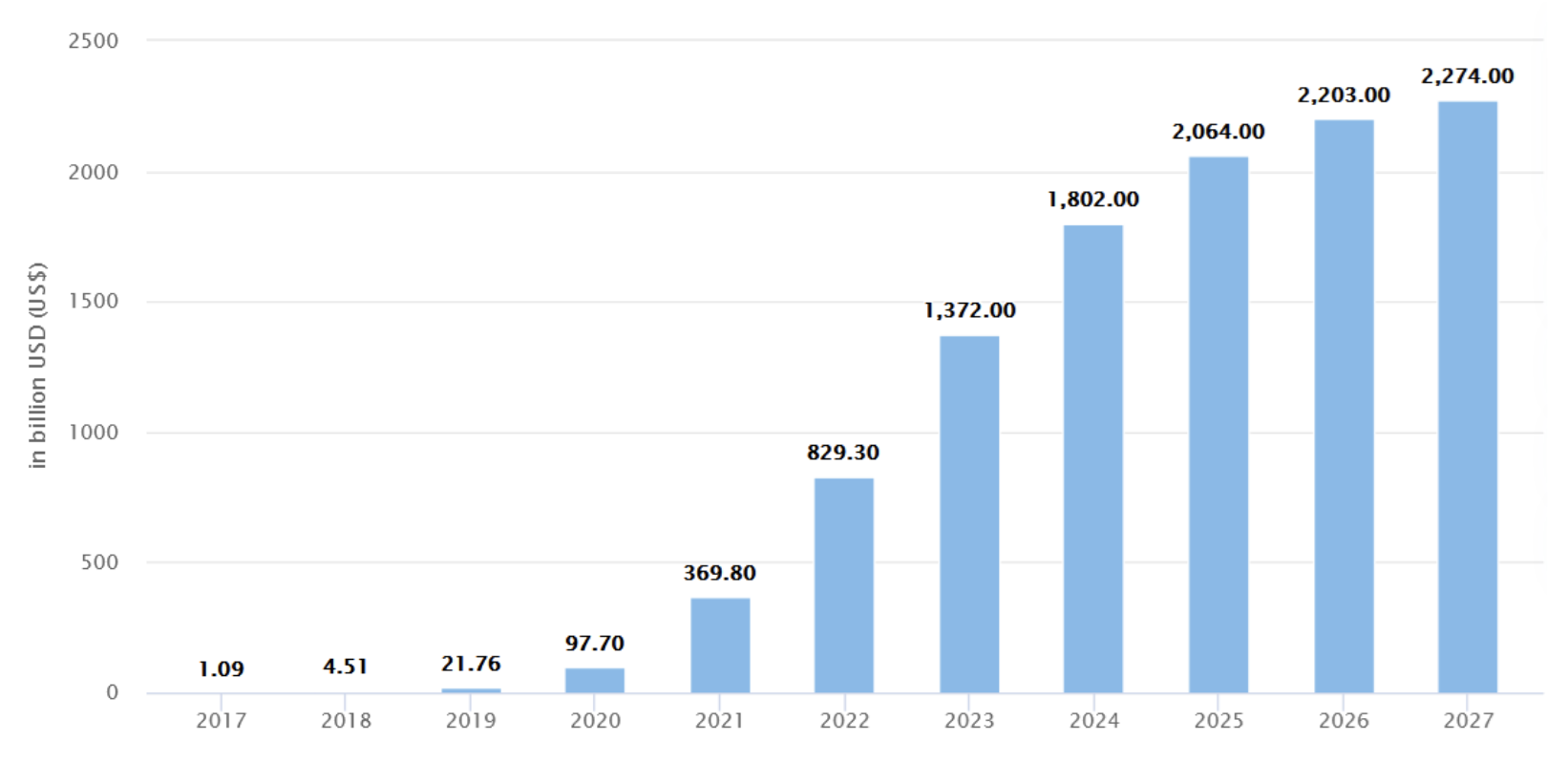
- Robo advisors: These are digital platforms that use algorithms to manage the portfolio. These automated systems are much cheaper to employ than human-managed SMAs, meaning that they have grown rapidly in popularity since being introduced in 2008. The downside is that the level of portfolio customization that you enjoy tends to be lower.
Analysts at Statista expect assets under management (AUMs) in the robo advisor market to continue growing steadily, as the chart below shows.
How To Compare Managed Trading Accounts
You have plenty of choice when it comes to deciding which managed account provider to go with. However, there are multiple factors we, and you, should consider:
Trading Performance
Reputable managed account brokers supply a wide range of information on who makes trading decisions, their philosophy, and other elements that influence their decision-making.
You should choose a company that provides comprehensive reports showing the historical performance of the accounts they supervise.
Total return, risk-adjusted return, volatility, and performance against key benchmarks are critical criteria that you should pore over carefully.
Capital Requirements
Managed account providers typically demand that you meet minimum investment amounts. The exact value differs from brokerage to brokerage, although they can be high (sometimes running into six-figure amounts).
If you want an accessible option, IG Smart Portfolios are available with a $500 minimum investment.
Commission and Fee Structure
Employing the expertise of a market professional involves taking on extra cost. In fact, the expense of using a managed account can be high.
Fees may be applied on an annual basis and charged as a percentage of total assets under administration (AUMs). These can vary considerably amongst account providers, but most charge between 1% and 3% of AUM.
Alternatively, some providers charge a monthly subscription fee and a cut of any profits, known as a performance fee.
That said, eToro is popular because it does not charge any additional fees to copy trades beyond the usual spreads and transaction fees. The downside is that the expertise and performance of master traders can vary dramatically.
Importantly, large fees can significantly erode investment returns. Keeping costs to a minimum is essential, although you may be willing to accept higher expenses if you expect to make a better return with a specific provider, for example.
Robo advisors tend to charge lower fees than account providers that employ money managers. I think these can be a good option for traders operating on a low budget.
Royston WildAuthorCustomer Support
The extra fees that you often pay for managed accounts should (in theory) guarantee a good level of customer service. You will want to be able to contact your provider quickly and easily, and to receive regular updates on your holdings and the performance of your portfolio.
You can consult user feedback on review websites like Trustpilot to assess the quality of a provider’s customer support.
Alternatively, we test the customer support of managed account brokers as part of our review process, with IG standing out for its 24/7 reliable assistance.
Technology and User Interface
Some money managers operate sophisticated in-house trading platforms, while others outsource their non-core functions to third-party providers.
It is important to select an account provider which has stable online technology and offers a user-friendly interface. After all, if you cannot understand any of the reports or information provided to you, how can you tell how close you are to meeting your financial goals?
FxPro offers a MAM account through the industry’s most popular platform – MetaTrader 4, so if you are already familiar with this forex trading software you can skip a steep learning curve.
I also recommend that you check that the managed account provider you are planning to use is recognized and approved by your local regulator.
In the UK, for example, clients can ascertain an account provider’s regulatory status through the Financial Conduct Authority (FCA).
Royston WildAuthorBottom Line
Managed trading accounts can be extremely useful if you have little time or energy to build and supervise your portfolio. They can also provide tax benefits, and allow you to benefit from the expertise of a professional.
However, these accounts may require high investment amounts and can attract elevated fees (though cheaper options are often provided by robo advisors).
When comparing brokers with managed trading accounts, it is important to consider customer support, interfaces and fees. It is also critical to evaluate the skill of the investment manager by considering past trading performance.
FAQ
What Is A Managed Trading Account?
A managed trading account is a financial product where a human (or automated) advisor is delegated day-to-day management of your portfolio.
This third party should execute transactions based on your risk tolerance, financial goals and economic circumstances, and closely monitor the portfolio’s performance.
What Is The Difference Between A Managed And Unmanaged Trading Account?
Managed trading accounts provide a hands-off approach to trading. You give control to a manager who will buy or sell securities and assets on your behalf.
Conversely, unmanaged accounts require you to take action and make trading decisions.
Are Managed Trading Accounts Worth The Fees?
Managed trading accounts may be worth it if you do not want to actively trade and have the capital to meet the sometimes large minimum investment requirements.
However, these accounts do not necessarily beat the market and returns can be below average due to the fees incurred.