




The CAC 40 is the benchmark index of the French stock market, tracking the 40 largest and most actively traded companies listed on Euronext Paris. CAC 40 brokers give traders access to those shares, plus products that track the index itself.
Below we rank the best brokers with access to the CAC 40 in 2026, based on our hands-on tests with live and demo accounts. We cover what to weigh up when comparing providers, walk through placing a trade step by step, and answer the questions new traders ask most.
The brokers listed below primarily offer stock trading through CFDs (Contracts for Difference). This allows for leverage and short-selling, making them effective tools for day traders. However, CFDs do not provide direct ownership of shares and are generally not appropriate for long-term investors due to overnight financing costs.CAC-40 Brokers
These are the 6 best brokers for trading on the CAC 40 Index France:
-
- Demo account
- Regulator: FMA, FSA
- Min. deposit: $0
-
- Demo account
- Regulator: ASIC, CySEC, FSCA, BVI FSC
- Platforms: Web Platform, MT4, MT5, TradingCentral
-
- Demo account
- Regulator: CySEC, MISA
- Platforms: MT4, MT5
-
- Demo account
- Regulator: FCA, ASIC, FSCA, VFSC, CIMA
- Min. deposit: $50
-
- Demo account
- Regulator: ASIC, CySEC, FSA, FSCA, FSC, SCB, CMA-Kenya
- Min. deposit: $0
-
- Demo account
- Regulator: FSA
- Platforms: MT5






Learn how we test brokers and why you can trust our ratings.
This is why we think these brokers are the best in this category in 2026:
- BlackBull 4.5/5 BlackBull is a New Zealand-based CFD broker providing diverse trading opportunities on over 2,180 instruments. After undergoing a rebrand in 2023, it now sports a modern look and feel complete with professional-grade trading tools and ultra-fast execution speeds averaging 20ms.
- Markets.com 4.4/5 Established in 2008, Markets.com is a long-standing, multi-regulated broker with oversight from the CySEC and FSCA. It offers unique features to track hedge fund moves and insider trades, while providing stock signals to alert traders to market opportunities. Its choice of accounts (Classic to Professional) caters to all levels of active trader. 72.3% of retail accounts lose money.
- FXCC 4.6/5 FXCC is an established broker that’s been offering low-cost online trading since 2010. Registered in Comoros Union and regulated by the CySEC, it stands out for its ECN trading conditions, no minimum deposit and smooth account opening that takes less than 5 minutes.
- Vantage 4.7/5 Founded in 2009, Vantage offers trading on 1000+ short-term CFD products to millions of clients. You can trade Forex CFDs from 0.0 pips on the RAW account through TradingView, MT4 or MT5. Vantage is ASIC-regulated and client funds are segregated. Copy traders will also appreciate the range of social trading tools.
- FP Markets 4.2/5 Established in 2005 in Australia, FP Markets is an ASIC- and CySEC-regulated broker boasting an extensive suite of tradable assets. Its Standard and Raw accounts cater to day traders at every level, while it packs a punch in the tooling department, from the MetaTrader suite and intuitive TradingView to actionable trading ideas from Trading Central and AutoChartist.
- Bullwaves 3.9/5 Established in 2024 and headquartered in Seychelles, Bullwaves is a MetaTrader-only broker offering access to a modest collection of 250+ assets including forex, metals, indices, and newer additions like stocks and ETFs. Traders can choose from three accounts; Classic, VIP and Elite, catering to different experience levels and budgets.
Community Sentiment
See how users rate these brokers based on the average customer ratings submitted on DayTrading.com, plus ratings from Trustpilot, the Apple App Store and Google Play.
| Broker | Our Users' Rating | Trustpilot Score | Trustpilot Reviews | iOS App Rating | Android App Rating |
|---|---|---|---|---|---|
| BlackBull | 3517 | ||||
| Markets.com | 1256 | ||||
| FXCC | 221 | ||||
| Vantage | 15680 | ||||
| FP Markets | 10359 | ||||
| Bullwaves | 675 |
BlackBull
After improving its trading infrastructure with Equinix servers in London, reducing latency for traders, BlackBull is an obvious choice if you want to day trade stock CFDs with ECN pricing. With competitive spreads and no commission on a growing roster of digital tokens paired with USD, BlackBull also works for active crypto traders.
 Christian Harris, Reviewer
BlackBull quick facts
- Demo Account
- ✔Yes
- Instruments
- CFDs, Stocks, Indices, Commodities, Futures, Crypto
- Regulator
- FMA, FSA
- Platforms
- BlackBull Invest, BlackBull CopyTrader, MT4, MT5, cTrader, TradingView, AutoChartist
- Minimum Deposit
- $0
- Minimum Trade
- 0.01 Lots
- Account Currencies
- USD, EUR, GBP, CAD, AUD, NZD, JPY, ZAR, SGD
Stock Exchanges
BlackBull offers trading on 10 stock exchanges:
- Australian Securities Exchange (ASX)
- CAC 40 Index France
- DAX GER 40 Index
- Dow Jones
- Euronext
- FTSE UK Index
- Hang Seng
- IBEX 35
- Nasdaq
- S&P 500
Pros
- BlackBulls’s research is superb, especially the daily ‘Trading Opportunities’ articles that break down complex market movements into easy-to-understand insights, making it simpler to capitalize on emerging trends.
- BlackBull is a much greater fit for aspiring traders following the overhaul of its ECN Prime account, now featuring improved spreads averaging 0.16 on EUR/USD and a more accessible minimum deposit of $0 compared to the old $2,000.
- BlackBull offers every ingredient for day traders; fast execution speeds of <100ms and tight spreads from 0.0 pips.
Cons
- Unlike most top brokers, BlackBull charges an irritating $5 withdrawal fee, which can detract from the overall cost-effectiveness, especially for active traders who frequently move funds.
- Despite a growing selection of 2,180+ assets, including additions to its Asia Pacific indices, they are mainly stocks with an average selection of currency pairs and indices.
- Although the Education Hub now features improvements like webinars and tutorials, the courses we’ve explored need more focus on explaining the wider economic factors influencing prices.
Markets.com
Markets.com is best suited to retail investors who trade frequently but don’t want to calculate commissions, thanks to its spread-only pricing (EUR/USD around 1.3 pips). It especially appeals to short-term traders who value fast execution, flexible asset choice spanning 2,200+ instruments and proprietary tools like hedge fund confidence indices and insider trade alerts.
Christian Harris, Reviewer
Markets.com quick facts
- Demo Account
- ✔Yes
- Instruments
- CFDs, Forex, Stocks, Commodities, Indices, Crypto, ETFs, Bonds
- Regulator
- ASIC, CySEC, FSCA, BVI FSC
- Platforms
- Web Platform, MT4, MT5, TradingCentral
- Minimum Deposit
- $200
- Minimum Trade
- 0.01 Lots
- Account Currencies
- USD, EUR, GBP, AUD, ZAR, SEK, NOK, DKK, CHF, PLN, CZK
Stock Exchanges
Markets.com offers trading on 10 stock exchanges:
- CAC 40 Index France
- DAX GER 40 Index
- Dow Jones
- Euronext
- FTSE UK Index
- IBEX 35
- Nasdaq
- New York Stock Exchange
- Russell 2000
- S&P 500
Pros
- Switching between the proprietary web platform (great for alerts and quick analysis) and MT5 (strong for algorithmic EAs) was smooth in our tests; positions synced across desktop, web, and mobile without gaps or re-quotes.
- Markets.com’s Hedge Fund Confidence and Insider Trading tools pulls SEC filings into the dashboard within 24 hours of disclosure, helping to spot fund moves and C-suite buys before most retail newsfeeds updated.
- Markets.com provides commission-free trading on most assets with spreads starting from around 0.6 pips on major forex pairs, making it cost-effective for casual traders.
Cons
- The proprietary web platform felt a bit basic once we pushed into advanced charting with fewer drawing/indicator options than full TradingView or MetaTrader.
- While CySEC and FSCA oversight is solid, the SVGFSA and BVIFSC entities offers 1:500 leverage under a light-touch framework, meaning protections like compensation schemes and strict conduct rules lag behind the strictest regulatory standards.
- During sign-up, we hit unclear account type explanations and got stuck in an email verification loop that locked us out for an hour - way less streamlined than other brokers we’ve tested.
FXCC
FXCC continues to prove itself an excellent option for day traders with a particularly strong selection of 70+ currency pairs, ultra-tight spreads from 0.0 pips during testing, and a free VPS for qualifying traders.
 Jemma Grist, Reviewer
FXCC quick facts
- Demo Account
- ✔Yes
- Instruments
- CFDs, Forex, Stocks, Indices, Metals, Energies, Crypto
- Regulator
- CySEC, MISA
- Platforms
- MT4, MT5
- Minimum Deposit
- $0
- Minimum Trade
- 0.01 Lots
- Account Currencies
- USD, EUR, GBP, CAD
Stock Exchanges
FXCC offers trading on 13 stock exchanges:
- CAC 40 Index France
- DAX GER 40 Index
- Deutsche Boerse
- Dow Jones
- Euronext
- FTSE UK Index
- Hong Kong Stock Exchange
- IBEX 35
- Japan Exchange Group
- Nasdaq
- New York Stock Exchange
- S&P 500
- SIX Swiss Exchange
Pros
- The free VPS for qualifying traders and the ability to build or buy EAs on MetaTrader make FXCC a strong option for algo traders.
- FXCC has stepped up its offering over the years, adding MT5 to its suite of platforms, hundreds of stocks and more cryptos to its product line-up, plus a copy trading feature and greater margin trading opportunities.
- Customer support still relies on human agents with response times of under three minutes on live chat during our tests and knowledgeable reps - a welcome break from the frustrating AI chatbots increasingly offered by brokers.
Cons
- Although FXCC has bolstered its range of markets with US, European and Asian stocks, the choice of metals and energies is light, and there are no soft commodities.
- Although regulated by the CySEC, FXCC’s offshore entity operates with weak regulatory oversight from MISA and may not provide safeguards like investor compensation in the event of broker insolvency.
- Although the economic calendar has benefited from a facelift, FXCC still offers very little in terms of market research beyond basic daily technical analysis and aggregated market news, with no tools like Autochartist or social sentiment data.
Vantage
Vantage remains an excellent option for CFD traders seeking a tightly-regulated broker with access to the reliable MetaTrader platforms. The fast sign-up process and $50 minimum deposit make it very straightforward to start day trading quickly.
Jemma Grist, Reviewer
Vantage quick facts
- Demo Account
- ✔Yes
- Instruments
- CFDs, Forex, Stocks, Indices, Commodities, ETFs, Bonds
- Regulator
- FCA, ASIC, FSCA, VFSC, CIMA
- Platforms
- ProTrader, MT4, MT5, TradingView, TradingCentral, DupliTrade
- Minimum Deposit
- $50
- Minimum Trade
- 0.01 Lots
- Account Currencies
- USD, EUR, GBP, CAD, AUD, NZD, JPY, HKD, SGD, PLN
Stock Exchanges
Vantage offers trading on 14 stock exchanges:
- Australian Securities Exchange (ASX)
- Bombay Stock Exchange
- CAC 40 Index France
- DAX GER 40 Index
- Dow Jones
- Euronext
- FTSE UK Index
- Hang Seng
- IBEX 35
- Japan Exchange Group
- London Stock Exchange
- Nasdaq
- National Stock Exchange Of India
- S&P 500
Pros
- It’s quick and easy to open a live account – taking less than 5 minutes
- Vantage maintains its high trust score thanks to its strong reputation and top-tier regulation from the FCA and ASIC
- There are no short-term strategy restrictions with hedging and scalping permitted
Cons
- The average execution speeds of 100ms to 250ms are slower than alternatives based on tests
- A steep $10,000 deposit is needed for the best trading conditions, which include the $1.50 commission per side
- It's a shame that some clients will need to register with the offshore entity, which offers less regulatory protection
FP Markets
FP Markets strikes an ideal balance between affordability and quality for active traders. They’ve managed to keep trading costs low while expanding their investment offering, charting tools, and research features, all while providing excellent support you can rely on for urgent trading queries.
Christian Harris, Reviewer
FP Markets quick facts
- Demo Account
- ✔Yes
- Instruments
- CFDs, Forex, Stocks, Indices, Commodities, Bonds, ETFs, Crypto
- Regulator
- ASIC, CySEC, FSA, FSCA, FSC, SCB, CMA-Kenya
- Platforms
- Iress, MT4, MT5, cTrader, TradingView, AutoChartist, TradingCentral
- Minimum Deposit
- $0
- Minimum Trade
- 0.01 Lots
- Account Currencies
- USD, EUR, GBP, CAD, AUD, NZD, JPY, CHF, HKD, SGD
Stock Exchanges
FP Markets offers trading on 15 stock exchanges:
- Australian Securities Exchange (ASX)
- Borsa Italiana
- CAC 40 Index France
- DAX GER 40 Index
- Dow Jones
- Euronext
- FTSE UK Index
- Hang Seng
- IBEX 35
- Japan Exchange Group
- London Stock Exchange
- Nasdaq
- National Stock Exchange Of India
- New York Stock Exchange
- S&P 500
Pros
- FP Markets has a seamless onboarding experience, standing out with crypto deposits and over 10 base currencies, catering to global traders.
- FP Markets has integrated top-notch research tools from Trading Central and Autochartist, helping traders identify short-term opportunities based on chart patterns, indicators, and other technical factors.
- FP Markets delivers fast and dependable support, available 24/5 with average response times of less than 1 minute during testing.
Cons
- While pricing in the Raw account is excellent, spreads in the Standard account trail the cheapest brokers with a 1.1-pip average spread on the EUR/USD compared to the 0.8-pip average at IC Markets.
- FP Markets’ Iress platform is only available to clients in Australia. It also primarily emphasizes stock trading over forex trading, and data fees can accumulate rapidly unless you're an active trader or maintain a high-balance account.
- Although Traders Hub provides rich research, notably the Daily Report, Technical Report, Market Insights, and Fundamental Analysis, it needs to widen its daily content variety and keep its forex news updated to match category leaders like IG.
Bullwaves
Bullwaves may appeal to aspiring day traders looking for the MetaTrader charting platforms with a growing suite of research tools, including AI-powered market analysis. However, the limited track record and weak regulatory credentials raise questions about its reliability.
Christian Harris, Reviewer
Bullwaves quick facts
- Demo Account
- ✔Yes
- Instruments
- CFDs, Forex, Commodities, Stocks, Indices, ETFs, Crypto
- Regulator
- FSA
- Platforms
- MT5
- Minimum Deposit
- $100
- Minimum Trade
- 0.01 Lots
- Account Currencies
- USD, EUR, GBP
Stock Exchanges
Bullwaves offers trading on 6 stock exchanges:
- CAC 40 Index France
- DAX GER 40 Index
- Dow Jones
- FTSE UK Index
- Nasdaq
- S&P 500
Pros
- Bullwaves now offers copy trading, allowing users to replicate the moves of traders across 900+ strategies with thin spreads from 0.01 pips.
- Bullwaves has upgraded its market offering with global equities, soft commodities, cryptos, and ETFs, as well as tripling the selection of FX assets.
- USDT deposits and withdrawals are facilitated, in addition to regular bank cards, bank wire transfers, and an e-wallet.
Cons
- Bullwaves operates without strong regulation in major jurisdictions, holding a license with one lower tier regulator, the Seychelles FSA, meaning it lacks oversight from reputable authorities to ensure compliance with strict financial standards.
- Customer support performed poorly during our initial tests with no 24/7 chat support as advertised, and no response to our email queries, though it performed much better in our latest round of tests with most queries getting answers same-day.
- Bullwaves has limited education tools, reducing its appeal for beginners, especially compared to category leaders like IG that provide structured courses and interactive elements.
Critical Factors When Choosing A CAC-40 Broker
The right broker depends on what you trade and how you trade it. Here is what matters most when you compare providers for the CAC 40 specifically.
Access To CAC 40 Instruments
Start with what you can actually trade. Some brokers only offer a CAC 40 index CFD. Others give you the full set: individual Euronext Paris shares, the index as a CFD, futures and options listed on Euronext, and ETFs that track the index, such as the Amundi CAC 40 ETF or the iShares CAC 40 UCITS ETF.
If you want to buy single shares, check for fractional dealing. Stocks like LVMH and Hermès trade at high prices per share, so fractional orders let you take a position without committing several hundred euros to one trade.
Order Execution And Routing
How your order reaches the market affects the price you get. Direct market access (DMA) sends your order straight to the Euronext order book, so you see and trade against real liquidity. Retail routing passes your order through the broker or a market maker first, which can mean a worse fill on fast-moving stocks.
For liquid CAC 40 names like TotalEnergies or Sanofi, spreads are tight and the difference is small. For thinner names, or during the volatile first minutes after the 09:00 open, slower routing can cost you through slippage. If you scalp or trade the open, prioritise a broker with fast execution and, ideally, DMA.
Platforms And Charting
Day traders need a platform they can read quickly. Look for the ability to trade directly from charts, switch time frames, and run technical indicators. Many CAC 40 brokers offer MetaTrader 5 or TradingView, while others build their own software.
Test the platform on a demo account before you fund it. Real-time conditions and virtual money let you learn the order ticket without risking capital.
Market Data And Order-Book Depth
A basic feed shows you the best bid and offer. Level II data shows the depth of the order book, so you can see resting orders at different prices. That matters during high-volatility sessions on the CAC 40, when you want to judge whether a level will hold before you commit. Not every broker includes Level II as standard, and some charge for it as an add-on, so check before you sign up.
Currency And Costs
The CAC 40 trades in euros, and most brokers offer euro-denominated accounts. If you fund in another currency, expect a conversion fee on every deposit and withdrawal, which adds up if you trade often.
Compare the full cost of holding a position, not just the headline spread. For CFDs that means the spread, any commission, and the overnight financing charge. For share dealing it means the commission and any custody or currency fee.
Regulation
In France, brokers are supervised by the Autorité des Marchés Financiers (AMF). Across the EU and UK, retail leverage on index CFDs is capped under ESMA-style rules, which protects newer traders from oversized positions. Check that any broker you use is authorised by a recognised regulator and that your funds are held separately from the firm’s own money.
Funding and Minimum Deposit
If you trade from France, look for brokers that accept Cartes Bancaires (CB) cards and SEPA transfers, so you can fund and start quickly. A low minimum deposit helps when you are starting out. You can open an account with FBS from €10 or the equivalent, for example, though you will want more than that to trade the index sensibly.
Education and Support
Learning material earns a broker points, especially if it sits inside the client dashboard so you are not switching tabs to research. Interactive Brokers runs a full training library covering beginner to advanced topics, including European equities and index trading.
CAC-40 – Headlines
- The CAC 40 holds 40 of the largest, most actively traded companies on Euronext Paris. It is free-float market-cap weighted, with any single stock capped at 15%, and reviewed quarterly (source: Euronext).
- It trades from 09:00 to 17:30 CET and is priced in euros.
- You can trade it as individual shares, an index CFD, futures, options, or an ETF.
- New to the platform? Practise first on a demo account before risking real money.
- Read price action across time frames with our guide to TradingView, which several CAC 40 brokers support.
- Track your results and spot what works with a trading journal.
How To Place A Trade On The CAC-40
Here is the process I follow, kept simple for a first trade. I ran these steps in an Interactive Brokers account so you can see the flow before using real money.
I go into the IBKR platform and searched the instrument box. For a single share I typed the company name. In this case I did LVMH (under the stock ticker MC), and the Euronext Paris listing came up.
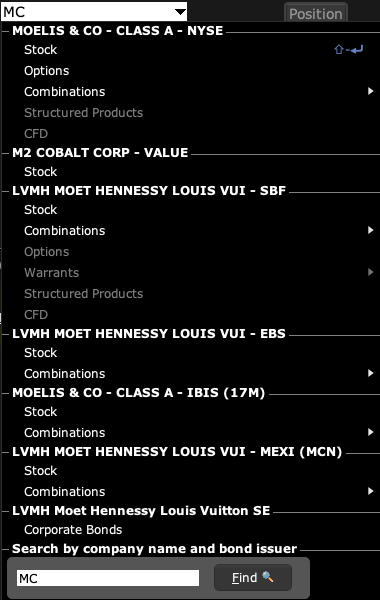
I checked the spread before doing anything else. Liquid CAC 40 shares like LVMH (shown below) showed a tight spread, while the smaller components (e.g., Eurofins Scientific) were wider.

A wide spread means you pay more to get in and out, so it tells you how much the trade has to move before you break even, which means a lot to day traders and other short-term traders.
For those outside the United States, you can access the CAC 40 CFD for the index itself. For American traders, the EWQ iShares MSCI France ETF is a strong proxy.
I chose the order type. A market order fills at the current price, which can be fine for liquid names in calm conditions. But you give up control, so it’s not my personal preference.
A limit order only fills at the price you set or better. This way I’m not filled at a worse level than I expected.
I reviewed the order confirmation screen. This shows the estimated cost, including any commission. For those in CFDs, it’ll give you the overnight financing if you hold past the close. I read this every time, as it’s the clearest summary of what the trade will actually cost.
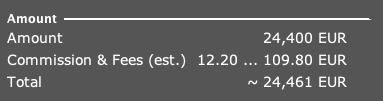
As a limit order, it’ll first sit in queue, assuming it doesn’t fill outright.

If you are choosing between a single stock and broad index exposure… Buying, for example, LVMH puts your money behind one company. Buying a CAC 40 ETF or index CFD spreads it across all 40, so one bad earnings report matters far less (just be mindful of correlations).
CAC-40 Live Price Chart
CAC40 Chart for DayTrading.com by TradingView
CAC-40 Background
The CAC 40, short for Cotation Assistée en Continu (Continuously Assisted Quotation), launched on 31 December 1987 with a base level of 1,000. It runs from the Paris Bourse and has been operated by Euronext since 2000. Euronext also runs the benchmark indices for Amsterdam, Brussels, Dublin, Lisbon, Milan, and Oslo.
The index tracks the 40 largest and most actively traded companies on Euronext Paris, selected by free-float market capitalisation and trading volume. Its make-up is reviewed quarterly, and no single company can carry more than 15% of the index. Trading runs from 09:00 to 17:30 CET, with the level recalculated every 15 seconds.
Constituents include household names such as LVMH, TotalEnergies, Sanofi, L’Oréal, Airbus, and BNP Paribas. Because these firms account for the bulk of Euronext Paris by value, the CAC 40 works as a gauge of the French economy and, given France’s weight in the eurozone, the wider European market.
Trading The CAC-40 vs Other European Markets
The CAC 40 sits alongside Germany’s DAX, the UK’s FTSE 100, and the pan-European Euro Stoxx 50. Where it differs is its mix. Luxury and consumer names like LVMH, Hermès, and Kering carry real weight, alongside energy through TotalEnergies. That makes the index sensitive to global luxury demand, the Chinese consumer, and the oil price in a way the DAX, with its industrial and auto tilt, is not.
For a trader, that concentration cuts both ways. A strong luxury earnings season can move the whole index, which creates opportunities but also sharper swings than a more diversified benchmark. Liquidity in the large caps is deep, so spreads stay tight, but mid caps inside the wider CAC family trade thinner.
How The CAC-40 Is Reviewed
Euronext’s independent Index Steering Committee, the Conseil Scientifique, reviews the index on the third Friday of March, June, September, and December. September is the annual review, when free-float factors and the 15% cap are reset. Any changes take effect about two weeks after the review.
These rebalance days bring heavy volume as funds adjust their holdings to match the new weights. A good broker handles them with stable execution and no platform slowdown, which is worth testing on a demo account around a review date if you trade actively.
CAC-40 Broker FAQs
Which brokers offer access to the CAC 40?
Most major CFD and share-dealing brokers cover the index. The toplist above ranks the ones we tested for execution, cost, available instruments, and platform quality.
Can I trade the CAC 40 with leverage?
Yes, through CFDs and futures. Retail leverage on index CFDs is capped under EU and UK rules, so the maximum is lower than it once was. Leverage increases both potential gains and losses, so size positions carefully. A limit order, stop-loss, and small position size are especially important with leveraged CAC 40 products because even modest index moves can quickly magnify account gains or losses.
Can I buy individual French shares, or only the index?
It depends on the broker. Some offer only a CAC 40 index product, while others let you trade individual Euronext Paris shares as well. If single-stock trading matters to you, check the instrument list and whether fractional dealing is available.
Can I trade the CAC 40 outside French market hours?
The cash index trades 09:00 to 17:30 CET. CAC 40 futures and many index CFDs trade over a longer window. So brokers offering those let you react to news before and after the Paris session.
Do I need a euro account to trade the CAC 40?
Not always, but it helps. The index and its shares are priced in euros, so a euro-denominated account avoids a currency conversion fee on every deposit, withdrawal, and trade. Check the account currencies your broker supports.
Is there a CAC 40 ETF I can trade through a broker?
Yes. The Amundi CAC 40 ETF and the iShares CAC 40 UCITS ETF (IFREx) both track the index and are available through many brokers. An ETF gives you exposure to all 40 companies in a single position, usually at low cost.
What is the minimum deposit to start?
It varies widely. FBS lets you open from €10 or the equivalent, while other brokers set higher minimums. Whatever the figure, fund enough to trade sensible position sizes and manage risk.
Conclusion – CAC-40 Brokers
Use the comparison above to choose between the top CAC 40 brokers we tested in 2026. The right provider gives you the instruments you want, fast execution in euros, clear pricing, and a platform you can trade confidently.
Practise on a demo account first, keep your early position sizes small, and make sure you understand both the product and the French market before you commit real money.