




End of day trading is a convenient strategy for many traders. By placing your trades at the end of each trading day, you don’t need to spend time watching the markets all day and can avoid being distracted by news. It may also reduce the need for paid real-time data or intraday scanning tools. This page will explain what end of day trading means, the benefits and risks, and how to get started with end of day trading. We will also detail an example.
Trading Brokers in Spain
-
- Demo account
- Regulator: FCA, ASIC, CySEC, FSC, SCB, FSA
- Platforms: MT4, MT5, TradingView, TradeLocker
71.28% of retail traders lose money when trading CFDs -
- Demo account
- Platforms: xStation
- Min. deposit: $0
75% of accounts lose money when trading CFDs with this provider. -
- Demo account
- Regulator: FCA, ASIC, CMVM , FSCA, SCB, FSA
- Platforms: TN Trader, MT4, TradingView
-
- Demo account
- Regulator: ASIC, VFSC, FSA
- Platforms: MT4, MT5, cTrader, TradingView, DupliTrade
-
- Demo account
- Instruments: CFDs, Forex, Indices, Shares, Commodities
- Regulator: ASIC, CySEC, FSCA, FSC
-
- Demo account
- Regulator: FMA, FSA
- Min. deposit: $0






Learn how we test brokers and why you can trust our ratings.
Here is a short overview of each broker's pros and cons
- Eightcap 4.6/5 Eightcap is a multi-regulated forex and CFD broker established in Australia in 2009. The broker has proven popular with active day traders, providing 800+ instruments with tight spreads and notable improvements in recent years, integrating the leading TradingView platform, alongside AI-powered financial calendars and algo trading tools with zero coding experience required.
- XTB 4.8/5 Founded in 2002 in Poland, XTB now serves more than 1 million clients. The forex and CFD broker combines a heavily regulated trading environment with an extensive selection of assets and a commitment to trader satisfaction, featuring an intuitive in-house platform with superb tools to support aspiring day traders.
- Trade Nation 4.4/5 Trade Nation is a top FX and CFD broker regulated in multiple jurisdictions including the UK and Australia. The firm offers low-cost fixed and variable spreads on 1000+ assets with robust trading platforms and training materials. The Signal Centre can also be used for trade ideas.
- Fusion Markets 4.6/5 Fusion Markets is an online broker established in 2017 and regulated by the ASIC, VFSC and FSA. It is best known for its low-cost forex and CFD trading, although its multiple account types and copy trading solutions cater to a range of traders. New clients can sign up and start trading in 3 easy steps.
- FBS 4.3/5 Founded in 2009, FBS is an award-winning CFD broker operating in over 150 countries with a client base exceeding 27 million traders. Traders are supported at every stage of their journey with 24/7 assistance, market analytics, trading calculators, and competitive pricing with zero commissions.
- BlackBull 4.5/5 BlackBull is a New Zealand-based CFD broker providing diverse trading opportunities on over 2,180 instruments. After undergoing a rebrand in 2023, it now sports a modern look and feel complete with professional-grade trading tools and ultra-fast execution speeds averaging 20ms.
Community Sentiment
See how users rate these brokers based on the average customer ratings submitted on DayTrading.com, plus ratings from Trustpilot, the Apple App Store and Google Play.
| Broker | Our Users' Rating | Trustpilot Score | Trustpilot Reviews | iOS App Rating | Android App Rating |
|---|---|---|---|---|---|
| Eightcap | 3907 | ||||
| XTB | 3004 | ||||
| Trade Nation | 2166 | ||||
| Fusion Markets | 10175 | ||||
| FBS | 10213 | ||||
| BlackBull | 3517 |
Eightcap
Eightcap delivers in every area for day traders with a growing selection of charting platforms, education via Labs, and AI-powered tools. Now sporting 120+ crypto CFDs, it's also become a stand-out choice for crypto trading, winning our 'Best Crypto Broker' award two years in a row.
 Christian Harris, Reviewer
Eightcap quick facts
- Demo Account
- ✔Yes
- Instruments
- CFDs in Forex, Stocks, Indices, Commodities, Crypto
- Regulator
- FCA, ASIC, CySEC, FSC, SCB, FSA
- Platforms
- MT4, MT5, TradingView, TradeLocker
- Minimum Deposit
- $100
- Minimum Trade
- 0.01 Lots
- Account Currencies
- USD, EUR, GBP, CAD, AUD, NZD, SGD
Pros
- Eightcap added TradeLocker in 2026 for certain regions, marking it out as the best regulated TradeLocker broker, while still delivering Eightcap's ultra-fast execution and low fees for active traders on the charting software.
- Eightcap stands out with a selection of powerful trading tools and resources, including MT4 and MT5, and more recently the 100-million strong social trading network TradingView.
- After bolstering its roster in 2021, Eightcap offers one of the most extensive selections of cryptocurrency CFDs in the market, with crypto/fiat pairs, crypto/crypto pairs, plus crypto indices for broader exposure to the market.
Cons
- The demo account expires after 30 days and can only be extended upon request - a notable inconvenience compared to the likes of XM with its unlimited demo mode.
- Eightcap needs to continue bolstering its suite of 800+ instruments to match category leaders like Blackbull Markets with its 26,000+ assets, featuring a particularly weak selection of commodities.
- Despite a useful library of educational guides and e-books in Labs, Eightcap still trails IG’s comprehensive toolkit for aspiring traders with its dedicated IG Academy app and 18 course categories.
XTB
XTB stands out as a top choice for new day traders with the terrific xStation platform, low trading costs, no minimum deposit, and excellent educational tools, many of which are seamlessly integrated into the platform.
Christian Harris, Reviewer
XTB quick facts
- Demo Account
- ✔Yes
- Instruments
- CFDs on shares, Indices, ETFs, Raw Materials, Forex currencies, cryptocurrencies, Real shares, Real ETFs
- Regulator
- FCA, CySEC, KNF, DFSA, FSC, SCA, CMF, Bappebti
- Platforms
- xStation
- Minimum Deposit
- $0
- Minimum Trade
- 0.01 Lots
- Account Currencies
- USD, EUR, GBP
Pros
- The xStation platform continues to impress with its user-friendly interface and intuitive features, including customizable news feeds, sentiment heatmaps, and trader calculator, reducing the learning curve for newer traders.
- With an excellent range of educational materials, including training videos and articles integrated into the platform, XTB supports traders at all levels.
- First-class 24/5 customer support is available, including a friendly live chat with response times of under two minutes during testing.
Cons
- XTB discontinued support for MT4, limiting traders to its proprietary platform, xStation, potentially deterring advanced day traders familiar with the MetaTrader suite.
- Not being able to adjust the default leverage level of XTB products is frustrating, as manual adjustment can significantly mitigate trade risk, especially in forex and CFD trading.
- XTB does not offer a raw spread account, which is becoming increasingly common among competitors like Pepperstone, and may disappoint day traders looking for the tightest spreads.
Trade Nation
Trade Nation suits discretionary traders who want to speculate on major indices like the US 500 or liquid FX pairs, and want the predictable all-in costs of fixed spreads. In tests, we found the fixed-spread TN Trader environment particularly useful for trading around scheduled economic releases owing to its reliable charting environment and because published spreads stayed capped.
Christian Harris, Reviewer
Trade Nation quick facts
- Demo Account
- ✔Yes
- Instruments
- CFDs, Forex, Indices, Shares, Commodities, Futures, Bonds, Spread Betting (UK and Ireland only), Cryptos (Bahamas entity only)
- Regulator
- FCA, ASIC, CMVM , FSCA, SCB, FSA
- Platforms
- TN Trader, MT4, TradingView
- Minimum Deposit
- $0
- Minimum Trade
- 0.1 Lots
- Account Currencies
- USD, EUR, GBP, AUD, ZAR, SEK, NOK, DKK
Pros
- Trade Nation accounts can now be linked with TradingView, providing advanced multi-charts and the ability to execute trades directly.
- The demo comes with a $5,000 practice account and you can request a one-on-one platform walkthrough by callback - this level of personal help is rare.
- In testing of the TN Trader account under normal market conditions, fixed spreads held while fills were prompt on major forex pairs, with a slight drift in the entry level as price ticked between click and fill.
Cons
- Offshore SCB and FSA entities allow retail clients up to 1:200 and 1:500 leverage compared to 1:30 in regions like the UK, Europe and Australia, so an FSA client can have 16 times the exposure of a UK retail client on the same trade, but with less oversight and no compensation scheme.
- The 2–20% rebate scheme is closed to FCA, CMVM, and ASIC clients, meaning active day traders in these regions who would benefit from transaction rebates cannot claim them.
- Withdrawals can take up to five business days, which is around the industry average but slower than the 1-3 days we’re increasingly seeing brokers offer in an attempt to quash withdrawal complaints from retail investors.
Fusion Markets
Fusion Markets is a standout option for forex traders looking for excellent pricing with spreads near zero, industry-low commissions and recently TradingView integration. It’s a particularly good broker for Australian traders where the company is headquartered and regulated by the ASIC.
 Jemma Grist, Reviewer
Fusion Markets quick facts
- Demo Account
- ✔Yes
- Instruments
- CFDs, Forex, Stocks, Indices, Commodities, Crypto
- Regulator
- ASIC, VFSC, FSA
- Platforms
- MT4, MT5, cTrader, TradingView, DupliTrade
- Minimum Deposit
- $0
- Minimum Trade
- 0.01 Lots
- Account Currencies
- USD, EUR, GBP, CAD, AUD, NZD, JPY, CHF, HKD, SGD
Pros
- Fusion Markets is set up to support algo traders with a sponsored VPS solution and a 25% discount if you opt for the NYC Servers VPS for MT4 or cTrader.
- The range of charting platforms and social trading features is excellent, with MT4, MT5, cTrader and more recently TradingView, catering to a wide range of trader preferences.
- Fusion Markets continues to impress with its pricing that provides tight spreads with below-average commissions that will appeal to active day traders.
Cons
- Traders outside of Australia must sign up with weakly regulated global entities with limited safeguards, though in August 2026 they made negative balance protection available to all eligible accounts.
- The demo account expires after 30 days, limiting its potential as a useful trading tool alongside a real-money account.
- Fusion Market trails alternatives, notably IG, in the education department with limited guides and live video sessions to upskill new traders.
FBS
FBS is an excellent choice for day traders at every level and budget, with just a $5 minimum deposit and intensive academy for aspiring traders alongside access to MT4 and MT5.
Christian Harris, Reviewer
FBS quick facts
- Demo Account
- ✔Yes
- Instruments
- CFDs, Forex, Indices, Shares, Commodities
- Regulator
- ASIC, CySEC, FSCA, FSC
- Platforms
- FBS App, MT4, MT5
- Minimum Deposit
- $5
- Minimum Trade
- 0.01 Lots
- Account Currencies
- USD, EUR, AUD, JPY
Pros
- FBS strikes the balance between robust features and ease of use, with a sign-up process taking <10 minutes, an intuitive app, advanced research through Market Analytics & more recently VIP Analytics, plus immersive education through the FBS Academy and Trader’s Blog.
- 24/7 customer support that performed excellently during testing is available, alongside a $5 minimum deposit, and a huge variety of 200+ funding options, making it ideal for traders with small accounts.
- The introduction of the FBI Assistant has given active traders useful, AI-powered intelligence to assess charts and patterns with potential trade ideas that can be executed in one click.
Cons
- Despite enhancing the selection of currency pairs, now providing over 70, FBS still trails industry leaders like BlackBull Markets in its market offering with a particularly narrow selection of commodities and indices.
- There are only four base currencies available - EUR, USD, AUD and JPY (region dependant) - which isn't practical for minimizing currency conversion fees for many global traders, and is especially striking given the broker’s user base spans over 150 nations.
- Although the FBS app offers a terrific mobile trading experience for aspiring traders and MT4/MT5 cater to advanced traders, the absence of cTrader and TradingView, which are increasingly offered by alternatives like Pepperstone, will deter day traders familiar with these platforms.
BlackBull
After improving its trading infrastructure with Equinix servers in London, reducing latency for traders, BlackBull is an obvious choice if you want to day trade stock CFDs with ECN pricing. With competitive spreads and no commission on a growing roster of digital tokens paired with USD, BlackBull also works for active crypto traders.
Christian Harris, Reviewer
BlackBull quick facts
- Demo Account
- ✔Yes
- Instruments
- CFDs, Stocks, Indices, Commodities, Futures, Crypto
- Regulator
- FMA, FSA
- Platforms
- BlackBull Invest, BlackBull CopyTrader, MT4, MT5, cTrader, TradingView, AutoChartist
- Minimum Deposit
- $0
- Minimum Trade
- 0.01 Lots
- Account Currencies
- USD, EUR, GBP, CAD, AUD, NZD, JPY, ZAR, SGD
Pros
- BlackBulls’s research is superb, especially the daily ‘Trading Opportunities’ articles that break down complex market movements into easy-to-understand insights, making it simpler to capitalize on emerging trends.
- After partnering with ZuluTrade and Myfxbook, alongside improvements to its own CopyTrader, and finally enabling cTrader Copy, BlackBull offers one of the most comprehensive copy trading experiences we've seen.
- BlackBull offers every ingredient for day traders; fast execution speeds of <100ms and tight spreads from 0.0 pips.
Cons
- Despite a growing selection of 2,180+ assets, including additions to its Asia Pacific indices, they are mainly stocks with an average selection of currency pairs and indices.
- Unlike most top brokers, BlackBull charges an irritating $5 withdrawal fee, which can detract from the overall cost-effectiveness, especially for active traders who frequently move funds.
- Although the Education Hub now features improvements like webinars and tutorials, the courses we’ve explored need more focus on explaining the wider economic factors influencing prices.
What Is End Of Day Trading?
An end of the day trading strategy simply means to make trading decisions very near to, or after the markets close. Whereas day traders watch charts all day, opening and closing trades when they choose, end of day traders typically trade at the close or the open.
Some stocks and ETFs can also be traded after hours, depending on the broker and venue, but liquidity may be lower, spreads may be wider and orders may be harder to execute at the expected price. The SEC highlights these as key extended-hours trading risks.
End of day trading can reduce the temptation to react to intraday news and price noise, though traders remain exposed to overnight announcements, earnings releases and market gaps. End of day trading setups allow you to cut out the noise, can often lead to cheaper rates, and enable you trade with limit or stop orders. Although it is sometimes discussed alongside day trading, end-of-day trading often overlaps with swing trading, especially when positions are held overnight. This strategy is useful for people who want to continue working their day job, though they will need to understand how their broker applies relevant day trading rules.
What Time Does End Of Day Trading Start?
Before we get into the details, let’s first look into when end of day trading starts. The correct definition for ‘end of day’ trading depend on which markets you are trading, whether in the UK or elsewhere. For shares and ETFs, it is usually tied to the relevant exchange close. For forex, it is more often tied to a broker’s daily candle close or the end of a major trading session.
For forex, “end of day” is less straightforward than for equities because spot FX trades across a decentralised 24-hour market during the trading week. However, liquidity and volatility often concentrate around the major regional sessions, especially London, roughly 8am to 4pm UK time, New York, roughly 8am to 5pm Eastern Time, and the London–New York overlap, roughly 1pm to 4pm UK time. Traders may therefore plan entries and exits around session closes or around their broker’s daily candle close.
In general, traditional day trading is when you see more market participants which leads to higher liquidity. However, end of day trading often sees a high volume of activity as many traders unwind their positions and close trading for the day.
So, to figure out what time day trading ends, check your local markets of interest.
Strategy Example
Placing your orders at the end of a trading day means you can still use the same intraday strategies. Many traders use swing trading on stocks or forex, using the end of day method. It’s simply the timing of when you place your trades that is different.
The best end of day trading methods use software to implement strategies. The system will create pending orders for the next day while time is effectively paused (i.e. when no trades are occurring).
One common end-of-day forex method is breakout trading. Traders use this approach to try to enter when price moves out of a low-volatility range. The aim is to catch the early part of a larger move, but false breakouts are common and results depend heavily on market conditions, execution and risk management.
Breakout traders aim to enter when a quiet market begins to expand into a stronger move. This can sometimes capture the early part of a trend, but false breakouts are common and losses can accumulate if the strategy is not tested and managed carefully.
To trade a breakout, you need to wait for a low volatility range to form. You then enter a trade on the first move outside the range that has formed. Here is an example.
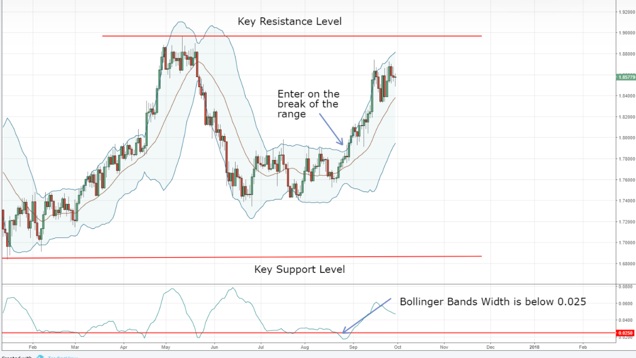
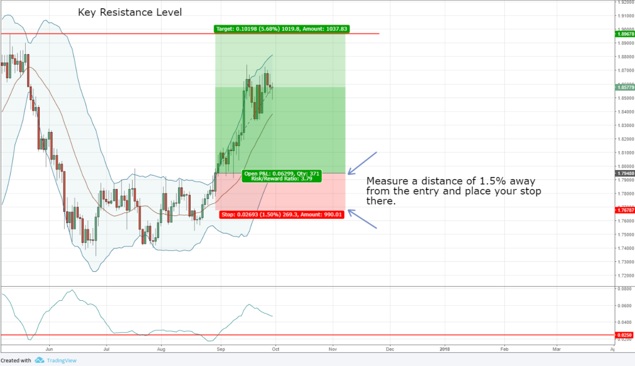
The key to breakout trading is that you have larger winning trades than you have losing trades. To help achieve this, you can place a stop-loss. A stop-loss can help define risk, but it does not guarantee execution at the chosen price. Traders should also account for slippage, gaps and changing liquidity.
Some traders place stops beyond the range or use volatility-based measures such as recent average movement. There is no universally optimal percentage stop-loss; the appropriate level depends on the currency pair, timeframe, volatility and the trader’s risk tolerance. For example, many traders measure between a 0.5% and 2% move of the currency and place the stop-loss there – many consider 1.5% a good level to keep the win rate high.
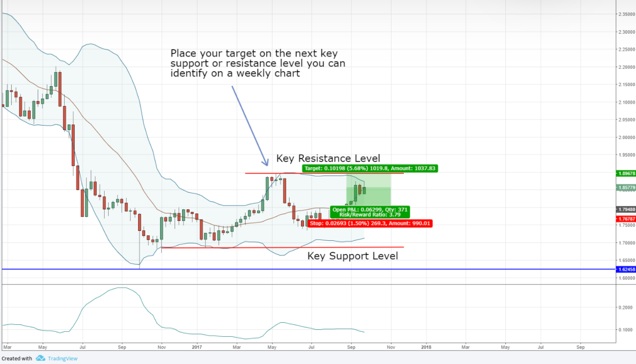
You also want to put a profit target on the next major level. To identify this level, you can look at a weekly chart for the nearest support and resistance level.
Benefits Of End Of Day Trading
There are several benefits to the end of day trading:
- Convenience – The process of end of day trading can be more convenient compared to intraday investing. If you have a full-time job, you don’t need to watch the markets all day. Because your analysis starts when the rest of the markets are closing, it means that it does not interfere with your regular job. You can place your orders to go live at the end of the trading day. Your positions will be left open overnight. But your trade adjustments, such as moving your risks to break even, or adjusting the profit levels are easier to manage.
- Cheaper rates – If you are trading stocks or futures, for example, you may need to pay fees for intraday data. You may also pay other fees such as transaction costs and a software charge. End of day trading is all about trading with closing prices. Many online brokers do not charge for this service. Because the end of day prices are widely available from everywhere, you do not have to pay additional sums to gain real-time market data. Scanning tools are also relatively cheaper when it comes to end of day trading.
- Limit or stop orders – End of day trading means you’ll likely need to use limit or stop orders. Some online brokerages charge a higher fee when you trade with market orders. This is because the execution costs are high. Resting limit orders can add liquidity and may attract different pricing on some venues, but this depends on the broker, market and order type. A marketable limit order may execute immediately and remove liquidity.
- Discipline – End of day trading can make you more disciplined. You are using just a few hours a day to analyse the markets to create a trading plan. Because your attention is more focussed, the temptation of overtrading and the emotional influences of daily news announcements should be reduced.
Downsides Of End Of Day Trading
Despite some benefits, there are several downsides to end of day trading:
- Missing overnight developments – The biggest risk is that you are trading when the markets are less active. This puts you at risk of overnight market developments. For example, when earnings are released, prices tend to gap significantly. Because you are trading just once a day, at the closing hours of the markets, it can leave your positions vulnerable to overnight market movements.
- Less active risk management – With day trading you can manage your risk efficiently. This is because you are constantly monitoring the markets. This isn’t the case with end of day trading. There’s a chance you’ll make huge profits, but an equal or greater risk your stops may be triggered before you have a chance to adjust your risk settings, and in fast or gapping markets they may execute at a worse price than expected..
- Liquidity – You are also at risk of reduced liquidity with end of day trading. As a result, there is a chance that your limit orders will not be triggered at the price you wanted.
- Earnings season – Earnings timings are something to be wary of when end of day trading. Because most companies tend to release their earnings before the market opens or after the market closes, you can expect to see pre-market and after-market pricing turn volatile.
How To Get Started End Of Day Trading
As with all trading strategies, you first need to find a top broker and fund your account to access daily prices, charts and risk tools. It’s also always worth comparing spreads, platform features, mobile signals and customer support during end of trading hours.
Final Word
End of day trading is a convenient method for anyone who wants to continue working their regular day job. End of day trading allows you to cut the noise and use limit or stop orders to control your trades. It may also reduce the need for real-time data, but traders should still account for spreads, slippage and overnight risk. Make sure you also use a top broker to get started end of day trading.
FAQ
What Is The Difference Between Intraday And End Of Day Trading?
Intraday trading is when forex traders place orders, or open and close positions, while the local market is open. End of day trading is a strategy whereby traders make forex decisions very near to, or after the markets close.
What Is The Best End Of Day Trading Software?
Any top broker will provide you with the best software to support an end of day trading strategy. Look for a broker that provides access to charts, trading signals and risk tools, such as stop losses and limit orders. These will support your technical analysis and may help you become a successful forex trader.
Can You Day Trade At Night?
Overnight trading is the trading that takes place outside of normal trading hours. Bonds have extended trading hours and overnight trading can take place on stocks between 4 am and 9:30 am (when the exchanges open) and 6 pm (when the exchanges close) and 8 pm.
Does High Frequency Investing During End Of Day Trading Affect The Markets?
High-frequency trading and end-of-day price dislocation can affect the markets. Firstly, more competition is accompanied by high-frequency trading and larger volumes, which improve market liquidity. Secondly, more competition may mean that high-frequency traders adapt their strategies and engage in more speculative trades, which can impact market liquidity.
Can You Trade At The End Of The Trading Day With Robinhood?
Robinhood offers extended-hours trading. This means you’ll be able to trade during pre-market and after-hours sessions. That equals an extra two and a half hours of market access, each day.
Can You Trade ETFs With End Of Day Trading?
Trading for stocks and ETFs typically closes at 4 pm ET, but unlike with mutual funds, you can continue trading stocks and ETFs in the after-hours market.