




End of day trading is a convenient strategy for many traders. By placing your trades at the end of each trading day, you don’t need to spend time watching the markets all day and can avoid being distracted by news. It may also reduce the need for paid real-time data or intraday scanning tools. This page will explain what end of day trading means, the benefits and risks, and how to get started with end of day trading. We will also detail an example.
Trading Brokers in New Zealand
-
- Demo account
- Regulator: FMA, FSA
- Min. deposit: $0
-
- Demo account
- Regulator: FCA, FSCA, FSA
- Min. deposit: $50
-
- Demo account
- Platforms: MT4, MT5, TradingCentral
- Min. deposit: $5
-
- Demo account
- Min. deposit: $100
- Min. trade: 0.01 Lots
-
- Demo account
- Regulator: FSC
- Platforms: R StocksTrader, MT4, MT5, TradingView
-
- Demo account
- Regulator: ASIC, CySEC, FSA, SCB, CMA-Kenya
- Min. deposit: $200






Learn how we test brokers and why you can trust our ratings.
This is why we think these brokers are the best in this category in 2026:
- BlackBull 4.5/5 BlackBull is a New Zealand-based CFD broker providing diverse trading opportunities on over 2,180 instruments. After undergoing a rebrand in 2023, it now sports a modern look and feel complete with professional-grade trading tools and ultra-fast execution speeds averaging 20ms.
- Moneta Markets 4.4/5 Founded in 2019 and headquartered in Johannesburg, South Africa, Moneta Markets offers over 1000 instruments for short-term trading. New traders can choose between STP and ECN accounts while the smooth sign-up process has helped attract 70,000 registered traders.
- XM 4.8/5 XM is a globally recognized forex and CFD broker with 20+ million clients in 190+ countries. Since 2009, this trusted broker has been delivering low trading fees across its growing roster of 1000+ instruments. It also offers a comprehensive MetaTrader experience that we've observed firsthand placing test trades.
- AvaTrade 4.9/5 Established in 2006, AvaTrade is a leading forex and CFD broker trusted by over 400,000 traders. Operating under regulation in 9 jurisdictions, AvaTrade processes an impressive 2+ million trades each month. Through like MT4, MT5, and its proprietary WebTrader, the broker provides a growing selection of 1,250+ instruments. Whether it’s CFDs, AvaOptions, or the more recent AvaFutures, short-term traders at all levels will find opportunities. With terrific education and 24/5 multilingual customer support, AvaTrade delivers the complete trading experience.
- RoboForex 4.5/5 RoboForex is an online broker, established in 2009 and registered with the FSC in Belize. Traders can choose from five accounts (Prime, ECN, R StocksTrader, ProCent, Pro) catering to different needs with trades from 0.01 lots and spreads from 0 pips. RoboForex has also enhanced its offering over the years, adding CFD instruments and launching its stock trading platform, plus the CopyFX system.
- IC 4.8/5 IC Markets (now IC) is a globally recognized forex and CFD broker known for its excellent pricing, comprehensive range of trading instruments, and premium trading technology. Founded in 2007 and headquartered in Australia, the brokerage is regulated by the ASIC, CySEC and FSA, and has attracted more than 200,000 clients from over 200 countries.
Community Sentiment
See how users rate these brokers based on the average customer ratings submitted on DayTrading.com, plus ratings from Trustpilot, the Apple App Store and Google Play.
| Broker | Our Users' Rating | Trustpilot Score | Trustpilot Reviews | iOS App Rating | Android App Rating |
|---|---|---|---|---|---|
| BlackBull | 3517 | ||||
| Moneta Markets | 643 | ||||
| XM | 3132 | ||||
| AvaTrade | 13597 | ||||
| RoboForex | 777 | ||||
| IC | 2 |
BlackBull
After improving its trading infrastructure with Equinix servers in London, reducing latency for traders, BlackBull is an obvious choice if you want to day trade stock CFDs with ECN pricing. With competitive spreads and no commission on a growing roster of digital tokens paired with USD, BlackBull also works for active crypto traders.
 Christian Harris, Reviewer
BlackBull quick facts
- Demo Account
- ✔Yes
- Instruments
- CFDs, Stocks, Indices, Commodities, Futures, Crypto
- Regulator
- FMA, FSA
- Platforms
- BlackBull Invest, BlackBull CopyTrader, MT4, MT5, cTrader, TradingView, AutoChartist
- Minimum Deposit
- $0
- Minimum Trade
- 0.01 Lots
- Account Currencies
- USD, EUR, GBP, CAD, AUD, NZD, JPY, ZAR, SGD
Pros
- BlackBull is a much greater fit for aspiring traders following the overhaul of its ECN Prime account, now featuring improved spreads averaging 0.16 on EUR/USD and a more accessible minimum deposit of $0 compared to the old $2,000.
- After partnering with ZuluTrade and Myfxbook, alongside improvements to its own CopyTrader, and finally enabling cTrader Copy, BlackBull offers one of the most comprehensive copy trading experiences we've seen.
- BlackBull offers every ingredient for day traders; fast execution speeds of <100ms and tight spreads from 0.0 pips.
Cons
- Unlike most top brokers, BlackBull charges an irritating $5 withdrawal fee, which can detract from the overall cost-effectiveness, especially for active traders who frequently move funds.
- Although the Education Hub now features improvements like webinars and tutorials, the courses we’ve explored need more focus on explaining the wider economic factors influencing prices.
- Despite a growing selection of 2,180+ assets, including additions to its Asia Pacific indices, they are mainly stocks with an average selection of currency pairs and indices.
Moneta Markets
With ECN pricing featuring spreads from 0 and commissions from $1, leveraged trading, and terrific charting platforms, Moneta Markets is an excellent broker for experienced day traders.
Christian Harris, Reviewer
Moneta Markets quick facts
- Demo Account
- ✔Yes
- Instruments
- CFDs, Forex, Stocks, Indices, Commodities, ETFs, Crypto
- Regulator
- FCA, FSCA, FSA
- Platforms
- AppTrader, ProTrader 2.0, MT4, MT5, TradingCentral
- Minimum Deposit
- $50
- Minimum Trade
- 0.01 Lots
- Account Currencies
- USD, EUR, GBP, CAD, NZD, JPY, HKD, SGD, BRL
Pros
- Moneta Markets makes account funding a breeze, with plenty of account currencies, zero transfer fees and a wide selection of traditional, digital and now crypto-backed payment methods.
- Registering for an account with Moneta Markets is quick and easy through the digital sign-up process, taking just a few minutes with an accessible $50 minimum deposit.
- Moneta Markets supports a growing suite of 1000+ tradable assets, with a particularly strong selection of commodities and more recently fresh index CFDs.
Cons
- Although regulated by the FSCA, trading through the Seychelles-based entity may result in limited regulatory protections due to its offshore base and lax mandated account safeguards.
- Clients need an account balance of at least $500 to access educational materials, a serious drawback for beginners who can get free materials from brokers like IG and eToro.
- The best pricing is reserved for traders who deposit $20,000 for the ECN Ultra account, putting it out of reach for most retail investors.
XM
With a low $5 minimum deposit, advanced charting platforms in MT4 and MT5, expanding range of markets, and a Zero account offering spreads from 0.0, XM provides all the essentials for active traders, even earning our ‘Best MT4/MT5 Broker’ award in recent years.
Christian Harris, Reviewer
XM quick facts
- Demo Account
- ✔Yes
- Instruments
- CFDs, Forex, Stocks, Commodities, Indices, Thematic Indices, Precious Metals, Energies
- Regulator
- CySEC, DFSA, FSCA, SCA, FSA, FSC-Belize, FSC-Mauritius, CMA-Kenya, CMA-UAE
- Platforms
- MT4, MT5, TradingCentral
- Minimum Deposit
- $5
- Minimum Trade
- 0.01 Lots
- Account Currencies
- USD, EUR, GBP, JPY, ZAR
Pros
- XM’s customer support has delivered over years of testing, with 24/7 assistance in 30 languages, response times of under 2 minutes and a growing Telegram channel.
- XM stands out for its commitment to trader education, with a wealth of well-presented resources, including webinars, tutorials, and even real-time trading sessions through XM Live.
- XM’s Zero account is ideal for day trading with spreads from 0.0 pips, 99.35% of orders executed in <1 second, and no requotes or rejections.
Cons
- XM is falling behind the curve by not offering cTrader, which is favored over MetaTrader by some serious traders for its smoother user experience and superior charting package.
- Although trusted and generally well-regulated in some regions, XM also has global entities registered with the weak regulators like FSC (Belize) and FSA (Seychelles), whilst UK clients are no longer accepted, reducing its market reach.
- XM relies solely on the MetaTrader platforms for desktop trading, so there’s no in-house downloadable solution for a more beginner-friendly user experience with unique features.
AvaTrade
AvaTrade offers active traders everything they need: an intuitive WebTrader, powerful AvaProtect risk management, a smooth 5-minute sign-up process, and dependable support you can rely on in fast-moving markets.
 Jemma Grist, Reviewer
AvaTrade quick facts
- Demo Account
- ✔Yes
- Instruments
- CFDs, Forex, Stocks, Indices, Commodities, ETFs, Bonds, Crypto, Spread Betting, Futures
- Regulator
- ASIC, CySEC, FSCA, ISA, CBI, JFSA, BVI, FSRA/ADGM, AFM, CMA-Kenya, CIRO (via Friedberg Direct)
- Platforms
- WebTrader, AvaTradeGO, AvaOptions, AvaFutures, MT4, MT5, AlgoTrader, TradingView, TradingCentral, DupliTrade
- Minimum Deposit
- $100
- Minimum Trade
- 0.01 Lots
- Account Currencies
- USD, EUR, GBP, CAD, AUD, ZAR
Pros
- Years on, AvaTrade remains one of the few brokers offering a bespoke risk management tool, AvaProtect, that insures losses up to $1M for a fee and is easy to activate on the platform.
- Support at AvaTrade performed excellently during testing, with response times of 3 minutes and localized support in major trading jurisdictions, including the UK, Europe and the Middle East.
- The WebTrader excelled in our hands-on tests, sporting a user-friendly interface for beginners, complete with robust charting tools like 6 chart layouts and 60+ technical indicators.
Cons
- AvaTrade’s WebTrader has improved, but work is still needed in terms of customizability – frustratingly widgets like market watch and watchlists can’t be hidden, moved, or resized.
- While signing up is a breeze, AvaTrade lacks an ECN account like Pepperstone or IC Markets, which provides the raw spreads and ultra-fast execution many day traders are looking for.
- The AvaSocial app is good but not great – the look and feel, plus the navigation between finding strategy providers and account management needs upgrading to rival category leaders like eToro.
RoboForex
RoboForex is great if you want a vast range of 12,000+ day trading markets with ECN accounts, powerful charting and loyalty promotions. It also stands out for stock traders with its user-friendly R StocksTrader platform, featuring 3,000+ shares, fees from $0.01 and sophisticated watchlists.
Christian Harris, Reviewer
RoboForex quick facts
- Demo Account
- ✔Yes
- Instruments
- CFDs, Forex, Stocks, Indices, Commodities, ETFs, Futures, Crypto
- Regulator
- FSC
- Platforms
- R StocksTrader, MT4, MT5, TradingView
- Minimum Deposit
- $10
- Minimum Trade
- 0.01 Lots
- Account Currencies
- USD, EUR
Pros
- The R Stocks Trader platform rivals leading solutions like MT4, with netting and hedging capabilities, comprehensive backtesting, Level II pricing, and a flexible workspace.
- In 2026, RoboForex introduced swap-free trading across all accounts, removing overnight interest charges, and potentially appealing to swing forex traders, though spreads and commissions may still apply.
- RoboForex is known for its tight spreads starting from 0 pips and low minimum deposits from $10, making it accessible to those on a budget. The ability to trade with micro lots further lowers the barrier to entry for new traders.
Cons
- While RoboForex offers competitive spreads, some of its account types come with high trading commissions up to $20 per lot, trailing the cheapest brokers, such as IC Markets.
- Despite offering a range of platforms, RoboForex still doesn't support the increasingly popular cTrader. This might deter traders who prefer this specific platform for their day trading activities and is available at firms like Fusion Markets.
- Despite 15+ years in the industry and registering with the Financial Commission, RoboForex is authorized by one ‘Red-Tier’ regulator – the FSC in Belize, lowering the level of regulatory protections for traders.
IC
IC (formerly IC Markets) offers superior pricing, exceptionally fast execution and seamless deposits. The introduction of advanced charting platforms, notably TradingView, and the Raw Trader Plus account, ensures it remains a top choice for intermediate to advanced day traders.
Christian Harris, Reviewer
IC quick facts
- Demo Account
- ✔Yes
- Instruments
- CFDs, Forex, Stocks, Indices, Commodities, Bonds, Futures, Crypto
- Regulator
- ASIC, CySEC, FSA, SCB, CMA-Kenya
- Platforms
- MT4, MT5, cTrader, TradingView, TradingCentral, DupliTrade, Quantower
- Minimum Deposit
- $200
- Minimum Trade
- 0.01 Lots
- Account Currencies
- USD, EUR, GBP, CAD, AUD, NZD, JPY, CHF, HKD, SGD
Pros
- IC offers among the tightest spreads in the industry, with 0.0-pip spreads on major currency pairs, making it especially cost-effective for day traders.
- IC offers fast and dependable 24/7 support based on firsthand experience, particularly when it comes to accounts and funding issues.
- IC secured DayTrading.com's 'Best MT4/MT5 Broker' in 2025 for its seamless, industry-leading MetaTrader integration, refined over years to maximize the platform experience.
Cons
- Despite four industry-leading third-party platforms, there is no proprietary software or trading app built with new traders in mind.
- The breadth and depth of tutorials, webinars and educational resources still need work, trailing alternatives like CMC Markets and reducing its suitability for beginners.
- Interest isn't paid on unused cash, an increasingly popular feature found at alternatives like Interactive Brokers.
What Is End Of Day Trading?
An end of the day trading strategy simply means to make trading decisions very near to, or after the markets close. Whereas day traders watch charts all day, opening and closing trades when they choose, end of day traders typically trade at the close or the open.
Some stocks and ETFs can also be traded after hours, depending on the broker and venue, but liquidity may be lower, spreads may be wider and orders may be harder to execute at the expected price. The SEC highlights these as key extended-hours trading risks.
End of day trading can reduce the temptation to react to intraday news and price noise, though traders remain exposed to overnight announcements, earnings releases and market gaps. End of day trading setups allow you to cut out the noise, can often lead to cheaper rates, and enable you trade with limit or stop orders. Although it is sometimes discussed alongside day trading, end-of-day trading often overlaps with swing trading, especially when positions are held overnight. This strategy is useful for people who want to continue working their day job, though they will need to understand how their broker applies relevant day trading rules.
What Time Does End Of Day Trading Start?
Before we get into the details, let’s first look into when end of day trading starts. The correct definition for ‘end of day’ trading depend on which markets you are trading, whether in the UK or elsewhere. For shares and ETFs, it is usually tied to the relevant exchange close. For forex, it is more often tied to a broker’s daily candle close or the end of a major trading session.
For forex, “end of day” is less straightforward than for equities because spot FX trades across a decentralised 24-hour market during the trading week. However, liquidity and volatility often concentrate around the major regional sessions, especially London, roughly 8am to 4pm UK time, New York, roughly 8am to 5pm Eastern Time, and the London–New York overlap, roughly 1pm to 4pm UK time. Traders may therefore plan entries and exits around session closes or around their broker’s daily candle close.
In general, traditional day trading is when you see more market participants which leads to higher liquidity. However, end of day trading often sees a high volume of activity as many traders unwind their positions and close trading for the day.
So, to figure out what time day trading ends, check your local markets of interest.
Strategy Example
Placing your orders at the end of a trading day means you can still use the same intraday strategies. Many traders use swing trading on stocks or forex, using the end of day method. It’s simply the timing of when you place your trades that is different.
The best end of day trading methods use software to implement strategies. The system will create pending orders for the next day while time is effectively paused (i.e. when no trades are occurring).
One common end-of-day forex method is breakout trading. Traders use this approach to try to enter when price moves out of a low-volatility range. The aim is to catch the early part of a larger move, but false breakouts are common and results depend heavily on market conditions, execution and risk management.
Breakout traders aim to enter when a quiet market begins to expand into a stronger move. This can sometimes capture the early part of a trend, but false breakouts are common and losses can accumulate if the strategy is not tested and managed carefully.
To trade a breakout, you need to wait for a low volatility range to form. You then enter a trade on the first move outside the range that has formed. Here is an example.
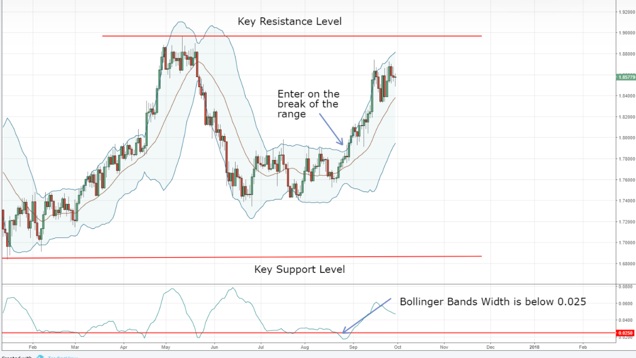
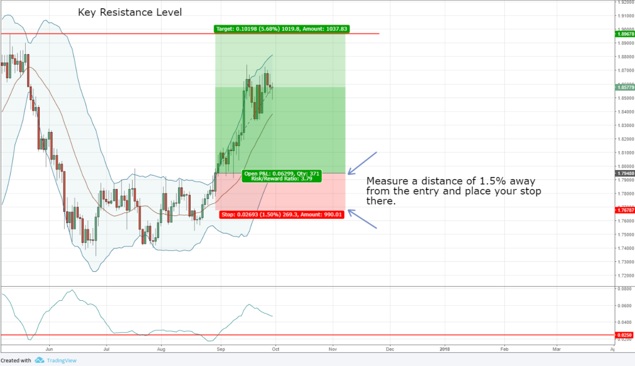
The key to breakout trading is that you have larger winning trades than you have losing trades. To help achieve this, you can place a stop-loss. A stop-loss can help define risk, but it does not guarantee execution at the chosen price. Traders should also account for slippage, gaps and changing liquidity.
Some traders place stops beyond the range or use volatility-based measures such as recent average movement. There is no universally optimal percentage stop-loss; the appropriate level depends on the currency pair, timeframe, volatility and the trader’s risk tolerance. For example, many traders measure between a 0.5% and 2% move of the currency and place the stop-loss there – many consider 1.5% a good level to keep the win rate high.
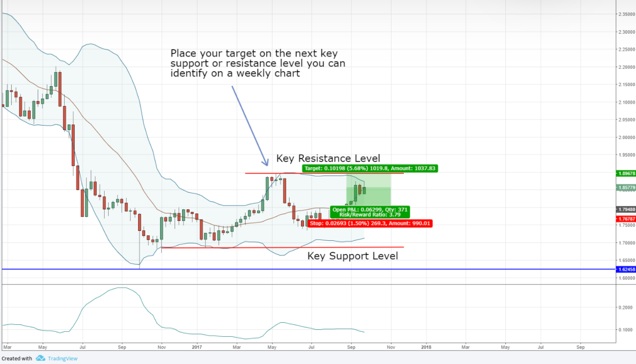
You also want to put a profit target on the next major level. To identify this level, you can look at a weekly chart for the nearest support and resistance level.
Benefits Of End Of Day Trading
There are several benefits to the end of day trading:
- Convenience – The process of end of day trading can be more convenient compared to intraday investing. If you have a full-time job, you don’t need to watch the markets all day. Because your analysis starts when the rest of the markets are closing, it means that it does not interfere with your regular job. You can place your orders to go live at the end of the trading day. Your positions will be left open overnight. But your trade adjustments, such as moving your risks to break even, or adjusting the profit levels are easier to manage.
- Cheaper rates – If you are trading stocks or futures, for example, you may need to pay fees for intraday data. You may also pay other fees such as transaction costs and a software charge. End of day trading is all about trading with closing prices. Many online brokers do not charge for this service. Because the end of day prices are widely available from everywhere, you do not have to pay additional sums to gain real-time market data. Scanning tools are also relatively cheaper when it comes to end of day trading.
- Limit or stop orders – End of day trading means you’ll likely need to use limit or stop orders. Some online brokerages charge a higher fee when you trade with market orders. This is because the execution costs are high. Resting limit orders can add liquidity and may attract different pricing on some venues, but this depends on the broker, market and order type. A marketable limit order may execute immediately and remove liquidity.
- Discipline – End of day trading can make you more disciplined. You are using just a few hours a day to analyse the markets to create a trading plan. Because your attention is more focussed, the temptation of overtrading and the emotional influences of daily news announcements should be reduced.
Downsides Of End Of Day Trading
Despite some benefits, there are several downsides to end of day trading:
- Missing overnight developments – The biggest risk is that you are trading when the markets are less active. This puts you at risk of overnight market developments. For example, when earnings are released, prices tend to gap significantly. Because you are trading just once a day, at the closing hours of the markets, it can leave your positions vulnerable to overnight market movements.
- Less active risk management – With day trading you can manage your risk efficiently. This is because you are constantly monitoring the markets. This isn’t the case with end of day trading. There’s a chance you’ll make huge profits, but an equal or greater risk your stops may be triggered before you have a chance to adjust your risk settings, and in fast or gapping markets they may execute at a worse price than expected..
- Liquidity – You are also at risk of reduced liquidity with end of day trading. As a result, there is a chance that your limit orders will not be triggered at the price you wanted.
- Earnings season – Earnings timings are something to be wary of when end of day trading. Because most companies tend to release their earnings before the market opens or after the market closes, you can expect to see pre-market and after-market pricing turn volatile.
How To Get Started End Of Day Trading
As with all trading strategies, you first need to find a top broker and fund your account to access daily prices, charts and risk tools. It’s also always worth comparing spreads, platform features, mobile signals and customer support during end of trading hours.
Final Word
End of day trading is a convenient method for anyone who wants to continue working their regular day job. End of day trading allows you to cut the noise and use limit or stop orders to control your trades. It may also reduce the need for real-time data, but traders should still account for spreads, slippage and overnight risk. Make sure you also use a top broker to get started end of day trading.
FAQ
What Is The Difference Between Intraday And End Of Day Trading?
Intraday trading is when forex traders place orders, or open and close positions, while the local market is open. End of day trading is a strategy whereby traders make forex decisions very near to, or after the markets close.
What Is The Best End Of Day Trading Software?
Any top broker will provide you with the best software to support an end of day trading strategy. Look for a broker that provides access to charts, trading signals and risk tools, such as stop losses and limit orders. These will support your technical analysis and may help you become a successful forex trader.
Can You Day Trade At Night?
Overnight trading is the trading that takes place outside of normal trading hours. Bonds have extended trading hours and overnight trading can take place on stocks between 4 am and 9:30 am (when the exchanges open) and 6 pm (when the exchanges close) and 8 pm.
Does High Frequency Investing During End Of Day Trading Affect The Markets?
High-frequency trading and end-of-day price dislocation can affect the markets. Firstly, more competition is accompanied by high-frequency trading and larger volumes, which improve market liquidity. Secondly, more competition may mean that high-frequency traders adapt their strategies and engage in more speculative trades, which can impact market liquidity.
Can You Trade At The End Of The Trading Day With Robinhood?
Robinhood offers extended-hours trading. This means you’ll be able to trade during pre-market and after-hours sessions. That equals an extra two and a half hours of market access, each day.
Can You Trade ETFs With End Of Day Trading?
Trading for stocks and ETFs typically closes at 4 pm ET, but unlike with mutual funds, you can continue trading stocks and ETFs in the after-hours market.