




Brokers with synthetic indices provide unique trading opportunities on products that emulate realistic market movements. Unlike a traditional index, a synthetic index often has no correlation to underlying assets and is not impacted by real events.
The leader in synthetic indices is undisputedly Deriv, with multiple proprietary indices that can’t be found elsewhere. However, they don’t accept traders from a long list of countries, including the US, Canada, UK and several others. Our list of top brokers with synthetic indices below will only show those that accept your location.
Best Synthetic Index Brokers 2026
We tested multiple brokers and found that these 6 platforms offer the best synthetic index trading products:
-
- Demo account
- Platforms: MT4, MT5, TradingCentral
- Min. deposit: $5
-
- Demo account
- Min. deposit: $100
- Min. trade: 0.01 Lots
-
- Demo account
- Min. deposit: $0
- Min. trade: 0.01 Lots
73-89% of retail investor accounts lose money when trading CFDs -
- Demo account
- Regulator: FCA, ASIC, CySEC, FSC, SCB, FSA
- Platforms: MT4, MT5, TradingView, TradeLocker
71.28% of retail traders lose money when trading CFDs -
- Demo account
- Regulator: FCA, ASIC, FSCA, VFSC, CIMA
- Min. deposit: $50
-
- Demo account
- Min. deposit: $0
- Min. trade: 0.01 Lots






Learn how we test brokers and why you can trust our ratings.
Why Are These Brokers The Best For Synthetic Indices?
Here’s a quick rundown of why we think these are the top brokers for trading synthetic indices:
- XM is the best broker for synthetic index trading in 2026 in Cuba 4.8/5 During our tests, XM offered synthetic indices like Volatility 75 (VIX75) via MT5, providing 24/7 trading. Spreads started at 0.08 with competitive costs. Execution was fast, with 99% of trades under one second.
- AvaTrade 4.9/5 AvaTrade offers synthetic indices from our tests, notably the Volatility 75 Index (VIX 75), through its MetaTrader 4 (MT4) and MetaTrader 5 (MT5) platforms. These indices are algorithmically generated, providing 24/7 trading opportunities. Spreads for the synthetic index range from 0.15% to 0.21%, with trading costs at industry standard levels.
- Pepperstone 4.8/5 During our tests, Pepperstone offered synthetic indices like Volatility 75 (VIX75) via MT5 and cTrader, providing 24/7 trading. Spreads started at 0.0 pips with fast execution under 30 ms. Regulated by ASIC, FCA, CySEC, and DFSA, Pepperstone also offered Razor and Standard accounts, advanced charting, and an Active Trader program with rebates and reduced costs.
- Eightcap 4.6/5 During our tests, Eightcap offered synthetic indices such as Volatility 75 via MT4 and MT5, available 24/7. Spreads started from 0.6 pips with fast execution. Eightcap also provided advanced charting, diverse account types, and reliable execution, making it suitable for volatility-focused trading strategies.
- Vantage 4.7/5 From our tests, Vantage offers synthetic indices like Volatility 75 and Volatility 100 via MT4 and MT5. Spreads started from 0.5 pips with fast execution. Vantage also offered advanced charting, diverse account types, and reliable execution for synthetic trading strategies.
- IG 4.8/5 During our tests, IG offered synthetic indices, including the Volatility Index, via MT4 and TradingView. These algorithmically generated markets operate 24/7, simulating volatility with competitive spreads. Execution was reliable, with swap-free options for eligible traders. IG also offered advanced charting, flexible expiries, and diversified markets, providing a secure environment for synthetic index trading.
Best Brokers With Synthetic Indices 2026 Comparison
| Broker | Minimum Deposit | Minimum Trade | Platforms | Regulator |
|---|---|---|---|---|
| XM | $5 | 0.01 Lots | MT4, MT5, TradingCentral | CySEC, DFSA, FSCA, SCA, FSA, FSC-Belize, FSC-Mauritius, CMA-Kenya, CMA-UAE |
| AvaTrade | $100 | 0.01 Lots | WebTrader, AvaTradeGO, AvaOptions, AvaFutures, MT4, MT5, AlgoTrader, TradingView, TradingCentral, DupliTrade | ASIC, CySEC, FSCA, ISA, CBI, JFSA, BVI, FSRA/ADGM, AFM, CMA-Kenya, CIRO (via Friedberg Direct) |
| Pepperstone | $0 | 0.01 Lots | Pepperstone Trading Platform, MT4, MT5, cTrader, TradingView | FCA, ASIC, CySEC, BaFin, DFSA, SCA, SCB, CMA-Kenya |
| Eightcap | $100 | 0.01 Lots | MT4, MT5, TradingView, TradeLocker | FCA, ASIC, CySEC, FSC, SCB, FSA |
| Vantage | $50 | 0.01 Lots | ProTrader, MT4, MT5, TradingView, TradingCentral, DupliTrade | FCA, ASIC, FSCA, VFSC, CIMA |
| IG | $0 | 0.01 Lots | Web, L2 Dealer, MT4, TradingView, AutoChartist, TradingCentral, ProRealTime | CFTC, NFA, FCA, BaFin, ASIC, FINMA, MAS, JFSA, FMA, DFSA, BMA |
How Safe Are The Best Synthetic Index Brokers?
Synthetic indices are unique instruments, so regulation, fund security, and platform reliability are essential. Here’s how our top brokers safeguard your trading experience:
| Broker | Trust Rating | Guaranteed Stop Loss | Negative Balance Protection | Segregated Accounts |
|---|---|---|---|---|
| XM | ✘No | ✔Yes | ✔Yes | |
| AvaTrade | ✘No | ✔Yes | ✔Yes | |
| Pepperstone | ✘No | ✔Yes | ✔Yes | |
| Eightcap | ✘No | ✔Yes | ✔Yes | |
| Vantage | ✘No | ✔Yes | ✔Yes | |
| IG | ✔Yes | ✔Yes | ✔Yes |
Are The Best Synthetic Index Brokers Good For Beginners?
New to synthetic indices? We reviewed education tools, demo accounts, and user-friendly platforms to see which brokers are best for beginner traders:
| Broker | Demo Account | Minimum Deposit | Minimum Trade | Education Rating | Support Rating |
|---|---|---|---|---|---|
| XM | ✔Yes | $5 | 0.01 Lots | ||
| AvaTrade | ✔Yes | $100 | 0.01 Lots | ||
| Pepperstone | ✔Yes | $0 | 0.01 Lots | ||
| Eightcap | ✔Yes | $100 | 0.01 Lots | ||
| Vantage | ✔Yes | $50 | 0.01 Lots | ||
| IG | ✔Yes | $0 | 0.01 Lots |
Are The Top Synthetic Index Brokers Good For Experienced Traders?
Experienced traders need consistent pricing, reliable execution, and leverage flexibility. Here’s where our leading brokers excelled for advanced synthetic index trading:
| Broker | Automated Trading | VPS | AI | Pro Account | Leverage | Low Latency | Extended Hours |
|---|---|---|---|---|---|---|---|
| XM | Expert Advisors (EAs) on MetaTrader | ✔Yes | ✔Yes | ✘No | 1:1000 | ✔Yes | ✘No |
| AvaTrade | Expert Advisors (EAs) on MetaTrader | ✘No | ✔Yes | ✔Yes | 1:30 (Retail) 1:400 (Pro) | ✔Yes | ✘No |
| Pepperstone | Expert Advisors (EAs) on MetaTrader, cBots on cTrader | ✘No | ✘No | ✔Yes | 1:30 (Retail - UK, EU, Australia), 1:500 (Pro), 1:200 (Offshore), 1:400 (Kenya) | ✔Yes | ✘No |
| Eightcap | Expert Advisors (EAs) on MetaTrader | ✔Yes | ✘No | ✘No | 1:500 | ✔Yes | ✘No |
| Vantage | Myfxbook AutoTrade, Expert Advisors (EAs) on MetaTrader | ✔Yes | ✘No | ✘No | 1:500 | ✘No | ✘No |
| IG | Expert Advisors (EAs) on MetaTrader, build your own on ProRealTime | ✔Yes | ✔Yes | ✔Yes | 1:30 (Retail), 1:250 (Pro) | ✔Yes | ✔Yes |
Compare Detailed Ratings Of Top Synthetic Index Brokers
See how the top brokers for synthetic indices performed across critical categories in our tests:
| Broker | Trust | Platforms | Assets | Mobile | Fees | Accounts | Research | Education | Support |
|---|---|---|---|---|---|---|---|---|---|
| XM | |||||||||
| AvaTrade | |||||||||
| Pepperstone | |||||||||
| Eightcap | |||||||||
| Vantage | |||||||||
| IG |
Community Sentiment
See how users rate these brokers based on the average customer ratings submitted on DayTrading.com, plus ratings from Trustpilot, the Apple App Store and Google Play.
| Broker | Our Users' Rating | Trustpilot Score | Trustpilot Reviews | iOS App Rating | Android App Rating |
|---|---|---|---|---|---|
| XM | 3134 | ||||
| AvaTrade | 13590 | ||||
| Pepperstone | 3695 | ||||
| Eightcap | 3909 | ||||
| Vantage | 15680 | ||||
| IG | 10153 |
How Popular Are The Top Synthetic Index Brokers?
Synthetic indices are gaining traction with traders worldwide. We looked at which brokers are attracting the most users
Why Trade Synthetic Indices With XM?
With a low $5 minimum deposit, advanced charting platforms in MT4 and MT5, expanding range of markets, and a Zero account offering spreads from 0.0, XM provides all the essentials for active traders, even earning our ‘Best MT4/MT5 Broker’ award in recent years.
 Christian Harris, Reviewer
XM quick facts
- Demo Account
- ✔Yes
- Instruments
- CFDs, Forex, Stocks, Commodities, Indices, Thematic Indices, Precious Metals, Energies
- Regulator
- CySEC, DFSA, FSCA, SCA, FSA, FSC-Belize, FSC-Mauritius, CMA-Kenya, CMA-UAE
- Platforms
- MT4, MT5, TradingCentral
- Minimum Deposit
- $5
- Minimum Trade
- 0.01 Lots
- Account Currencies
- USD, EUR, GBP, JPY, ZAR
Pros
- XM’s growing roster of 1,400+ instruments provides diverse short-term trading opportunities, with unique turbo stocks, fractional shares, and more recently thematic indices.
- XM’s customer support has delivered over years of testing, with 24/7 assistance in 30 languages, response times of under 2 minutes and a growing Telegram channel.
- XM has rolled out platform upgrades with integrated TradingView charts and an XM AI assistant, delivering faster execution, smarter analysis, and a sleeker, more intuitive trading experience.
Cons
- XM relies solely on the MetaTrader platforms for desktop trading, so there’s no in-house downloadable solution for a more beginner-friendly user experience with unique features.
- While the XM app stands out for its usability and exclusive copy trading products, the selection of technical analysis tools needs to be improved to meet the needs of advanced traders.
- XM is falling behind the curve by not offering cTrader, which is favored over MetaTrader by some serious traders for its smoother user experience and superior charting package.
Why Trade Synthetic Indices With AvaTrade?
AvaTrade offers active traders everything they need: an intuitive WebTrader, powerful AvaProtect risk management, a smooth 5-minute sign-up process, and dependable support you can rely on in fast-moving markets.
 Jemma Grist, Reviewer
AvaTrade quick facts
- Demo Account
- ✔Yes
- Instruments
- CFDs, Forex, Stocks, Indices, Commodities, ETFs, Bonds, Crypto, Spread Betting, Futures
- Regulator
- ASIC, CySEC, FSCA, ISA, CBI, JFSA, BVI, FSRA/ADGM, AFM, CMA-Kenya, CIRO (via Friedberg Direct)
- Platforms
- WebTrader, AvaTradeGO, AvaOptions, AvaFutures, MT4, MT5, AlgoTrader, TradingView, TradingCentral, DupliTrade
- Minimum Deposit
- $100
- Minimum Trade
- 0.01 Lots
- Account Currencies
- USD, EUR, GBP, CAD, AUD, ZAR
Pros
- Years on, AvaTrade remains one of the few brokers offering a bespoke risk management tool, AvaProtect, that insures losses up to $1M for a fee and is easy to activate on the platform.
- AvaTrade launched AvaFutures to offer low-margin access to global markets, then expanded in 2025 as one of the first brokers to add CME’s Micro Grain Futures, and then later in the year went further by integrating with TradingView.
- Support at AvaTrade performed excellently during testing, with response times of 3 minutes and localized support in major trading jurisdictions, including the UK, Europe and the Middle East.
Cons
- AvaTrade’s WebTrader has improved, but work is still needed in terms of customizability – frustratingly widgets like market watch and watchlists can’t be hidden, moved, or resized.
- The AvaSocial app is good but not great – the look and feel, plus the navigation between finding strategy providers and account management needs upgrading to rival category leaders like eToro.
- While signing up is a breeze, AvaTrade lacks an ECN account like Pepperstone or IC Markets, which provides the raw spreads and ultra-fast execution many day traders are looking for.
Why Trade Synthetic Indices With Pepperstone?
Pepperstone stands out as a top choice for day trading, offering razor-sharp spreads, ultra-fast execution, and advanced charting platforms for experienced traders. New traders are also welcomed with no minimum deposit, extensive educational resources, and exceptional 24/5 support (18h a day on weekends).
Christian Harris, Reviewer
Pepperstone quick facts
- Demo Account
- ✔Yes
- Instruments
- CFDs, Forex, Currency Indices, Stocks, Indices, Commodities, ETFs, Crypto CFDs, Spread Betting
- Regulator
- FCA, ASIC, CySEC, BaFin, DFSA, SCA, SCB, CMA-Kenya
- Platforms
- Pepperstone Trading Platform, MT4, MT5, cTrader, TradingView
- Minimum Deposit
- $0
- Minimum Trade
- 0.01 Lots
- Account Currencies
- USD, EUR, GBP, CAD, AUD, NZD, JPY, CHF, HKD, SGD
Pros
- Award-winning customer support is available via telephone, email or live chat with response times of <5 minutes during testing and friendly agents knowledgeable about its products and trading tools.
- Offers a dedicated CopyTrading app for traders who want a less active approach to trading, available in some countries.
- There’s support for a range of industry-leading charting platforms including MT4, MT5, TradingView, and cTrader, catering to various short-term trading styles, including algo trading.
Cons
- Execution may not feel as reliable in fast markets as headline speeds suggest. In our own testing, execution was fast at desired prices, but some community complaints focus on slippage, stop-loss fills and spread-sensitive order triggers during volatile conditions.
- Pepperstone has removed support for several tools that elevated the trading experience for active retail traders, notably Autochartist, Capitalise.ai and a free VPS for qualifying traders (now only pro traders in some countries).
- Despite improvements to its range of markets, crypto CFD offerings are still fairly limited compared to other brokers who focus on this area, such as Eightcap, and there's no option to invest in real coins.
Why Trade Synthetic Indices With Eightcap?
Eightcap delivers in every area for day traders with a growing selection of charting platforms, education via Labs, and AI-powered tools. Now sporting 120+ crypto CFDs, it's also become a stand-out choice for crypto trading, winning our 'Best Crypto Broker' award two years in a row.
Christian Harris, Reviewer
Eightcap quick facts
- Demo Account
- ✔Yes
- Instruments
- CFDs in Forex, Stocks, Indices, Commodities, Crypto
- Regulator
- FCA, ASIC, CySEC, FSC, SCB, FSA
- Platforms
- MT4, MT5, TradingView, TradeLocker
- Minimum Deposit
- $100
- Minimum Trade
- 0.01 Lots
- Account Currencies
- USD, EUR, GBP, CAD, AUD, NZD, SGD
Pros
- With tight spreads from 0 pips, low commission fees, Eightcap provides cost-effective and flexible trading conditions that can accommodate an array of strategies, including day trading and scalping.
- Eightcap has brought in GOLD247 for 24/7 trading opportunities on a gold/USD CFD with leverage up to 1:20, minimum trade size of 0.01 lots, and no commission, appealing to weekend traders interested in the precious metal.
- Having excelled across all key areas for day traders, Eightcap outperformed every competitor to win our 'Best Overall Broker' award for 2024, also securing our 'Best Crypto Broker' title for 2025 and 'Best TradingView Broker' for 2025.
Cons
- Despite a useful library of educational guides and e-books in Labs, Eightcap still trails IG’s comprehensive toolkit for aspiring traders with its dedicated IG Academy app and 18 course categories.
- The demo account expires after 30 days and can only be extended upon request - a notable inconvenience compared to the likes of XM with its unlimited demo mode.
- Eightcap needs to continue bolstering its suite of 800+ instruments to match category leaders like Blackbull Markets with its 26,000+ assets, featuring a particularly weak selection of commodities.
Why Trade Synthetic Indices With Vantage?
Vantage remains an excellent option for CFD traders seeking a tightly-regulated broker with access to the reliable MetaTrader platforms. The fast sign-up process and $50 minimum deposit make it very straightforward to start day trading quickly.
Jemma Grist, Reviewer
Vantage quick facts
- Demo Account
- ✔Yes
- Instruments
- CFDs, Forex, Stocks, Indices, Commodities, ETFs, Bonds
- Regulator
- FCA, ASIC, FSCA, VFSC, CIMA
- Platforms
- ProTrader, MT4, MT5, TradingView, TradingCentral, DupliTrade
- Minimum Deposit
- $50
- Minimum Trade
- 0.01 Lots
- Account Currencies
- USD, EUR, GBP, CAD, AUD, NZD, JPY, HKD, SGD, PLN
Pros
- The ECN accounts are very competitive with spreads from 0.0 pips and a $1.50 commission per side (Pro ECN account)
- There’s an excellent suite of day trading software, including the award-winning platforms MT4 and MT5
- There are no short-term strategy restrictions with hedging and scalping permitted
Cons
- A steep $10,000 deposit is needed for the best trading conditions, which include the $1.50 commission per side
- It's a shame that some clients will need to register with the offshore entity, which offers less regulatory protection
- The average execution speeds of 100ms to 250ms are slower than alternatives based on tests
Why Trade Synthetic Indices With IG?
IG continues to provide a comprehensive package with an intuitive web platform, best-in-class education for beginners, advanced charting tools bolstered by its recent TradingView integration, real-time data, and robust trade execution for experienced day traders.
Christian Harris, Reviewer
IG quick facts
- Demo Account
- ✔Yes
- Instruments
- CFDs (not in US), Forex, Stocks, Indices, Commodities, ETFs, Futures, Options, Crypto, Spread Betting (UK only)
- Regulator
- CFTC, NFA, FCA, BaFin, ASIC, FINMA, MAS, JFSA, FMA, DFSA, BMA
- Platforms
- Web, L2 Dealer, MT4, TradingView, AutoChartist, TradingCentral, ProRealTime
- Minimum Deposit
- $0
- Minimum Trade
- 0.01 Lots
- Account Currencies
- USD, EUR, GBP, CAD, AUD, JPY, ZAR, SEK, DKK, CHF, HKD, SGD
Pros
- IG is amongst the best in terms of its range of instruments, which includes stocks, forex, indices, commodities, and cryptocurrencies, plus added US-listed futures and options as well as an AI Index, providing diversification opportunities.
- IG offers an extensive collection of professional and engaging educational resources, including webinars, articles, and analysis.
- As a well-established broker, IG operates under strict regulatory guidelines in multiple jurisdictions, maintaining a high level of trust.
Cons
- Beginners might find IG’s fee structure complex, with various fees for different types of trades or services, potentially leading to confusion or unexpected charges.
- IG applies an inactivity fee of $12-$18 per month after 2 years, deterring casual investors.
- IG has discontinued its swap-free account, reducing its appeal to Islamic traders.
How DayTrading.com Chose The Top Brokers That Allow Trading On Synthetic Indices
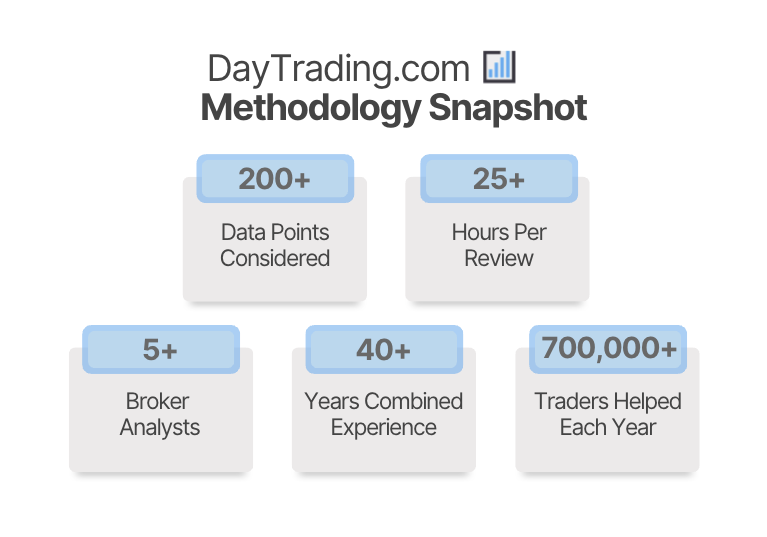
To rank the best brokers for synthetic indices, our team of experienced traders found and then evaluated platforms that offer simulated trading instruments.
Each broker’s synthetic index setup was tried, with our traders recording key factors like execution, pricing, platform stability, and user experience. We then combined hard data with our hands-on testing insights to create a ranking of the top synthetic index brokers.
What Is A Synthetic Index?
Synthetic index is a term used to describe an index that is not comprised of underlying assets, such as stocks, instead using random number generators to provide a value.
Synthetic indices typically take two forms:
- Asset-based, tracking the value of a specific market or element of a market, or
- Simulated, based on computer-generated data entirely separate from any actual markets but designed to imitate real-life price movements.
Understanding these different products can be confusing due to the interchangeability of the synthetic index label. This can also make it difficult for traders to discover which brokers offer synthetic indices trading.
Le’s break down both types of synthetic indices, listing their differences, respective merits and supporting brokers.
Simulated Synthetic Indices
Most commonly offered by forex brokers and binary options brokers from our tests, simulated synthetic indices use complex algorithms designed to mirror realistic price movements. In contrast to asset-based products, simulated synthetic indices are markets with no correlation to any underlying asset.
Simulated synthetic index brokers often provide traders with several options for their preferred trading vehicle and simulated market conditions. In addition, these markets can normally be traded 24/7.
However, some active traders are understandably wary of these products due to the opacity of these over-the-counter products. Some traders believe that for these products to be viable, the algorithms must be broker-favored, and therefore abstain from these artificial markets.
Asset-Based Synthetic Indices
Asset-based synthetic indices track the value of specific market sectors or market values. Popular examples of asset-based synthetic indices are the S&P 500 Volatility Index (VIX) and the US Dollar Index (USDX).
With synthetic indices based on spot assets, such as currency indices or market sector instruments, many of these products are hedged with real assets by the firm that provides the index.
A combination of swaps, futures, options and spot assets can also be used to back more sophisticated synthetic indices, though some of these products may not be fully hedged due to their complexity.
This measure attempts to secure the values of synthetic indices, though collapses have happened in the past – more on this later.
Simulated Vs Asset-Based Synthetic Indices
To help you decide which type of synthetic index is best for your goals and trading style, we have compared simulated and asset-based indices across several key categories:
Trading Vehicles
Simulated
With simulated synthetic indices brokers, trading instruments are more limited, often via binary options or CFDs. There are fewer forex brokers with simulated synthetic indices, with products mainly offered by binary brokers.
While these products are different in terms of leverage, fees and payouts, strategies are more limited than with asset-based synthetic indices.
Binary options, which are unregulated in certain jurisdictions, are typically traded in the short term with an all-or-nothing strategy.
Asset-Based
With asset-based synthetic indices, traders can use a variety of trading vehicles. Synthetic index brokers may offer contracts for difference (CFDs), exchange-traded funds (ETFs), futures, and options.
This gives traders more choice, opening up possibilities in terms of strategies and timeframes. The variety of vehicles available to trade asset-based synthetic indices also offers traders both high and low leverage options.
Payouts & Risk
Simulated
Simulated synthetic indices are typically traded through binary options or CFDs, and their payouts and capital risks vary depending on the vehicle used.
Binary options offer fixed payouts for a winning trade, with the best brokers for synthetic indices offering payouts of over 95% for a correct prediction. Traders cannot lose more than they invest in a position.
While CFDs offer leveraged profit potential, they also carry significant risks, including the possibility of losing more than the initial investment.
When trading at synthetic indices brokers using CFDs, ensure that your chosen brokerage offers features like stop losses and negative balance protection.
Asset-Based
Due to the wide range of vehicles available when trading asset-based synthetic indices, investors can choose a trading strategy suited to their personal risk/reward tolerance.
Products range from the highly leveraged CFD market down to the more stable ETF setup.
Safety & Security
Simulated
Brokers with simulated synthetic indices are not typically regulated by top-tier financial authorities such as the Securities and Exchange Commission (SEC) in the US or Financial Conduct Authority (FCA) in the UK.
Synthetic index binary options and forex brokers may not store client finds in tier-one banks or provide access to investor compensation schemes.
In addition, the opacity of simulated trading algorithms may not sit well with some traders. We’ve seen limited evidence to suggest that synthetic index brokers skew their algorithms to disadvantage investors, but with no real market to base prices on, the opportunity to manipulate simulated prices is arguably there.
Asset-Based
Asset-based synthetic indices are typically traded through regulated exchanges and brokers, which offer a higher level of security and transparency.
For example, the best brokers with synthetic indices brokers are often regulated by the FCA, SEC, or trusted bodies from other regions. This regulatory oversight provides traders with some level of protection against fraud, market manipulation, and other forms of misconduct.
However, this does not mean that asset-based synthetic index investments are safe. On 5 February 2018, VIX futures rose from their opening level of 16 into the low 30s by the afternoon. This caused two synthetic indices that offered an inverse VIX tracker to fall by over 95% each, wiping out the funds of traders.
Due to the nature of synthetic indices, such losses are often difficult to reverse.
Trading Hours
Simulated
One of the unique advantages of brokers with synthetic indices is the ability to trade a market with infinite liquidity that operates 24/7.
Other than scheduled maintenance and platform downtimes, the algorithms for simulated synthetic indices run constantly, giving traders around the world an equal chance to trade.
Asset-Based
The operating hours for asset-based synthetic indices usually follow the trading hours of the underlying assets that make up the index.
The longest trading hours can often be found via forex brokers with synthetic indices or futures brokers, with trading available up to 11 hours per day. However, even these extended market instruments do not typically trade on weekends.
Trading Fees
The fees and commissions paid when trading synthetic indices are often dependent on the vehicle and broker rather than the type of index. There are also other types of charges to consider when choosing the best brokers for synthetic indices, which we will get into later on.
Traders can opt for low or zero-commission brokers to trade ETFs and there are no commission fees when speculating with most binary options brokers. The highest fees will come when trading through forex brokers with synthetic indices CFDs, plus futures and options.
Comparing Brokers With Synthetic Indices
Our list of synthetic indices brokers includes several top brands. But to help you find which broker offers the best synthetic indices trading conditions, look for the following qualities:
Vehicles
The first step when choosing a trading platform is to establish the type of synthetic index available.
Binary options and forex brokers can sometimes support both asset-based synthetic indices and simulated synthetic indices.
However, traditional stocks, futures and options brokers typically shy away from the less transparent natures of simulated synthetic indices.
Markets & Customization
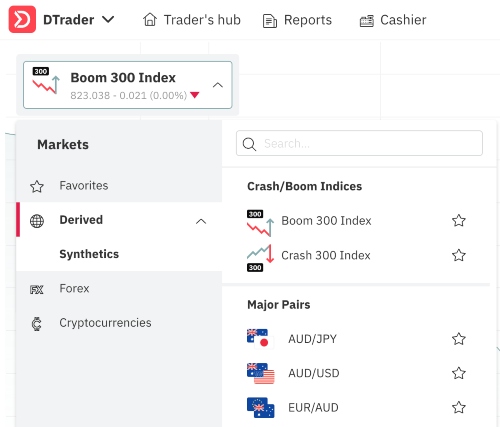
The next item to compare is which broker offers the synthetic index markets you favor.
When trading simulated synthetic indices, the best brokers offer a range of different products set up with various algorithms simulating different market conditions.
For asset-based synthetic indices, this can mean finding brokers that support products from a range of financial markets, such as stocks and forex.
Fees & Payouts
Simulated synthetic indices are often traded as binary options or “multipliers”, although some forex brokers allow CFD trading with simulated synthetic indices.
With binary options, there are no trading fees, with profits dictated by payouts. While investors should shop around for the most competitive payouts, ensure that you are not enticed into a suspect broker by high payouts alone.
CFD profits are similar from broker to broker. Spreads and charges such as commissions and swap fees make the difference between trading firms.
With asset-based synthetic indices, payouts will often depend on the trading product, which is largely independent of a specific broker. However, fees and commissions can significantly influence how much profit is made by a successful trader.
Look for low spreads and commissions when trading CFDs, and low or zero commissions for ETF and futures trading. This said, some brokers with synthetic indices can draw investors in with low trading fees and add account or deposit charges, so do your due diligence before signing up.
Regulation & Security
The safety of funds and sensitive personal information is key when trading any product.
To give yourself the best chance at staying safe, favor brokers with regulation from reputable bodies such as the US SEC or UK FCA.
The best brokers for synthetic indices will also offer additional measures, such as two-factor authentication (2FA) and fund insurance schemes.
Trading Platforms
Choosing brokers with synthetic indices that support stable, reliable and user-friendly platforms is a must. Some synthetic indices brokers use proprietary solutions so make use of a demo account to trial these terminals before committing money.
Alternatively, opt for a popular and well-supported platform such as MetaTrader 4 (MT4) or MetaTrader 5 (MT5). These platforms offer advantages such as customizable indicators and automated trading tools.
Payments
Choose brokers with synthetic indices that offer low-cost, high-speed deposit options. Ideally, these solutions will include choices with some protection, such as PayPal or debit cards. In addition, native support for your local currency will help you avoid conversion fees.
In the CFD and binary options space, there are also some synthetic indices brokers with bonus schemes. But while deposit bonuses can be attractive, ensure you understand any withdrawal terms before opting in.
Bottom Line
When comparing brokers with synthetic indices, there are several considerations to keep in mind. Firstly, traders should favor synthetic index brokers with oversight from reputable regulators. Other considerations include market availability, trading platform support, accepted payment methods and fees.
Get started with our list of the best brokers with synthetic indices.