





Russell 2000 brokers give active traders access to the small- and mid-cap end of the US equity market through stocks, ETFs, futures, and other derivatives. Launched in 1984, the index tracks around 2,000 of the smallest names in the Russell 3000. It’s widely watched as a barometer of domestic US economic health, with small caps generating less than 20% of their revenues outside the US compared to around 40% for the Russell 1000 LSEG. (By comparison, the S&P 500 generates 30-40% of its revenue outside the US, the Nasdaq 40-50%, and the Dow Jones around 30-35%.)
Below we rank the best brokers with access to the Russell 2000 based on our hands-on tests. We explain what to weigh when comparing providers for small-cap trading, walk through a step-by-step trade on the index, and answer the most common questions traders ask.
The brokers listed below primarily offer stock trading through CFDs (Contracts for Difference). This allows for leverage and short-selling, making them effective tools for day traders. However, CFDs do not provide direct ownership of shares and are generally not appropriate for long-term investors due to overnight financing costs.Top Brokers With Access To The Russell 2000
Following our broker reviews and platform testing, these are the strongest options for trading Russell 2000-linked markets:
-
- Demo account
- Platforms: MT4, MT5, TradingCentral
- Min. deposit: $5
-
- Demo account
- Min. deposit: $100
- Min. trade: 0.01 Lots
-
- Demo account
- Regulator: ASIC, CySEC, FSA, SCB, CMA-Kenya
- Min. deposit: $200
-
- Demo account
- Min. deposit: $0
- Min. trade: 0.01 Lots
73-89% of retail investor accounts lose money when trading CFDs -
- Demo account
- Regulator: ASIC, CySEC, FSCA, BVI FSC
- Platforms: Web Platform, MT4, MT5, TradingCentral
-
- Demo account
- Platforms: eToro Web, CopyTrader, TradingCentral
- Min. deposit: $50
61% of retail CFD accounts lose money. eToro is a multi-asset investment platform. The value of your investments may go up or down. Your capital is at risk.




Learn how we test brokers and why you can trust our ratings.
What Sets These Russell 2000 Brokers Apart?
This is why we think these brokers are the best in this category in 2026:
- XM is the best broker with access to the Russell 2000 in 2026 4.8/5 XM is a globally recognized forex and CFD broker with 20+ million clients in 190+ countries. Since 2009, this trusted broker has been delivering low trading fees across its growing roster of 1000+ instruments. It also offers a comprehensive MetaTrader experience that we've observed firsthand placing test trades.
- AvaTrade 4.9/5 Established in 2006, AvaTrade is a leading forex and CFD broker trusted by over 400,000 traders. Operating under regulation in 9 jurisdictions, AvaTrade processes an impressive 2+ million trades each month. Through like MT4, MT5, and its proprietary WebTrader, the broker provides a growing selection of 1,250+ instruments. Whether it’s CFDs, AvaOptions, or the more recent AvaFutures, short-term traders at all levels will find opportunities. With terrific education and 24/5 multilingual customer support, AvaTrade delivers the complete trading experience.
- IC 4.8/5 IC Markets (now IC) is a globally recognized forex and CFD broker known for its excellent pricing, comprehensive range of trading instruments, and premium trading technology. Founded in 2007 and headquartered in Australia, the brokerage is regulated by the ASIC, CySEC and FSA, and has attracted more than 200,000 clients from over 200 countries.
- Pepperstone 4.8/5 Established in Australia in 2010, Pepperstone is a top-rated forex and CFD broker with over 830,000 clients worldwide. It offers access to 1,400+ instruments on leading platforms MT4, MT5, cTrader and TradingView, maintaining low, transparent fees. Pepperstone is also regulated by trusted authorities like the FCA, ASIC, and CySEC, helping to ensure a secure environment for day traders at all levels.
- Markets.com 4.4/5 Established in 2008, Markets.com is a long-standing, multi-regulated broker with oversight from the CySEC and FSCA. It offers unique features to track hedge fund moves and insider trades, while providing stock signals to alert traders to market opportunities. Its choice of accounts (Classic to Professional) caters to all levels of active trader. 72.3% of retail accounts lose money.
- eToro 4.0/5 eToro is a top-rated multi-asset platform which offers trading services in thousands of CFDs, stocks and cryptoassets. Launched in 2007, the brand has millions of active traders globally and is authorized by tier one regulators, including the FCA and CySEC. The brand is particularly popular for its comprehensive social trading platform. Crypto investments are risky and may not suit retail investors. You could lose your entire investment. Understand the risks here. 61% of retail CFD accounts lose money.
How Trustworthy Are The Top Russell 2000 Brokers?
We looked at each broker’s regulatory status, safeguards and client protection measures:
| Broker | Trust Rating | Guaranteed Stop Loss | Negative Balance Protection | Segregated Accounts |
|---|---|---|---|---|
| XM | ✘No | ✔Yes | ✔Yes | |
| AvaTrade | ✘No | ✔Yes | ✔Yes | |
| IC | ✘No | ✔Yes | ✔Yes | |
| Pepperstone | ✘No | ✔Yes | ✔Yes | |
| Markets.com | ✔Yes | ✔Yes | ✔Yes | |
| eToro | ✘No | ✔Yes | ✔Yes |
Are The Top Russell 2000 Brokers Easy For New Traders To Use?
We reviewed how simple these platforms are for beginners who want exposure to Russell 2000 markets:
| Broker | Demo Account | Minimum Deposit | Minimum Trade | Education Rating | Support Rating |
|---|---|---|---|---|---|
| XM | ✔Yes | $5 | 0.01 Lots | ||
| AvaTrade | ✔Yes | $100 | 0.01 Lots | ||
| IC | ✔Yes | $200 | 0.01 Lots | ||
| Pepperstone | ✔Yes | $0 | 0.01 Lots | ||
| Markets.com | ✔Yes | $200 | 0.01 Lots | ||
| eToro | ✔Yes | $50 | $10 |
Do The Best Russell 2000 Brokers Work Well For Advanced Traders?
More experienced traders often need flexible order types, strong charting, competitive pricing and dependable execution for Russell 2000 markets - here’s how the top brokers stack up:
| Broker | Automated Trading | VPS | AI | Pro Account | Leverage | Low Latency | Extended Hours |
|---|---|---|---|---|---|---|---|
| XM | Expert Advisors (EAs) on MetaTrader | ✔Yes | ✔Yes | ✘No | 1:1000 | ✔Yes | ✘No |
| AvaTrade | Expert Advisors (EAs) on MetaTrader | ✘No | ✔Yes | ✔Yes | 1:30 (Retail) 1:400 (Pro) | ✔Yes | ✘No |
| IC | Expert Advisors (EAs) on MetaTrader, cBots on cTrader, Myfxbook AutoTrade | ✔Yes | ✘No | ✘No | 1:5000 | ✔Yes | ✘No |
| Pepperstone | Expert Advisors (EAs) on MetaTrader, cBots on cTrader | ✘No | ✘No | ✔Yes | 1:30 (Retail - UK, EU, Australia), 1:500 (Pro), 1:200 (Offshore), 1:400 (Kenya) | ✔Yes | ✘No |
| Markets.com | Expert Advisors (EAs) on MetaTrader | ✘No | ✘No | ✔Yes | 1:500 | ✔Yes | ✘No |
| eToro | Automate your trades via CopyTrader - follow profitable traders. Open and close trades automatically when they do. | ✘No | ✔Yes | ✘No | 1:30 EU | ✘No | ✔Yes |
Compare Ratings For The Leading Russell 2000 Brokers
Review how the top Russell 2000 brokers scored across the areas we test most closely:
| Broker | Trust | Platforms | Assets | Mobile | Fees | Accounts | Research | Education | Support |
|---|---|---|---|---|---|---|---|---|---|
| XM | |||||||||
| AvaTrade | |||||||||
| IC | |||||||||
| Pepperstone | |||||||||
| Markets.com | |||||||||
| eToro |
Community Sentiment
See how users rate these brokers based on the average customer ratings submitted on DayTrading.com, plus ratings from Trustpilot, the Apple App Store and Google Play.
| Broker | Our Users' Rating | Trustpilot Score | Trustpilot Reviews | iOS App Rating | Android App Rating |
|---|---|---|---|---|---|
| XM | 3134 | ||||
| AvaTrade | 13590 | ||||
| IC | 2 | ||||
| Pepperstone | 3695 | ||||
| Markets.com | 1256 | ||||
| eToro | 32220 |
Which Russell 2000 Trading Platforms Have The Largest Client Bases?
We assessed client numbers across our highest-rated broker selections:
Why Trade The Russell 2000 With XM?
With a low $5 minimum deposit, advanced charting platforms in MT4 and MT5, expanding range of markets, and a Zero account offering spreads from 0.0, XM provides all the essentials for active traders, even earning our ‘Best MT4/MT5 Broker’ award in recent years.
 Christian Harris, Reviewer
XM quick facts
- Demo Account
- ✔Yes
- Instruments
- CFDs, Forex, Stocks, Commodities, Indices, Thematic Indices, Precious Metals, Energies
- Regulator
- CySEC, DFSA, FSCA, SCA, FSA, FSC-Belize, FSC-Mauritius, CMA-Kenya, CMA-UAE
- Platforms
- MT4, MT5, TradingCentral
- Minimum Deposit
- $5
- Minimum Trade
- 0.01 Lots
- Account Currencies
- USD, EUR, GBP, JPY, ZAR
Stock Exchanges
XM offers trading on 16 stock exchanges:
- Australian Securities Exchange (ASX)
- Borsa Italiana
- CAC 40 Index France
- DAX GER 40 Index
- Deutsche Boerse
- Dow Jones
- Euronext
- FTSE UK Index
- Hang Seng
- IBEX 35
- Japan Exchange Group
- Korea Exchange
- Nasdaq
- Russell 2000
- S&P 500
- SIX Swiss Exchange
Pros
- XM stands out for its commitment to trader education, with a wealth of well-presented resources, including webinars, tutorials, and even real-time trading sessions through XM Live.
- XM’s growing roster of 1,400+ instruments provides diverse short-term trading opportunities, with unique turbo stocks, fractional shares, and more recently thematic indices.
- XM’s customer support has delivered over years of testing, with 24/7 assistance in 30 languages, response times of under 2 minutes and a growing Telegram channel.
Cons
- While the XM app stands out for its usability and exclusive copy trading products, the selection of technical analysis tools needs to be improved to meet the needs of advanced traders.
- XM is falling behind the curve by not offering cTrader, which is favored over MetaTrader by some serious traders for its smoother user experience and superior charting package.
- Although trusted and generally well-regulated in some regions, XM also has global entities registered with the weak regulators like FSC (Belize) and FSA (Seychelles), whilst UK clients are no longer accepted, reducing its market reach.
Why Trade The Russell 2000 With AvaTrade?
AvaTrade offers active traders everything they need: an intuitive WebTrader, powerful AvaProtect risk management, a smooth 5-minute sign-up process, and dependable support you can rely on in fast-moving markets.
 Jemma Grist, Reviewer
AvaTrade quick facts
- Demo Account
- ✔Yes
- Instruments
- CFDs, Forex, Stocks, Indices, Commodities, ETFs, Bonds, Crypto, Spread Betting, Futures
- Regulator
- ASIC, CySEC, FSCA, ISA, CBI, JFSA, BVI, FSRA/ADGM, AFM, CMA-Kenya, CIRO (via Friedberg Direct)
- Platforms
- WebTrader, AvaTradeGO, AvaOptions, AvaFutures, MT4, MT5, AlgoTrader, TradingView, TradingCentral, DupliTrade
- Minimum Deposit
- $100
- Minimum Trade
- 0.01 Lots
- Account Currencies
- USD, EUR, GBP, CAD, AUD, ZAR
Stock Exchanges
AvaTrade offers trading on 15 stock exchanges:
- Australian Securities Exchange (ASX)
- Borsa Italiana
- Deutsche Boerse
- Euronext
- Hang Seng
- IBEX 35
- Japan Exchange Group
- London Stock Exchange
- Nasdaq
- Russell 2000
- SIX Swiss Exchange
- Shanghai Stock Exchange
- Shenzhen Stock Exchange
- Taiwan Stock Exchange
- Toronto Stock Exchange
Pros
- Support at AvaTrade performed excellently during testing, with response times of 3 minutes and localized support in major trading jurisdictions, including the UK, Europe and the Middle East.
- The WebTrader excelled in our hands-on tests, sporting a user-friendly interface for beginners, complete with robust charting tools like 6 chart layouts and 60+ technical indicators.
- Years on, AvaTrade remains one of the few brokers offering a bespoke risk management tool, AvaProtect, that insures losses up to $1M for a fee and is easy to activate on the platform.
Cons
- While signing up is a breeze, AvaTrade lacks an ECN account like Pepperstone or IC Markets, which provides the raw spreads and ultra-fast execution many day traders are looking for.
- The AvaSocial app is good but not great – the look and feel, plus the navigation between finding strategy providers and account management needs upgrading to rival category leaders like eToro.
- AvaTrade’s WebTrader has improved, but work is still needed in terms of customizability – frustratingly widgets like market watch and watchlists can’t be hidden, moved, or resized.
Why Trade The Russell 2000 With IC?
IC (formerly IC Markets) offers superior pricing, exceptionally fast execution and seamless deposits. The introduction of advanced charting platforms, notably TradingView, and the Raw Trader Plus account, ensures it remains a top choice for intermediate to advanced day traders.
Christian Harris, Reviewer
IC quick facts
- Demo Account
- ✔Yes
- Instruments
- CFDs, Forex, Stocks, Indices, Commodities, Bonds, Futures, Crypto
- Regulator
- ASIC, CySEC, FSA, SCB, CMA-Kenya
- Platforms
- MT4, MT5, cTrader, TradingView, TradingCentral, DupliTrade, Quantower
- Minimum Deposit
- $200
- Minimum Trade
- 0.01 Lots
- Account Currencies
- USD, EUR, GBP, CAD, AUD, NZD, JPY, CHF, HKD, SGD
Stock Exchanges
IC offers trading on 12 stock exchanges:
- Australian Securities Exchange (ASX)
- CAC 40 Index France
- DAX GER 40 Index
- Dow Jones
- Euronext
- FTSE UK Index
- Hang Seng
- IBEX 35
- Nasdaq
- New York Stock Exchange
- Russell 2000
- S&P 500
Pros
- IC secured DayTrading.com's 'Best MT4/MT5 Broker' in 2025 for its seamless, industry-leading MetaTrader integration, refined over years to maximize the platform experience.
- You have access to over 2,250 CFDs across various markets, including forex, commodities, indices, stocks, bonds, and cryptocurrencies, allowing for diversified trading strategies.
- IC offers among the tightest spreads in the industry, with 0.0-pip spreads on major currency pairs, making it especially cost-effective for day traders.
Cons
- There are fees for certain withdrawal methods, including a $20 wire charge, which can eat into profits, especially for frequent withdrawals.
- Despite four industry-leading third-party platforms, there is no proprietary software or trading app built with new traders in mind.
- While IC offers a selection of metals and cryptos for trading via CFDs, the range is not as extensive as brokers like eToro, limiting opportunities for traders interested in these asset classes.
Why Trade The Russell 2000 With Pepperstone?
Pepperstone stands out as a top choice for day trading, offering razor-sharp spreads, ultra-fast execution, and advanced charting platforms for experienced traders. New traders are also welcomed with no minimum deposit, extensive educational resources, and exceptional 24/5 support (18h a day on weekends).
Christian Harris, Reviewer
Pepperstone quick facts
- Demo Account
- ✔Yes
- Instruments
- CFDs, Forex, Currency Indices, Stocks, Indices, Commodities, ETFs, Crypto CFDs, Spread Betting
- Regulator
- FCA, ASIC, CySEC, BaFin, DFSA, SCA, SCB, CMA-Kenya
- Platforms
- Pepperstone Trading Platform, MT4, MT5, cTrader, TradingView
- Minimum Deposit
- $0
- Minimum Trade
- 0.01 Lots
- Account Currencies
- USD, EUR, GBP, CAD, AUD, NZD, JPY, CHF, HKD, SGD
Stock Exchanges
Pepperstone offers trading on 21 stock exchanges:
- Australian Securities Exchange (ASX)
- CAC 40 Index France
- DAX GER 40 Index
- Deutsche Boerse
- Dow Jones
- Euronext
- FTSE UK Index
- Hang Seng
- Hong Kong Stock Exchange
- IBEX 35
- Japan Exchange Group
- Korea Exchange
- London Stock Exchange
- Nasdaq
- New York Stock Exchange
- Russell 2000
- S&P 500
- SIX Swiss Exchange
- Shanghai Stock Exchange
- Shenzhen Stock Exchange
- Taiwan Stock Exchange
Pros
- Award-winning customer support is available via telephone, email or live chat with response times of <5 minutes during testing and friendly agents knowledgeable about its products and trading tools.
- Offers a dedicated CopyTrading app for traders who want a less active approach to trading, available in some countries.
- Pepperstone emerges as a low-cost broker, especially for serious day traders with spreads from 0.0 in the Razor account and rebates up to 30% (index and commodities) and $3/lot (forex) through the Active Trader program.
Cons
- Pepperstone has removed support for several tools that elevated the trading experience for active retail traders, notably Autochartist, Capitalise.ai and a free VPS for qualifying traders (now only pro traders in some countries).
- Execution may not feel as reliable in fast markets as headline speeds suggest. In our own testing, execution was fast at desired prices, but some community complaints focus on slippage, stop-loss fills and spread-sensitive order triggers during volatile conditions.
- Despite improvements to its range of markets, crypto CFD offerings are still fairly limited compared to other brokers who focus on this area, such as Eightcap, and there's no option to invest in real coins.
Why Trade The Russell 2000 With Markets.com?
Markets.com is best suited to retail investors who trade frequently but don’t want to calculate commissions, thanks to its spread-only pricing (EUR/USD around 1.3 pips). It especially appeals to short-term traders who value fast execution, flexible asset choice spanning 2,200+ instruments and proprietary tools like hedge fund confidence indices and insider trade alerts.
Christian Harris, Reviewer
Markets.com quick facts
- Demo Account
- ✔Yes
- Instruments
- CFDs, Forex, Stocks, Commodities, Indices, Crypto, ETFs, Bonds
- Regulator
- ASIC, CySEC, FSCA, BVI FSC
- Platforms
- Web Platform, MT4, MT5, TradingCentral
- Minimum Deposit
- $200
- Minimum Trade
- 0.01 Lots
- Account Currencies
- USD, EUR, GBP, AUD, ZAR, SEK, NOK, DKK, CHF, PLN, CZK
Stock Exchanges
Markets.com offers trading on 10 stock exchanges:
- CAC 40 Index France
- DAX GER 40 Index
- Dow Jones
- Euronext
- FTSE UK Index
- IBEX 35
- Nasdaq
- New York Stock Exchange
- Russell 2000
- S&P 500
Pros
- Markets.com provides commission-free trading on most assets with spreads starting from around 0.6 pips on major forex pairs, making it cost-effective for casual traders.
- Switching between the proprietary web platform (great for alerts and quick analysis) and MT5 (strong for algorithmic EAs) was smooth in our tests; positions synced across desktop, web, and mobile without gaps or re-quotes.
- Markets.com’s Hedge Fund Confidence and Insider Trading tools pulls SEC filings into the dashboard within 24 hours of disclosure, helping to spot fund moves and C-suite buys before most retail newsfeeds updated.
Cons
- During sign-up, we hit unclear account type explanations and got stuck in an email verification loop that locked us out for an hour - way less streamlined than other brokers we’ve tested.
- The proprietary web platform felt a bit basic once we pushed into advanced charting with fewer drawing/indicator options than full TradingView or MetaTrader.
- Inactivity charges kick in after just 3 months, while variable spreads are wider than top ECN brokers during testing, which may deter day traders and high-frequency traders.
Why Trade The Russell 2000 With eToro?
eToro's social trading platform leads the pack with a terrific user experience and active community chat that can help beginners find opportunities. There are also competitive fees on thousands of CFDs and real stocks, plus excellent rewards for experienced strategy providers.
Christian Harris, Reviewer
eToro quick facts
- Demo Account
- ✔Yes
- Instruments
- CFDs, Forex, Stocks, Indices, ETFs, Smart Portfolios, Commodities, Futures, Crypto, NFTs
- Regulator
- FCA, CySEC, MiCA, MFSA, FSRA, ASIC, FSAS, MAS, GFSC
- Platforms
- eToro Web, CopyTrader, TradingCentral
- Minimum Deposit
- $50
- Minimum Trade
- $10
- Account Currencies
- USD, EUR, GBP, AUD, DKK
Stock Exchanges
eToro offers trading on 26 stock exchanges:
- Abu Dhabi Securities Exchange
- Australian Securities Exchange (ASX)
- Borsa Italiana
- CAC 40 Index France
- DAX GER 40 Index
- Deutsche Boerse
- Dow Jones
- Dubai Financial Market
- Euronext
- FTSE UK Index
- Hang Seng
- Hong Kong Stock Exchange
- IBEX 35
- Japan Exchange Group
- Korea Exchange
- London Stock Exchange
- Nasdaq
- Nasdaq Nordic & Baltics
- National Stock Exchange Of India
- New York Stock Exchange
- Russell 2000
- S&P 500
- SIX Swiss Exchange
- Shanghai Stock Exchange
- Taiwan Stock Exchange
- Tokyo Commodity Exchange
Pros
- The copy trading app facilitates a best-in-class social environment, with an engaging social feed and community chat that we love using.
- In 2025, eToro stopped including all crypto trading fees within the spread - instead, the same commission is now charged separately and shown as a clear line item, giving active traders more transparency without increasing overall costs.
- July 2026 brought welcome upgrades, notably eToro Edge with a charting package that will meet the demands of active day traders, plus AI agent trading through Tori.
Cons
- The lack of additional charting platforms like MT4 will reduce the appeal for seasoned day traders accustomed to using third-party software.
- There are no guaranteed stop loss orders which would be a useful risk management feature for beginners.
- There are limited contact methods aside from the in-platform live chat.
How We Picked The Best Brokers With Access To The Russell 2000
To shortlist the best trading brokers for Russell 2000 exposure, we:
- Identified which brokers in our database offer Russell 2000-linked markets. This meant creating accounts with brokers, reviewing their available instruments, and, where possible, logging into their platforms to confirm access to Russell 2000 indices, ETFs, futures, options or other related products.
- Ordered Russell 2000 brokers using our full broker rating methodology. Our ratings are built from more than 200 data points, including Russell 2000 market coverage, fees, regulation, platform functionality, execution standards, research tools and account features, combined with feedback from our expert reviewers after hands-on testing.
Key Factors When Choosing A Russell 2000 Broker
The Russell 2000 trades differently to the S&P 500 or Nasdaq 100. Spreads are wider and liquidity thins out faster. Individual small caps can gap several percent more easily on an earnings release or regulatory headline. The right broker is the one that handles these quirks without bleeding your edge away on costs and slippage.
Order Routing And Execution Speed
Small-cap stocks don’t have the constant two-sided liquidity of a name like Apple or Microsoft. It’s easier for smaller traders to move the price. Many market makers don’t participate in small caps.
Brokers that offer direct market access (DMA) and smart order routing across all five small-cap listing venues – NYSE, Nasdaq, NYSE American, ARCA, and CBOE – tend to provide tighter fills than those that internalize flow or route exclusively to wholesalers.
Interactive Brokers, for example, has some of the most sophisticated order options available to the broader public.
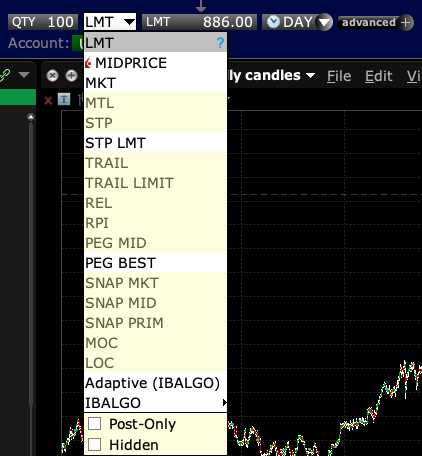
Its SMART routing is one of the stronger examples here. It’s used to find price improvement on mid-cap names where many retail platforms might otherwise default to the NBBO.
Level II Data And Depth Of Book
Level II is more important the less liquid the securities are because transaction costs start having more of an effect. When the top-of-book is only showing 200 shares on each side, seeing the full depth tells you whether a 1,000-share order will walk the book against you or get filled cleanly. But not every broker includes Level II data for free (e.g., at IBKR, Nasdaq TotalView is a paid add-on). So be sure to factor the subscription cost into your monthly overhead if you’re trading small caps.
Instrument Availability
Active traders generally want various instruments available to them to express a view.
- Futures – The CME E-mini Russell 2000 (RTY) and Micro E-mini (M2K) give you round-the-clock leveraged exposure (futures are open 23 hours per day, 5 days per week, from Sunday evening to Friday evening). They’re the easiest way to hedge or speculate on the index itself. They provide substantial leverage at 10x or even more. Financing costs are baked into the contract itself. Optimus Futures and Interactive Brokers both support these contracts.
- ETFs – IWM (iShares Russell 2000), VTWO (Vanguard), and leveraged products like TNA and TZA for 3x long/short exposure (meant to be used for day trading purposes due to reset-related decay).
- Individual stocks – Individual stocks give you direct access to the ~2,000 constituents. This is standard with most brokers. What more traders are demanding is extended-hours trading capability (4 AM to 8 PM ET). For traders who don’t want to feel “locked out” of markets, it’s important as earnings releases cluster either side of the regular session.
- CFDs – Retail traders outside of the US and some other regions can access the Russell 2000 as a cash index CFD with leverage. These are typically under the ticker “US2000” or similar.
Extended-Hours Trading
Small caps are particularly earnings-sensitive and sensitive to US domestic economic data, given the majority of their revenue comes from within US borders. A big share of their volatility now happens outside the 9:30 AM to 4 PM ET window.
Research from Sodali & Co suggests that over 40% of daily equity volatility already occurs overnight. If you’re directly trading earnings reactions on Russell 2000 names, make sure your broker actually supports pre-market and post-market sessions on small caps rather than only large caps. Note that you may be limited to limit orders only in extended-hours sessions due to lower liquidity levels.
Fees And Financing
As a day trader or active trader more generally, your transaction costs matter a lot to your results.
Most Russell 2000 brokers charge through commissions as a percentage of each trade and/or through the bid-ask spreads. Additional charges may include deposit and withdrawal fees, subscription costs for different account types, and any extra features.
Also take into account swap fees if you hold positions overnight with products like CFDs. For futures traders, per-side commissions vary by broker (Optimus Futures is known for low commissions in the futures space). These add up fast if you’re trading several round-trips a day.
Regulation
Russell 2000 brokers that are regulated are generally more trustworthy than those without licenses. For example, brokerages licensed by FINRA in the US must be truthful in their adverts and provide the requisite disclosures. To verify a broker is regulated, you can check their license number with the regulatory body’s directory.
Platforms And Tools
The platform is where you will analyze listed companies and execute trades. For active Russell 2000 traders, you generally have a bunch of must-haves and nice-to-haves in the form of a fast DOM ladder, customizable hotkeys, conditional orders (e.g., OCO, bracket, trailing stops), and solid charting with volume profile.
Interactive Brokers’ TWS and IBKR Desktop cover all of this. Optimus Futures offers Optimus Flow, MT5, and TradingView integration so you can pick the charting setup you prefer.
Customer Service
Quick and effective assistance is important if you experience issues. The best Russell 2000 brokers offer live chat and phone assistance with human agents available during US market hours. Some may offer extended customer service hours as well.
Russell 2000 – Headline Information
- The Russell 2000 is the small-cap segment of the Russell 3000, so the broker you choose needs reliable access to stocks traded across NYSE, Nasdaq, NYSE American, ARCA and CBOE.
- Small-cap names have less liquidity, so they tend to carry wider spreads and higher volatility than large caps. This makes execution quality and order routing more important than headline commissions.
- Level II data to look at resting orders at various price points is also helpful when dealing with the wider bid-ask spreads of small caps.
- Active traders typically access the Russell 2000 through the E-mini and Micro E-mini Russell 2000 futures (RTY/M2K) on CME, the iShares Russell 2000 ETF (IWM), or CFDs on the index via retail brokers.
- Use a demo account to practice the nuances of small caps before wading in (e.g., navigating through small-cap order books and the trading itself) and risking capital.
How To Place A Trade On The Russell 2000
Let’s look at a basic workflow on how to place a trade on the Russell 2000.
Step 1: Open And Fund Your Account
I have an account with Interactive Brokers. If you’re new to any broker, the registration process is relatively straightforward. If you don’t already have an account with them, most brokers will ask for basic personal information and verify your identity before you can get up and running with a live account (at which point you can go ahead and fund it).
If you’re looking to get your feet wet with a broker before committing real money, consider a demo account first to see if it meets your needs.
Step 2: Search For A Russell 2000 Ticker
Once inside the platform, I can search for a ticker.
Let’s look at IWM, the iShares Russell 2000 ETF and the most liquid way to trade the index as a whole. It normally has a bid-ask spread of just $0.01-$0.03 during regular hours during normal market activity.
On average, it’s a bit wider than SPY and QQQ, the S&P 500 and Nasdaq ETFs, respectively.
After hours, you will see the bid and ask widen out considerably, which is typical for any ETF outside the core session. Be sure you have a good reason to trade after hours, as you might have to absorb the extra transaction costs.
The ticker appears along with the bid-ask spread (and size at each, which dynamically adjusts) and basic fund information.
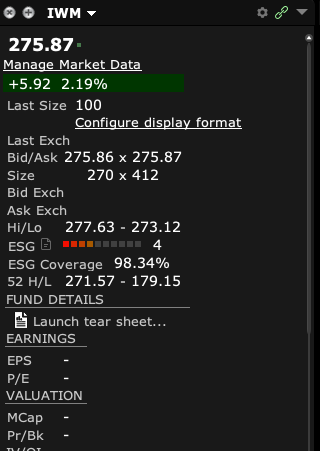
In our testing, searching for the major Russell 2000 instruments was quick and easy. When searching for IWM, I typed in its ticker symbol and hit Enter on my keyboard. This produced a pop-down menu on the order entry page, showing the ability to track the stock, options, and combinations of options (calls, puts, and various structures).
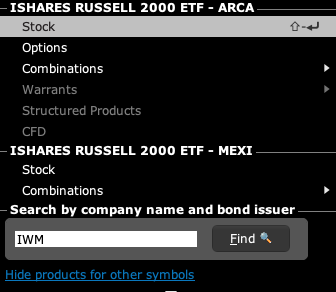
I also searched for several individual Russell 2000 constituents to compare. The spread on larger small-cap names was wider. This is typical for the top-weighted Russell 2000 stocks. Lower-weighted constituents can show noticeably wider spreads, especially outside the busiest hours of the session.
If you’re searching for the RTY futures contract, the transaction cost is generally under $25 when factoring in the spread. This sounds hefty, but also note that you’re controlling low-six-figures worth of Russell 2000, so as a percentage it is reasonable. Also note that part of your cost is the financing fee built into the futures contract. You will notice that it trades at a premium relative to spot to reflect the leverage costs, which are institutional level and don’t contain the retail mark-up and roughly equal to a risk-free rate most of the time (though this can change during stress periods).
Step 3: Analyze The Spread
IWM is one of the most heavily traded ETFs in the world and is listed on NYSE Arca. The bid-ask spread was tight at just two cents.
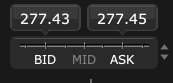
The ETF’s massive daily trading volume keeps the spread narrow throughout the regular session. It will nonetheless widen out after market hours like all other securities.
For individual Russell 2000 components, the spread can vary more than you might expect. The biggest names in the index generally offer the tightest spreads during normal market hours when news and events aren’t being priced into the market. Smaller-weighted Russell 2000 constituents can widen out significantly, especially around the open and close. If you’re trading smaller individual Russell 2000 stocks rather than the IWM ETF, account for the wider spread as an additional cost every time you move in and out of the trade.
Let’s look at Bloom Energy (BE), one of the larger components in the Russell 2000:
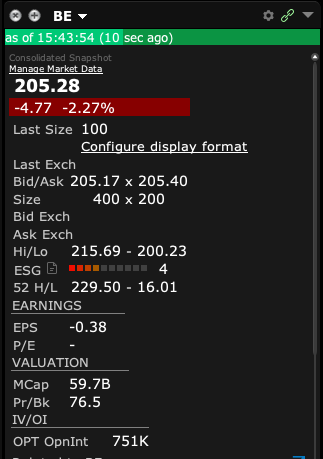
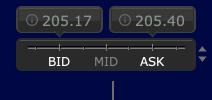
The bid-ask spread is noticeably wider than the overall index:
Step 4: Select Your Order Type
I placed a limit order rather than a market order. I rarely use any type of market order to better control the price, and this is especially important with Russell 2000 small caps where liquidity can thin out fast.
Some brokers (including Interactive Brokers) have adaptive pricing, which is a type of market order that works at getting you the best price. MidPrice is an option as well, which splits the bid and ask.
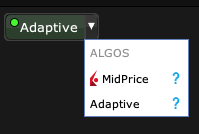
For most intraday Russell 2000 trading, limit orders are the safest default, especially during the first 15-30 minutes after the opening bell when small-cap prices can sometimes swing faster than you can keep up.
Step 5: Confirm And Execute
Before submitting, the platform displayed an order confirmation screen showing the ticker, order type, quantity, limit price, estimated commission, margin requirements (initial and maintenance margin), and total estimated cost.
I reviewed these details and clicked confirm.
As a limit order, it shows up in your personal queue and you wait for it to execute.

History of the Russell 2000
The Russell 2000 index was founded in 1984 by the Frank Russell Company, an asset management and investment firm. It was the first real way to gauge the strength of so many small and medium-cap companies in the US at once. Nowadays, the index is run by the FTSE Russell Group (a subsidiary of the London Stock Exchange Group) and has grown to become a popular method of gauging the health of the US small-cap equities market.
With the ticker symbol RUT, you can follow live price quotes and look at history charts for the Russell 2000 on websites such as MarketWatch and Yahoo Finance. The best brokers with access to the Russell 2000 also have charts showing time frames ranging from the past few days up to several years ago. The top platforms may also contain fact sheets detailing P/E ratio history, average historical returns, annual returns by year and the total return and dividend yield since the index was launched.
Rules
The Russell 2000’s listings can change as companies’ fortunes change and new organizations go public.
For a company to be included in the Russell 2000, it must satisfy the following criteria:
- Be a part of the Russell 3000
- Have a market cap of at least $30 million
- Have a lower float-adjusted market cap than all companies in the Russell 1000 index
- Be a publicly traded company
- Trade on the NYSE, NASDAQ, ARCA, NYSE American or CBOE
Trading Hours
The opening hours for the index depend on the instrument and exchange you are trading. For instance, futures on the E-Mini Russell 2000 index from CME Globex are tradable between Sunday 6 PM and Friday 5 PM (ET) with a 60-minute break each day starting at 5 PM.
Many of the stocks you can trade with Russell 2000 brokers are traded on US exchanges, for which the market operating hours are generally as follows:
- 4 AM until 9:30 AM (ET) – Pre-market trading session
- 9:30 AM until 4 PM (ET) – Core trading session
- 4 PM until 8 PM (ET) – Post-market trading session
However, bear in mind that online Russell 2000 brokers may set their own trading hours.
Trading The Russell 2000 vs Other US Indices
The Russell 2000 behaves very differently to the S&P 500 or Nasdaq 100, and active traders should understand the trade-offs before allocating capital.
- Volatility – small caps are more volatile than large caps. The Russell 2000 routinely posts daily ranges wider than the S&P 500, which creates more intraday opportunity but also more risk of getting stopped out on noise.
- Liquidity – top large-cap names have pennies-wide spreads all day. Small caps do not. On a quiet afternoon, a Russell 2000 constituent at the lower end of the market cap range can have spreads of 10-20 cents on a $15 stock.
- Domestic bias – less than 20% of Russell 2000 revenues come from outside the US, versus around 40% for the Russell 1000. This means the Russell 2000 is more sensitive to US interest rates, US domestic growth and US regulatory policy, and less sensitive to the dollar or global growth.
- Sector mix – the Russell 2000 is overweight Financials, Industrials and Health Care. The S&P 500 and Nasdaq 100 are dominated by mega-cap technology.
- Reconstitution cycle – reconstitution remains one of the highest-volume sessions of the year for US equities.
What Companies Are In The Russell 2000?
There are companies on the Russell 2000 from a wide range of industries such as technology, energy and utilities. Constituents change as new IPOs are added and at reconstitution, so the specific top holdings rotate.
Names that have historically graduated from the Russell 2000 to the Russell 1000 include Nvidia, Amazon, Costco, Netflix, Adobe and Intuit – a reminder that today’s small cap can become tomorrow’s mega cap.
How To Start Trading The Russell 2000
Select An Instrument
There are several ways to trade the Russell 2000. Among the most popular are:
Stocks
The index is made up of companies from a range of different stock exchanges, so if you want to trade individual stocks you will need to ensure your Russell 2000 brokers provide access to at least one of these.
When selecting the stock or stocks to trade with Russell 2000 brokers, you need to consider volume vs volatility. The trading volume of an asset relates to how many shares of a company are being exchanged over a given time. It is a key metric because it gives an idea of where future price movements could be. For instance, if there are more people trading a given stock at one time, the price is considered more likely to move and by a larger amount. A by-product of having so many other traders placing buy and sell orders is that there is lower slippage as orders are filled faster. Additionally, the bid-ask spreads are likely to be tighter too.
You also need to account for the volatility of a given stock tradable through Russell 2000 brokers. Volatility relates to how hard it is to predict the frequency and the size of swings in the value of a stock, which can be taken advantage of to generate returns. Generally, during times of low volatility, the price of a stock is not expected to see large fluctuations in price, meaning there may be less opportunity to generate returns. On the flip side, higher volatility stocks are often more attractive for day traders as there are more chances to capitalize on price action with the swings happening so often. The drawback is the added risk as the price can easily swing unfavorably, putting you in a losing position.
ETFs
An exchange-traded fund (ETF) is a collection of assets, typically stocks, that is tracked and traded as a single security. As the name suggests, they can be traded on exchanges, making them easy to access for clients of Russell 2000 brokers.
There are ETFs that track the price of the Russell 2000 by allocating to some or all of the index’s stocks. The most widely traded is the iShares Russell 2000 ETF (IWM), listed on NYSE Arca, which holds the bulk of the index’s constituents and is the standard vehicle retail traders use for Russell 2000 exposure. Other options include the Vanguard Russell 2000 ETF (VTWO) and the SPDR Portfolio S&P 600 Small Cap ETF (SPSM), which tracks a similar small-cap universe.
If you feel that the ETFs that track the performance of the Russell 2000 index closely produce insufficient returns, you can instead trade leveraged ETFs. Examples include the Direxion Daily Small Cap Bull 3X (TNA) and ProShares Ultra Russell2000 (UWM) which leverage the index by 3x and 2x, respectively. Alternatively, you can trade inverse ETFs such as the Direxion Daily Small Cap Bear 3X (TZA) and ProShares Short Russell2000 (RWM). These track the Russell 2000 with a -3x and -1x inverse multiplier, allowing traders to profit from a decline in the value of the entire index.
Derivatives
Derivative products are a popular way for retail traders to speculate on price movements, with many Russell 2000 brokers offering products that allow them to take advantage of leverage through margin trading.
Derivatives can be traded on individual stocks, ETFs that track the Russell 2000, or using the Russell 2000 index itself as a basis for trades. Some of the most popular Russell 2000 derivatives are listed below:
- CFDs, or contracts for difference, allow traders to make leveraged bets on price movements without actually buying or selling the underlying security. Not available in some regions, including the US.
- Futures – the CME E-mini Russell 2000 (RTY) and Micro E-mini (M2K) are the benchmark contracts for index traders. The Micro contract is 1/10th the size of the E-mini and lets smaller accounts take index positions without outsized margin.
- Options – the contract buyer has the right but no obligation to buy or sell the underlying at a specified price at expiry. Russell 2000 index options trade on CBOE, and options on IWM are among the most liquid ETF options in the market.
Research Companies & Markets
A good first step is to research the companies with the highest market capitalization as these will have the biggest influence on price movements. You should also take note of the largest markets and sectors represented on the index and research factors that influence these when developing your strategy.
Find A Niche
The index tracks just under 2,000 stocks, so finding a niche is another way to streamline the trading process. Whether this is concentrating on a single industry or on certain stocks such as the top 10 by market cap.
There are many stocks you can trade and many ways in which you can trade so it can be easy to be overwhelmed with too many choices. It may be best therefore to focus your time and effort on just a few securities. By doing so, you learn more about certain companies which can help you to make better predictions on future price movements.
Bottom Line
The Russell 2000 is a popular index due to its status as a benchmark for the performance of the US small-cap equities market. Through Russell 2000 brokers, clients can spot trade as well as open derivatives such as futures and options on a range of stocks.
Register with one of the top-rated Russell 2000 brokers to get started.
FAQs
What Stocks Are In The Russell 2000?
There are around 2,000 stocks in the Russell 2000 index. You can find a full list of all companies in the Russell 2000 index on the FTSE Russell website. Constituents turn over at each quarterly review and at reconstitution.
Are Russell 2000 Brokers Regulated?
The best Russell 2000 brokers hold licenses with regulatory bodies such as the Financial Industry Regulatory Authority (FINRA) in the US or the Financial Conduct Authority (FCA) in the UK. You can check and confirm if a broker is regulated by checking the license number on the regulator’s database.
How Do You Short the Russell 2000?
You can either take a short position on the index directly via an ETF (e.g., IWM) or via futures (e.g., RTY or M2K directly on the CME). For non-US traders, you can also do so via a CFD. Opening a put options contract or a bearish options trade structure is another possibility.
Another way is to trade against the Russell 2000 by trading inverse and leveraged short ETFs such as the Direxion Daily Small Cap Bear 3X (TZA) or ProShares Short Russell2000 (RWM). These are intended for risk-tolerant day traders only. For swing trading and longer timeframes, the daily leverage reset creates tracking error.
Where Can I Track the Russell 2000 Index?
Websites such as Yahoo Finance and MarketWatch provide useful information on instruments such as futures and ETFs, with lists detailing recent contracts. Some Russell 2000 brokers also offer live price charts and graphs with the latest data on the index, and TradingView is the most widely used third-party charting platform for the ticker.
Can I Day Trade the Russell 2000?
Yes. Active traders typically day trade the Russell 2000 via the E-mini RTY future, the Micro E-mini M2K, IWM, or CFDs on the cash index. Day trading individual Russell 2000 constituents requires a Pattern Day Trader margin account in the US.
What Is the Difference Between the Russell 2000 and the Russell 1000?
The Russell 1000 holds the largest ~1,000 US stocks (large and mega caps). It’s around 93% of the Russell 3000’s market cap. The Russell 2000 holds the next ~2,000 stocks (small and mid caps) and is around 7% of the Russell 3000’s market cap. Together they make up the Russell 3000.
Is the Russell 2000 More Volatile Than the S&P 500, Dow Jones, and Nasdaq? Does It Have Higher Returns?
The Russell 2000 has more volatility than the S&P 500 and Dow and comparable volatility with the Nasdaq.
| Name | Ticker | IWM | SPY | QQQ | DIA | Annualized Return | Daily Standard Deviation | Monthly Standard Deviation | Annualized Standard Deviation |
|---|---|---|---|---|---|---|---|---|---|
| iShares Russell 2000 ETF | IWM | 1.00 | 0.87 | 0.75 | 0.84 | 7.95% | 1.51% | 5.77% | 19.99% |
| State Street SPDR S&P 500 ETF | SPY | 0.87 | 1.00 | 0.87 | 0.95 | 7.96% | 1.21% | 4.35% | 15.05% |
| Invesco QQQ Trust | QQQ | 0.75 | 0.87 | 1.00 | 0.77 | 8.43% | 1.63% | 6.44% | 22.32% |
| State Street SPDR Dow Jones Industrials ETF | DIA | 0.84 | 0.95 | 0.77 | 1.00 | 8.21% | 1.15% | 4.22% | 14.60% |