




With a boom in cryptocurrency, margin trading on this volatile asset provides new and potentially lucrative opportunities. In this tutorial, we explain how to trade crypto on margin plus offer tips for choosing the best exchanges and platforms. We also cover the pros and cons of crypto margin trading and a guide to getting started.
Crypto Margin Trading Platforms
-
- Coins: BCH, BTC, BTG, ETH, LTC, XRP, EOS, DASH
- Crypto Spread: BTC <1%, ETH 2%
- Min. deposit: $100
-
- Crypto Spread: 0.05% BTC, 0.05% ETH
- Platforms: PXTrader 2.0, MT5, TradingCentral
- Min. deposit: $0
-
- Crypto Spread: BTC 42.036
- Min. deposit: $200
- Regulator: ASIC, CySEC, FSA, SCB, CMA-Kenya
-
- Crypto Spread: 114.37 (BTC)
- Platforms: Web Platform, MT4, MT5, TradingCentral
- Min. deposit: $200
-
- Crypto Spread: Variable
- Min. deposit: $50
- Regulator: FCA, ASIC, FSCA, VFSC, CIMA
-
- Coins: BCH, BTC, ETH, LTC, XRP, IOTA, NEO, EOS, XMR
- Crypto Spread: Variable
- Platforms: WebTrader, App
81% of retail CFD accounts lose money.






Learn how we test brokers and why you can trust our ratings.
Here is a summary of why we recommend these brokers in October 2026:
- AvaTrade 4.9/5 Regulated in five continents, AvaTrade offers a secure way to access crypto markets. There's a growing range of digital currencies including Bitcoin, Ethereum and Ripple, plus more unusually, a crypto index for diversified exposure. You can also access competitive crypto spreads in the broker's three platforms as well as 1:2 leverage.
- PrimeXBT 4.2/5 Traders can speculate on popular cryptos with commissions as low as 0.05% and high leverage up to 1:200. Additionally, the broker continues to improve its offering by introducing Crypto Futures, with 101 new tokens added in 2025, as well as trading contests with real prizes.
- IC 4.8/5 IC offers 20+ cryptocurrencies which are tradable via CFDs, including lesser-known tokens such as Avalanche, Kusama and Uniswap. Commission-free trading is available, and experienced crypto traders can access leverage in the MetaTrader platforms.
- Markets.com 4.4/5 Markets.com’s crypto offering covers 30+ major coins, including Bitcoin, Ethereum, and Litecoin, with leverage options that vary by region but stay more conservative than on forex. Execution was generally smooth in our tests, though spreads were noticeably wider during high volatility, making it better for swing trades than ultra-short-term scalping.
- Vantage 4.7/5 You can trade cryptos 24/7, including Bitcoin, with up to 1:200 leverage and zero overnight fees. Various risk management tools are also available, including price alerts and stop losses. The Vantage app also offers an excellent live news feed so you can keep track of the crypto market whilst on the go.
- Plus500 4.1/5 Investors can trade on rising and falling prices with CFDs on popular cryptos like Bitcoin. Plus500 also stands out for its crypto indices, which offer diversification opportunities by tracking a basket of leading digital currencies. Availability subject to regulation.
Community Sentiment
See how users rate these brokers based on the average customer ratings submitted on DayTrading.com, plus ratings from Trustpilot, the Apple App Store and Google Play.
| Broker | Our Users' Rating | Trustpilot Score | Trustpilot Reviews | iOS App Rating | Android App Rating |
|---|---|---|---|---|---|
| AvaTrade | 13590 | ||||
| PrimeXBT | 418 | ||||
| IC | 2 | ||||
| Markets.com | 1256 | ||||
| Vantage | 15680 | ||||
| Plus500 | 20107 |
AvaTrade
AvaTrade offers active traders everything they need: an intuitive WebTrader, powerful AvaProtect risk management, a smooth 5-minute sign-up process, and dependable support you can rely on in fast-moving markets.
 Jemma Grist, Reviewer
AvaTrade quick facts
- Coins
- BCH, BTC, BTG, ETH, LTC, XRP, EOS, DASH
- Crypto Mining
- ✘No
- Auto Market Maker
- ✘No
- Crypto Spread
- BTC <1%, ETH 2%
- Crypto Lending
- ✘No
- Crypto Staking
- ✘No
- Platforms
- WebTrader, AvaTradeGO, AvaOptions, AvaFutures, MT4, MT5, AlgoTrader, TradingView, TradingCentral, DupliTrade
- Minimum Deposit
- $100
- Regulator
- ASIC, CySEC, FSCA, ISA, CBI, JFSA, BVI, FSRA/ADGM, AFM, CMA-Kenya, CIRO (via Friedberg Direct)
- Account Currencies
- USD, EUR, GBP, CAD, AUD, ZAR
- Leverage
- 1:30 (Retail) 1:400 (Pro)
AvaTrade Leverage Trading
Pros
- AvaTrade launched AvaFutures to offer low-margin access to global markets, then expanded in 2025 as one of the first brokers to add CME’s Micro Grain Futures, and then later in the year went further by integrating with TradingView.
- The WebTrader excelled in our hands-on tests, sporting a user-friendly interface for beginners, complete with robust charting tools like 6 chart layouts and 60+ technical indicators.
- Years on, AvaTrade remains one of the few brokers offering a bespoke risk management tool, AvaProtect, that insures losses up to $1M for a fee and is easy to activate on the platform.
Cons
- The AvaSocial app is good but not great – the look and feel, plus the navigation between finding strategy providers and account management needs upgrading to rival category leaders like eToro.
- While signing up is a breeze, AvaTrade lacks an ECN account like Pepperstone or IC Markets, which provides the raw spreads and ultra-fast execution many day traders are looking for.
- AvaTrade’s WebTrader has improved, but work is still needed in terms of customizability – frustratingly widgets like market watch and watchlists can’t be hidden, moved, or resized.
PrimeXBT
PrimeXBT is suited to aspiring traders looking for crypto derivatives alongside traditional markets like forex and indices, all tradable on an intuitive, web-based platform. The copy trading solution is also ideal for hands-off traders with 5-star ratings and performance graphs to help you find traders that align with your preferences and risk appetite.
 William Berg, Reviewer
PrimeXBT quick facts
- Coins
- BTC, LTC, ETH, XRP, EOS, ADA, DOT, SOL, UNI, LINK, DOGE, BNB, ICP, SAND, PAXG, andmore
- Crypto Mining
- ✘No
- Auto Market Maker
- ✘No
- Crypto Spread
- 0.05% BTC, 0.05% ETH
- Crypto Lending
- ✘No
- Crypto Staking
- ✘No
- Platforms
- PXTrader 2.0, MT5, TradingCentral
- Minimum Deposit
- $0
- Regulator
- FSCA, FSC, FSA, CNAD
- Account Currencies
- USD, EUR, GBP
- Leverage
- 1:1000
PrimeXBT Leverage Trading
Pros
- PrimeXBT seriously bolstered its suite of Crypto Futures in 2025, now offering over 200 tokens spanning AI, NFTs, Metaverse, Layer 1 &2, and more.
- Traders can now use crypto balances (BTC, ETH, USDT, USDC) as margin to trade traditional financial markets, without needing to convert funds into fiat currency first.
- PrimeXBT has added opportunities with new tokens for exchanging and funding, including 1Inch, Aave, and Injective.
Cons
- Despite licenses from agencies like the FSCA, FSC, CNAD, and FSA, PrimeXBT lacks authorization from a top-tier body, making it higher risk than some other top-rated crypto exchanges and brokers.
- Support response times and the choice of channels could be improved to provide active traders with quicker, more comprehensive assistance.
- Despite improvements like 7 metal additions, the around 350+ instruments still trails competitors, notably OKX with its 400+ assets.
IC
IC (formerly IC Markets) offers superior pricing, exceptionally fast execution and seamless deposits. The introduction of advanced charting platforms, notably TradingView, and the Raw Trader Plus account, ensures it remains a top choice for intermediate to advanced day traders.
 Christian Harris, Reviewer
IC quick facts
- Coins
- BTC, BCH, DOT, DSH, EMC, EOS, ETH, LNK, LTC, NMC, PPC, XLM, XRP, ADA, BNB, DOG, UNI, XTZ
- Crypto Mining
- ✘No
- Auto Market Maker
- ✘No
- Crypto Spread
- BTC 42.036
- Crypto Lending
- ✘No
- Crypto Staking
- ✘No
- Platforms
- MT4, MT5, cTrader, TradingView, TradingCentral, DupliTrade, Quantower
- Minimum Deposit
- $200
- Regulator
- ASIC, CySEC, FSA, SCB, CMA-Kenya
- Account Currencies
- USD, EUR, GBP, CAD, AUD, NZD, JPY, CHF, HKD, SGD
- Leverage
- 1:5000
IC Leverage Trading
Pros
- IC offers fast and dependable 24/7 support based on firsthand experience, particularly when it comes to accounts and funding issues.
- As a tightly regulated and widely respected broker, IC prioritizes client security and transparency, helping to ensure a reliable trading experience globally.
- You have access to over 2,250 CFDs across various markets, including forex, commodities, indices, stocks, bonds, and cryptocurrencies, allowing for diversified trading strategies.
Cons
- While IC offers a selection of metals and cryptos for trading via CFDs, the range is not as extensive as brokers like eToro, limiting opportunities for traders interested in these asset classes.
- The breadth and depth of tutorials, webinars and educational resources still need work, trailing alternatives like CMC Markets and reducing its suitability for beginners.
- Interest isn't paid on unused cash, an increasingly popular feature found at alternatives like Interactive Brokers.
Markets.com
Markets.com is best suited to retail investors who trade frequently but don’t want to calculate commissions, thanks to its spread-only pricing (EUR/USD around 1.3 pips). It especially appeals to short-term traders who value fast execution, flexible asset choice spanning 2,200+ instruments and proprietary tools like hedge fund confidence indices and insider trade alerts.
Christian Harris, Reviewer
Markets.com quick facts
- Coins
- XLM, PENGU, BTC, XTZ, SNX, YFI, TRX, HLP, HIVE, VAULTA, CRV, RSR, BAT, AAVE, VANA, VIRTUAL, XRP, DOGE, LTC, SKY, XMR, ADA, BCH, DASH, AVAX, BGB, PI, ETH, WLFI, TON, ZRX, SOL, DOT, LINK, UNI
- Crypto Mining
- ✘No
- Auto Market Maker
- ✘No
- Crypto Spread
- 114.37 (BTC)
- Crypto Lending
- ✘No
- Crypto Staking
- ✘No
- Platforms
- Web Platform, MT4, MT5, TradingCentral
- Minimum Deposit
- $200
- Regulator
- ASIC, CySEC, FSCA, BVI FSC
- Account Currencies
- USD, EUR, GBP, AUD, ZAR, SEK, NOK, DKK, CHF, PLN, CZK
- Leverage
- 1:500
Markets.com Leverage Trading
Pros
- Markets.com provides commission-free trading on most assets with spreads starting from around 0.6 pips on major forex pairs, making it cost-effective for casual traders.
- Switching between the proprietary web platform (great for alerts and quick analysis) and MT5 (strong for algorithmic EAs) was smooth in our tests; positions synced across desktop, web, and mobile without gaps or re-quotes.
- Within the 2,200+ CFDs, Markets.com offers thematic baskets like the Warren Buffett Blend and Cannabis Blend, which behaved like ready-made mini-ETFs during testing, saving the work of balancing weights manually.
Cons
- While CySEC and FSCA oversight is solid, the SVGFSA and BVIFSC entities offers 1:500 leverage under a light-touch framework, meaning protections like compensation schemes and strict conduct rules lag behind the strictest regulatory standards.
- The proprietary web platform felt a bit basic once we pushed into advanced charting with fewer drawing/indicator options than full TradingView or MetaTrader.
- During sign-up, we hit unclear account type explanations and got stuck in an email verification loop that locked us out for an hour - way less streamlined than other brokers we’ve tested.
Vantage
Vantage remains an excellent option for CFD traders seeking a tightly-regulated broker with access to the reliable MetaTrader platforms. The fast sign-up process and $50 minimum deposit make it very straightforward to start day trading quickly.
Jemma Grist, Reviewer
Vantage quick facts
- Coins
- ADA, AVA, BTC, DOG, EOS, ETH, LTC, NEO, SHB, SOL, TRX, UNI, XRP, more
- Crypto Mining
- ✘No
- Auto Market Maker
- ✘No
- Crypto Spread
- Variable
- Crypto Lending
- ✘No
- Crypto Staking
- ✘No
- Platforms
- ProTrader, MT4, MT5, TradingView, TradingCentral, DupliTrade
- Minimum Deposit
- $50
- Regulator
- FCA, ASIC, FSCA, VFSC, CIMA
- Account Currencies
- USD, EUR, GBP, CAD, AUD, NZD, JPY, HKD, SGD, PLN
- Leverage
- 1:500
Vantage Leverage Trading
Pros
- Vantage maintains its high trust score thanks to its strong reputation and top-tier regulation from the FCA and ASIC
- There are no short-term strategy restrictions with hedging and scalping permitted
- The ECN accounts are very competitive with spreads from 0.0 pips and a $1.50 commission per side (Pro ECN account)
Cons
- The average execution speeds of 100ms to 250ms are slower than alternatives based on tests
- It's a shame that some clients will need to register with the offshore entity, which offers less regulatory protection
- A steep $10,000 deposit is needed for the best trading conditions, which include the $1.50 commission per side
Plus500
Plus500 offers a super-clean experience for traders with a CFD trading platform that sports a modern design and dynamic charting. That said, the broker’s research tools are limited, fees trail the cheapest brokers, and there’s room for enhancement in its educational resources.
Christian Harris, Reviewer
Plus500 quick facts
- Coins
- BCH, BTC, ETH, LTC, XRP, IOTA, NEO, EOS, XMR
- Crypto Mining
- ✘No
- Auto Market Maker
- ✘No
- Crypto Spread
- Variable
- Crypto Lending
- ✘No
- Crypto Staking
- ✘No
- Platforms
- WebTrader, App
- Minimum Deposit
- $100
- Regulator
- FCA, CySEC, EFSA, ASIC, FMA, FSCA, MAS, ISA, FSA, DFSA, SCA, JFSA, SCB, CIRO, BAPPEBTI, OJK, BI
- Account Currencies
- USD, EUR, GBP, AUD, ZAR, CZK
- Leverage
- ✔Yes
Plus500 Leverage Trading
Pros
- Plus500 provides a specialized WebTrader platform designed explicitly for CFD trading, offering a clean and uncluttered interface
- AI Bites has been added, giving active traders real-time, AI-generated market summaries, technical analysis, and social sentiment next to charts, aiding in short-term trading decisions
- The broker offers low commission trading on a diverse range of markets, minimizing additional fees while appealing to established traders
Cons
- The absence of social trading means users can’t follow and replicate the trades of experienced traders
- Compared to some competitors, especially IG, Plus500’s research and analysis tools are limited
- Educational resources are limited compared to best-in-class brokers like eToro, impacting the learning curve for beginners
What Is Crypto Margin Trading?
Crypto margin trading is the practice of using leverage to multiply the results of a trade. The amount a trader has deposited in their account is known as the margin.
A broker offering margin trading will provide traders with a leverage quote, this is usually displayed as either a ratio (e.g 1:2) or a multiple (e.g 2x), meaning that for every 1 base crypto coin, the results of a trade are multiplied by 2.
To enable traders to open larger positions, the broker allows them to borrow capital. This will need to be paid back in full, but the profits can be retained by the trader.
For example, if your leverage is 1:2 and you deposit $1,000, you can open positions with a total value of $2000.
If you use this to purchase Ethereum and the price moves 5%, you’ll have $2,100 worth of ETH.
If you close your trade there and return the $1,000 borrowed, you’re left with $1,100, having made a $100 profit.
If you’d placed the same trade in your spot account, you’d have made a $50 profit.
It’s important to note that profits are amplified, but equally, so are losses. Plus, your borrowed amount will still need to be returned. Therefore, margin trading on cryptos should only be utilised by knowledgeable investors.
Some of the top crypto exchanges offer crypto margin trading, including Kraken and Crypto.com.
What Is A Margin Call?
If the price of the asset held on margin drops in value significantly, a broker will issue a margin call. This means that traders will have to prove that they can return the amount borrowed, by depositing more funds.
The account will usually be suspended from opening new trades until this has been completed, or the asset rises in value again.
A margin call is designed to protect traders from losing more than they can afford.
For example, if you’re trading $1,000 on margin with 5x leverage and the value of ETH drops 17.5%, the value of the asset you hold is now worth $4,125.
Your operating loss is -$875. Since you’ve only deposited $1,000, you’re in danger of losing more than your initial deposit amount if the value slips further. At this point, a margin call may be issued.
Pros Of Crypto Margin Trading
- Lower capital requirements – Some Bitcoin trading strategies that require large amounts of capital. For example, scalping is the practice of executing short and sharp trades to collect small profits regularly. Crypto margin trading allows traders to maximise the results of each trade and means profits can accumulate quickly.
- 24/7 margin trading – Unlike the forex and commodities markets, crypto can be traded 24/7. If you’re a weekend trader, this means you can take advantage of margin trading outside of usual operating hours.
Cons Of Crypto Margin Trading
- Losses are amplified – While crypto trading on margin can mean increased profits, it also means that any losses are multiplied. Losses can exceed the deposit amount, so the risk involved is significantly larger when compared with trading on a cash account. Traders should consider whether they can afford the risk.
- Interest on borrowed crypto – While traders keep all the profits from their trades, some exchanges charge interest on the borrowed amount. The rate varies based on the cryptocurrency and the length of time capital is borrowed.
- Negative balance protection – In the world of forex, margin trading has been around a while. Therefore, most brokers are subject to regulation that aims to protect retail investors. In the EU, regulated forex brokers must provide negative balance protection, for example. This means that traders are prevented from losing more than their deposit amount when trading on margin. This level of protection is not generally available in the crypto industry, leaving altcoin margin traders exposed to significant risk.
- Regulatory challenges – Leveraged crypto trading has been barred outright or severely restricted in some jurisdictions due to its volatility and high risk. For example, measures introduced by the European Securities and Markets Authority (ESMA) in 2018 limited leverage to 1:2, while the UK’s Financial Conduct Authority barred leveraged crypto derivatives for retail traders in 2020.
- Limited trading pairs – Not all crypto margin trading platforms offer leverage on all pairs, sometimes it’s only available on one or two. This limits traders’ scope for utilising an arbitrage strategy.
How To Start Crypto Margin Trading
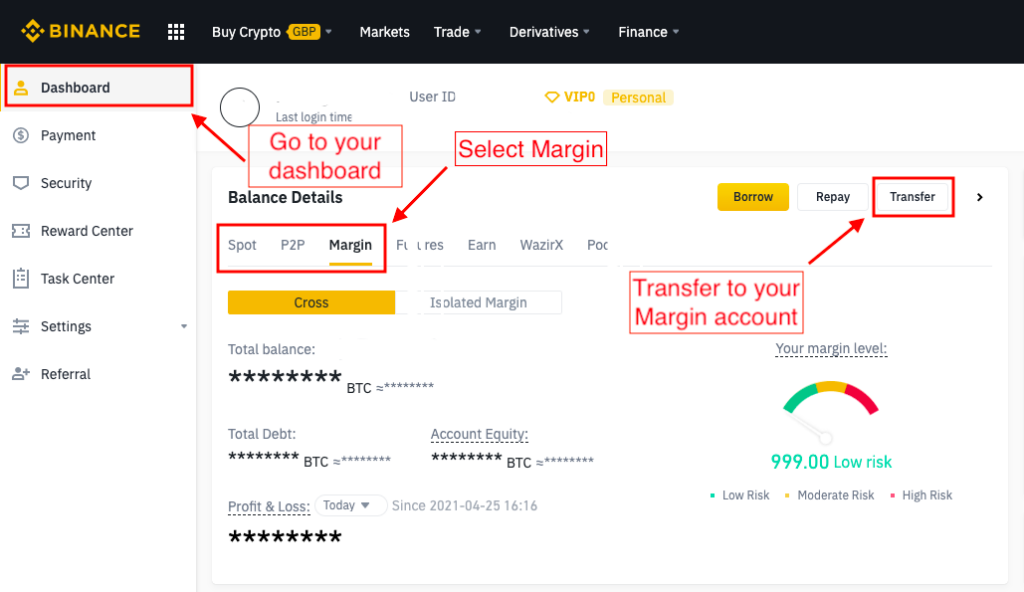
To start crypto margin trading, you’ll first need to select a broker or an exchange that provides the service. Some of the best crypto exchanges that offer margin trading include Kraken. Then sign up to an account and complete any KYC checks – this usually involves inputting proof of identity and some personal information. Next, visit your settings. There will usually be an option to switch your account from spot to margin trading. In some cases, you’ll then need to transfer tokens to your margin account.
Choosing A Crypto Margin Trading Broker
- Leverage offered – Take a look a what leverage a broker is offering to understand how much you can trade. Note that higher leverage isn’t necessarily better – crypto assets tend to be highly volatile, meaning that even leverage of 1:2 can bring tidy profits, while high leverage will expose you to very serious risk if a trade goes the wrong way.
- Fees – The fee structure for margin trading varies per broker. Some operate by allowing traders to borrow tokens as leverage. In this instance, interest is usually charged on the borrowed amount. Kraken, on the other hand, charges an opening and closing fee on the spot value of the trade. A rollover fee is applied based on how long the position is held. Look for a broker whose fee structure you’re comfortable with. Also, taxes will usually need to be paid on any gains, in line with rules in your jurisdiction.
- Demo accounts – Since Bitcoin margin trading involves an increased level of risk, traders must have the opportunity to practice their strategies using signals beforehand. A trading simulator and online courses allow clients to trial strategies before using real money. Profit calculators are also useful to help predict the outcome of a trade and can replace the manual spreadsheet you’ve previously worked with.
Final Word On Crypto Margin Trading
Now we’ve explained the ins and outs of crypto margin trading, you’ve hopefully got the understanding to get started. Bitcoin and other cryptos are highly volatile markets and while trading on margin can mean huge upside, retail investors should also be aware of the risks involved. It’s possible this asset could suffer from increased regulation in the future, but for now, it represents an exciting opportunity for traders.
FAQ
How Does Bitcoin Margin Trading Work?
Crypto margin trading means investors can multiply the results of their Bitcoin trade by utilising leverage. Leverage is the number of times you can multiply the results, it is either written as a ratio (e.g 1:3) or a multiple (e.g 3x). Leverage allows traders to borrow funds from their broker. In this way, a trader can execute much larger positions than their deposit amount and can amplify profits.
Are There Many Crypto Exchanges That Allow Margin Trading?
The top crypto margin trading exchanges that allow margin trading include Kraken, but there are more to choose from. However, availability does vary by location. Some popular exchanges, including eToro and Coinbase, have suspended crypto margin trading at times due to volatility in the market.
Is Crypto Margin Trading Legal In The USA?
The US has taken steps towards crypto margin trading on CFTC‑registered exchanges following 2025 regulatory changes that lifted prior restrictions on spot margin.
Will A Crypto Margin Call Go Away?
A margin call will cease once your account has been deposited with sufficient funds or the asset has increased in value. A margin call is designed to protect a trader from losses that exceed their deposit amount.
Can I Trade Crypto On Margin?
Yes, some of the top Bitcoin exchanges now offer trading on margin, with the opportunity to multiply the results of any trade. Whilst the practice is restricted in some jurisdictions, it is available in Australia, India, and Canada, to name just a few.