




Brokers with low leverage enable traders to manage risk when trading derivatives. Higher leverage means greater risk. This guide explains how trading with low leverage works and examines common leverage ratios and models. Read on for a list of the benefits and drawbacks of trading using lower leverage accounts. We have also ranked and compared the best companies and brokers with low leverage in 2026.
Brokers With Low Leverage
-
- Demo account
- Regulator: FCA, ASIC, CMVM , FSCA, SCB, FSA
- Platforms: TN Trader, MT4, TradingView
-
- Demo account
- Regulator: FCA, CySEC, FSCA, FSC
- Platforms: WebTrader, UM Social, UM App, MT4, MT5
-
- Demo account
- Min. deposit: $0
- Min. trade: 0.01 Lots
-
- Demo account
- Regulator: FCA, CySEC, FSA, DFSA, FSCA
- Platforms: Tickmill Webtrader, MT4, MT5, TradingView
-
- Demo account
- Regulator: FCA, ASIC, FMA, DFSA, FSC
- Platforms: Axi Copy Trading, MT4, AutoChartist
-
- Demo account
- Regulator: FCA, FSCA, FSA
- Min. deposit: $50






Learn how we test brokers and why you can trust our ratings.
This is why we think these brokers are the best in this category in 2026:
- Trade Nation 4.4/5 Trade Nation is a top FX and CFD broker regulated in multiple jurisdictions including the UK and Australia. The firm offers low-cost fixed and variable spreads on 1000+ assets with robust trading platforms and training materials. The Signal Centre can also be used for trade ideas.
- Ultima Markets 3.9/5 Ultima Markets is a forex and CFD broker, established in 2016. The firm is regulated by several financial bodies, including the CySEC. Users can trade 250+ CFDs spanning major asset classes, from currencies to stocks and commodities. As well as the industry-leading MetaTrader 4 platform, clients can use the Ultima Markets app and social trading service.
- IG 4.8/5 Founded in 1974, IG is part of IG Group Holdings Plc, a publicly traded (LSE: IGG) brokerage. The brand offers a top-tier selection of 17,000+ markets, with a range of user-friendly platforms and investing apps. For 50 years, IG has maintained its position as an industry leader, excelling in all key areas for traders.
- Tickmill 4.0/5 Tickmill is a global broker authorized by trusted regulators including the CySEC and the FCA. Hundreds of thousands of traders have opened an account with the firm with more than 530 million trades executed. Advanced trading tools, educational content and low fees make this broker stand out from competitors.
- Axi 3.7/5 Established in 2007, Axi is a multi-regulated forex and CFD broker that has made strides to improve its trading experience over the years, from expanding its suite of stocks and upgrading the Axi Academy to launching its own copy trading app.
- Moneta Markets 4.4/5 Founded in 2019 and headquartered in Johannesburg, South Africa, Moneta Markets offers over 1000 instruments for short-term trading. New traders can choose between STP and ECN accounts while the smooth sign-up process has helped attract 70,000 registered traders.
Community Sentiment
See how users rate these brokers based on the average customer ratings submitted on DayTrading.com, plus ratings from Trustpilot, the Apple App Store and Google Play.
| Broker | Our Users' Rating | Trustpilot Score | Trustpilot Reviews | iOS App Rating | Android App Rating |
|---|---|---|---|---|---|
| Trade Nation | 2170 | ||||
| Ultima Markets | 989 | ||||
| IG | 10185 | ||||
| Tickmill | 1193 | ||||
| Axi | 8101 | ||||
| Moneta Markets | 644 |
Trade Nation
Trade Nation suits discretionary traders who want to speculate on major indices like the US 500 or liquid FX pairs, and want the predictable all-in costs of fixed spreads. In tests, we found the fixed-spread TN Trader environment particularly useful for trading around scheduled economic releases owing to its reliable charting environment and because published spreads stayed capped.
 Christian Harris, Reviewer
Trade Nation quick facts
- Demo Account
- ✔Yes
- Instruments
- CFDs, Forex, Indices, Shares, Commodities, Futures, Bonds, Spread Betting (UK and Ireland only), Cryptos (Bahamas entity only)
- Regulator
- FCA, ASIC, CMVM , FSCA, SCB, FSA
- Platforms
- TN Trader, MT4, TradingView
- Minimum Deposit
- $0
- Minimum Trade
- 0.1 Lots
- Account Currencies
- USD, EUR, GBP, AUD, ZAR, SEK, NOK, DKK
Pros
- The broker expanded into Europe with regulated online trading services after securing authorization from Portugal's CVMV, boosting its safety protections for European residents.
- The demo comes with a $5,000 practice account and you can request a one-on-one platform walkthrough by callback - this level of personal help is rare.
- Trade Nation's 2026 partnership with Volt has sped up payments for Australian traders, who can now make instant deposits and withdrawals using PayID, with the faster payout capabilities planned for clients in the UK and EU.
Cons
- The 2–20% rebate scheme is closed to FCA, CMVM, and ASIC clients, meaning active day traders in these regions who would benefit from transaction rebates cannot claim them.
- Offshore SCB and FSA entities allow retail clients up to 1:200 and 1:500 leverage compared to 1:30 in regions like the UK, Europe and Australia, so an FSA client can have 16 times the exposure of a UK retail client on the same trade, but with less oversight and no compensation scheme.
- There is no raw or ECN pricing tier, which are often prefered by day traders. No matter how much you deposit or trade, you use the same fixed (or variable on MT4) pricing as beginners, making it unsuitable for scalpers especially.
Ultima Markets
Ultima Markets is best for beginners looking to speculate on popular financial markets on the reliable MetaTrader 4 or more recently the MetaTrader 5 platform. The minimum deposit is accessible at $50, there are no fees when you open and fund your account, and the addition of the Academy makes for a supportive learning environment.
 Jemma Grist, Reviewer
Ultima Markets quick facts
- Demo Account
- ✔Yes
- Instruments
- CFDs, Forex, Stocks, Indices, Commodities, Crypto, ETFs, Pre-IPO
- Regulator
- FCA, CySEC, FSCA, FSC
- Platforms
- WebTrader, UM Social, UM App, MT4, MT5
- Minimum Deposit
- $50
- Minimum Trade
- 0.01 Lots
- Account Currencies
- USD, EUR, GBP, CAD, AUD, JPY, HKD, SGD
Pros
- Fast execution speeds averaging <20ms
- Pre-IPO stocks added, including Rocket Launch and LEO Satellite networks
- $50 minimum deposit with the Standard account
Cons
- $20,000 minimum deposit required for the very best trading conditions
- Weak regulatory oversight through the offshore branch
- Slow sign-up process compared to rivals
IG
IG continues to provide a comprehensive package with an intuitive web platform, best-in-class education for beginners, advanced charting tools bolstered by its recent TradingView integration, real-time data, and robust trade execution for experienced day traders.
Christian Harris, Reviewer
IG quick facts
- Demo Account
- ✔Yes
- Instruments
- CFDs (not in US), Forex, Stocks, Indices, Commodities, ETFs, Futures, Options, Crypto, Spread Betting (UK only)
- Regulator
- CFTC, NFA, FCA, BaFin, ASIC, FINMA, MAS, JFSA, FMA, DFSA, BMA, CONSOB
- Platforms
- Web, L2 Dealer, MT4, TradingView, AutoChartist, TradingCentral, ProRealTime
- Minimum Deposit
- $0
- Minimum Trade
- 0.01 Lots
- Account Currencies
- USD, EUR, GBP, CAD, AUD, JPY, ZAR, SEK, DKK, CHF, HKD, SGD
Pros
- IG is amongst the best in terms of its range of instruments, which includes stocks, forex, indices, commodities, and cryptocurrencies, plus added US-listed futures and options as well as an AI Index, providing diversification opportunities.
- IG offers an extensive collection of professional and engaging educational resources, including webinars, articles, and analysis.
- As a well-established broker, IG operates under strict regulatory guidelines in multiple jurisdictions, maintaining a high level of trust.
Cons
- Beginners might find IG’s fee structure complex, with various fees for different types of trades or services, potentially leading to confusion or unexpected charges.
- IG has discontinued its swap-free account, reducing its appeal to Islamic traders.
- IG applies an inactivity fee of $12-$18 per month after 2 years, deterring casual investors.
Tickmill
Tickmill is a stellar choice for day traders, especially if you opt for the Raw account which delivers near-zero pip spreads and impressively fast order execution during testing.
Christian Harris, Reviewer
Tickmill quick facts
- Demo Account
- ✔Yes
- Instruments
- Forex, CFDs, stocks, indices, commodities, cryptocurrencies, futures, options, bonds
- Regulator
- FCA, CySEC, FSA, DFSA, FSCA
- Platforms
- Tickmill Webtrader, MT4, MT5, TradingView
- Minimum Deposit
- $100
- Minimum Trade
- 0.01 Lots
- Account Currencies
- USD, EUR, GBP, ZAR
Pros
- Tickmill’s multiple licenses with authorities like the FCA and CySEC aren’t just paperwork - they translate to real-world benefits. Your money is kept separate in secure accounts, and the broker offers negative balance protection. In practice, this means you won’t be on the hook for more than you deposit, providing peace of mind when markets get volatile.
- Based on our actual trading experience, Tickmill consistently processes orders quickly - averaging ~59 milliseconds - with very few instances of slippage or requotes. For a day trader, that means you can trust your entry and exit prices without worrying about delays that might cost you money in fast markets.
- When using the Raw Spread account, you’ll notice how tight the spreads are - sometimes even zero pips - paired with a transparent per-trade commission. This setup helps keep your overall trading costs low, which is a significant advantage when you’re making frequent trades and want to avoid hidden fees that cut into your profits.
Cons
- If you’re used to cTrader’s modern layout and sophisticated order types, you’ll miss that here. Tickmill sticks with MetaTrader 4 and 5, as well as TradingView and its own proprietary platform, so there’s no cTrader option. This might slow down traders who rely on cTrader’s workflow or specific tools, such as cTrader Copy.
- Tickmill primarily focuses on forex pairs, select stock CFDs, indices, and a few commodities. If you like switching between many different asset classes, like crypto or a broader range of stocks, you’ll find the choices limited compared to brokers with thousands of instruments.
Axi
Axi is a stand-out option if you want to day trade forex on the MetaTrader 4 platform thanks to the broker’s growing selection of 70+ currency pairs, the MT4 NextGen upgrade, and tight spreads from just 0.2 pips if you opt for the Pro account.
Christian Harris, Reviewer
Axi quick facts
- Demo Account
- ✔Yes
- Instruments
- CFDs, Forex, Stocks, Indices, Commodities, Crypto
- Regulator
- FCA, ASIC, FMA, DFSA, FSC
- Platforms
- Axi Copy Trading, MT4, AutoChartist
- Minimum Deposit
- $0
- Minimum Trade
- 0.01 Lots
- Account Currencies
- USD, EUR, GBP, CHF, PLN
Pros
- Axi offers a terrific MT4 experience, enhanced with the NextGen plug-in for advanced order management and analytics, and complete with low execution latency of approximately 30ms.
- Advanced traders can now sign up for the Axi Select funded trader program through the broker’s offshore entity, providing funding up to $1 million with a 90% profit share, which multiple traders have achieved.
- Axi introduced an intuitive AI trading feature in 2026 that enables MT5 users to manage accounts and configure trades directly through Claude in a large step towards agentic trading.
Cons
- Axi still has our confidence but issues with the ASIC and FMA in recent years mean it needs to continue providing a secure environment while adhering to licensing conditions.
- Despite performing well whenever we use it, Axi's support is unavailable 24/7, which can be inconvenient for traders in different time zones or those needing assistance outside standard trading hours.
- Axi is falling behind by only offering MT4 when many rivals now support MT5, cTrader, TradingView and proprietary software for a slicker experience with more advanced tools.
Moneta Markets
With ECN pricing featuring spreads from 0 and commissions from $1, leveraged trading, and terrific charting platforms, Moneta Markets is an excellent broker for experienced day traders.
Christian Harris, Reviewer
Moneta Markets quick facts
- Demo Account
- ✔Yes
- Instruments
- CFDs, Forex, Stocks, Indices, Commodities, ETFs, Crypto
- Regulator
- FCA, FSCA, FSA
- Platforms
- AppTrader, ProTrader 2.0, MT4, MT5, TradingCentral
- Minimum Deposit
- $50
- Minimum Trade
- 0.01 Lots
- Account Currencies
- USD, EUR, GBP, CAD, NZD, JPY, HKD, SGD, BRL
Pros
- Moneta Markets makes account funding a breeze, with plenty of account currencies, zero transfer fees and a wide selection of traditional, digital and now crypto-backed payment methods.
- Moneta Markets supports a growing suite of 1000+ tradable assets, with a particularly strong selection of commodities and more recently fresh index CFDs.
- Registering for an account with Moneta Markets is quick and easy through the digital sign-up process, taking just a few minutes with an accessible $50 minimum deposit.
Cons
- The best pricing is reserved for traders who deposit $20,000 for the ECN Ultra account, putting it out of reach for most retail investors.
- Clients need an account balance of at least $500 to access educational materials, a serious drawback for beginners who can get free materials from brokers like IG and eToro.
- While trading costs are generally competitive, index CFDs feature fairly high spreads especially on US products like the S&P 500, trailing IC Markets during testing.
How Does Leverage Work?
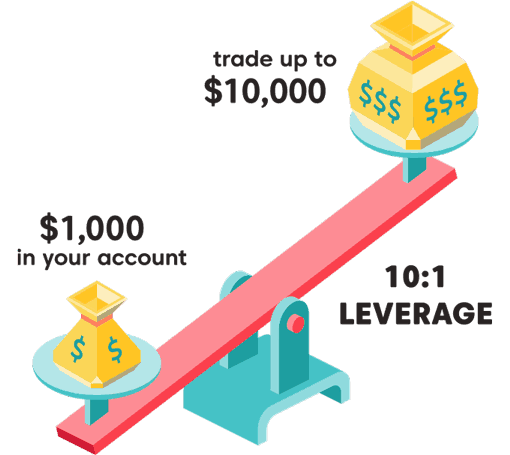
In basic terms, leverage trading works in a similar way to borrowing. Your broker lends you money to open larger position sizes, and in turn, you can make a greater profit.
Leverage is often shown as a ratio which represents the balance of the loan capital (from the broker) to the value of the full equity (the amount the trader invests).
For example, a broker offering 1:5 leverage means for every $10 invested, you can borrow up to $50. This gives traders the chance to multiply the results of a trade.
Importantly however, trading on leverage can magnify losses. So in highly volatile markets, such as cryptos, you can use lower leverage to protect yourself from losing money quickly. This is also why brokers with low leverage are popular with traders starting out.
Examples
Let’s say a trader starts with a $100 deposit, and their broker offers a 1:10 leveraged ratio on commodities. This means that they can trade in positions up to ten times the value of their available balance, so a maximum of $1000.
They invest $1000 in crude oil and the value of crude oil rises by 10%, so the trader earns $100 in profit ($1000 * 1.1 = $1100). However, if they had purchased $100 worth of crude oil without leverage on the same trade, their profit would be $10 ($100 * 1.1 = $110).
Alternatively, say a trader has a $100 deposit and their broker offers higher leverage at 1:100. They invest $10,000 ($1000 * 100) in Apple stocks but the value of the stock plummets by 10% so the trader loses $1000 ($10,000 * 0.9 = $9,000), 10 times their initial deposit.
So, while leveraged trades can magnify your profits, brokers with low leverage can help avoid larger losses.
Note, the examples above do not take into account any fees you may have to pay to trade on margin.
What Is Considered Low Leverage?
Generally, low leverage is considered to be below 1:30. However, leverage can vary depending on the markets you’re investing in.
The most trusted brokers that offer lower leverage are regulated by the FCA (UK), ASIC (Australia) and CySEC (Europe). These financial watchdogs typically limit leverage rates based on the market in question. Common leverage ratios include:
- 1:30 – Major forex pairs, for example, EUR/USD and GBP/USD
- 1:20 – Gold, minor forex pairs, major stock market indices, for example, NYSE and FTSE 100
- 1:10 – Commodities and minor indices, for example, energies like oil
- 1:5 – Stocks and shares, for example, Amazon, Microsoft, and Tesla
- 1:2 – Cryptocurrency assets, for example, Bitcoin, Ethereum and Litecoin
Pros Of Brokers With Low Leverage
- Gains With Reduced Risk – Using smaller leverage can benefit traders by slightly increasing their position size, and thus increasing their potential profits. With low leverage, the risk is minimized but bigger profits are still achievable.
- Lower Charges – Because leverage means that you borrow money, the broker can charge you fees for holding positions overnight or completing transactions. However, the cost structure with lower leverage means that you borrow less, and therefore you pay less in fees.
- Fewer Losses – As leverage boosts capital, it will also magnify any gains and losses. Choosing a broker with a lower rate of leverage will help to mitigate your losses, as you are exposed to less risk overall.
- Beginner-Friendly – Using brokers with low leverage is a more risk-conscious strategy, which makes it ideal for beginners who are still becoming familiar with a given market.
Cons Of Brokers With Low Leverage
- Limited Profits – When using a broker with lower leverage, your profit potential is limited by the rate of leverage they offer. There is no opportunity to make higher-risk trades that offer potentially larger returns.
- Restricts Your Portfolio – Signing up to a broker with low leverage means you may have fewer opportunities to diversify your portfolio. A trader using high leverage is more likely to have the capital to invest in multiple assets like REITs, CFDs, bonds, or cryptos.
How To Choose Brokers With Low Leverage
The key factors to consider when selecting a trading account with lower leverage include:
- Fees – Research the broker’s overall fee structure. Look for leverage transaction costs and any fees charged for keeping positions overnight.
- Available Assets – Ensure that your desired asset is available, whether that’s forex, equities, commodities or cryptocurrencies.
- Minimum Leverage – Check the level of minimum leverage offered on your chosen asset. Alternatively, we have compiled a list of the top brokers with low leverage.
- Negative Balance Protection – This is a useful feature offered by most regulated brokers. It protects your account from going negative even if the markets change rapidly. This is especially beneficial for new traders.
- Demo Account – Demo accounts enable you to practice trading with low leverage, and to establish if you are happy with the trading software offered by the brokerage. Free practice accounts are often the sign of a trusted broker.
- Supported Countries – Ensure that you’re allowed to use the broker in question. Whether you’re from the US, Canada or elsewhere, different brokers will only accept traders from certain jurisdictions.
Final Word On Brokers With Low Leverage
Brokers with low leverage offer clients the opportunity to benefit from trading on margin without the risks that higher leverage can bring.
It’s important to remember, however, that any form of leveraged trading can result in unpredictable losses. Beginners should open demo accounts to practise trading on margin, and ensure that they select the most trusted broker to protect their capital.
Nevertheless, low leverage is ideal for cautious investors looking to steadily build profits. See our list of the best brokers with low leverage trading to get started.
FAQs
Is Low Leverage Better For Beginners?
Whether you’re trading crypto, forex, stocks or bonds, for beginners a lower leverage ratio is good. This helps to reduce losses, which are more expected with newcomers who may make mistakes. Fortunately, most EU, UK and Australian-regulated trading brokers cap leverage for retail traders to 1:30.
Who Are The Top Regulated Brokers With Low Leverage?
Many of the best brokers offer low leverage options, and choosing a platform will depend on your individual needs. Some of the top low leveraged trading firms include XM, AvaTrade, eToro, Pepperstone and IG.
What Does Low Leverage Vs Low Margin Mean?
Leverage and margin both involve borrowing funds to trade. A leveraged position means a trader has taken on debt, while the margin is the actual money/ratio i.e loan taken to invest in financial markets. Both terms are often used interchangeably.
What Countries Allow Low Leveraged Trading?
Leveraged trading is regulated and legal in numerous countries across the globe. For example:
- US – National Futures Association (NFA)
- Australia – Australian Securities and Investments Commission (ASIC)
- UK and Europe – Financial Conduct Authority (FCA), the European Securities and Markets Authority (ESMA), Cyprus Securities & Exchange Commission (CySEC)
- Singapore – Monetary Authority of Singapore (MAS)
Note, in 2021 India banned the retail trading of many leveraged products.