




Quick Verdict
CRITICAL ALERT: FinUp, operating via finup.ai, is an unregistered online AI trading software operating through Binance that has been flagged by the financial regulators of Spain and New Zealand. The platform displays high-risk traits associated with unauthorized investment websites, including unclear licensing, weak public accountability, and a business model that appears to target retail traders without the legal protections offered by regulated brokers.
Please observe: This warning is in regards to the AI trading software FinUp.ai, not the credit card service FinUp.io (which shares a poor reputation but operates as a separate entity) nor the AI loan and debt funding service FinnUp.in (another separate entity).
We do not recommend any standalone 100% automated AI trading software, as our review panel considers independent automated algorithmic loops too high-risk for retail capital. While AI can serve as an excellent supportive tool for data analysis and market research, it should not be given unsupervised custody of your funds. Visit our curated list of our top-rated brokers with AI tools to find secure, heavily regulated alternatives featuring institutional-grade analytics tools.
I would not deposit money or connect api keys with FinUp. The platform has been explicitly named in public regulatory warnings by both the CNMV and the FMA. It fails to provide the basic layers of regulatory investor protection that retail traders must demand before risking their capital.
 William BergHead Legal Analyst
| Safety Metric | Status | Action Required |
|---|---|---|
| Regulatory Status | 🚨 Unregistered / Official Regulator Alert | Do not deposit or trade assets on this platform. |
| Domain Integrity | ⚠️ Operates Through finup.ai | Verify every corporate claim directly via third-party registries, not the platform itself. |
| Overall Risk Score | Critical Risk Factor | Avoid opening an account, downloading system profiles, or sending capital. |
Regulation & Licensing
In this section, we evaluate the underlying legal framework, corporate disclosure model, and authorization status of FinUp.
Official Authorization Claim
FinUp presents itself as an advanced online financial portal through finup.ai. They offer a sleek, modern user interface intentionally optimized to establish a psychological sense of security. However, our investigation notes that their public-facing promotional material entirely omits clear, balanced information regarding the stark operational risks a trader assumes when connecting their account to Binance via external API endpoints.
A legitimate financial service or algorithmic tool should prominently display its registered legal entity name, corporate registration number, active supervisory authority, physical headquarters address, client money handling protocols, and an independent consumer complaint path. FinUp fails to meet any of these standard transparency metrics.
Regulator Verification Reality
The core risk factor governing this entity is documented by top-tier European and international supervisory bodies:
CNMV Public Warning (Spain): Spain’s Comisión Nacional del Mercado de Valores (CNMV) issued a formal public enforcement warning regarding FINUP. The CNMV explicitly states that the entity connected with https://finup.ai is not authorized to provide investment services or activities restricted under Spanish securities laws, including managed foreign currency transactions. This warning was subsequently cross-shared and republished by Belgium’s Financial Services and Markets Authority (FSMA).
FMA Enforcement Alert (New Zealand): The Financial Markets Authority (FMA) of New Zealand has tracked illicit promotional campaigns pushing the software through unregulated local channels, naming prominent scheme promoters in an official enforcement alert warning the public against engaging with the underlying software infrastructure. FinUp is mentioned as am entity the FMA is concerned about.
The “Software Provider” Loophole & Broker Lock-in
FinUp claims that it does not require formal licensing because it functions strictly as a financial trading software provider rather than a custodial broker. However, from a risk management perspective, this argument falls flat because the software is hardcoded to work exclusively alongside the infrastructure of Binance. Users do not have the liberty to pick a trusted, locally regulated brokerage house to clear their trades; they are locked into FinUp’s closed ecosystem loop.
Furthermore, our research panel found no evidence of authorization by any tier-one regulatory powerhouse (such as the FCA, ASIC, SEC, CFTC, BaFin, or FINMA). By chaining its software exclusively to Binance—an offshore entity that has faced heavy regulatory sanctions, multi-billion dollar criminal penalties, and asset restrictions across the U.S., UK, Singapore, and Australia—FinUp inherits the exact same compliance volatility.
Binance’s historical enforcement track record includes severe civil actions by the SEC regarding the commingling of customer funds and allegations of wash trading to manipulate asset prices. Routing your capital into an unauthorized software loop built entirely on top of an unvetted exchange node exposes your deposit to acute counterparty risk.
William BergHead Legal AnalystRegulatory oversight is not decorative boilerplate—it provides tangible, enforceable legal safeguards including:
- Mandatory segregation of client capital in tier-1 banking institutions;
- Legally mandated capital adequacy buffers to prevent sudden insolvency;
- Independent, third-party operational audits and financial transparency reporting;
- Statutory restriction of misleading marketing or guaranteed profit claims;
- Access to government-backed investor compensation funds in the event of default.
Without these guardrails, retail users are completely exposed to the internal policies and unverified claims of the operators.
Fund Safety & “Safety Theater” Risks
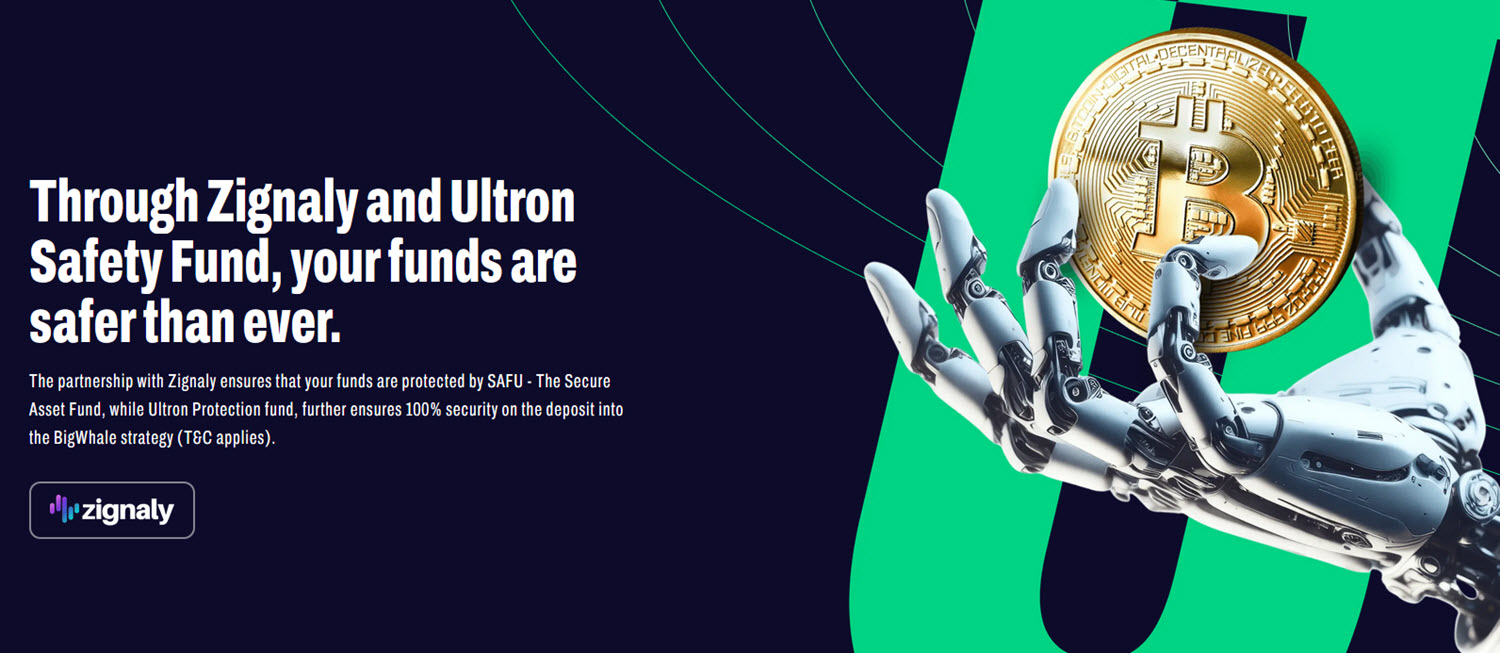
FinUp’s marketing states that its technical partnership with Zignaly guarantees fund security through Binance’s SAFU (Secure Asset Fund for Users), alongside secondary guarantees from an “Ultron Protection Fund” to protect capital allocated to their BigWhale strategy. Our legal analysis classifies this as “safety theater.”
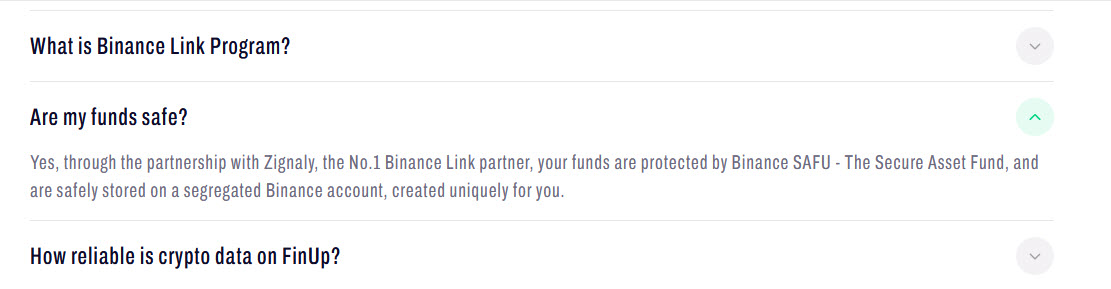
The SAFU fund is an internal balance sheet allocation controlled entirely at the discretion of Binance’s management team. There is no independent, third-party custodial trustee or legal framework governing how or when these funds are disbursed to retail victims of unauthorized third-party apps. Relying on an internal, un-audited corporate pool for protection provides zero legal recourse if things go wrong.
Online Reputation & Digital Footprint
A meticulous check of FinUp’s public identity reveals multiple structural anomalies common among high-risk financial setups.
Domain Age & Corporate Invisibility
Operating via an `.ai` extension, FinUp maintains an exceptionally thin public footprint. Legitimate financial technology networks leave an exhaustive public trail of audited balance sheets, corporate house records, clear executive profiles on professional registries, open legal disclosures, and verified listings on native mobile marketplaces. FinUp provides none of these tracking metrics, which serves as a notable warning sign for an entity demanding API integration with a user’s principal exchange account.
Public Sentiment & Review Discrepancies
FinUp lacks a standard, multi-year history of organic user commentary. Independent security blogs and financial warning hubs universally categorize it as unsafe due to the lack of recognized cross-border regulatory permissions. While the platform tries to muddy the waters by insisting it is merely an independent app, international securities watchdogs have looked past the software label and treated it as an unauthorized financial intermediary.
Modus Operandi & Red Flags
We break down the marketing loops and structural red flags that consumers need to recognize to protect their digital asset portfolios.
The Appearance of Professionalism
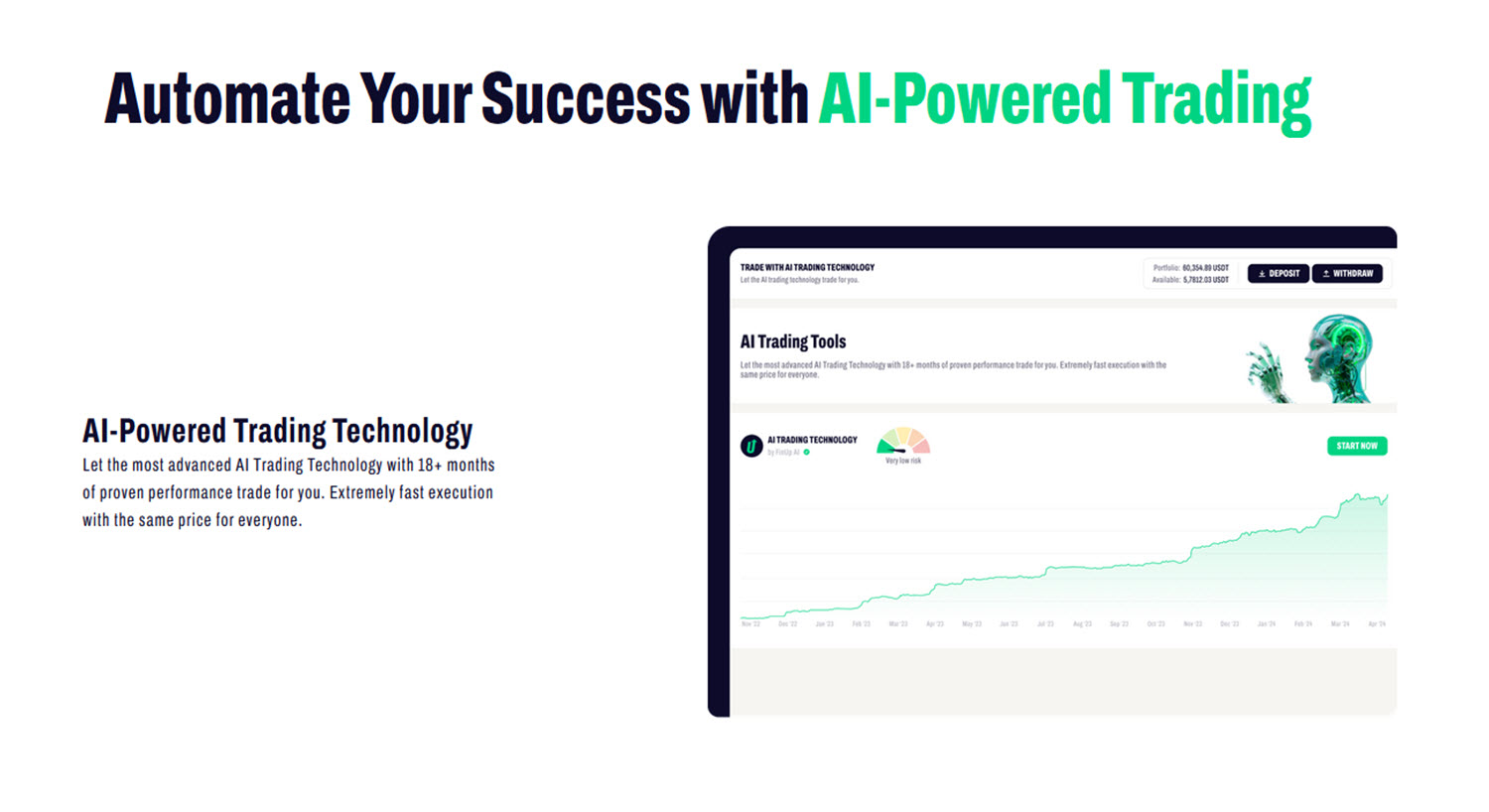
A website does not become secure simply because it utilizes high-end design assets, modern typography, or animated UI dashboards. Fraudulent platforms consistently replicate the exact visual branding of premium FinTech startups to systematically lower a retail investor’s defense mechanisms. Because trading interfaces can easily be simulated via closed demo servers, a running dashboard showing compounding profits does not provide proof of actual underlying market liquidity.
Social Engineering and False Profit Expectations
Unlicensed operations of this nature are frequently pushed through distributed social networks, including private Telegram rooms, WhatsApp groups, localized investment communities, or hyper-targeted social media funnels. The marketing consistently focuses on highly aggressive profitability profiles that no commercial machine learning model can safely sustain over changing market regimes. There is no AI model currently in existence that can execute risk-free trading profits, and any platform claiming otherwise is engaging in fraudulent misrepresentation.
Professional Opinion
Based on our strict asset protection guidelines, we advise traders against utilizing FinUp or linking personal exchange credentials to their software infrastructure. The official CNMV enforcement alert alone is a definitive reason to avoid the platform entirely.
The combination of zero verified regulatory oversight, hardcoded dependencies on a highly scrutinized exchange platform like Binance, and reliance on un-audited fund safety mechanisms marks this platform as an extreme risk factor. The core danger is not just typical market variance, but complete platform risk—including the very real probability of sudden withdrawal locks, account terminations, or API-driven capital leaks with zero administrative avenues for legal escalation or asset recovery.
Next Steps if You Have Already Opened and Funded an Account
Because blockchain-based token movements are completely irreversible, you must act rapidly to mitigate potential exposure and document vital evidence:
- Halt All External Funding: Categorically reject any requests to send secondary crypto deposits to cover “withdrawal taxes,” “clearance fees,” “security keys,” or “compliance verifications.” Genuine financial applications never require an out-of-pocket payment to unlock an existing balance.
- Sever API and Wallet Authorizations: Log into your Binance account instantly and delete any API keys or automated trading permissions granted to FinUp. If you connected an external Web3 wallet (such as MetaMask or Trust Wallet), open your security dashboard and revoke all smart contract approvals connected to their domain.
- Preserve Your Cryptographic Footprint: Take detailed screenshots of all your trading history dashboards, export transaction receipts, and document every specific Transaction Hash (TxID) alongside the exact deposit wallet addresses provided by the platform. This data is essential for forensic tracking.
- Report the Incident to Cybercrime Units: File a complete dossier containing your documented evidence with your local national financial regulator, cybercrime department, or digital asset tracking units to ensure the active URLs are updated on security blacklists.
- Screen for Recovery Scams: Remain highly alert against solicitations from groups claiming they can “hack the software database” or “force an on-chain reversal” for an upfront commission. These are secondary recovery scams specifically engineered to target recent victims of financial fraud.