




Trading lithium has surged in popularity following the global rise in demand for electric vehicles. Although the commodity is not directly tradeable, investors can gain exposure through stocks, ETFs, CFDs and futures. This tutorial unpacks lithium trading economics, from the early uses of the chemical element to the factors that affect its prices, plus the pros and cons of investing in this volatile market. Our experts have also listed the top lithium brokers:
Best Brokers For Trading Lithium
These are the 3 best brokers for trading Lithium in Bhutan:
-
- Demo account
- Min. deposit: $100
- Min. trade: 0.01 Lots
-
- Demo account
- Platforms: eToro Web, CopyTrader, TradingCentral
- Min. deposit: $50
61% of retail CFD accounts lose money. eToro is a multi-asset investment platform. The value of your investments may go up or down. Your capital is at risk. -
- Demo account
- Min. deposit: $0
- Min. trade: 0.01 Lots


Learn how we test brokers and why you can trust our ratings.
Here is a short overview of each broker's pros and cons
- AvaTrade 4.9/5 Established in 2006, AvaTrade is a leading forex and CFD broker trusted by over 400,000 traders. Operating under regulation in 9 jurisdictions, AvaTrade processes an impressive 2+ million trades each month. Through like MT4, MT5, and its proprietary WebTrader, the broker provides a growing selection of 1,250+ instruments. Whether it’s CFDs, AvaOptions, or the more recent AvaFutures, short-term traders at all levels will find opportunities. With terrific education and 24/5 multilingual customer support, AvaTrade delivers the complete trading experience.
- eToro 4.0/5 eToro is a top-rated multi-asset platform which offers trading services in thousands of CFDs, stocks and cryptoassets. Launched in 2007, the brand has millions of active traders globally and is authorized by tier one regulators, including the FCA and CySEC. The brand is particularly popular for its comprehensive social trading platform. Crypto investments are risky and may not suit retail investors. You could lose your entire investment. Understand the risks here. 61% of retail CFD accounts lose money.
- IG 4.5/5 Founded in 1974, IG is part of IG Group Holdings Plc, a publicly traded (LSE: IGG) brokerage. The brand offers a top-tier selection of 17,000+ markets, with a range of user-friendly platforms and investing apps. For 50 years, IG has maintained its position as an industry leader, excelling in all key areas for traders.
Community Sentiment
See how users rate these brokers based on the average customer ratings submitted on DayTrading.com, plus ratings from Trustpilot, the Apple App Store and Google Play.
| Broker | Our Users' Rating | Trustpilot Score | Trustpilot Reviews | iOS App Rating | Android App Rating |
|---|---|---|---|---|---|
| AvaTrade | 13656 | ||||
| eToro | 32292 | ||||
| IG | 10246 |
AvaTrade
Celebrating 20 Years in the industry, AvaTrade offers active traders everything they need: an intuitive WebTrader, powerful AvaProtect risk management, a smooth 5-minute sign-up process, and dependable support you can rely on in fast-moving markets.
 Jemma Grist, Reviewer
AvaTrade quick facts
- Demo Account
- ✔Yes
- Instruments
- CFDs, Forex, Stocks, Indices, Commodities, ETFs, Bonds, Crypto, Spread Betting, Futures
- Regulator
- ASIC, CySEC, FSCA, ISA, CBI, JFSA, BVI, FSRA/ADGM, AFM, CMA-Kenya, CIRO (via Friedberg Direct)
- Platforms
- WebTrader, AvaTradeGO, AvaOptions, AvaFutures, MT4, MT5, AlgoTrader, TradingView, TradingCentral, DupliTrade
- Minimum Deposit
- $100
- Minimum Trade
- 0.01 Lots
- Account Currencies
- USD, EUR, GBP, CAD, AUD, ZAR
Commodities
AvaTrade offers trading of 18 commodities:
- Cannabis
- Cocoa
- Coffee
- Copper
- Corn
- Cotton
- Gasoline
- Gold
- Lithium
- Natural Gas
- Oil
- Palladium
- Platinum
- Precious Metals
- Silver
- Soybeans
- Sugar
- Wheat
Pros
- AvaFutures traders can now use TradingView for 100+ indicators, screeners and a calendar, the sharing of trade ideas, commissions from $0.45, intraday margins from $60, and access to exchanges like CME and EUREX.
- AvaTrade launched AvaFutures to offer low-margin access to global markets, then expanded in 2025 as one of the first brokers to add CME’s Micro Grain Futures.
- Years on, AvaTrade remains one of the few brokers offering a bespoke risk management tool, AvaProtect, that insures losses up to $1M for a fee and is easy to activate on the platform.
Cons
- While signing up is a breeze, AvaTrade lacks an ECN account like Pepperstone or IC Markets, which provides the raw spreads and ultra-fast execution many day traders are looking for.
- AvaTrade’s WebTrader has improved, but work is still needed in terms of customizability – frustratingly widgets like market watch and watchlists can’t be hidden, moved, or resized.
- The AvaSocial app is good but not great – the look and feel, plus the navigation between finding strategy providers and account management needs upgrading to rival category leaders like eToro.
eToro
eToro's social trading platform leads the pack with a terrific user experience and active community chat that can help beginners find opportunities. There are also competitive fees on thousands of CFDs and real stocks, plus excellent rewards for experienced strategy providers.
 Christian Harris, Reviewer
eToro quick facts
- Demo Account
- ✔Yes
- Instruments
- CFDs, Forex, Stocks, Indices, ETFs, Smart Portfolios, Commodities, Futures, Crypto, NFTs
- Regulator
- FCA, CySEC, MiCA, MFSA, FSRA, ASIC, FSAS, MAS, GFSC
- Platforms
- eToro Web, CopyTrader, TradingCentral
- Minimum Deposit
- $50
- Minimum Trade
- $10
- Account Currencies
- USD, EUR, GBP, AUD, DKK
Commodities
eToro offers trading of 27 commodities:
- Aluminium
- Cannabis
- Cattle
- Cocoa
- Coffee
- Copper
- Corn
- Cotton
- Gasoline
- Gold
- Iron
- Lead
- Lean Hogs
- Lithium
- Livestock
- Natural Gas
- Nickel
- Oil
- Orange Juice
- Palladium
- Platinum
- Precious Metals
- Silver
- Soybeans
- Sugar
- Wheat
- Zinc
Pros
- Apple Watch compatibility allows you to monitor your eToro account, portfolio, popular assets, and prices for your watchlist right from your wrist.
- July 2026 brought welcome upgrades, notably eToro Edge with a charting package that will meet the demands of active day traders, plus AI agent trading through Tori.
- Top copy traders can receive annual payments up to 1.5% of assets under copy in the broker's Popular Investor Program.
Cons
- There are no guaranteed stop loss orders which would be a useful risk management feature for beginners.
- There are limited contact methods aside from the in-platform live chat.
- There is a $30 minimum withdrawal amount and a $5 fee, which will affect novices with low capital.
IG
IG continues to provide a comprehensive package with an intuitive web platform, best-in-class education for beginners, advanced charting tools bolstered by its recent TradingView integration, real-time data, and robust trade execution for experienced day traders.
Christian Harris, Reviewer
IG quick facts
- Demo Account
- ✔Yes
- Instruments
- CFDs (not in US), Forex, Stocks, Indices, Commodities, ETFs, Futures, Options, Crypto, Spread Betting (UK only)
- Regulator
- CFTC, NFA, FCA, BaFin, ASIC, FINMA, MAS, JFSA, FMA, DFSA, BMA, CONSOB
- Platforms
- Web, L2 Dealer, MT4, TradingView, AutoChartist, TradingCentral, ProRealTime
- Minimum Deposit
- $0
- Minimum Trade
- 0.01 Lots
- Account Currencies
- USD, EUR, GBP, CAD, AUD, JPY, ZAR, SEK, DKK, CHF, HKD, SGD
Commodities
IG offers trading of 20 commodities:
- Aluminium
- Cannabis
- Cattle
- Coffee
- Copper
- Gold
- Iron
- Lean Hogs
- Lithium
- Natural Gas
- Nickel
- Oil
- Orange Juice
- Palladium
- Precious Metals
- Silver
- Soybeans
- Steel
- Sugar
- Wheat
Pros
- As a well-established broker, IG operates under strict regulatory guidelines in multiple jurisdictions, maintaining a high level of trust.
- IG is amongst the best in terms of its range of instruments, which includes stocks, forex, indices, commodities, and cryptocurrencies, plus added US-listed futures and options as well as an AI Index, providing diversification opportunities.
- The IG app offers a superb mobile trading experience with a clean design that helped it secure Runner Up at our 'Best Trading App' award.
Cons
- IG applies an inactivity fee of $12-$18 per month after 2 years, deterring casual investors.
- Beginners might find IG’s fee structure complex, with various fees for different types of trades or services, potentially leading to confusion or unexpected charges.
- IG has discontinued its swap-free account, reducing its appeal to Islamic traders.
Trading Lithium Basics
Lithium is a versatile alkali element and metal, used in pharmaceuticals, glass, cermaics and alloys. However, the most common use of lithium today is in batteries for digital devices, smartphones and electric cars.
Lithium, in its compound form, is extracted from brine deposits or mined from igneous rock. There are two main types of lithium, namely lithium carbonate and lithium hydroxide, with the latter being predominantly used in battery production.
Australia, Chile and China are the biggest producers of lithium. Among these, Australia is the leading producer of hard rock lithium, making it home to key suppliers of the electric vehicle market, including Albemarle and Pilbara Minerals.
Although not directly tradeable as a commodity like gold or silver, trading lithium-based assets is possible via stocks, ETFs and derivatives such as CFDs and futures.
History
The discovery of lithium dates to 1817, when Swedish chemist Johan August Arfwedson detected the presence of lithium whilst analyzing petalite ore.
Over time, scientists discovered new techniques to isolate pure lithium from its salts through electrolysis. This eventually led to its commercial production by the German company Metallgesellschaft AG in 1923.
In the mid-1900s psychiatrists discovered that lithium could be used to treat bipolar disorder and depression. Additionally, during World War II, lithium grease was used in aircraft engines, before later being used in the production of nuclear fusion weapons during the Cold War.
Today, the demand for lithium-ion batteries has surged, making lithium a critical component in the global geopolitical competition for renewable energy.
Top Lithium-Producing Countries
In recent years, around 90% of global lithium production and trade flows came from three countries: Australia, Chile and China.
| Country | Volume (tonnes) |
|---|---|
| Australia | 55,416 |
| Chile | 26,000 |
| China | 14,000 |
| Argentina | 5,967 |
| Brazil | 1,500 |
| Zimbabwe | 1,200 |
| Portugal | 900 |
| United States | 900 |
What Influences The Price Of Lithium?
- Electric car market: The demand for lithium for electric vehicles is set to dominate the current supply to traditional markets. Despite only accounting for less than 1% of the automobile market, electric vehicles already use 50% of the world’s lithium-ion battery supply.
- Demand for smart devices: The demand for lithium-ion batteries in the electronics industry will continue to grow as more smart home devices such as thermometers and alarms are introduced.
- Large-scale power grids and battery systems: Major players such as Tesla have been developing energy-efficient systems which allow consumers to store electricity. They can also be used in areas prone to regional power cuts and energy shortages.
- Decreasing production costs: In the last few decades, lithium battery production has become more efficient and cheaper to produce, further boosting the incentive for electric vehicles.
- Supply shortages: The high demand for electric vehicles may result in a shortage of lithium supply. Lithium mega-factories may face challenges in their supply chain, so producers may need to explore alternative ways to obtain the mineral, such as extracting it from volcanoes.
- Lithium-ion alternatives: Hydrogen Fuel Cells and other cost-effective alternatives may replace lithium-ion batteries as the top clean energy source. Graphene supercapacitors and redox flow batteries could offer even greater power.
Pros Of Trading Lithium
- The demand for batteries is relatively steady: Lithium-ion batteries play a crucial role in fulfilling the world’s need for portable devices and electric vehicles, creating opportunities for traders.
- Invest in tech giants: Major players like Tesla and Apple are expected to make significant contributions to large-scale battery and power projects, creating a lucrative market to explore.
- Global climate change goals: Several governments have adopted carbon-neutral policies to reduce greenhouse gas emissions and combat climate change, which may further drive the demand for electric vehicles.
Cons Of Trading Lithium
- Inefficient production: The production of batteries is ultimately still costly and involves a toxic manufacturing process. The lack of economies of scale could negatively impact lithium trading prices in the long run.
- Lack of trust in EVs: Many consumers are skeptical about electric vehicle technology and still prefer traditional combustion engines that continue to dominate the automobile market.
Ways To Trade Lithium
- Lithium BALITG: Traders can buy shares in lithium stocks listed on the BITA American Lithium and Battery Metals Giants Index (BALITG). The BALITG is the benchmark stock market index for the battery and lithium technology sector, tracking 15 of the largest American companies that have exposure to metals in the battery production chain. BALITG trading is available at leading brokers such as AvaTrade.
- Lithium stocks: Alternatively, you can trade stocks of publicly listed companies involved in lithium production. Among the top 5 biggest lithium stocks are Gangfeng Lithium, Albemarle, Tianqi Lithium, Sociedad Quimica y Minera de Chile and Pilbara Minerals. Leading online brokers include eToro, IG and Plus500.
- Lithium ETFs: Exchange-traded funds offer exposure to the lithium market at relatively lower risk, deriving their value from a portfolio of various related companies, including Samsung and Tesla. Examples include the Global X Lithium & Battery Tech ETF and the Battery Tech & Lithium ETF ACDC.
- Lithium CFDs and options: Traders can also speculate on lithium prices without taking ownership of the underlying assets. Popular vehicles include CFDs on lithium ETFs.
- Lithium futures: You can also now access Lithium Hydroxide CIF futures contracts at the London Metal Exchange (LME) and the Chicago Mercantile Exchange (CME). These can be used as a hedging tool to minimize the risk of fluctuating lithium prices.
Comparing Lithium Brokers
- Available assets: Find out what lithium-based assets and trading vehicles are on offer. IG, for example, offers several lithium stocks which can be traded via CFDs or through the broker’s share dealing platform. Note, the top brokers will publish details of any European, Australian or other lithium trading halts.
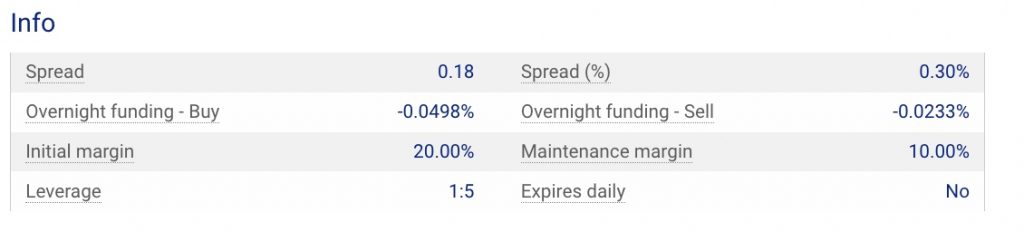
- Fees: Look at the broker’s trading fees, namely spreads and commissions. For example, AvaTrade offers a 0.5% spread over-market for the BALITG index. There may also be overnight charges or account inactivity fees.
- Trading platform: Top lithium brokers will offer reputable third-party platforms which include advanced charting features and integrated analysis tools. Leading solutions include cTrader and MetaTrader 4.
- Regulation: For the most secure trading experience, look for lithium brokers that are licensed by top-tier regulatory bodies such as CySEC or FCA. These bodies enforce strict measures to ensure client funds are protected. Regulated brokers that facilitate lithium trading include Plus500 and eToro.
- Demo account: To practice lithium trading strategies, you can use a broker’s demo account. These provide a risk-free environment where you can access real-time market prices and place simulated trades using virtual money. Demo accounts are available at most lithium brokers.
How To Trade Lithium
- Find a broker: Choose a brokerage firm that offers lithium trading via stocks, ETFs or derivatives. Consider the broker’s trading fees, available platforms, regulatory oversight and account types.
- Analyze the market: Once you have chosen your instrument, make use of any available resources and market data to analyze the lithium market.
- Set risk parameters and monitor position: Set appropriate risk management criteria to protect your profit margin and limit your exposure. Open your position and stay ahead of any market updates that could negatively impact the price of lithium.
Final Word On Trading Lithium
Investing in lithium stocks and derivatives provides opportunities to tap into the expanding EV industry and the worldwide shift towards a more sustainable, low-carbon economy. Traders have the option to diversify their portfolio and hedge against the price risks of lithium through CFDs, ETFs, futures and stocks.
With that said, many consumers remain hesitant about electric vehicles and concerns regarding lithium production could threaten future prices of lithium stocks and derivatives in the short and long-term.
To get started, see our list of the best lithium brokers.
FAQ
How Can I Trade Lithium?
You can invest in shares and ETFs of lithium-based companies, such as Tesla or Pilbara Minerals. Alternatively, you can trade derivatives like the Global X Lithium & Battery Tech ETF CFD or Lithium Hydroxide CIF futures. To access these trading vehicles, sign up with one of our recommended lithium brokers.
What Is Lithium Trading At?
Lithium prices depend on the stock or derivative product being traded. You can find real-time lithium price charts using analytics tools such as TradingView.
Can You Trade Lithium Futures?
Yes, you can trade Lithium Hydroxide CIF futures contracts at the London Metal Exchange (LME) and the Chicago Mercantile Exchange (CME). These are cash-settled contracts meaning you do not take physical delivery of the underlying asset.
Who Is The Largest Exporter Of Lithium?
Australia, Chile and China are the largest producers and exporters of lithium, accounting for approximately 90% of global production. The largest lithium mining companies operating in these countries include Gangfeng Lithium, Albemarle, Tianqi Lithium and Sociedad Quimica y Minera de Chile.
Is Lithium Traded On The Stock Market?
Publicly traded companies that are involved in the mining or production of lithium are listed on leading stock markets. Examples include Albemarle, listed on the New York Stock Exchange (NYSE) and Gangfeng Lithium, listed on the Shenzhen Stock Exchange (SSE).
Article Sources
- World Economic Forum Largest Lithium Producers
- International Lithium Association
- CME Group Lithium Hedging
- IG Lithium Stocks
The writing and editorial team at DayTrading.com use credible sources to support their work. These include government agencies, white papers, research institutes, and engagement with industry professionals. Content is written free from bias and is fact-checked where appropriate. Learn more about why you can trust DayTrading.com