



Exchange-traded funds (ETFs) are instruments that enable you to articulate your market or sectoral perspectives, whether at the domestic or global level. Yet while these investment vehicles are traded on exchanges just like regular stocks, you still need a trustworthy broker with a wide range of ETFs, low costs, and high-quality platforms.
Top-Rated Brokers For Trading ETFs
Based on our detailed testing and analysis, these are the best brokers for trading ETFs:
-
- Demo account
- Min. deposit: $100
- Min. trade: 0.01 Lots
-
- Demo account
- Regulator: FSC
- Platforms: R StocksTrader, MT4, MT5, TradingView
-
- Demo account
- Min. deposit: $0
- Min. trade: 0.01 Lots
73-89% of retail investor accounts lose money when trading CFDs -
- Demo account
- Regulator: ASIC, CySEC, FSCA, BVI FSC
- Platforms: Web Platform, MT4, MT5, TradingCentral
-
- Demo account
- Platforms: eToro Web, CopyTrader, TradingCentral
- Min. deposit: $50
61% of retail CFD accounts lose money. eToro is a multi-asset investment platform. The value of your investments may go up or down. Your capital is at risk. -
- Demo account
- Regulator: FCA, ASIC, FSCA, VFSC, CIMA
- Min. deposit: $50




Learn how we test brokers and why you can trust our ratings.
Here is a short summary of why we think each broker belongs in this top list:
- AvaTrade 4.9/5 During our tests, AvaTrade supported 59 ETF CFDs across sectors, including energy, real estate, biotechnology, emerging markets, and defense. Spreads start at 0.13% per trade (with no commissions), and overnight swap fees apply. Trading via MT5 or AvaTradeGO, it offers zero-deposit and global regulation (ASIC, FCA, Irish Central Bank), suiting short-term leveraged ETF traders.
- RoboForex 4.5/5 In our latest round of testing, RoboForex offered over 1,000 ETFs, with sectors like technology, healthcare, energy, and finance. ETF trading takes place via the R StocksTrader platform and spreads start from $0.01 per share. The minimum deposit is $100, with leverage available on ETFs. The platform provides a user-friendly interface and advanced charting tools, enhancing the ETF trading experience.
- Pepperstone 4.8/5 When we tested Pepperstone’s ETF offering via MT5 and cTrader, execution was ultra-fast, and spreads averaged 0.0–0.3 pips. Over 100 ETF CFDs were accessible with no commission on standard accounts. Regulated by ASIC and FCA, the low $0 minimum deposit makes it ideal for small ETF trades.
- Markets.com 4.4/5 Established in 2008, Markets.com is a long-standing, multi-regulated broker with oversight from the CySEC and FSCA. It offers unique features to track hedge fund moves and insider trades, while providing stock signals to alert traders to market opportunities. Its choice of accounts (Classic to Professional) caters to all levels of active trader. 72.3% of retail accounts lose money.
- eToro 4.0/5 When we tested ETF trading on eToro, we found over 300 ETFs spanning tech, energy, healthcare, and ESG sectors. The platform's zero-commission model stood out, though spreads averaged 0.09%. Regulated by the FCA and CySEC, its $10 minimum deposit and social trading tools made ETF investing accessible and intuitive.
- Vantage 4.7/5 During our hands-on tests, Vantage offered CFD-based access to approximately 55 global ETFs, covering sectors like equity indices, commodities, bonds, real estate, and energy. On Raw ECN accounts, spreads start at just 0.0 pips, with commissions at just USD 3.00 per lot (for Pro accounts, the commission is even lower at just USD 1.50 per lot).
Community Sentiment
See how users rate these brokers based on the average customer ratings submitted on DayTrading.com, plus ratings from Trustpilot, the Apple App Store and Google Play.
| Broker | Our Users' Rating | Trustpilot Score | Trustpilot Reviews | iOS App Rating | Android App Rating |
|---|---|---|---|---|---|
| AvaTrade | 13629 | ||||
| RoboForex | 776 | ||||
| Pepperstone | 3712 | ||||
| Markets.com | 1258 | ||||
| eToro | 32275 | ||||
| Vantage | 15839 |
AvaTrade
AvaTrade offers active traders everything they need: an intuitive WebTrader, powerful AvaProtect risk management, a smooth 5-minute sign-up process, and dependable support you can rely on in fast-moving markets.
 Jemma Grist, Reviewer
AvaTrade quick facts
- Demo Account
- ✔Yes
- Instruments
- CFDs, Forex, Stocks, Indices, Commodities, ETFs, Bonds, Crypto, Spread Betting, Futures
- Regulator
- ASIC, CySEC, FSCA, ISA, CBI, JFSA, BVI, FSRA/ADGM, AFM, CMA-Kenya, CIRO (via Friedberg Direct)
- Platforms
- WebTrader, AvaTradeGO, AvaOptions, AvaFutures, MT4, MT5, AlgoTrader, TradingView, TradingCentral, DupliTrade
- Minimum Deposit
- $100
- Minimum Trade
- 0.01 Lots
- Account Currencies
- USD, EUR, GBP, CAD, AUD, ZAR
Pros
- Support at AvaTrade performed excellently during testing, with response times of 3 minutes and localized support in major trading jurisdictions, including the UK, Europe and the Middle East.
- The WebTrader excelled in our hands-on tests, sporting a user-friendly interface for beginners, complete with robust charting tools like 6 chart layouts and 60+ technical indicators.
- Years on, AvaTrade remains one of the few brokers offering a bespoke risk management tool, AvaProtect, that insures losses up to $1M for a fee and is easy to activate on the platform.
Cons
- The AvaSocial app is good but not great – the look and feel, plus the navigation between finding strategy providers and account management needs upgrading to rival category leaders like eToro.
- While signing up is a breeze, AvaTrade lacks an ECN account like Pepperstone or IC Markets, which provides the raw spreads and ultra-fast execution many day traders are looking for.
- AvaTrade’s WebTrader has improved, but work is still needed in terms of customizability – frustratingly widgets like market watch and watchlists can’t be hidden, moved, or resized.
RoboForex
RoboForex is great if you want a vast range of 12,000+ day trading markets with ECN accounts, powerful charting and loyalty promotions. It also stands out for stock traders with its user-friendly R StocksTrader platform, featuring 3,000+ shares, fees from $0.01 and sophisticated watchlists.
 Christian Harris, Reviewer
RoboForex quick facts
- Demo Account
- ✔Yes
- Instruments
- CFDs, Forex, Stocks, Indices, Commodities, ETFs, Futures, Crypto
- Regulator
- FSC
- Platforms
- R StocksTrader, MT4, MT5, TradingView
- Minimum Deposit
- $10
- Minimum Trade
- 0.01 Lots
- Account Currencies
- USD, EUR
Pros
- RoboForex offers over 12,000 instruments, providing more short-term trading opportunities than the vast majority of online brokers, with forex, stocks, indices, ETFs, commodities, and futures.
- RoboForex is known for its tight spreads starting from 0 pips and low minimum deposits from $10, making it accessible to those on a budget. The ability to trade with micro lots further lowers the barrier to entry for new traders.
- RoboForex secured the 'Best Forex Broker 2025' title in DayTrading.com's Awards after broadening their FX offering, cutting spreads and opening up services in various countries.
Cons
- RoboForex provides a variety of account types, which, while offering flexibility, can be overwhelming for newer traders trying to choose the most suitable option for their trading style. Alternatives, notably eToro, provide a smoother entry into online trading with one retail account.
- While RoboForex offers competitive spreads, some of its account types come with high trading commissions up to $20 per lot, trailing the cheapest brokers, such as IC Markets.
- Despite 15+ years in the industry and registering with the Financial Commission, RoboForex is authorized by one ‘Red-Tier’ regulator – the FSC in Belize, lowering the level of regulatory protections for traders.
Pepperstone
Pepperstone stands out as a top choice for day trading, offering razor-sharp spreads, ultra-fast execution, and advanced charting platforms for experienced traders. New traders are also welcomed with no minimum deposit, extensive educational resources, and exceptional 24/5 support (18h a day on weekends).
Christian Harris, Reviewer
Pepperstone quick facts
- Demo Account
- ✔Yes
- Instruments
- CFDs, Forex, Currency Indices, Stocks, Indices, Commodities, ETFs, Crypto CFDs, Spread Betting
- Regulator
- FCA, ASIC, CySEC, BaFin, DFSA, SCA, SCB, CMA-Kenya
- Platforms
- Pepperstone Trading Platform, MT4, MT5, cTrader, TradingView
- Minimum Deposit
- $0
- Minimum Trade
- 0.01 Lots
- Account Currencies
- USD, EUR, GBP, CAD, AUD, NZD, JPY, CHF, HKD, SGD
Pros
- Award-winning customer support is available via telephone, email or live chat with response times of <5 minutes during testing and friendly agents knowledgeable about its products and trading tools.
- Pepperstone has started providing trading in pre-IPO perpetual futures like SpaceX (SPCX.US-PERP) in select regions, such as the UAE.
- After adding spread betting through TradingView, Pepperstone provides a seamless, tax-efficient trading experience with advanced analysis tools for financial spread bettors in supported countries.
Cons
- Pepperstone has removed support for several tools that elevated the trading experience for active retail traders, notably Autochartist, Capitalise.ai and a free VPS for qualifying traders (now only pro traders in some countries).
- Despite improvements to its range of markets, crypto CFD offerings are still fairly limited compared to other brokers who focus on this area, such as Eightcap, and there's no option to invest in real coins.
- Overnight holding fees are higher than that found with some Market Maker brokers (usually Benchmark + 2.5%). This makes pepperstone an ideal broker for day traders and forex scalpers but less suitable for swing traders who often keep position open overnight.
Markets.com
Markets.com is best suited to retail investors who trade frequently but don’t want to calculate commissions, thanks to its spread-only pricing (EUR/USD around 1.3 pips). It especially appeals to short-term traders who value fast execution, flexible asset choice spanning 2,200+ instruments and proprietary tools like hedge fund confidence indices and insider trade alerts.
Christian Harris, Reviewer
Markets.com quick facts
- Demo Account
- ✔Yes
- Instruments
- CFDs, Forex, Stocks, Commodities, Indices, Crypto, ETFs, Bonds
- Regulator
- ASIC, CySEC, FSCA, BVI FSC
- Platforms
- Web Platform, MT4, MT5, TradingCentral
- Minimum Deposit
- $200
- Minimum Trade
- 0.01 Lots
- Account Currencies
- USD, EUR, GBP, AUD, ZAR, SEK, NOK, DKK, CHF, PLN, CZK
Pros
- Switching between the proprietary web platform (great for alerts and quick analysis) and MT5 (strong for algorithmic EAs) was smooth in our tests; positions synced across desktop, web, and mobile without gaps or re-quotes.
- Within the 2,200+ CFDs, Markets.com offers thematic baskets like the Warren Buffett Blend and Cannabis Blend, which behaved like ready-made mini-ETFs during testing, saving the work of balancing weights manually.
- Markets.com’s Hedge Fund Confidence and Insider Trading tools pulls SEC filings into the dashboard within 24 hours of disclosure, helping to spot fund moves and C-suite buys before most retail newsfeeds updated.
Cons
- The proprietary web platform felt a bit basic once we pushed into advanced charting with fewer drawing/indicator options than full TradingView or MetaTrader.
- During sign-up, we hit unclear account type explanations and got stuck in an email verification loop that locked us out for an hour - way less streamlined than other brokers we’ve tested.
- While CySEC and FSCA oversight is solid, the SVGFSA and BVIFSC entities offers 1:500 leverage under a light-touch framework, meaning protections like compensation schemes and strict conduct rules lag behind the strictest regulatory standards.
eToro
eToro's social trading platform leads the pack with a terrific user experience and active community chat that can help beginners find opportunities. There are also competitive fees on thousands of CFDs and real stocks, plus excellent rewards for experienced strategy providers.
Christian Harris, Reviewer
eToro quick facts
- Demo Account
- ✔Yes
- Instruments
- CFDs, Forex, Stocks, Indices, ETFs, Smart Portfolios, Commodities, Futures, Crypto, NFTs
- Regulator
- FCA, CySEC, MiCA, MFSA, FSRA, ASIC, FSAS, MAS, GFSC
- Platforms
- eToro Web, CopyTrader, TradingCentral
- Minimum Deposit
- $50
- Minimum Trade
- $10
- Account Currencies
- USD, EUR, GBP, AUD, DKK
Pros
- The eToro Club entry barrier has been lowered, with a $4.99/month subscription providing access to 18 perks, including a debit card that turns shopping into equities with 4% back in shares.
- eToro picked up second place in DayTrading.com's 'Best Crypto Broker' for 2025 with its huge range of tokens, reliable service and competitive fees.
- There's a comprehensive online training academy with accessible resources, from bitesize articles to comprehensive courses.
Cons
- The lack of additional charting platforms like MT4 will reduce the appeal for seasoned day traders accustomed to using third-party software.
- There are limited contact methods aside from the in-platform live chat.
- There are no guaranteed stop loss orders which would be a useful risk management feature for beginners.
Vantage
Vantage remains an excellent option for CFD traders seeking a tightly-regulated broker with access to the reliable MetaTrader platforms. The fast sign-up process and $50 minimum deposit make it very straightforward to start day trading quickly.
Jemma Grist, Reviewer
Vantage quick facts
- Demo Account
- ✔Yes
- Instruments
- CFDs, Forex, Stocks, Indices, Commodities, ETFs, Bonds
- Regulator
- FCA, ASIC, FSCA, VFSC, CIMA
- Platforms
- ProTrader, MT4, MT5, TradingView, TradingCentral, DupliTrade
- Minimum Deposit
- $50
- Minimum Trade
- 0.01 Lots
- Account Currencies
- USD, EUR, GBP, CAD, AUD, NZD, JPY, HKD, SGD, PLN
Pros
- It’s quick and easy to open a live account – taking less than 5 minutes
- There’s an excellent suite of day trading software, including the award-winning platforms MT4 and MT5
- The app was upgraded in 2026 with wider asset visibility bringing together balances across Contract, Copy, and Funding accounts on one screen
Cons
- A steep $10,000 deposit is needed for the best trading conditions, which include the $1.50 commission per side
- The average execution speeds of 100ms to 250ms are slower than alternatives based on tests
- It's a shame that some clients will need to register with the offshore entity, which offers less regulatory protection
How To Find The Best Brokers For ETFs
Choosing the best broker to trade ETFs involves careful consideration of your individual needs and preferences. However, here are the key areas we took into account:
Available ETFs
First and foremost, you need to ensure the broker offers a wide range of ETFs that align with your strategy. This may include funds covering various asset classes, sectors, and regions.
In our experience, the top ETF brokers offer funds spanning stocks, commodities, and bonds with access to popular funds like the SPDR S&P 500 ETF Trust (SPY), Invesco QQQ Trust (QQQ) and iShares 20+ Year Treasury Bond ETF (TLT).
Tools and Resources
Look for an ETF broker that provides the platform you are used to. In our experience, MetaTrader 4, MetaTrader 5 and cTrader are the most popular third-party solutions available.
The platforms should include intuitive access to real-time market data, research reports, and charting capabilities. Mobile app availability may also be crucial if you want to trade ETFs on the go.
If you are new to ETFs, we recommend testing its various platform choices with demo accounts to make sure they are user-friendly.
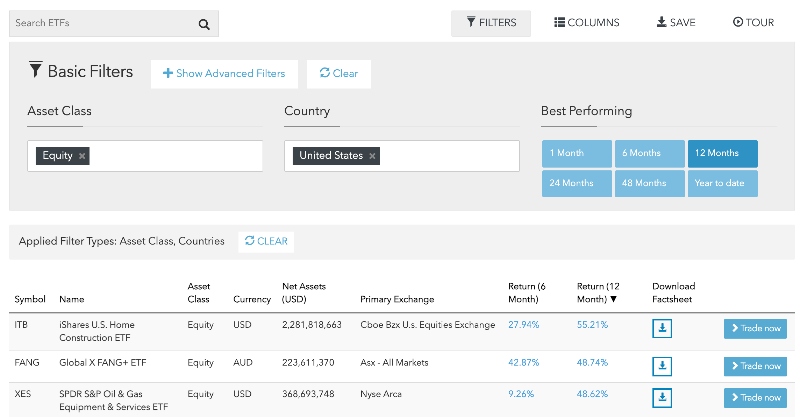
In addition, we favor brokers that offer intuitive ETF screeners that can help you find suitable funds based on asset class, region and performance.
Costs and Fees
Fees are an important consideration for our team. Many brokers now offer commission-free ETFs, but it is important to review spreads any check for any additional charges.
For example, we found that commission-free ETFs are sometimes only available up to a certain monthly volume, after which a transaction fee applies. You may also need to pay an expense ratio, which is essentially a charge for managing the fund.
Ultimately, a transparent pricing structure is a good indication that the ETF broker is reliable and trustworthy.
Leverage
Leverage can amplify both gains and losses, so it is crucial to have a clear understanding of how it works and to use it cautiously. Brokers also charge for using leverage. Most long-term investors in ETFs tend to avoid leverage, while it may be more relevant for short-term traders.
Several regulators restrict leverage to 1:30 for retail traders, including in the UK, EU and Australia, however some brokers offer higher rates for professional investors or to clients who sign up through their offshore entities. Importantly, offshore brokers tend to offer less legal protection so we recommend caution.
Security and Regulation
Safety is of utmost importance, so our team prefer ETF brokers who hold licenses with trusted regulators. This is especially important with strategies using ETFs, where funds can be invested with a broker for weeks or months.
We verify that the broker is regulated by a reputable authority, such as the Securities and Exchange Commission (SEC) in the United States, the Financial Conduct Authority (FCA) in the UK, or the Cyprus Securities & Exchange (CySEC) in Europe. This should ensure they provide strong security measures to protect your account and personal information.
Methodology
To find the top brokers for ETFs, we analyzed firms across several key categories; the range of ETFs, the fees and costs, the quality of the investing platforms and tools, and the firm’s reputation and regulatory status.
As well as considering quantitive metrics, our ratings were informed by qualitative insights gathered during the evaluation stage.
This approach enabled us to compile a list of the best brokers for ETFs.
What Are ETFs?
An ETF tracks the performance of a specific group of assets, such as stocks, bonds, or commodities, and offers a straightforward way to trade in a wide range of these assets without having to buy them individually.
If the value of the assets in these bundles increases, so does the value of the ETF. In this way, owning a share in an ETF is essentially speculating on the strength of an economy or market, rather than one asset within the list. This makes it a very diverse trading investment.
Exchange-traded funds were initially created to provide investors with a more cost-effective and liquid alternative to traditional mutual funds.
They were first introduced in the early 1990s, with the launch of the SPDR S&P 500 ETF (SPY), designed to track the performance of the S&P 500 Index.
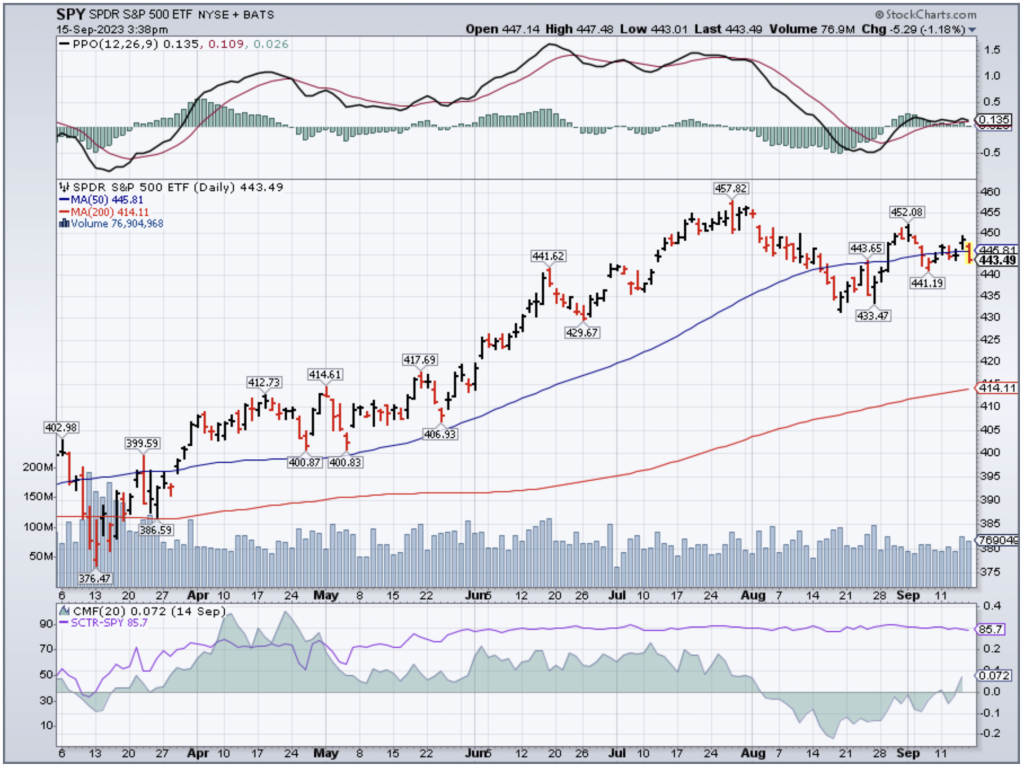
Unlike mutual funds, which are priced at the end of the trading day, ETFs trade on stock exchanges throughout the trading day, giving traders intraday liquidity.
Before launching, newly created ETFs must obtain approval from the relevant financial regulatory authority in the market where they intend to be listed.
For instance, in the US, the ETF sponsor submits a detailed proposal to the Securities and Exchange Commission (SEC) for review and approval.
Today, the industry has grown significantly, with thousands of ETFs available globally, attracting both individual and institutional traders.
Income Or Accumulation
ETFs will either have an income or accumulation asset class. Often, you will see the same fund has the option for the investor to choose one or the other.
The asset class determines how you will receive returns. Stocks and shares are regularly paying out dividends to their investors when, and if, they make a profit.
In an accumulation fund, this capital is reinvested for fund growth, meaning more stocks are bought. Whereas an income fund pays the dividends (either monthly, quarterly or annually) back to the fund owners.
Types Of ETFs
ETFs come in various types, each designed to cater to specific trading strategies:
- Equity: An equity ETF primarily holds a diversified portfolio of stocks.
- Index: Index ETFs track the performance of specific market indices, aiming to replicate the returns of the underlying index. Examples include tracking the S&P 500 and the Nasdaq.
- Sector: These ETFs focus on specific sectors of the economy, such as technology, healthcare, financial services, or energy. They offer targeted exposure to particular industries.
- Commodity: These ETFs track the performance of commodities like gold, silver, oil, natural gas, and agricultural products. They may hold physical commodities or use futures contracts to replicate price movements.
- Currency: Currency ETFs provide exposure to foreign currencies relative to a base currency, such as the US dollar. You can trade them for diversification and hedging.
- Bond: These ETFs invest in bonds and other fixed-income securities. They can focus on government bonds, corporate bonds, municipal bonds, or specific durations (e.g. short-term or long-term bonds).
- Factor: These ETFs follow specific investment styles or factors like value, growth, dividend yield, low volatility, or momentum.
- Inverse: Inverse ETFs aim to deliver the opposite returns of an underlying index or asset. They are used for shorting or hedging strategies and are designed for short-term trading.
- Leveraged: Leveraged ETFs use financial derivatives to amplify returns. For example, a 2x leveraged ETF seeks to provide double the daily returns of its underlying index, while a 3x leveraged ETF aims for triple the returns. These are also intended for short-term trading and carry higher risks.
- Multi-Asset: These ETFs hold a mix of asset classes, providing you with a diversified portfolio in a single fund. They can include a combination of stocks, bonds, and other assets.
- Thematic: These ETFs focus on specific investment themes or trends, such as clean energy, cybersecurity, robotics, or cannabis.
- Global And International: These ETFs provide exposure to international markets, allowing you to diversify beyond your domestic market. Examples include ETFs tracking foreign stock markets or regions.
- Dividend: Dividend ETFs invest in stocks or funds with a history of paying dividends. They are popular among income-focused investors.
Where To Find The Best ETFs
Most ETFs and index funds are invested through fund owners. Examples of the most popular are Fidelity, ARKK, AJ Bell and Charles Swab.
Plus, since ETFs are traded on exchanges, they are accessible through retail brokers, including those listed above.
However, there are literally thousands of funds on the market, so finding funds with the highest returns will take a bit of research.
Luckily, many of the best providers offer tools to help you find the correct ETF to invest in for you. We have listed some of the top resources below:
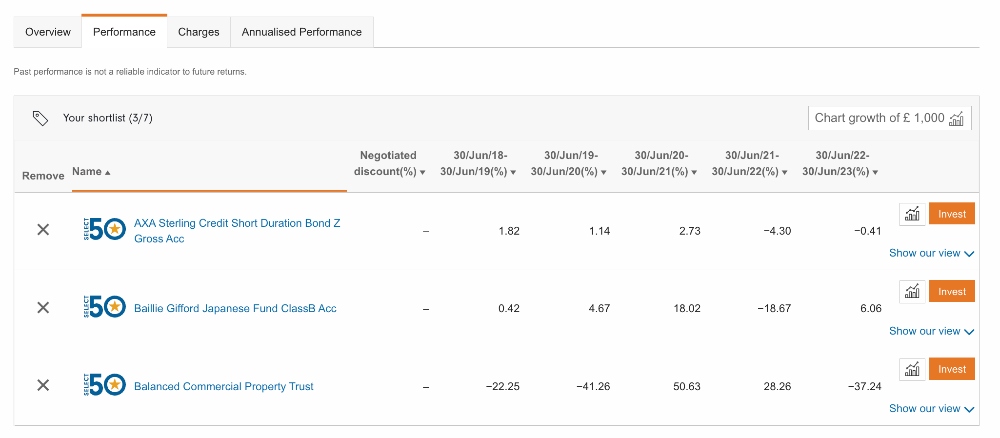
Wealth 50 List, Hargreaves Lansdown
This HL fund list is a great starting point for those looking to whittle down the list to something more manageable.
The HL researchers look at four key criteria: the fund manager and their previous performance, their process of stock selection and the team’s culture.
Fidelity Select ETF List
Fidelity analysts have compiled a list of the most cost-effective and well constructed ETFs they provide. They only include products that directly hold the securities highlighted, meaning there are no derivative ETFs in this list.
iShares Compare Funds Tool
This page allows you to select your top 4 iShares funds and compare them side by side. Factors such as the benchmark index, investment objective and expense/charge ratio are displayed alongside each other for easy comparison.
Forbes Advisor Best ESG Funds
For those looking to find funds that have a positive impact on environmental and social factors, Forbes compiles a monthly list of the top ETFs to watch in this sector.
ESG trading funds are increasingly popular as investors look for ways to use their savings for good, such as investment in green energy or micro-capital firms. Each ETL has a description of why they have picked it. These are based on previous performance and fee ratios. However, due to their ‘people over profit’ philosophy, ESG ETLs are not known for their high dividends vs traditional funds.
ETF News Outlets
Companies, such as the news outlet Stream, offer free analysis and commentary on the top ETFs. This is a great way to keep your finger on the pulse.
Important: steer away from lists that only consider best performing trading ETFs over the short term. Past performance is not an indication of future gain, and this is an oversimplification of what to look for. It might be that this fund is invested in risky stocks that have returned strong profits this year, but will not be replicated in the coming quarters.
Much more important is the fund manager’s past performance, their strategy for the future and your confidence in this.
10 Best ETFs
The popularity of ETFs can vary depending on market conditions, trends, and individual trading strategies. However, some funds have consistently attracted a significant amount of trading volume due to their liquidity, diversity, and relevance to various market themes.
These are some of the most popular ETFs to trade:
- SPDR S&P 500 ETF Trust (SPY): This tracks the performance of the S&P 500 Index, which represents the 500 largest publicly traded companies in the United States. It is one of the most widely traded ETFs and provides exposure to the US stock market.
- Invesco QQQ Trust (QQQ): QQQ tracks the Nasdaq-100 Index, which consists of 100 of the largest non-financial companies listed on the Nasdaq stock exchange. It is popular among traders interested in technology and growth stocks.
- ProShares UltraPro QQQ (TQQQ): TQQQ is a leveraged ETF that aims to provide three times the daily returns of the Nasdaq-100 Index. It is popular among traders seeking amplified exposure to the tech-heavy Nasdaq.
- ProShares UltraPro Short QQQ (SQQQ): A leveraged inverse ETF providing three times the inverse daily returns of the Nasdaq-100 Index, used to profit from declining prices in the Nasdaq.
- iShares Russell 2000 ETF (IWM): IWM tracks the Russell 2000 Index, which represents small-cap US stocks. You can use this to gain exposure to smaller companies and potentially higher volatility.
- ProShares Ultra VIX Short-Term Futures ETF (UVXY): Designed to provide leveraged exposure to short-term VIX futures contracts, allowing you to speculate on market volatility.
- Direxion Daily Semiconductor Bull 3x Shares (SOXL): A leveraged exchange-traded fund aiming to provide three times the daily returns of the PHLX Semiconductor Sector Index, used to gain amplified exposure to semiconductor stocks.
- SPDR Financial Select Sector ETF (XLF): XLF follows the Financial Select Sector Index, making it a relevant choice when focussing on financial sector stocks.
- SPDR Gold Trust (GLD): GLD provides exposure to the price of gold bullion. It is a popular way to gain exposure to the precious metal.
- iShares 20+ Year Treasury Bond ETF (TLT): TLT tracks long-term US Treasury bonds. It is often used as a trading instrument to express views on interest rates and bond market trends.
ETFs vs Individual Stocks
Whether ETFs are good or bad for your trading portfolio depends upon many factors. These are the main pros and cons:
- Diversification: ETFs provide instant diversification by holding a basket of assets, reducing the risk associated with individual stocks. This diversification helps spread risk and may lead to more stable returns.
- Liquidity: ETFs are highly liquid and can be bought or sold throughout the trading day at market prices. In contrast, individual stocks may have less liquidity, making it harder to execute large trades without affecting the stock’s price.
- Flexibility: ETFs cover various asset classes, sectors, and themes, giving you the flexibility to choose from a wide range of investment options. This allows for tailoring portfolios to specific investment strategies and goals.
- Cost-Efficiency: ETFs typically have lower expense ratios than actively managed mutual funds, and their trading costs are often lower than trading individual stocks due to reduced brokerage fees.
- Tax Efficiency: ETFs are structured in a way that can result in tax advantages, such as potentially lower capital gains taxes compared to trading individual stocks. This tax efficiency can help you keep more of your returns.
- Limited Individual Stock Selection: ETFs provide exposure to a group of stocks, which means you have limited control over the specific stocks within the fund. If you want to invest in a particular company, you can’t do so directly through an ETF.
- Tracking Error: ETFs may not perfectly replicate the performance of their underlying index due to tracking errors. Factors like expenses and trading costs can cause deviations from the index’s returns.
- Intraday Price Volatility: While intraday trading is an advantage, it can also lead to more frequent price volatility, which may result in unexpected fluctuations when buying or selling ETF shares.
- Lack Of Voting Rights: When you own individual stocks, you often have voting rights in the company’s decisions. With ETFs, you typically don’t have such rights because you’re a shareholder of the ETF provider, not the underlying companies in the fund.
- Complexity: Leveraged and inverse ETFs, which aim to amplify returns or provide inverse exposure, can be complex and risky. They are designed for short-term trading and can lead to magnified losses if not used correctly, making them less suitable for inexperienced investors.
- Too Narrow: In some cases, ETFs do not cover a wide enough range of constituents. By limiting themselves to large-cap stocks, they effectively deny investors access to growth opportunities created by small-cap companies.
- Leverage Increases Risk: Diverse funds may contain leveraged financial derivatives. Leverage trading can boost investment returns, though the same goes for losses. Risk-averse investors should avoid leveraged funds, or at least carefully weigh them.
How To Start Trading ETFs
Starting to trade ETFs involves several key steps:
1. Educate Yourself
Begin by learning about exchange-traded funds, their structure, and how they work. Understand the different types, including equity, fixed income, commodity, and sector-specific funds.
Pay attention to expense ratios, tracking indices, historical performance, and asset composition. Familiarize yourself with the risks and benefits.
2. Set Clear Goals
Determine your investment objectives and risk tolerance. Are you trading for short-term gains or long-term growth?
Clarifying your goals will help you choose the right ETFs for your strategy.
3. Choose A Broker
Open an account with a reputable broker that offers access to a wide range of exchange-traded funds. Consider key factors like trading fees, research tools, and educational resources.
4. Practice With A Demo Account
Many brokerages offer paper trading through demo accounts that allow you to practice trading without using real money. This is an excellent way to gain experience and test your ETF trading strategies.
5. Execute Your First Trade
Once you are comfortable, begin with a small amount of capital that you can afford to risk. Use limit or stop orders to manage the price at which you buy or sell. Double-check your order details before confirming.
6. Risk Management
Implement risk management strategies, such as setting stop-loss orders, to protect your capital. Avoid making impulsive decisions based on emotions.
7. Review And Adjust
Periodically review your portfolio and ETF trading strategy. Adjust your holdings and goals as needed based on your experiences and changing market conditions.
8. Stay Disciplined
ETF trading requires discipline. Stick to your trading plan and avoid making emotional decisions. Remember that losses are a part of trading, and not every trade will be profitable.
FAQ
What Is An ETF Broker?
An ETF broker is a financial intermediary or brokerage firm that facilitates the buying and selling of ETFs. These brokers provide a platform or app that allows you to access a range of ETFs, execute trades, and manage your portfolios.
The best ETF brokers offer various tools, research, and educational resources to help you make informed decisions when investing in ETFs.
Which Is The Best ETF Broker?
See our list of the best ETF brokers. They are all regulated, offer a good breadth of ETFs, competitive fees and high-quality platforms and tools, including screeners to help you find funds that align with your financial goals.
Is A Margin Account Needed To ETFs?
No, a margin account is not typically needed to trade ETFs. Most brokerage accounts allow you to buy and sell ETFs using a cash account, where transactions are funded only with the cash available in the account.
However, some traders may choose to use a margin account to potentially amplify their ETF positions by borrowing funds from the broker, but this involves additional risks and margin requirements. It is essential to understand the implications of margin before using such accounts.
How Do ETFs Work?
Exchange-traded funds (ETFs) are baskets of securities, bundled together into one package. These investment funds are listed on a stock exchange, such as the London Stock Exchange (LSE), giving them their namesake – ‘exchange traded’.
A process known as Creation and Redemption governs ETF trading shares. The entity needed to “create” ETF shares is an Authorized Participant.
To create shares, the Authorized Participant buys stocks from the index tracked by the fund. It then puts them into the ETF, by exchanging them for shares representing equal value.
The AP sells these shares to investors.
The redemption process (i.e. selling the ETF stake) effectively reverses the above-detailed steps.
What Do ETFs Include?
ETFs can contain a multitude of instruments. In fact, almost any tradable asset can be contained in an ETF. This includes stocks and shares, bonds, commodities and cryptocurrency tokens like Bitcoin.
Are ETFs Suitable For Beginner Traders?
Exchange-traded funds can be suitable for beginner traders due to their simplicity, diversification benefits, and ease of trading on stock exchanges. They provide an accessible way to start investing in various asset classes and sectors.
Where Can I Trade ETFs?
ETFs are investment funds that are traded on a stock exchange. Therefore, you can buy exchange-traded funds with many brokers that offer stock trading. Alternatively, we have ranked the best ETF brokers at the top of this guide.
Can ETFs Be Traded Using Leverage?
Yes. Leveraged ETFs aim to provide amplified returns by using financial derivatives and other strategies. They are designed for short-term trading and can be used to gain two or three times the daily returns (or inverse returns) of an underlying index.
However, due to their leveraged nature, they carry higher risks and are not suitable for long-term investors or those with a low risk tolerance.
Are ETFs A Safe Investment Vs Individual Stocks?
ETFs are generally diverse portfolios of investments. In theory, this makes them safer than individual stocks which rely on the fortunes of one company and its CEO.
However, the answer to this depends on the ETF’s components. Some funds contain leveraged derivatives that are exposed to increased risk.
Mutual Funds Vs ETFs: What’s The Difference?
Mutual funds and exchange-traded funds are both investment funds that can be professionally managed. However, ETFs can be bought or sold throughout the trading day at market prices, providing greater liquidity and flexibility.
Mutual funds, in contrast, are bought and sold once daily at the end-of-day NAV (Net Asset Value) price.
What Are ESG ETFs?
ESG stands for environmental, social and governance. ESG ETFs are funds that are focused on investing in companies and other assets that promote the wellbeing of the environment and the communities connected to them.
Article Sources
The writing and editorial team at DayTrading.com use credible sources to support their work. These include government agencies, white papers, research institutes, and engagement with industry professionals. Content is written free from bias and is fact-checked where appropriate. Learn more about why you can trust DayTrading.com