





Water is becoming one of the most critical commodities. With climate change, shifting rainfall patterns, and growing demand from agriculture and industry, water scarcity is no longer a distant issue. Traders have started to see water not just as a resource, but as a market with real investment potential.
The launch of the Nasdaq Veles California Water Index Futures (H2O) on the Chicago Mercantile Exchange was a turning point. For the first time, we could directly trade water price exposure, much like oil, natural gas, or wheat. That has opened up opportunities for traders who want to bet on scarcity trends.
When we began testing water futures through leading brokers, we noticed two things: liquidity is still developing, but access is expanding fast. More brokers are now making H2O available to retail traders.
Dig into our pick of the best brokers for trading water futures, stocks and ETFs, drawing on our tests.
Top 3 Brokers For Trading Water
Following our hands-on tests, these brokers stand out if you want to trade water futures, clean water technology firms, and water-themed ETFs:
-
- Demo account
- Platforms: eToro Web, CopyTrader, TradingCentral
- Min. deposit: $50
61% of retail CFD accounts lose money. eToro is a multi-asset investment platform. The value of your investments may go up or down. Your capital is at risk. -
- Demo account
- Platforms: xStation
- Min. deposit: $0
69-80% of accounts lose money when trading CFDs with this provider. -
- Demo account
- Min. deposit: $0
- Min. trade: 0.01 Lots

Learn how we test brokers and why you can trust our ratings.
Why Are These Brokers The Best For Water Trading?
Here's a rundown of why we rate these platforms as the top providers for water trading:
- eToro is the best broker for water futures, stocks and ETFs in 2026 in Pitcairn 4.0/5 eToro is excellent for traders who want simple exposure to water through ETFs or individual stocks, especially if social trading appeals. Fees were transparent, and portfolio setup was quick during testing. While execution speed doesn’t match other water brokers in this list, eToro lowers the barrier to entry for retail traders curious about water with the best social trading tools we’ve used.
- XTB 4.8/5 XTB doesn’t offer direct NQH2O futures, but for ETF and stock-based water strategies it’s a solid, low-cost choice. In our tests, placing trades on thematic ETFs like PHO and FIW was seamless, and platform tools like price alerts and clean charting made it easy to positions. If your goal is to ride the broader water investment theme through equities and ETFs rather than diving into futures, XTB offers a straightforward entry point.
- IG 4.8/5 IG delivers strong NQH2O futures execution and ETF coverage, and with a more approachable interface than some other platforms we tried. During testing, order fills were consistently fast with minimal slippage, and spreads stayed tight even in quieter sessions. The platform design is geared toward usability, making it easy to toggle between futures and ETFs for active traders.
How Trusted Are The Best Water Trading Brokers?
Water traders need secure accounts. Here’s how our top brokers ensure compliant access to global water futures, equities and ETFs:
| Broker | Trust Rating | Guaranteed Stop Loss | Negative Balance Protection | Segregated Accounts |
|---|---|---|---|---|
| eToro | ✘No | ✔Yes | ✔Yes | |
| XTB | ✘No | ✔Yes | ✔Yes | |
| IG | ✔Yes | ✔Yes | ✔Yes |
Are The Best Water Brokers Good For Beginners?
New to water futures, ETFs and utilities stocks? We assessed education, demo accounts, and support to find how our top choices help beginners:
| Broker | Demo Account | Minimum Deposit | Minimum Trade | Education Rating | Support Rating |
|---|---|---|---|---|---|
| eToro | ✔Yes | $50 | $10 | ||
| XTB | ✔Yes | $0 | 0.01 Lots | ||
| IG | ✔Yes | $0 | 0.01 Lots |
Are The Top Water Brokers Good For Experienced Traders?
Seasoned traders need access to water futures, global equities, sector ETFs, advanced order types, and efficient execution. Here’s where our top firms excelled:
| Broker | Automated Trading | VPS | AI | Pro Account | Leverage | Low Latency | Extended Hours |
|---|---|---|---|---|---|---|---|
| eToro | Automate your trades via CopyTrader - follow profitable traders. Open and close trades automatically when they do. | ✘No | ✔Yes | ✘No | 1:30 EU | ✘No | ✔Yes |
| XTB | - | ✘No | ✘No | ✔Yes | 1:500 | ✔Yes | ✘No |
| IG | Expert Advisors (EAs) on MetaTrader, build your own on ProRealTime | ✔Yes | ✔Yes | ✔Yes | 1:30 (Retail), 1:250 (Pro) | ✔Yes | ✔Yes |
Compare Detailed Ratings Of Top Water Brokers
See how the leading water trading platforms performed in each main testing area:
| Broker | Trust | Platforms | Assets | Mobile | Fees | Accounts | Research | Education | Support |
|---|---|---|---|---|---|---|---|---|---|
| eToro | |||||||||
| XTB | |||||||||
| IG |
Compare Trading Fees
Costs matter for water investing, especially for active traders. Compare trading fees across our top brokers:
| Broker | Cost Rating | Fixed Spreads | Inactivity Fee |
|---|---|---|---|
| eToro | ✔Yes | $10 | |
| XTB | ✘No | €/$10 per month after 365 days | |
| IG | ✘No | $12 |
Community Sentiment
See how users rate these brokers based on the average customer ratings submitted on DayTrading.com, plus ratings from Trustpilot, the Apple App Store and Google Play.
| Broker | Our Users' Rating | Trustpilot Score | Trustpilot Reviews | iOS App Rating | Android App Rating |
|---|---|---|---|---|---|
| eToro | 32220 | ||||
| XTB | 2946 | ||||
| IG | 10153 |
How Popular Are The Top Water Investing Platforms?
Water investing is gaining momentum. We looked at user numbers to see which brokers attract the most traders:
Why Use eToro To Trade Water?
eToro's social trading platform leads the pack with a terrific user experience and active community chat that can help beginners find opportunities. There are also competitive fees on thousands of CFDs and real stocks, plus excellent rewards for experienced strategy providers.
 Christian Harris, Reviewer
eToro quick facts
- Demo Account
- ✔Yes
- Instruments
- CFDs, Forex, Stocks, Indices, ETFs, Smart Portfolios, Commodities, Futures, Crypto, NFTs
- Regulator
- FCA, CySEC, MiCA, MFSA, FSRA, ASIC, FSAS, MAS, GFSC
- Platforms
- eToro Web, CopyTrader, TradingCentral
- Minimum Deposit
- $50
- Minimum Trade
- $10
- Account Currencies
- USD, EUR, GBP, AUD, DKK
Pros
- eToro picked up second place in DayTrading.com's 'Best Crypto Broker' for 2025 with its huge range of tokens, reliable service and competitive fees.
- There's a comprehensive online training academy with accessible resources, from bitesize articles to comprehensive courses.
- The eToro Club entry barrier has been lowered, with a $4.99/month subscription providing access to 18 perks, including a debit card that turns shopping into equities with 4% back in shares.
Cons
- There are limited contact methods aside from the in-platform live chat.
- There is a $30 minimum withdrawal amount and a $5 fee, which will affect novices with low capital.
- The lack of additional charting platforms like MT4 will reduce the appeal for seasoned day traders accustomed to using third-party software.
Why Use XTB To Trade Water?
XTB stands out as a top choice for new day traders with the terrific xStation platform, low trading costs, no minimum deposit, and excellent educational tools, many of which are seamlessly integrated into the platform.
Christian Harris, Reviewer
XTB quick facts
- Demo Account
- ✔Yes
- Instruments
- CFDs on shares, Indices, ETFs, Raw Materials, Forex currencies, cryptocurrencies, Real shares, Real ETFs
- Regulator
- FCA, CySEC, KNF, DFSA, FSC, SCA, CMF, Bappebti
- Platforms
- xStation
- Minimum Deposit
- $0
- Minimum Trade
- 0.01 Lots
- Account Currencies
- USD, EUR, GBP
Pros
- XTB offers fast withdrawals with payment within 3 business days, depending on the method and amount.
- With an excellent range of educational materials, including training videos and articles integrated into the platform, XTB supports traders at all levels.
- The xStation platform continues to impress with its user-friendly interface and intuitive features, including customizable news feeds, sentiment heatmaps, and trader calculator, reducing the learning curve for newer traders.
Cons
- Trading fees are competitive with average spreads of around 1 pip on the EUR/USD but still trail the cheapest brokers like IC Markets, plus there's an inactivity fee after 12 months.
- Not being able to adjust the default leverage level of XTB products is frustrating, as manual adjustment can significantly mitigate trade risk, especially in forex and CFD trading.
- The research tools at XTB are good but could be great if they went beyond in-house features with access to leading third-party tools such as Autochartist, Trading Central and TipRanks.
Why Use IG To Trade Water?
IG continues to provide a comprehensive package with an intuitive web platform, best-in-class education for beginners, advanced charting tools bolstered by its recent TradingView integration, real-time data, and robust trade execution for experienced day traders.
Christian Harris, Reviewer
IG quick facts
- Demo Account
- ✔Yes
- Instruments
- CFDs (not in US), Forex, Stocks, Indices, Commodities, ETFs, Futures, Options, Crypto, Spread Betting (UK only)
- Regulator
- CFTC, NFA, FCA, BaFin, ASIC, FINMA, MAS, JFSA, FMA, DFSA, BMA
- Platforms
- Web, L2 Dealer, MT4, TradingView, AutoChartist, TradingCentral, ProRealTime
- Minimum Deposit
- $0
- Minimum Trade
- 0.01 Lots
- Account Currencies
- USD, EUR, GBP, CAD, AUD, JPY, ZAR, SEK, DKK, CHF, HKD, SGD
Pros
- IG is amongst the best in terms of its range of instruments, which includes stocks, forex, indices, commodities, and cryptocurrencies, plus added US-listed futures and options as well as an AI Index, providing diversification opportunities.
- The ProRealTime advanced charting platform is free as long as certain modest monthly trading activity requirements are met.
- The IG app offers a superb mobile trading experience with a clean design that helped it secure Runner Up at our 'Best Trading App' award.
Cons
- IG applies an inactivity fee of $12-$18 per month after 2 years, deterring casual investors.
- Beginners might find IG’s fee structure complex, with various fees for different types of trades or services, potentially leading to confusion or unexpected charges.
- IG has discontinued its swap-free account, reducing its appeal to Islamic traders.
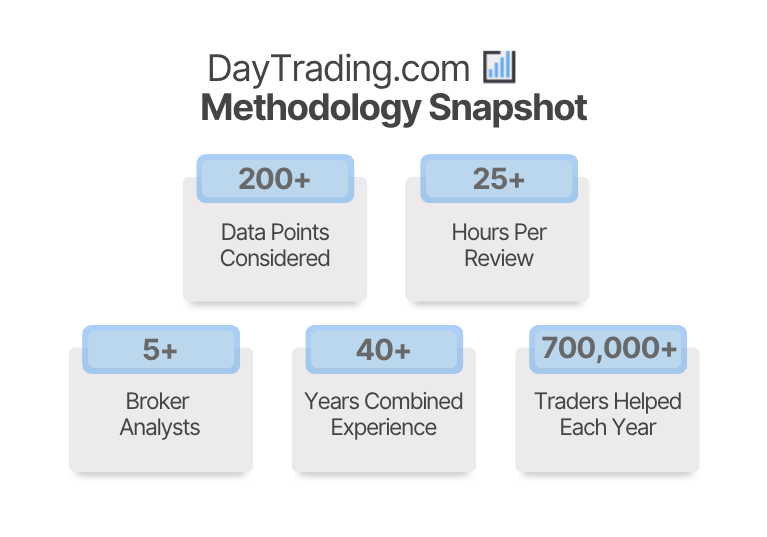
How DayTrading.com Chose The Best Brokers For Trading Water
When we narrowed down the best brokers for water trading, we didn’t just look at the marketing claims. We ran our own hands-on tests, placing trades in both the H2O futures contract and water-themed ETFs to see how each platform stacked up.
Here are the main factors we focused on:
- Execution Speed and Reliability: Futures pricing can move fast, so we timed how quickly orders were filled. Interactive Brokers and IG consistently gave the smoothest execution with minimal slippage.
- Costs and Margins: Trading futures comes with commissions and margin requirements. We found Interactive Brokers offered flexible margin options for different account sizes. For water ETFs, brokers like XTB and eToro stood out with competitive spreads.
- ETF and Stock Access: Not every broker gives you water futures, but most offer ETFs and water-related stocks. We tested access to water-related ETFs such as PHO, FIW, and PIO, plus leading utility and water infrastructure stocks. We found XTB and IG were particularly strong here.
- Platform Usability: It’s not just about access. We tested the platforms ourselves to see how easy it was to place futures orders, manage risk, and chart price movements. IG‘s platform was user-friendly, while Interactive Brokers provided depth for more advanced traders.
- Trading Scenarios: To simulate actual trading conditions, we tested a mix of long-term ETF holdings, single-stock trades, and short-term futures positions. This allowed us to see how brokers handled liquidity, volatility, and multi-product portfolios.
- Research Tools: Because water futures are still emerging, good broker-provided research and customer support were critical. Water is a niche market, so finding useful analysis is harder than with gold or oil. We rated brokers higher if they offered thematic research, ETF screeners, or direct CME market data to support trading decisions.
The Key Water Futures Contracts You Can Trade
The most important contract in the water market is the Nasdaq Veles California Water Index Futures (H2O), listed on the Chicago Mercantile Exchange. This contract tracks the price of water in California – one of the most water-stressed and agriculturally significant regions in the world.
Each futures contract represents 10 acre-feet of water, roughly 3.26 million gallons, and prices are quoted in US dollars per acre-foot. For traders, that means you can take positions based on expected changes in California water prices without ever needing to own or move physical water.
When we tested access across brokers, this was the single futures product consistently available. It is still early days in the water futures market, and liquidity is thinner compared to energy or grain contracts. That said, we noticed that execution quality on H2O has improved in recent years, with tighter spreads on larger platforms.
For traders looking beyond futures, some brokers also provide access to water-related ETFs and utility stocks that are indirectly tied to the same theme.
How to Trade Water: Futures vs ETFs vs Stocks
Water is unusual compared to energy, metals, or grains – you can’t just buy barrels or bushels of it and store it. That’s why most traders approach water through financial products: either futures, exchange-traded funds (ETFs), or stocks linked to water infrastructure.
Futures (Direct Exposure)
The Nasdaq Veles California Water Index Futures (H2O) is the main contract. Futures give you direct exposure to water prices, but they also come with higher margin requirements and sharper volatility.
From our testing, execution worked best on larger futures firms such as Interactive Brokers and IG.
ETFs (Diversified and Accessible)
If you’re looking for a simpler way to trade the water theme, ETFs are the way to go. Some of the most popular include:
- Invesco Water Resources ETF (PHO) – Tracks US-listed water companies.
- First Trust Water ETF (FIW) – Focuses on US-focused management firms.
- Invesco Global Water ETF (PIO) – Covers water infrastructure worldwide.
- iShares Global Water ETF – Tracks the S&P Global Water Index.
Stocks (Targeted Exposure)
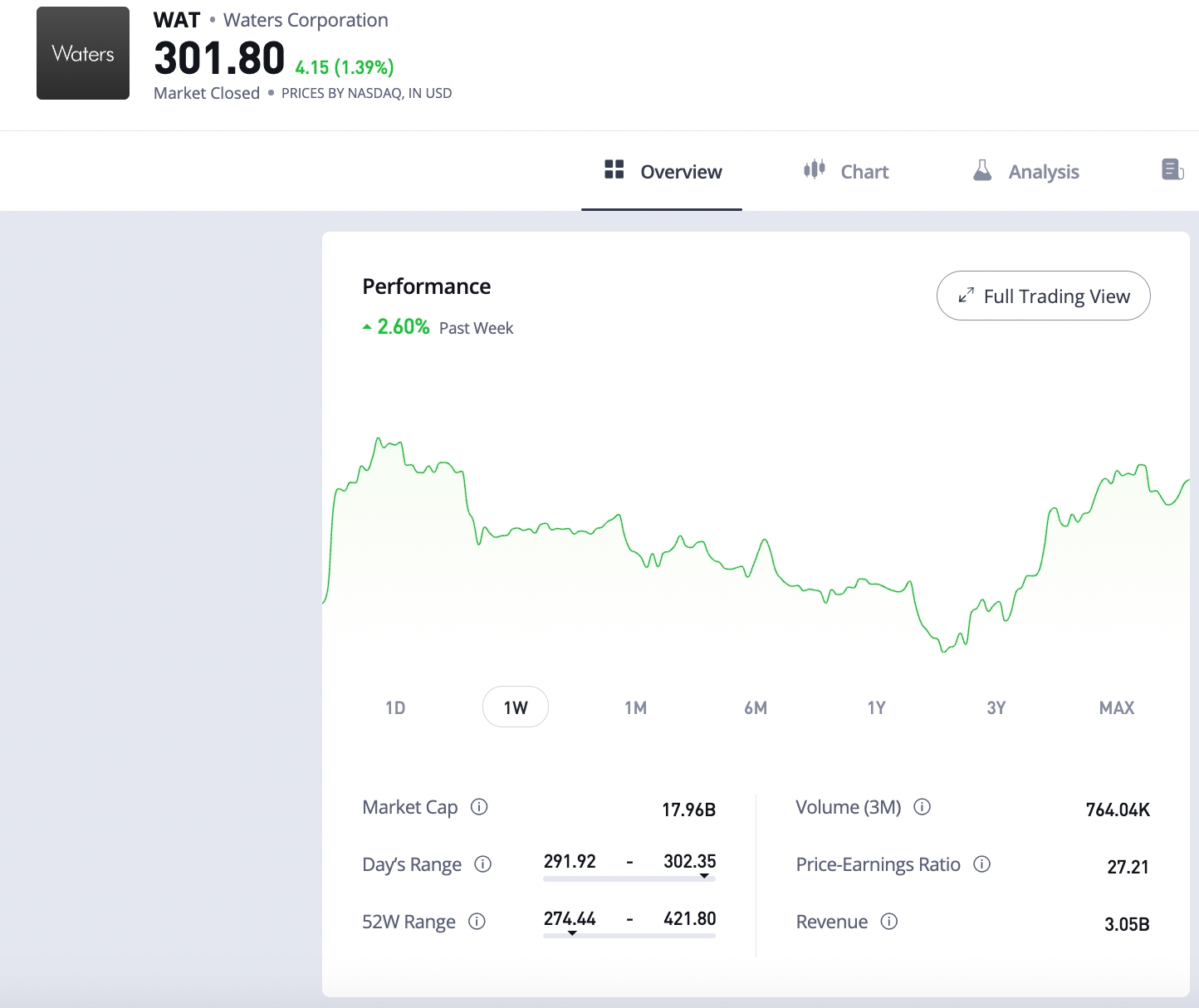
Finally, you can trade individual companies with strong exposure to water infrastructure, treatment, or utilities. Big names include American Water Works, Veolia Environnement, and Pentair.
Our testing showed that most multi-asset brokers list these stocks, so if you prefer equity-style exposure with earnings reports and dividends, this is the route.
Which is best?
From our experience, the choice depends on your style:
- Futures if you want leveraged, direct exposure.
- ETFs if you want diversified, lower-maintenance exposure.
- Stocks if you want to pick companies and track fundamentals.
Pros and Cons of Trading Water
Trading water isn’t the same as trading oil or gold – and that’s both an opportunity and a challenge. From our live testing and research, here’s how the balance looks:
Pros
- Exposure to a fast-growing, essential global theme
- Futures (H2O) provide direct access to water pricing
- ETFs make it simple to get diversified exposure to water companies
- Many brokers already offer water ETFs and stocks
- Useful for portfolio diversification outside of traditional commodities
Cons
- Futures market is still niche with lower liquidity
- Margin requirements can be steep for smaller traders
- Pricing is region-specific (California water index) and not global
- Limited research tools compared to energy or metals markets
- ETFs can dilute exposure with holdings not 100% focused on water