




Hydrogen has shifted from being an energy buzzword to a genuine growth story. With governments worldwide throwing serious weight behind the clean energy transition, hydrogen is moving closer to the center of conversation amongst active traders.
When we first started testing hydrogen-linked brokers, one thing jumped out: volatility. These stocks can move fast. That’s partly because many of the companies are still in growth phases, and partly because investor interest spikes whenever fresh news about subsidies or infrastructure investments hits the wires.
For us traders, that makes hydrogen stocks and ETFs a compelling space. Still, finding a platform with the right access, tools and pricing is key. Fortunately, we’ve run tests to identify the best brokers for trading hydrogen.
Top 3 Brokers For Trading Hydrogen Stocks and ETFs
Following our hands-on tests, these brokers stand out if you want to trade hydrogen stocks, clean energy firms, and hydrogen-focused ETFs:
-
- Demo account
- Platforms: eToro Web, CopyTrader, TradingCentral
- Min. deposit: $50
61% of retail CFD accounts lose money. eToro is a multi-asset investment platform. The value of your investments may go up or down. Your capital is at risk. -
- Demo account
- Platforms: xStation
- Min. deposit: $0
69-80% of accounts lose money when trading CFDs with this provider. -
- Demo account
- Min. deposit: $0
- Min. trade: 0.01 Lots

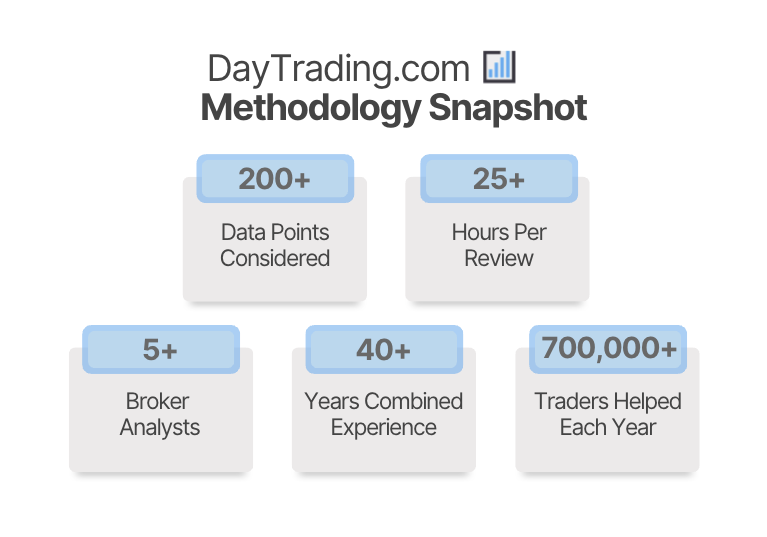
Learn how we test brokers and why you can trust our ratings.
Why Are These Brokers The Best For Hydrogen Trading?
Here's a rundown of why we rate these platforms as the top providers for trading the hydrogen economy:
- eToro is the best broker for hydrogen stocks and ETFs in 2026 in Turks And Caicos Islands 4.0/5 eToro impressed in our testing for active traders who want straightforward exposure to hydrogen with a social element. Access is focused on popular U.S. names like Plug Power, Ballard Power Systems, and Bloom Energy, alongside leading ETFs such as HYDR and HDRO. Depth in smaller European stocks is lacking, but if your strategy is built around mainstream hydrogen exposure and crowd-driven signals, eToro is an excellent platform.
- XTB 4.8/5 XTB proved itself a cost-effective choice for hydrogen traders. The platform provides access to U.S. hydrogen names like Plug Power and Bloom Energy, with HYDR among the ETFs available. Where it excelled was pricing - spreads and costs stayed low throughout testing, making it highly attractive for serious traders. Research tools and European depth lag behind other providers in this list, but if your focus is budget-friendly trading of U.S. hydrogen stocks, XTB is a standout.
- IG 4.8/5 In our hydrogen trading tests, IG offered one of the best experiences. Coverage was broad with everything from U.S. giants like Plug Power to European players such as Linde and Nel ASA, plus ETF access (HYDR, HTWO) was smooth. Execution stood out: order fills were consistently fast, and spreads stayed respectable even in choppier sessions. The platform’s charting tools are excellent for tracking volatile hydrogen names.
How Trusted Are The Best Hydrogen Brokers?
Hydrogen investors need secure accounts. Here’s how our top brokers ensure compliant access to global hydrogen equities and ETFs:
| Broker | Trust Rating | Guaranteed Stop Loss | Negative Balance Protection | Segregated Accounts |
|---|---|---|---|---|
| eToro | ✘No | ✔Yes | ✔Yes | |
| XTB | ✘No | ✔Yes | ✔Yes | |
| IG | ✔Yes | ✔Yes | ✔Yes |
Are The Best Hydrogen Brokers Good For Beginners?
New to hydrogen ETFs, fuel cell firms, and clean energy stocks? We assessed education, demo accounts, and support to find how our top choices help beginners:
| Broker | Demo Account | Minimum Deposit | Minimum Trade | Education Rating | Support Rating |
|---|---|---|---|---|---|
| eToro | ✔Yes | $50 | $10 | ||
| XTB | ✔Yes | $0 | 0.01 Lots | ||
| IG | ✔Yes | $0 | 0.01 Lots |
Are The Top Hydrogen Brokers Good For Experienced Traders?
Seasoned traders need access to hydrogen sector ETFs, global clean energy equities, advanced order types, and fast execution. Here’s where our top firms excelled:
| Broker | Automated Trading | VPS | AI | Pro Account | Leverage | Low Latency | Extended Hours |
|---|---|---|---|---|---|---|---|
| eToro | Automate your trades via CopyTrader - follow profitable traders. Open and close trades automatically when they do. | ✘No | ✔Yes | ✘No | 1:30 EU | ✘No | ✔Yes |
| XTB | - | ✘No | ✘No | ✔Yes | 1:500 | ✔Yes | ✘No |
| IG | Expert Advisors (EAs) on MetaTrader, build your own on ProRealTime | ✔Yes | ✔Yes | ✔Yes | 1:30 (Retail), 1:250 (Pro) | ✔Yes | ✔Yes |
Compare Detailed Ratings Of Top Hydrogen Brokers
See how the leading hydrogen trading platforms performed in each main testing area:
| Broker | Trust | Platforms | Assets | Mobile | Fees | Accounts | Research | Education | Support |
|---|---|---|---|---|---|---|---|---|---|
| eToro | |||||||||
| XTB | |||||||||
| IG |
Compare Trading Fees
Costs matter for hydrogen investing, especially for active traders. Compare trading fees across our top brokers:
| Broker | Cost Rating | Fixed Spreads | Inactivity Fee |
|---|---|---|---|
| eToro | ✔Yes | $10 | |
| XTB | ✘No | €/$10 per month after 365 days | |
| IG | ✘No | $12 |
Community Sentiment
See how users rate these brokers based on the average customer ratings submitted on DayTrading.com, plus ratings from Trustpilot, the Apple App Store and Google Play.
| Broker | Our Users' Rating | Trustpilot Score | Trustpilot Reviews | iOS App Rating | Android App Rating |
|---|---|---|---|---|---|
| eToro | 32275 | ||||
| XTB | 3036 | ||||
| IG | 10208 |
How Popular Are The Top Hydrogen Trading Platforms?
Hydrogen investing is gaining traction as part of the global clean energy transition. We looked at user numbers to see which brokers attract the most traders:
Why Use eToro To Trade Hydrogen?
eToro's social trading platform leads the pack with a terrific user experience and active community chat that can help beginners find opportunities. There are also competitive fees on thousands of CFDs and real stocks, plus excellent rewards for experienced strategy providers.
 Christian Harris, Reviewer
eToro quick facts
- Demo Account
- ✔Yes
- Instruments
- CFDs, Forex, Stocks, Indices, ETFs, Smart Portfolios, Commodities, Futures, Crypto, NFTs
- Regulator
- FCA, CySEC, MiCA, MFSA, FSRA, ASIC, FSAS, MAS, GFSC
- Platforms
- eToro Web, CopyTrader, TradingCentral
- Minimum Deposit
- $50
- Minimum Trade
- $10
- Account Currencies
- USD, EUR, GBP, AUD, DKK
Pros
- In 2025, eToro stopped including all crypto trading fees within the spread - instead, the same commission is now charged separately and shown as a clear line item, giving active traders more transparency without increasing overall costs.
- eToro has bolstered its investment offering, regularly adding new crypto assets, and now offering over 100 digital currencies.
- eToro elevated the social trading experience in 2025, integrating insights from Stocktwits 10M+ users to help gauge market sentiment.
Cons
- There are no guaranteed stop loss orders which would be a useful risk management feature for beginners.
- There is a $30 minimum withdrawal amount and a $5 fee, which will affect novices with low capital.
- The lack of additional charting platforms like MT4 will reduce the appeal for seasoned day traders accustomed to using third-party software.
Why Use XTB To Trade Hydrogen?
XTB stands out as a top choice for new day traders with the terrific xStation platform, low trading costs, no minimum deposit, and excellent educational tools, many of which are seamlessly integrated into the platform.
Christian Harris, Reviewer
XTB quick facts
- Demo Account
- ✔Yes
- Instruments
- CFDs on shares, Indices, ETFs, Raw Materials, Forex currencies, cryptocurrencies, Real shares, Real ETFs
- Regulator
- FCA, CySEC, KNF, DFSA, FSC, SCA, CMF, Bappebti
- Platforms
- xStation
- Minimum Deposit
- $0
- Minimum Trade
- 0.01 Lots
- Account Currencies
- USD, EUR, GBP
Pros
- First-class 24/5 customer support is available, including a friendly live chat with response times of under two minutes during testing.
- The xStation platform continues to impress with its user-friendly interface and intuitive features, including customizable news feeds, sentiment heatmaps, and trader calculator, reducing the learning curve for newer traders.
- With an excellent range of educational materials, including training videos and articles integrated into the platform, XTB supports traders at all levels.
Cons
- The research tools at XTB are good but could be great if they went beyond in-house features with access to leading third-party tools such as Autochartist, Trading Central and TipRanks.
- Not being able to adjust the default leverage level of XTB products is frustrating, as manual adjustment can significantly mitigate trade risk, especially in forex and CFD trading.
- XTB does not offer a raw spread account, which is becoming increasingly common among competitors like Pepperstone, and may disappoint day traders looking for the tightest spreads.
Why Use IG To Trade Hydrogen?
IG continues to provide a comprehensive package with an intuitive web platform, best-in-class education for beginners, advanced charting tools bolstered by its recent TradingView integration, real-time data, and robust trade execution for experienced day traders.
Christian Harris, Reviewer
IG quick facts
- Demo Account
- ✔Yes
- Instruments
- CFDs (not in US), Forex, Stocks, Indices, Commodities, ETFs, Futures, Options, Crypto, Spread Betting (UK only)
- Regulator
- CFTC, NFA, FCA, BaFin, ASIC, FINMA, MAS, JFSA, FMA, DFSA, BMA, CONSOB
- Platforms
- Web, L2 Dealer, MT4, TradingView, AutoChartist, TradingCentral, ProRealTime
- Minimum Deposit
- $0
- Minimum Trade
- 0.01 Lots
- Account Currencies
- USD, EUR, GBP, CAD, AUD, JPY, ZAR, SEK, DKK, CHF, HKD, SGD
Pros
- As a well-established broker, IG operates under strict regulatory guidelines in multiple jurisdictions, maintaining a high level of trust.
- The IG app offers a superb mobile trading experience with a clean design that helped it secure Runner Up at our 'Best Trading App' award.
- The proprietary web-based platform continues to caters to traders of all levels, with advanced charting tools and real-time market data useful for day trading, while IG has also added TradingView integration.
Cons
- IG applies an inactivity fee of $12-$18 per month after 2 years, deterring casual investors.
- Beginners might find IG’s fee structure complex, with various fees for different types of trades or services, potentially leading to confusion or unexpected charges.
- IG has discontinued its swap-free account, reducing its appeal to Islamic traders.
How DayTrading.com Chose The Top Brokers That Offer Hydrogen Stocks and ETFs
Hydrogen is still an emerging sector; therefore, broker choice makes a bigger difference than with mainstream equities. We put each platform through hands-on testing rather than relying on advertised features. Our goal was to see how each broker handles real trading of hydrogen stocks and ETFs.
Here’s what we looked for when testing brokers:
- Market Coverage: Some platforms only give you access to the big U.S. names, while others cover the entire supply chain across Europe, Asia, and the U.S. We wanted brokers that offered more than just Linde and Air Products. Access to growth stocks like Nel ASA or Ballard Power Systems, was a key scoring factor.
- ETF Access: Hydrogen ETFs are increasingly popular for diversification. We tested access to major ETFs, including the Global X Hydrogen ETF (HYDR) and L&G Hydrogen Economy UCITS ETF (HTWO). Brokers that offered both U.S. and European ETFs scored higher.
- Execution Speed: We placed multiple market and limit orders on both large-cap names like Linde and smaller, volatile plays such as Plug Power and Nel ASA. We measured how quickly orders were filled and tracked any slippage during periods of high market activity.
- Costs and Fees: We recorded spreads, commissions, and overnight financing charges across a variety of trades. This helped us see which brokers are truly cost-efficient when trading hydrogen stocks and ETFs rather than just relying on their published fee tables.
- Platform Usability: Ease of use matters, especially for volatile sectors like hydrogen. We evaluated charting, alerts, watchlists, and research tools, as well as the onboarding process and account setup speed.
- Real-World Trading Scenarios: We simulated different trading strategies, including short-term trades in volatile single stocks. This allowed us to test each broker’s performance in scenarios day traders are most likely to encounter.
How to Trade Hydrogen
There are two main ways to trade hydrogen:
1. Single Stock Purchases
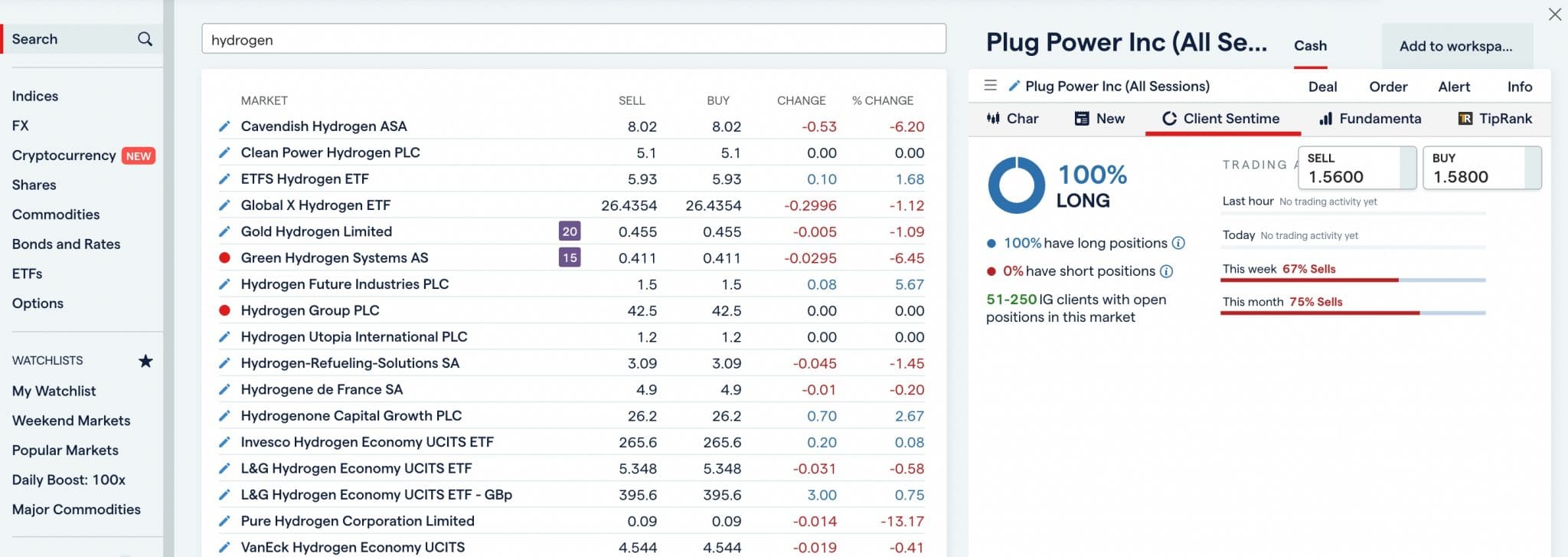
Buying individual hydrogen stocks gives you direct exposure to the companies driving the sector. This works well if you want to focus on a few names and ride their growth (or short them if the hype fades). But the trade-off is volatility – hydrogen pure plays like Plug Power can swing double digits in a single session.
Hydrogen is a mix of giants and disruptors. On one side, you’ve got established chemical companies that have been producing hydrogen for decades. On the other hand, smaller, high-volatility innovators are trying to carve out their place in the clean energy boom.
Here are the key names we’d keep on our radar:
| Company | Ticker | What They Do | Why Traders Watch |
|---|---|---|---|
| Plug Power | PLUG | Builds hydrogen fuel cells and infrastructure. | One of the most liquid hydrogen plays, but also volatile with regular earnings shocks. |
| Ballard Power Systems | BLDP | Specializes in fuel cell tech for buses, trucks, and shipping | A pure-play hydrogen stock with global projects, often sensitive to policy news |
| Bloom Energy | BE | Produces solid oxide fuel cells for clean electricity | Gains traction on partnerships and adoption in industrial markets |
| Nel ASA | NEL.OL | Norwegian hydrogen equipment and electrolyzer producer | Heavily tied to European hydrogen projects and subsidies |
| Linde | LIN | Global industrial gas giant with large hydrogen division | Stable, blue-chip exposure to hydrogen and green projects |
| Air Products & Chemicals | APD | U.S. giant investing heavily in hydrogen production and distribution | Reliable stock with both dividend stability and hydrogen upside |
During my tests, I noticed brokers vary widely in the stocks they offer. Larger caps like Linde and Air Products are accessible almost everywhere, while names like Nel ASA often require a broker with wide European market coverage.
That’s why and when platform and broker choice becomes crucial, depending on how deep into the hydrogen supply chain you want to trade.
 Paul HolmesAuthor
2. Exchange-Traded Funds (ETFs)
Hydrogen ETFs are the smarter route if you prefer diversification. Instead of betting on one or two companies, you spread exposure across dozens of players in hydrogen production, fuel cells, and infrastructure.
The most popular funds we saw across platforms in testing include:
- Global X Hydrogen ETF (HYDR) – U.S.-listed fund tracking hydrogen production and supply chain players.
- L&G Hydrogen Economy UCITS ETF (HTWO) – A European option covering hydrogen and fuel cell firms.
- VanEck Hydrogen Economy ETF (HDRO.EU) – Another EU-based product with broad sector exposure.
Hydrogen is volatile, no doubt, but that’s what makes it worth watching for many of us traders.
The key is having the right broker setup – one that gives access to both single stocks and ETFs, with tight spreads and reliable execution.
Paul HolmesAuthorPros and Cons of Trading Hydrogen
Pros
- High Growth Potential: Hydrogen is at the forefront of the clean energy transition, with both established companies and innovative startups.
- Diversification via ETFs: ETFs like HYDR and HTWO let you spread your risk across multiple hydrogen plays in one trade.
- Volatility Creates Opportunities: Price swings in smaller hydrogen names can offer short-term trading potential.
- Global Exposure: Traders can access U.S., European, and some Asian hydrogen stocks through the right brokers.
Cons
- High Volatility: Smaller hydrogen stocks can swing sharply on policy news, earnings, or project announcements.
- Limited Liquidity on Some Names: Some ETFs and smaller stocks trade with lower volume, which can affect fills and pricing.
- Complex Sector: Understanding hydrogen production, fuel cells, and infrastructure is necessary to make informed trades.
- Broker Access Varies: Not every platform offers all hydrogen stocks and ETFs, so careful broker selection is essential.