




Market maker brokers are companies that buy and sell financial assets with the use of their own inventories. They allow markets to operate smoothly by supplying deep liquidity and provide important benefits for short-term traders.
This guide will explain how they work, plus the advantages and disadvantages you can experience by day trading with a market maker broker. We’ve also evaluated a long row of companies to bring you our pick of the best market maker brokers.
Best Market Maker Brokers 2026
These are the top market-making brokers based on our exhaustive reviews:
-
- Demo account
- Platforms: MT4, MT5, TradingCentral
- Min. deposit: $5
-
- Demo account
- Min. deposit: $100
- Min. trade: 0.01 Lots
-
- Demo account
- Regulator: FCA, ASIC, CMVM , FSCA, SCB, FSA
- Platforms: TN Trader, MT4, TradingView
-
- Demo account
- Regulator: ASIC, CySEC, FSCA, BVI FSC
- Platforms: Web Platform, MT4, MT5, TradingCentral
-
- Demo account
- Platforms: eToro Web, CopyTrader, TradingCentral
- Min. deposit: $50
61% of retail CFD accounts lose money. eToro is a multi-asset investment platform. The value of your investments may go up or down. Your capital is at risk. -
- Demo account
- Regulator: FCA, ASIC, FSCA, VFSC, CIMA
- Min. deposit: $50





Learn how we test brokers and why you can trust our ratings.
This is why we think these brokers are the best in this category in 2026:
- XM 4.8/5 XM is a globally recognized forex and CFD broker with 20+ million clients in 190+ countries. Since 2009, this trusted broker has been delivering low trading fees across its growing roster of 1000+ instruments. It also offers a comprehensive MetaTrader experience that we've observed firsthand placing test trades.
- AvaTrade 4.9/5 Established in 2006, AvaTrade is a leading forex and CFD broker trusted by over 400,000 traders. Operating under regulation in 9 jurisdictions, AvaTrade processes an impressive 2+ million trades each month. Through like MT4, MT5, and its proprietary WebTrader, the broker provides a growing selection of 1,250+ instruments. Whether it’s CFDs, AvaOptions, or the more recent AvaFutures, short-term traders at all levels will find opportunities. With terrific education and 24/5 multilingual customer support, AvaTrade delivers the complete trading experience.
- Trade Nation 4.4/5 Trade Nation is a top FX and CFD broker regulated in multiple jurisdictions including the UK and Australia. The firm offers low-cost fixed and variable spreads on 1000+ assets with robust trading platforms and training materials. The Signal Centre can also be used for trade ideas.
- Markets.com 4.4/5 Established in 2008, Markets.com is a long-standing, multi-regulated broker with oversight from the CySEC and FSCA. It offers unique features to track hedge fund moves and insider trades, while providing stock signals to alert traders to market opportunities. Its choice of accounts (Classic to Professional) caters to all levels of active trader. 72.3% of retail accounts lose money.
- eToro 4.0/5 eToro is a top-rated multi-asset platform which offers trading services in thousands of CFDs, stocks and cryptoassets. Launched in 2007, the brand has millions of active traders globally and is authorized by tier one regulators, including the FCA and CySEC. The brand is particularly popular for its comprehensive social trading platform. Crypto investments are risky and may not suit retail investors. You could lose your entire investment. Understand the risks here. 61% of retail CFD accounts lose money.
- Vantage 4.7/5 Founded in 2009, Vantage offers trading on 1000+ short-term CFD products to millions of clients. You can trade Forex CFDs from 0.0 pips on the RAW account through TradingView, MT4 or MT5. Vantage is ASIC-regulated and client funds are segregated. Copy traders will also appreciate the range of social trading tools.
Best Market Maker Brokers Comparison
| Broker | Market Maker | Minimum Deposit | Investment Offering | Trading Platforms | Financial Regulators |
|---|---|---|---|---|---|
| XM | ✔Yes | $5 | CFDs, Forex, Stocks, Commodities, Indices, Thematic Indices, Precious Metals, Energies | MT4, MT5, TradingCentral | CySEC, DFSA, FSCA, SCA, FSA, FSC-Belize, FSC-Mauritius, CMA-Kenya, CMA-UAE |
| AvaTrade | ✔Yes | $100 | CFDs, Forex, Stocks, Indices, Commodities, ETFs, Bonds, Crypto, Spread Betting, Futures | WebTrader, AvaTradeGO, AvaOptions, AvaFutures, MT4, MT5, AlgoTrader, TradingView, TradingCentral, DupliTrade | ASIC, CySEC, FSCA, ISA, CBI, JFSA, BVI, FSRA/ADGM, AFM, CMA-Kenya, CIRO (via Friedberg Direct) |
| Trade Nation | ✔Yes | $0 | CFDs, Forex, Indices, Shares, Commodities, Futures, Bonds, Spread Betting (UK and Ireland only), Cryptos (Bahamas entity only) | TN Trader, MT4, TradingView | FCA, ASIC, CMVM , FSCA, SCB, FSA |
| Markets.com | ✔Yes | $200 | CFDs, Forex, Stocks, Commodities, Indices, Crypto, ETFs, Bonds | Web Platform, MT4, MT5, TradingCentral | ASIC, CySEC, FSCA, BVI FSC |
| eToro | ✔Yes | $50 | CFDs, Forex, Stocks, Indices, ETFs, Smart Portfolios, Commodities, Futures, Crypto, NFTs | eToro Web, CopyTrader, TradingCentral | FCA, CySEC, MiCA, MFSA, FSRA, ASIC, FSAS, MAS, GFSC |
| Vantage | ✔Yes | $50 | CFDs, Forex, Stocks, Indices, Commodities, ETFs, Bonds | ProTrader, MT4, MT5, TradingView, TradingCentral, DupliTrade | FCA, ASIC, FSCA, VFSC, CIMA |
Community Sentiment
See how users rate these brokers based on the average customer ratings submitted on DayTrading.com, plus ratings from Trustpilot, the Apple App Store and Google Play.
| Broker | Our Users' Rating | Trustpilot Score | Trustpilot Reviews | iOS App Rating | Android App Rating |
|---|---|---|---|---|---|
| XM | 3077 | ||||
| AvaTrade | 13629 | ||||
| Trade Nation | 2175 | ||||
| Markets.com | 1258 | ||||
| eToro | 32275 | ||||
| Vantage | 15839 |
XM
With a low $5 minimum deposit, advanced charting platforms in MT4 and MT5, expanding range of markets, and a Zero account offering spreads from 0.0, XM provides all the essentials for active traders.
 Christian Harris, Reviewer
XM quick facts
- Demo Account
- ✔Yes
- Instruments
- CFDs, Forex, Stocks, Commodities, Indices, Thematic Indices, Precious Metals, Energies
- Regulator
- CySEC, DFSA, FSCA, SCA, FSA, FSC-Belize, FSC-Mauritius, CMA-Kenya, CMA-UAE
- Platforms
- MT4, MT5, TradingCentral
- Minimum Deposit
- $5
- Minimum Trade
- 0.01 Lots
- Account Currencies
- USD, EUR, GBP, JPY, ZAR
Pros
- XM has rolled out platform upgrades with integrated TradingView charts and an XM AI assistant, delivering faster execution, smarter analysis, and a sleeker, more intuitive trading experience.
- XM’s growing roster of 1,400+ instruments provides diverse short-term trading opportunities, with unique turbo stocks, fractional shares, and more recently thematic indices.
- XM stands out for its commitment to trader education, with a wealth of well-presented resources, including webinars, tutorials, and even real-time trading sessions through XM Live.
Cons
- XM is falling behind the curve by not offering cTrader, which is favored over MetaTrader by some serious traders for its smoother user experience and superior charting package.
- Although trusted and generally well-regulated in some regions, XM also has global entities registered with the weak regulators like FSC (Belize) and FSA (Seychelles), whilst UK clients are no longer accepted, reducing its market reach.
- While the XM app stands out for its usability and exclusive copy trading products, the selection of technical analysis tools needs to be improved to meet the needs of advanced traders.
AvaTrade
AvaTrade offers active traders everything they need: an intuitive WebTrader, powerful AvaProtect risk management, a smooth 5-minute sign-up process, and dependable support you can rely on in fast-moving markets.
 Jemma Grist, Reviewer
AvaTrade quick facts
- Demo Account
- ✔Yes
- Instruments
- CFDs, Forex, Stocks, Indices, Commodities, ETFs, Bonds, Crypto, Spread Betting, Futures
- Regulator
- ASIC, CySEC, FSCA, ISA, CBI, JFSA, BVI, FSRA/ADGM, AFM, CMA-Kenya, CIRO (via Friedberg Direct)
- Platforms
- WebTrader, AvaTradeGO, AvaOptions, AvaFutures, MT4, MT5, AlgoTrader, TradingView, TradingCentral, DupliTrade
- Minimum Deposit
- $100
- Minimum Trade
- 0.01 Lots
- Account Currencies
- USD, EUR, GBP, CAD, AUD, ZAR
Pros
- Years on, AvaTrade remains one of the few brokers offering a bespoke risk management tool, AvaProtect, that insures losses up to $1M for a fee and is easy to activate on the platform.
- AvaTrade launched AvaFutures to offer low-margin access to global markets, then expanded in 2025 as one of the first brokers to add CME’s Micro Grain Futures.
- The WebTrader excelled in our hands-on tests, sporting a user-friendly interface for beginners, complete with robust charting tools like 6 chart layouts and 60+ technical indicators.
Cons
- While signing up is a breeze, AvaTrade lacks an ECN account like Pepperstone or IC Markets, which provides the raw spreads and ultra-fast execution many day traders are looking for.
- The AvaSocial app is good but not great – the look and feel, plus the navigation between finding strategy providers and account management needs upgrading to rival category leaders like eToro.
- AvaTrade’s WebTrader has improved, but work is still needed in terms of customizability – frustratingly widgets like market watch and watchlists can’t be hidden, moved, or resized.
Trade Nation
Trade Nation suits discretionary traders who want to speculate on major indices like the US 500 or liquid FX pairs, and want the predictable all-in costs of fixed spreads. In tests, we found the fixed-spread TN Trader environment particularly useful for trading around scheduled economic releases owing to its reliable charting environment and because published spreads stayed capped.
Christian Harris, Reviewer
Trade Nation quick facts
- Demo Account
- ✔Yes
- Instruments
- CFDs, Forex, Indices, Shares, Commodities, Futures, Bonds, Spread Betting (UK and Ireland only), Cryptos (Bahamas entity only)
- Regulator
- FCA, ASIC, CMVM , FSCA, SCB, FSA
- Platforms
- TN Trader, MT4, TradingView
- Minimum Deposit
- $0
- Minimum Trade
- 0.1 Lots
- Account Currencies
- USD, EUR, GBP, AUD, ZAR, SEK, NOK, DKK
Pros
- The demo comes with a $5,000 practice account and you can request a one-on-one platform walkthrough by callback - this level of personal help is rare.
- Trade Nation's 2026 partnership with Volt has sped up payments for Australian traders, who can now make instant deposits and withdrawals using PayID, with the faster payout capabilities planned for clients in the UK and EU.
- In testing of the TN Trader account under normal market conditions, fixed spreads held while fills were prompt on major forex pairs, with a slight drift in the entry level as price ticked between click and fill.
Cons
- The 2–20% rebate scheme is closed to FCA, CMVM, and ASIC clients, meaning active day traders in these regions who would benefit from transaction rebates cannot claim them.
- Offshore SCB and FSA entities allow retail clients up to 1:200 and 1:500 leverage compared to 1:30 in regions like the UK, Europe and Australia, so an FSA client can have 16 times the exposure of a UK retail client on the same trade, but with less oversight and no compensation scheme.
- There is no raw or ECN pricing tier, which are often prefered by day traders. No matter how much you deposit or trade, you use the same fixed (or variable on MT4) pricing as beginners, making it unsuitable for scalpers especially.
Markets.com
Markets.com is best suited to retail investors who trade frequently but don’t want to calculate commissions, thanks to its spread-only pricing (EUR/USD around 1.3 pips). It especially appeals to short-term traders who value fast execution, flexible asset choice spanning 2,200+ instruments and proprietary tools like hedge fund confidence indices and insider trade alerts.
Christian Harris, Reviewer
Markets.com quick facts
- Demo Account
- ✔Yes
- Instruments
- CFDs, Forex, Stocks, Commodities, Indices, Crypto, ETFs, Bonds
- Regulator
- ASIC, CySEC, FSCA, BVI FSC
- Platforms
- Web Platform, MT4, MT5, TradingCentral
- Minimum Deposit
- $200
- Minimum Trade
- 0.01 Lots
- Account Currencies
- USD, EUR, GBP, AUD, ZAR, SEK, NOK, DKK, CHF, PLN, CZK
Pros
- Markets.com provides commission-free trading on most assets with spreads starting from around 0.6 pips on major forex pairs, making it cost-effective for casual traders.
- Within the 2,200+ CFDs, Markets.com offers thematic baskets like the Warren Buffett Blend and Cannabis Blend, which behaved like ready-made mini-ETFs during testing, saving the work of balancing weights manually.
- Markets.com’s Hedge Fund Confidence and Insider Trading tools pulls SEC filings into the dashboard within 24 hours of disclosure, helping to spot fund moves and C-suite buys before most retail newsfeeds updated.
Cons
- While CySEC and FSCA oversight is solid, the SVGFSA and BVIFSC entities offers 1:500 leverage under a light-touch framework, meaning protections like compensation schemes and strict conduct rules lag behind the strictest regulatory standards.
- Inactivity charges kick in after just 3 months, while variable spreads are wider than top ECN brokers during testing, which may deter day traders and high-frequency traders.
- The proprietary web platform felt a bit basic once we pushed into advanced charting with fewer drawing/indicator options than full TradingView or MetaTrader.
eToro
eToro's social trading platform leads the pack with a terrific user experience and active community chat that can help beginners find opportunities. There are also competitive fees on thousands of CFDs and real stocks, plus excellent rewards for experienced strategy providers.
Christian Harris, Reviewer
eToro quick facts
- Demo Account
- ✔Yes
- Instruments
- CFDs, Forex, Stocks, Indices, ETFs, Smart Portfolios, Commodities, Futures, Crypto, NFTs
- Regulator
- FCA, CySEC, MiCA, MFSA, FSRA, ASIC, FSAS, MAS, GFSC
- Platforms
- eToro Web, CopyTrader, TradingCentral
- Minimum Deposit
- $50
- Minimum Trade
- $10
- Account Currencies
- USD, EUR, GBP, AUD, DKK
Pros
- Charts are powered by TradingView and offer strong technical analysis features, including 9 chart types and over 100 indicators.
- Top copy traders can receive annual payments up to 1.5% of assets under copy in the broker's Popular Investor Program.
- eToro introduced automated crypto staking (except for Ethereum which requires opt-in) providing a route to passive income.
Cons
- There are limited contact methods aside from the in-platform live chat.
- There are no guaranteed stop loss orders which would be a useful risk management feature for beginners.
- The lack of additional charting platforms like MT4 will reduce the appeal for seasoned day traders accustomed to using third-party software.
Vantage
Vantage remains an excellent option for CFD traders seeking a tightly-regulated broker with access to the reliable MetaTrader platforms. The fast sign-up process and $50 minimum deposit make it very straightforward to start day trading quickly.
Jemma Grist, Reviewer
Vantage quick facts
- Demo Account
- ✔Yes
- Instruments
- CFDs, Forex, Stocks, Indices, Commodities, ETFs, Bonds
- Regulator
- FCA, ASIC, FSCA, VFSC, CIMA
- Platforms
- ProTrader, MT4, MT5, TradingView, TradingCentral, DupliTrade
- Minimum Deposit
- $50
- Minimum Trade
- 0.01 Lots
- Account Currencies
- USD, EUR, GBP, CAD, AUD, NZD, JPY, HKD, SGD, PLN
Pros
- The ECN accounts are very competitive with spreads from 0.0 pips and a $1.50 commission per side (Pro ECN account)
- The broker has made efforts to expand its suite of CFDs providing further trading opportunities
- The app was upgraded in 2026 with wider asset visibility bringing together balances across Contract, Copy, and Funding accounts on one screen
Cons
- A steep $10,000 deposit is needed for the best trading conditions, which include the $1.50 commission per side
- It's a shame that some clients will need to register with the offshore entity, which offers less regulatory protection
- The average execution speeds of 100ms to 250ms are slower than alternatives based on tests
How Did We Choose The Best Market Maker Brokers?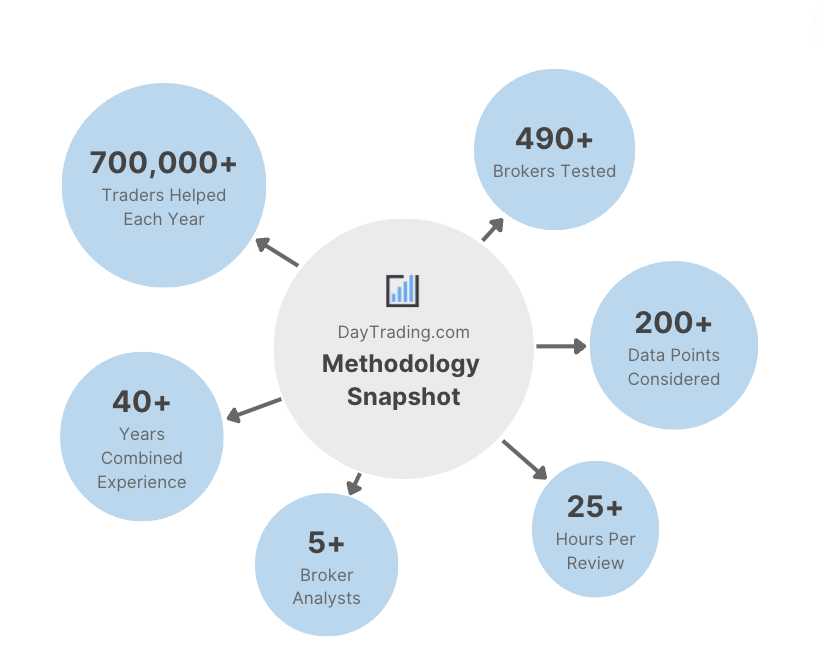
The first and most important thing we checked is that the company is trusted.
The best indicator of a trustworthy broker is authorization from a creditable body, such as the Securities and Exchange Commission in the US or the Financial Conduct Authority in the UK.
This will help safeguard your capital, ensure you are receiving a high level of customer care, and reduce the risk of falling victim to conflicts of interest.
Following that:
- We evaluated the market maker broker’s costs in the form of bid/ask spreads, commissions and additional fees.
- We looked for companies that are transparent about their operations and pricing structure.
- We looked for brokers with a wide selection of assets and securities, ensuring you’ll have a range of opportunities and the ability to build a diverse portfolio.
- We tested the broker’s trading platform to make sure it’s enjoyable to use and that you can enter and exit positions quickly and easily.
- We selected brokers with helpful features for short-term traders, including technical analysis tools, trading guides and mobile apps that facilitate trading ‘on the go’
- We prioritized market maker brokers with excellent customer support based on our hands-on tests that consider the speed and quality of assistance.
- We investigated the amount of borrowed funds, known as leverage, that you can use to trade, as this can play an important role in day trading strategies.
Understanding Market Makers
Market makers play an essential part in trading that takes place on regulated financial exchanges. They act as the middleman between buyers and sellers of financial securities, and continuously quote prices during market hours, thus ensuring that a trade can always be executed.
The deep liquidity that these institutions provide is critical for financial markets. It allows assets to be purchased and offloaded without causing substantial price turbulence.
Furthermore, their presence ensures that short-term traders, such as day traders, can open and close positions more easily.
Market makers also act as the middlemen in over-the-counter trading, where buyers and sellers do business outside of a financial exchange.
Importantly, market makers are not the same as brokerages. While brokers bring buyers and sellers together and pass orders onto third-party liquidity providers, market makers create the marketplace for investors by buying and selling assets directly to and from them.
However, financial institutions can act as both market makers and brokers. Trading with one of these dual-role entities carries advantages for short-term traders, though you should be aware of potential conflicts of interest that may arise.
Notably, market maker brokers may have an inherent conflict of interest as they often take positions opposite to their clients, potentially profiting from client losses. They also control prices and execution, which can lead to practices like price manipulation and less favorable execution for traders.
Strict regulation means that these companies must establish robust procedures and systems to avert any such conflicts.
These include setting up Chinese walls (barriers between different divisions), establishing strict order routing rules, and conducting regular internal audits.
 Royston WildAuthor
How Do Market Makers Work?
These institutions anticipate executing high volumes of buy and sell orders each day. And so they hold large inventories of assets, such as stocks, commodities, currencies and bonds, that they stand ready to trade from.
This function means that markets can keep moving by guaranteeing that a buyer and a seller can always find someone to do business with.
When markets are ‘illiquid,’ an investor may have difficulties locating another to make a trade. In these situations, the spread – in other words, the difference between the buy (or bid) and sell (or ask) prices – can be exceptionally high, resulting in greater costs to the trader.
How Do Market Maker Brokers Make Money?
Market-making brokers primarily generate profits through the bid/ask spread. They seek to buy at a lower bid price and sell at the higher ask price, and bank the difference in the process.
These institutions are still able to make money when liquidity is healthy and bid-ask spreads are kept to a minimum.
Whilst margins are small, the colossal volume of trades that are placed each day enables them to make a tidy profit.
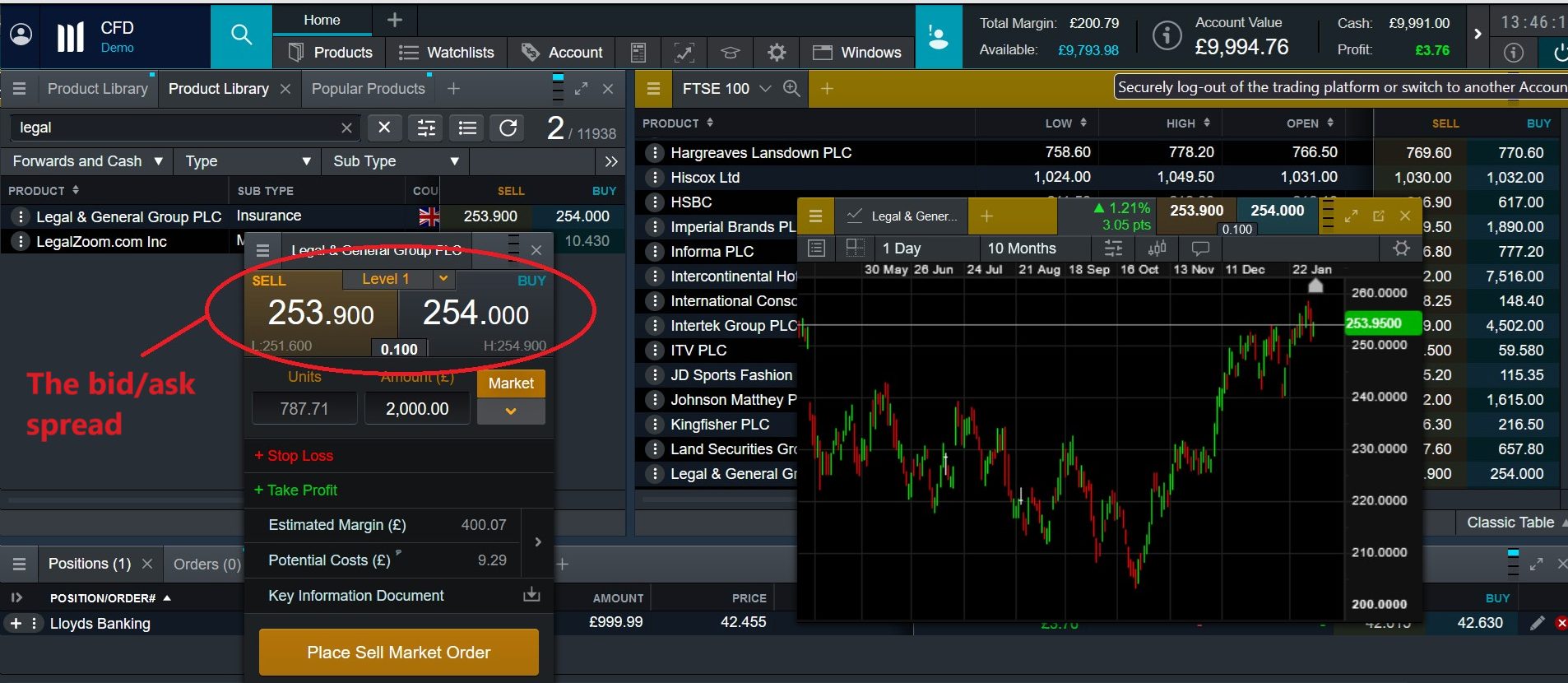
Certain market makers will also charge fees or commissions to execute trades. However, a high level of competition means that these costs – along with the difference between bid and ask prices – do not become prohibitive for traders.
Even if a market maker charges a trading fee, this can often be lower than that imposed by other brokers (like agency brokers).
Royston WildAuthorExample Trade
Let’s say that I wish to trade shares in Colin’s Computers using a market maker broker. I believe prices of the company will rise in price, and decide to buy 100 shares in the business to capitalize on this. The company currently trades at $50 per share.
To begin with, I’ll have a look at the bid and ask prices on my market-making broker’s trading platform. They are listed as:
- Bid price: $49.90
- Ask price: $50.10
This results in a bid/ask spread of $0.20.
When I place my buy order for 100 Colin’s Computers shares, the brokerage will match my instruction with existing sell orders on the market. If there is a seller who’s happy to offload their shares at $50.10, my order will be executed at this price.
In this case, how much profit would the market maker receive?
First off, let’s have a look at the total cost of the trade to me. This stands at $5,010 ($50.10 x 100 shares).
Now let’s assume that the market maker initially bought those shares for their inventory at the lower price of $49.90 each. Their profit would come in at $20 (the bid/ask spread of $0.20 x 100 shares).
Bottom Line
Deep liquidity is the key to straightforward and cost-effective trading. And by using market-making brokers, traders can enjoy an optimal dealing experience and improve their chances of making a profit.
However, using one of these brokerages to trade also presents risks that individuals need to be constantly mindful of. That’s why we recommend choosing one of our top-rated market maker brokers.
FAQ
What Is A Market Maker?
A market maker is a firm or broker that provides bids and offers of a two-sided market along with the market size of each. By trading on both sides of the market, these companies provide a platform for trading, making their money through spreads.
Do Market Maker Brokers Manipulate Prices?
Market maker brokers set their own bid/ask prices, which makes it possible for them to manipulate asset prices. However, competition is so stiff that spreads offered by market makers are generally tight.
Finding a market maker broker that is registered with a respected authority will help prevent you from being scammed or manipulated.
Do Market Maker Brokers Own Stock?
A market maker will buy stock from you and hold it until it finds another buyer. During this time, the broker does own that stock. However, they do not hold shares for their own benefit.
What Are The Advantages Of Trading With A Market Maker Broker?
Market maker brokers with healthy liquidity allow traders to enter and exit positions rapidly, thus enabling you to swiftly capitalize on trading opportunities that arise. This also helps reduce the threat of slippage, where the expected and actual prices of a trade differ due to timing issues.
Also, many such brokers offer fixed spreads, which appeal to beginners especially, providing a clear picture of how much a trade will cost.
What Are The Risks Of Trading With A Market Maker Broker?
While their operations are often closely observed by regulators, the potential for market-making brokers to act in their own interests at the expense of traders is always present.
Also, market makers may not provide the same level of price transparency as other brokers, such as ECN trading plarforms.
Additionally, with ECN brokers, it is possible to trade prices at certain times with little or no spread. This means day traders can often get better prices with these companies than with market makers.