




The Cyprus Securities and Exchange Commission (CySEC), a top European regulator with ‘green tier’ status in our Regulation & Trust Rating, ensures brokers maintain a secure environment for active traders like you and me.
Dig into the top CySEC-regulated trading platforms, personally tested by our experts and updated for 2026.
Best CySEC Brokers
Over 20% of the brokers we've evaluated out of our 143-strong database are authorized by the CySEC so the competition was tough. However, these 3 providers emerged as the absolute best following our rigorous tests:
-
- Demo account
- Regulator: NFA, CFTC, CySEC
- Min. trade: 1 contract
-
- Demo account
- Instruments: Cryptos, xStocks, Pre-IPO Perpetual Futures
- Regulator: FINTRAC, AUSTRAC, CySEC, CBI
-
- Regulator: CSSF, CBI, CySEC, BaFin, MAS, OSC, ASIC, BMA
- Min. deposit: $0
- Min. trade: $2
Learn how we test brokers and why you can trust our ratings.
Here is a summary of why we recommend these brokers in October 2026:
- NinjaTrader 4.5/5 NinjaTrader is a US-headquartered and regulated brokerage that specializes in futures trading. There are three pricing plans to suit different needs and budgets, as well as ultra-low margins on popular contracts. The brand's award-winning charting software and trading platform also offers a high-degree of customization and superb technical analysis features.
- Kraken 3.9/5 Kraken is a leading cryptocurrency exchange with a proprietary trading terminal and a list of 600+ tradeable crypto tokens. Up to 1:5 leverage is available with stable rollover fees on spot crypto trading and up to 1:50 on futures.
- Coinbase 3.5/5 Launched in 2012 as a platform enabling users to buy and sell Bitcoin via bank transfers, Coinbase has emerged as a crypto behemoth, expanding its services to include 240+ crypto assets, developing sophisticated trading platforms for retail investors, listing on the US Nasdaq, and securing licenses with multiple regulators. In May 2025, Coinbase also became the first crypto company to join the S&P 500, a milestone that enhances its reputation..
CySEC Brokers Comparison
| Broker | CySEC Regulated | EUR Account | Minimum Deposit | Markets | Platforms | Leverage |
|---|---|---|---|---|---|---|
| NinjaTrader | 1 | ✔Yes | $0 (live trades must meet intraday margin minimums, e.g., $50 to trade micro contracts) | Futures, Forex, Stocks, Options, Commodities, Futures, Crypto (non-futures depend on provider) | NinjaTrader Desktop, Web & Mobile, eSignal | $50 intraday margins for Micro contracts and $500 for popular E-mini contracts |
| Kraken | 1 | ✔Yes | $10 | Cryptos, xStocks, Pre-IPO Perpetual Futures | Kraken App, Kraken Pro, Kraken Futures, AlgoTrader, Quantower | - |
| Coinbase | 1 | ✔Yes | $0 | Crypto, Stocks, ETFs (US only), Pre-IPO Perpetual Futures (non-US) | Coinbase, Advanced Trade, Wallet, NFT, TradingView | - |
Community Sentiment
See how users rate these brokers based on the average customer ratings submitted on DayTrading.com, plus ratings from Trustpilot, the Apple App Store and Google Play.
| Broker | Our Users' Rating | Trustpilot Score | Trustpilot Reviews | iOS App Rating | Android App Rating |
|---|---|---|---|---|---|
| NinjaTrader | 1251 | ||||
| Kraken | 9305 | ||||
| Coinbase | 23275 |
NinjaTrader
NinjaTrader continues to meet the demands of active futures traders looking for low fees and premium analysis tools. The platform hosts top-rate charting features including hundreds of indicators and 10+ chart types.
 Christian Harris, Reviewer
NinjaTrader quick facts
- Demo Account
- ✔Yes
- Instruments
- Futures, Forex, Stocks, Options, Commodities, Futures, Crypto (non-futures depend on provider)
- Regulator
- NFA, CFTC, CySEC
- Platforms
- NinjaTrader Desktop, Web & Mobile, eSignal
- Minimum Deposit
- $0 (live trades must meet intraday margin minimums, e.g., $50 to trade micro contracts)
- Minimum Trade
- 1 contract
- Account Currencies
- USD, EUR, GBP, CAD, AUD
Pros
- Nano contracts — one-hundredth the size of standard contracts — allow traders to size positions with precision and manage risk at a much smaller scale, a meaningful advantage for those building positions gradually
- NinjaTrader launched CME Group Single Stock futures in July 2026, allowing traders to express directional views in top U.S. companies like Nvidia, and Amazon without needing options
- The market replay function is a standout feature — you can download tick-by-tick historical data, rewind to any specific date, and interact with it as if trading live, making it genuinely useful for both strategy testing and real-world practice
Cons
- Intraday margin requirements can spike by as much as four times in the 15 minutes leading up to major economic news releases, and may stay elevated for several minutes after volatility subsides — a detail that can catch underprepared traders off guard at exactly the wrong moment.
- NinjaTrader was acquired by Kraken in May 2025, and while it continues to operate independently for now, traders who value long-term stability may have reservations about how the platform's direction and pricing could shift under new ownership.
- NinjaTrader was fined $250k in 2025 for failing to implement an adequate anti-money laundering (AML) program and for supervisory failures.
Kraken
Kraken will suit traders looking for a diverse list of cryptos including Bitcoin and a good security track record.
 William Berg, Reviewer
Kraken quick facts
- Demo Account
- ✔Yes
- Instruments
- Cryptos, xStocks, Pre-IPO Perpetual Futures
- Regulator
- FINTRAC, AUSTRAC, CySEC, CBI
- Platforms
- Kraken App, Kraken Pro, Kraken Futures, AlgoTrader, Quantower
- Minimum Deposit
- $10
- Minimum Trade
- Variable
- Account Currencies
- USD, EUR, GBP, CAD, AUD, JPY, CHF
Pros
- 3D secure required
- Kraken, via Payward, secured VARA authorization in the UAE, so it can offer local clients Dirham funding and trading pair
- Low exchange fees on Kraken Pro
Cons
- Insider data breach and extortion incident affecting customer data in April 2026
- Slow verification process on Pro account
- Low leverage on spot trading
Coinbase
Coinbase is ideal for beginners looking for an intuitive platform to buy and sell a wide variety of cryptocurrencies, with robust security and regulatory compliance. However, its fees are higher compared to competitors in our tests, and it’s not as tailored for short-term traders.
Christian Harris, Reviewer
Coinbase quick facts
- Demo Account
- ✘No
- Instruments
- Crypto, Stocks, ETFs (US only), Pre-IPO Perpetual Futures (non-US)
- Regulator
- CSSF, CBI, CySEC, BaFin, MAS, OSC, ASIC, BMA
- Platforms
- Coinbase, Advanced Trade, Wallet, NFT, TradingView
- Minimum Deposit
- $0
- Minimum Trade
- $2
- Account Currencies
- USD, EUR
Pros
- Some users can secure a credit card by using their stablecoins (USDC) as collateral, with up to 4% paid back in Bitcoin.
- Coinbase supports 240+ cryptocurrencies, including Bitcoin (BTC), Ethereum (ETH), Solana (SOL), and more recently listed altcoins like $Trump, giving early access to emerging tokens.
- Coinbase Advanced has added TradingView integration, a feature rarely offered by crypto exchanges, allowing users to trade spot and futures markets directly from real-time charts with powerful technical analysis tools.
Cons
- There are woeful research tools; Advanced Trade has TradingView charts but lacks features like news feeds, economic calendars, and AI market insights.
- High crypto fees based on tests, especially compared to competitors like Kraken and BitMEX, and notably on the standard dealing platform.
- Frustrating customer support during testing, with most help options hidden behind login, making it tough for locked-out users or non-account holders to get assistance.
Methodology
To rank the top CySEC-authorized brokerages, we:
- Leveraged our near-daily updated directory of 143 brokers to locate those claiming a CySEC license.
- Confirmed their credentials on CySEC’s register of Regulated Entities, removing any that aren’t authorized.
- Blended the results with our firsthand tests and 200+ data points to list the 10 best.
How Can I Check If A Broker Is Regulated By The CySEC?
Verifying whether a broker is CySEC-regulated is a simple but vital step to ensure your trading safety.
It’s also a more intuitive process after CySEC gave their website and search facility a much needed upgrade in December 2024, now sporting a modern and user-friendly design.
Here’s a step-by-step walkthrough of the steps I took to check that eToro was regulated.
I’d expect a firm of eToro’s standing to be registered and authorized to conduct its business in every global jurisdiction it trades.
Its compliance department will be one of the firm’s most active divisions and will have staff who should ensure every t is crossed and every i is dotted.
However, a check takes no time at all…
Step 1: Visit CySEC’s Official Website
The first step is to go to the official CySEC website.
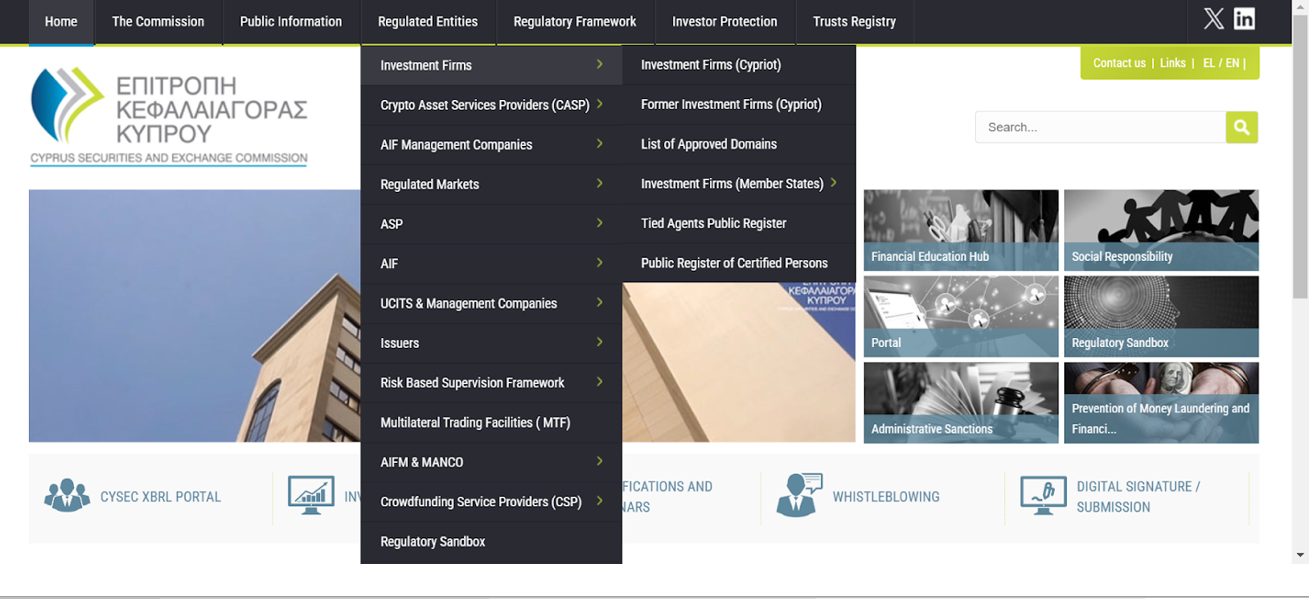
Step 2: Navigate To The ‘Regulated Entities’ Section
Look for the ‘Regulated Entities’ tab on the homepage in the menu. Hover over it, and a dropdown list will appear with categories like:
- Investment Firms (CIFs)
- Administrative Services
- Payment Institutions
For brokers, select ‘Investment Firms (CIFs)’
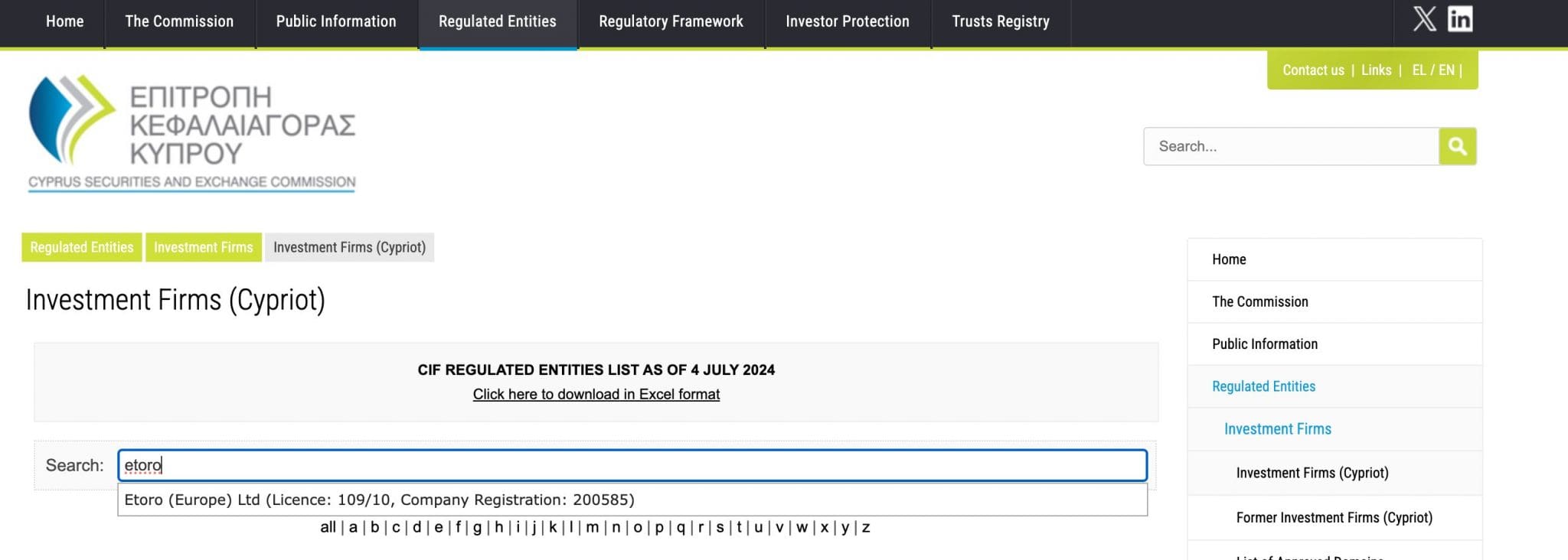
Step 3: Use The Search Function
You’ll be directed to a searchable list of licensed entities.
- Enter the broker’s name or their license number in the search bar
- Hit ‘Search’ to view the results
You can see where I punched eToro’s name into the search bar below.
Step 4: Verify The Broker’s Details
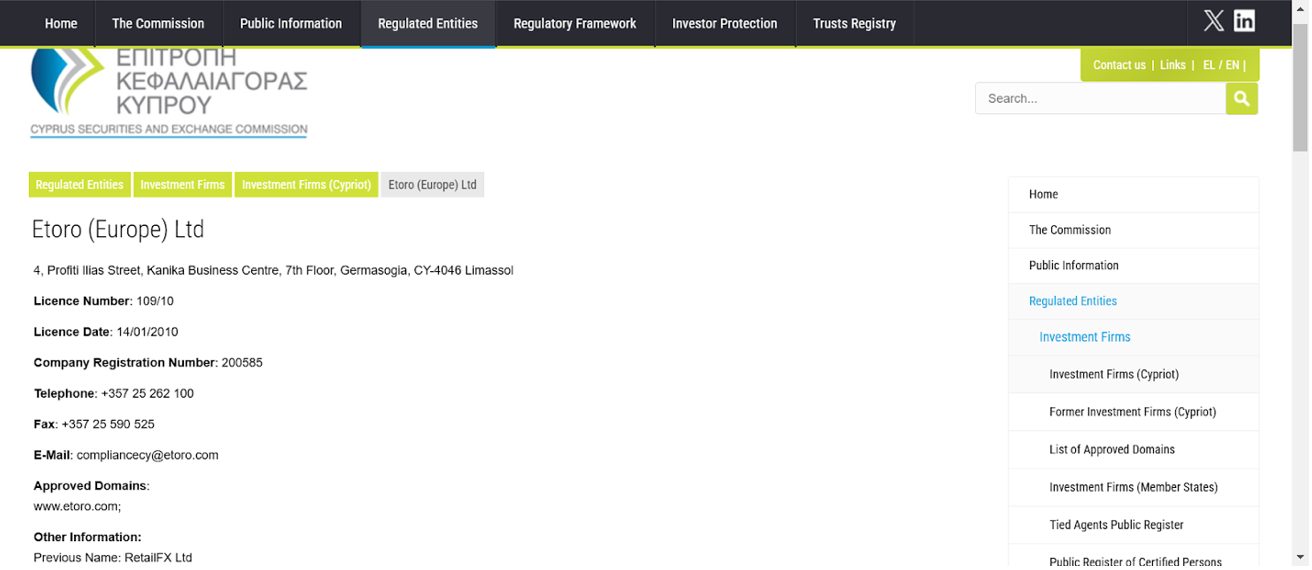
When the search results appear, look for the broker’s name in the list.
Click on the broker’s name to view their license details, including:
- Registration number
- Status (eg active, suspended, or revoked)
- Activities they are authorized to conduct
Step 5: Cross-Check Broker Information
Compare the details on CySEC’s website with the information on the broker’s website.
In our experience, legit brokers almost always prominently display their CySEC license number in their footer or ‘About Us’ section.
You can see below where I went to eToro’s website, found its regulation section, and then browsed this specific regulation page.
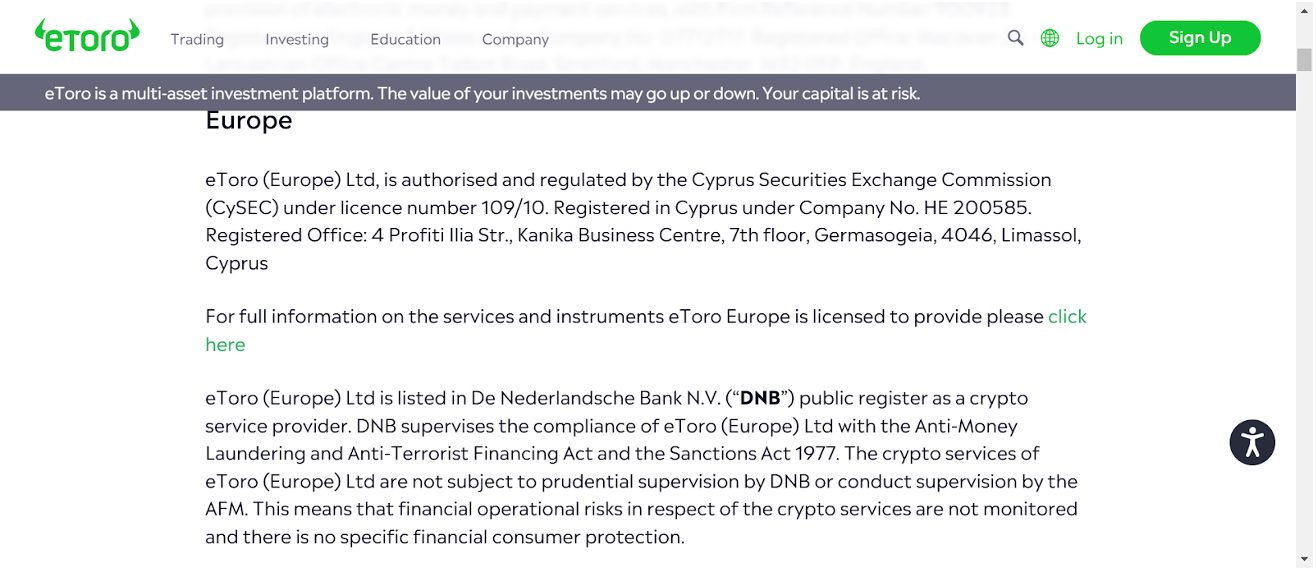
eToro states CySEC authorizes it under licence number 109/10, and this information should match what’s in the CySEC register.
As we can clearly see from the image in step 4, eToro (Europe) Ltd. is regulated by CySEC under license number 109/10, and further investigation reveals it has a clean bill of health.
It is licensed to conduct many forms of investment business throughout Europe and Cyprus.
Red Flags To Watch For
- No Matching Results: If the broker isn’t listed on CySEC’s website, they are not regulated by CySEC, even if they claim otherwise.
- Suspended or Revoked Status: Avoid brokers with inactive licenses.
What Is The CySEC?
CySEC, short for the Cyprus Securities and Exchange Commission, exists to keep the financial markets in Cyprus running smoothly and safely.
But its influence doesn’t just stop at Cyprus – thanks to its role in regulating brokers and financial firms that operate internationally, it extends across Europe and even globally.
Here’s what CySEC is all about:
- Protecting Investors – CySEC’s top priority is safeguarding your interests as a retail trader. They enforce strict rules on financial firms to ensure your money is handled responsibly and transparently.
- Regulating Financial Markets – CySEC oversees a wide range of financial activities, including popular products with day traders like forex, CFDs, and even cryptocurrencies. Its job is to make sure these markets operate fairly and without manipulation.
- Ensuring Compliance – Trading providers under CySEC’s watch must follow the law – period. From maintaining proper licenses to meeting operational standards, CySEC ensures brokers play by the rules.
- Promoting Market Stability – By cracking down on fraudulent activities and ensuring transparency, CySEC fosters trust and stability in the financial system. This benefits not only active traders but the overall economy.
CySEC acts as a watchdog, referee, and guide for financial firms and traders alike. It’s here to create a safe trading environment where everyone has a fair shot.
 Paul HolmesAuthor
Who Is CySEC Answerable To?
While CySEC plays a significant role in regulating financial markets, it doesn’t operate in a vacuum.
It’s answerable to key entities that ensure its accountability and alignment with broader goals:
- The Cypriot Government – CySEC is an independent public authority, but it ultimately reports to the Cypriot Ministry of Finance. This connection ensures CySEC aligns with national financial and economic policies.
- The European Union (EU) – As Cyprus is a member of the EU, CySEC must comply with EU financial directives, like the Markets in Financial Instruments Directive (MiFID II). These directives standardise European regulations and ensure CySEC’s practices meet EU-wide standards.
- The Public And Investors – CySEC is also accountable to the people it serves: investors, traders, and the broader financial community. CySEC ensures its actions are visible and understandable through regular reporting and transparency initiatives.
- International Regulatory Bodies – CySEC collaborates with organisations like the European Securities and Markets Authority (ESMA) and other global regulators. While not directly “answerable,” this partnership ensures its operations are consistent with international best practices.
By being answerable to these entities, CySEC is held to high-performance standards, transparency, and fairness.
For active traders like us, this means you can trust that CySEC’s actions are guided by clear oversight and a commitment to protecting the financial ecosystem.
Paul HolmesAuthorWhat Powers Does CySEC Have?
CySEC has the authority to ensure that the financial markets under its watch are fair, transparent, and above board.
Here’s a breakdown of its powers:
- Granting Licenses – CySEC has the power to approve or deny licenses for financial firms that want to operate in or from Cyprus. No license? No business. This means that brokers must meet strict standards before they can serve traders like me and you.
- Setting Rules And Regulations – CySEC doesn’t just enforce the rules – it creates them (with some direction from wider European bodies). It sets guidelines for how financial firms should operate, covering everything from advertising to client fund protection.
- Conducting Audits And Inspections – CySEC has the authority to dig into the books of the firms it regulates. Surprise audits and inspections? Absolutely! This ensures companies are staying compliant and not cutting corners.
- Imposing Penalties – Broke the rules? CySEC can hit trading platforms where it hurts through fines, license suspensions, or even revocations (more on brokers that have felt its wrath below). This keeps brokers accountable and sends a clear message: play fair or face the consequences.
- Investigating Fraud And Misconduct – If there’s any sign of market manipulation, fraud, or shady business practices, CySEC has the power to investigate. It can subpoena documents, question people, and take action to protect retail investors.
- Collaborating With Other Regulators – CySEC doesn’t work alone. Thanks to its connection with the EU and global regulatory networks, it collaborates with other watchdogs to tackle cross-border financial crime and ensure firms meet international standards.
What Rules Must A CySEC Broker Follow?
A broker must follow strict rules to carry the CySEC licence. These aren’t just suggestions but enforceable standards designed to protect traders like you and ensure fair, transparent markets.
Here are key rules a CySEC-regulated broker must adhere to:
- Obtaining Authorization – First things first, CySEC ensures that only reputable brokers can operate. To get a CySEC license, brokers must meet stringent criteria, demonstrating their reliability and financial stability. This licensing process weeds out shady operators, so you can trade with peace of mind knowing your brokerage is legit.
- Capital Adequacy Requirements – Brokers must maintain a minimum level of capital to prove they can handle market risks and unexpected losses. This ensures they stay financially healthy and stable.
- Segregation Of Client Funds – Imagine your trading funds are safely tucked away in a little vault, separate from the broker’s operational money. That’s precisely what CySEC mandates through the segregation of client funds. If anything were to happen to the broker, your money would remain protected and out of reach from any financial hiccups they might face.
- Transparency In Operations – CySEC-regulated brokers must provide transparent and honest information about their services, fees, risks, and trading conditions. Misleading advertising? Not allowed.
- Responsible Leverage Limits – Leverage trading can amplify your gains, but it can also magnify your losses. CySEC imposes leverage limits to keep things balanced, especially for retail traders, typically up to 1:30. This means brokers regulated by CySEC can’t offer sky-high leverage that might expose you to excessive risk, promoting a safer trading environment.
- Negative Balance Protection – Are you ever worried about losing more than you’ve invested? CySEC has your back with negative balance protection. This rule ensures you can’t owe money beyond your initial deposit. So, even if the market turns against your position, your losses are capped, keeping your financial well-being intact.
- Reporting And Auditing – CySEC doesn’t just grant licenses and walk away. It conducts regular audits and compliance checks to ensure brokers adhere to all regulations. These routine inspections help catch and rectify any issues early, maintaining a trustworthy trading environment.
- Best Execution Practices – Brokers must execute your trades at the best possible prices and conditions available at the time, ensuring fairness in how your orders are handled. This is essential for fast-paced traders like day traders.
- Anti-Money Laundering (AML) Compliance – Financial security goes beyond just protecting your trades. CySEC enforces strict AML policies, requiring brokers to verify your identity (Know Your Customer or KYC) and monitor transactions for suspicious activities. This helps prevent financial crimes and keeps the trading ecosystem clean and secure.
- Compensation Scheme Membership – In the unlikely event that a CySEC-regulated broker faces insolvency, you’re covered by the Investor Compensation Fund (ICF). This scheme can reimburse you up to €20,000, providing an extra layer of financial protection and peace of mind. This is a useful protection, though it’s lower than in other jurisdictions (it’s up to £85,000 in the UK).
- Adherence To MiFID II – As part of the EU, CySEC brokers must comply with MiFID II regulations, which govern everything from trade transparency to investor protection across the European Economic Area.
- Swift Action Against Misconduct – If a broker steps out of line, be it through fraud, manipulation, or any other misconduct – CySEC is quick to act. They can impose hefty fines, suspend licenses, or even revoke them entirely. This strict enforcement ensures brokers maintain high ethical standards and operate fairly.
- Complaints Handling – Even with all these protections, issues might occasionally arise. CySEC provides robust dispute resolution mechanisms, allowing you to raise concerns and seek resolutions effectively. If a broker fails to address your complaint satisfactorily, CySEC can intervene to help resolve the matter.
These regulations create a safer trading environment for us to trade. They ensure brokers operate with integrity, protect our funds, and provide the transparency we need to make informed decisions.
So, when you see a broker regulated by CySEC, you know they’ve passed a high bar of trustworthiness and accountability.
Paul HolmesAuthorDoes CySEC Have Teeth?
The Cyprus Securities and Exchange Commission has regulatory “teeth”, meaning it has the authority and the tools to enforce compliance among brokers and other financial entities.
Yet while CySEC is active, we’ve seen its penalties can be lenient compared to other major regulators, notably the FCA (UK) and ASIC (Australia).
Fortunately, CySEC has been ramping up enforcement in recent years to shed perceptions of being overly forgiving. Here are some notable examples:
- Exelcius Prime Ltd (2024): CySEC imposed a total fine of €740,000 on Exelcius Prime Ltd for various infractions, including providing unauthorized investment advice, non-compliance with organizational requirements, and failing to act in the best interests of clients.
- TradeEU.com and Titan Edge (2024): In late 2024, CySEC fined TradeEU and Titan Edge Capital for non-compliance issues such as inadequate disclosure practices and failure to implement measures to protect retail investors .
- Enforcement Actions (2023): CySEC imposed fines totaling €2.2 million in 2023 for various violations, including failures in compliance, transparency, and investor protection measures.
- FXORO (2023): FXORO faced a €360,000 penalty for breaches of investment laws, highlighting the firm’s failure to meet its regulatory obligations. This action underscores CySEC’s focus on investor protection and ensuring firms adhere to legal standards.
Bottom Line
While not as respected as FCA in the UK or ASIC in Australia, for traders in Europe, CySEC offers a reliable regulatory framework that prioritizes transparency, investor protection, and market integrity.
Its strict licensing requirements, regular audits, and ability to impose penalties ensure that brokers adhere to high operational and ethical standards.
With safeguards like segregated accounts, compensation schemes, and detailed compliance measures, day traders can feel more secure while navigating the volatile world of CFDs and forex.
Ultimately, choosing a CySEC-regulated broker ensures that one of Europe’s leading regulatory authorities governs your trading activities, offering peace of mind and fostering trust in the financial system.
To find the right provider for your needs, see DayTrading.com’s pick of the best CySEC trading platforms.
Article Sources
- Cyprus Securities & Exchange (CySEC)
- Regulated Entities - CySEC
- Investor Compensation Fund (ICF) - CySEC
- Markets in Financial Instruments Directive (MiFID II)
- Cypriot Ministry of Finance
- EU Financial Regulation
- Exelcius Prime Ltd CySEC Enforcement Action - Cyprus Mail
- TradeEU.com and Titan Edge CySEC Enforcement Action - Finance Magnates
- FXORO CySEC Enforcement Action - Finance Feeds
- 2023 CySEC Enforcement Action Total Fines - Finance Magnates
The writing and editorial team at DayTrading.com use credible sources to support their work. These include government agencies, white papers, research institutes, and engagement with industry professionals. Content is written free from bias and is fact-checked where appropriate. Learn more about why you can trust DayTrading.com