





Short sellers aim to profit from market downturns. We’ve found the best brokers for short selling by assessing key factors: markets available to short, fees on short positions, platform quality, account minimums, and our trust in the broker.
Best Brokers For Short Selling in Iran 2026
These are the 2 best platforms based on our findings, offering either direct short selling or short selling through products like derivatives:
-
- Demo account
- Regulator: FMA, FSA
- Min. deposit: $0
-
- Demo account
- Regulator: FSC (Mauritius)
- Platforms: MT4, MT5


Learn how we test brokers and why you can trust our ratings.
Here is a short overview of each broker's pros and cons
- BlackBull 4.5/5 When we evaluated BlackBull, short selling felt effortless across forex and CFD markets. Borrow costs were competitive, roughly 0.025% daily on forex CFDs and around 1.4% for equity CFDs and restrictions were minimal, allowing us to act fast on market moves. BlackBull is particularly strong for traders who want low-cost short selling opportunities on a broad range of instruments.
- NordFX 3.2/5 In our tests, NordFX made short selling CFDs and forex surprisingly straightforward. Borrow costs were roughly 0.03% daily on forex CFDs and about 1.6% for equity CFDs. With margin and reliable charting tools in MetaTrader, NordFX is a dependable platform for traders aiming to profit from short-term downward moves.
Best Brokers For Short Selling 2026 Comparison
| Broker | Short Selling Rating | Minimum Deposit |
|---|---|---|
| BlackBull | $0 | |
| NordFX | $10 |
Community Sentiment
See how users rate these brokers based on the average customer ratings submitted on DayTrading.com, plus ratings from Trustpilot, the Apple App Store and Google Play.
| Broker | Our Users' Rating | Trustpilot Score | Trustpilot Reviews | iOS App Rating | Android App Rating |
|---|---|---|---|---|---|
| BlackBull | 3517 | ||||
| NordFX | 70 |
BlackBull
After improving its trading infrastructure with Equinix servers in London, reducing latency for traders, BlackBull is an obvious choice if you want to day trade stock CFDs with ECN pricing. With competitive spreads and no commission on a growing roster of digital tokens paired with USD, BlackBull also works for active crypto traders.
 Christian Harris, Reviewer
BlackBull quick facts
- Demo Account
- ✔Yes
- Instruments
- CFDs, Stocks, Indices, Commodities, Futures, Crypto
- Regulator
- FMA, FSA
- Platforms
- BlackBull Invest, BlackBull CopyTrader, MT4, MT5, cTrader, TradingView, AutoChartist
- Minimum Deposit
- $0
- Minimum Trade
- 0.01 Lots
- Account Currencies
- USD, EUR, GBP, CAD, AUD, NZD, JPY, ZAR, SGD
Pros
- BlackBull is a much greater fit for aspiring traders following the overhaul of its ECN Prime account, now featuring improved spreads averaging 0.16 on EUR/USD and a more accessible minimum deposit of $0 compared to the old $2,000.
- With two ECN-powered accounts (Standard and Prime), plus Prime+ - an active trader rewards program offering trading rebates - BlackBull accommodates beginners through to high-volume active traders.
- After partnering with ZuluTrade and Myfxbook, alongside improvements to its own CopyTrader, and finally enabling cTrader Copy, BlackBull offers one of the most comprehensive copy trading experiences we've seen.
Cons
- Despite a growing selection of 2,180+ assets, including additions to its Asia Pacific indices, they are mainly stocks with an average selection of currency pairs and indices.
- Unlike most top brokers, BlackBull charges an irritating $5 withdrawal fee, which can detract from the overall cost-effectiveness, especially for active traders who frequently move funds.
- Although the Education Hub now features improvements like webinars and tutorials, the courses we’ve explored need more focus on explaining the wider economic factors influencing prices.
NordFX
NordFX suits experienced forex and CFD day traders or scalpers who already use MT4/MT5, want raw spreads from 0.0 pips with a fixed commission via the Zero accounts, and are comfortable accepting the trade-offs of weaker regulation and limited research tools.
Christian Harris, Reviewer
NordFX quick facts
- Demo Account
- ✔Yes
- Instruments
- Forex, CFDs, indices, commodities, cryptos, stocks
- Regulator
- FSC (Mauritius)
- Platforms
- MT4, MT5
- Minimum Deposit
- $10
- Minimum Trade
- $1
- Account Currencies
- USD
Pros
- There's an impressive range of 25+ payment methods, including local bank transfers, with zero fees and near-instant processing, making for a convenient account funding experience.
- The straightforward copy trading service may appeal to improving traders wanting to learn from those with more experience, with just a $100 minimum deposit to get started.
- NordFX has strengthened its account options with Pro accounts featuring spread-only pricing and Zero accounts with spreads from 0.0 on assets like the EUR/USD.
Cons
- With only around 100 instruments, NordFX’s market coverage doesn't match some top-rated offshore MetaTrader-focused brokers we've tested, with a particularly weak selection of a few dozen shares, despite it adding big names like SpaceX in 2026.
- Customer support needs work based on our multiple rounds of tests, with occasions where emails have gone unanswered and live chat response times of 10+ minutes.
- Although NordFX offers competitive pricing in its Zero accounts, it still trails the cheapest brokers like IC Markets, while the Pro accounts feature industry-high spreads from 10 pips.
Comparing Short Selling Brokers
Based on our exhaustive tests, the best brokers for short selling are trusted and offer a range of markets, low fees, excellent platforms, and accessible minimum deposits.
We unpack these comparison factors and our methodology below.
Trust
When we put together this list, our top priority was choosing trustworthy short selling brokers.
Only those who meet our stringent trust standards, including having up-to-date regulatory credentials and earning a solid reputation with our in-house experts, make the cut.
- eToro continues to distinguish itself through its stellar record with 25+ million users and authorization from multiple tier-one regulators including the US SEC and UK FCA.
Markets
Short selling brokers provide opportunities to profit when an asset’s price decreases, either through products like contracts for difference (CFDs), which aren’t allowed in all countries including the US, or by directly loaning the asset, such as stocks, to traders to rebuy later at a lower price.
We look for short selling brokers that offer a diverse range of markets, ensuring traders can capitalize on shorting opportunities across company shares, stock indices, currencies, or crypto tokens.
- AvaTrade excels for its extensive market offerings, allowing short positions through derivatives across 1,250+ stocks, indices, forex, commodities, and cryptocurrencies.
Fees
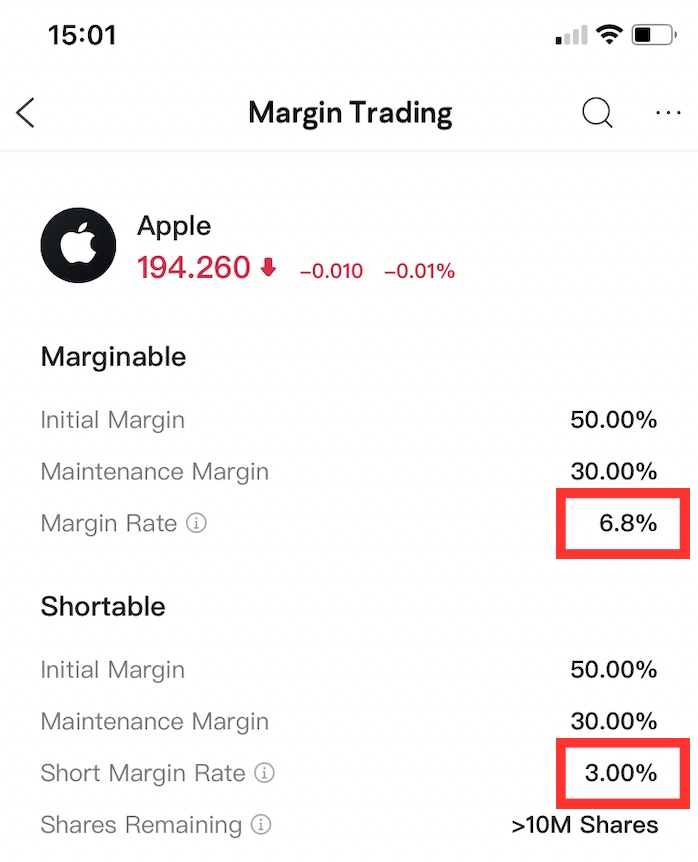
Short selling can involve certain fees including transaction costs, interest charged on borrowed funds, as well as standard interest rates on margin accounts.
We only select short selling brokers that offer highly competitive rates, but more than this we seek out those that offer good value for money by reviewing the total costs and how the services on offer weigh up.
Brokers frequently adjust their rates, so we also periodically review pricing structures to make sure short sellers have the latest information.
- Moomoo shines for its low fees with zero commissions and competitive short selling rates that vary depending on daily market supply.
Platforms
Traders need a fast, smooth and responsive platform or app to get the best results while short selling.
However, what separates the best short selling brokers for us is their valuable insights into securities that can be shorted, including the quantity available and alerts to significant changes in short interest rates and costs, to support decision-making.
- Interactive Brokers stands out with its comprehensive IBKR’s Securities Loan Borrow (SLB), offering real-time updates on shortable quantities, live and historical borrowing rates, and more throughout the day.
Methodology
Compiling our list of the top short selling brokers involved a 5-step, hands-on approach:
- Regulatory credentials – We went beyond the details advertised, verifying each broker’s license on the relevant agency’s website to ensure it was valid.
- Trading fees – We compared fees comprehensively – examining commissions, interest on borrowing, and any additional costs – to ensure brokers offer a cost-effective environment for short sellers.
- Platform quality – Putting platforms and tools to the test, we actively placed paper trades, assessing their suitability specifically for short selling.
- Trading markets – We investigated the markets and instruments available for short selling to ensure users have ample trading opportunities.
- Account opening – Recognizing the importance of accessibility, we verified that the minimum deposit required to open an account was reasonable, helping new short sellers get started.
FAQ
What Is Short Selling?
Short selling involves borrowing an asset to sell it in a bet that its price will drop, allowing you to buy it back at a later date and pocket the difference in price (minus any fees).
Alternatively, short sellers can speculate on falling prices using derivatives like contracts for difference (CFDs) in countries that allow it, whereby you don’t take ownership of the underlying asset.
Can Anyone Short Sell?
Thanks to the wide availability of online brokers, it is easier than ever to short stocks and other securities today. If you are able to sign up with the brokers on our list, then you can start short selling.
What Are The Benefits Of Short Selling?
Shorting can be a lucrative trading strategy when it comes off. Asset prices do not normally rise indefinitely, and short selling gives traders an opportunity to anticipate price drops and make money from the inevitable.
What Are The Risks Of Short Selling?
If you had bought one Bitcoin in 2019 for $5000, the maximum amount you would have risked losing was $5000 if the price went to zero. But in fact, the price rose to a peak above $60,000, so if you had shorted Bitcoin you would have potentially lost more than $55,000 (excluding any fees).
This illustrates how a short trade can be riskier than a straightforward buy, as there is no limit to how high an asset’s price can rise.