
Best Forex Bonuses In 2026



Forex bonus offers are less common nowadays due to regulations in many jurisdictions. But there are still some forex brokers, primarily in offshore locations, that do offer welcome bonuses. We list the top forex bonus brokers in September 2026.
We recommend caution before using any forex bonus. They can encourage overtrading and often can’t be withdrawn, or if they can, you may need to trade a certain number of FX lots first. They are best thought of as a way to test forex trading strategies or a broker. Check the regulatory restrictions on using forex bonuses in your region before opting in.
Top 2 Forex Bonuses in September 2026
These are the 2 best bonus offers from forex brokers right now:
-
1
 Plus500USWelcome Deposit Bonus up to $200Trading in futures and options involves the risk of loss and is not suitable for everyone.
 -
2
 FOREX.comVIP status with up to 10k+ in rebates - T&Cs apply.
Here is a summary of why we recommend these brokers in September 2026:
- Plus500US - Plus500 US offers futures trading on a small selection of 13 currencies, including popular pairs like the EUR/USD and GBP/USD. Day trading margins are competitive, while the educational resources do an excellent job of breaking down the basics of forex futures for new traders.
- FOREX.com - FOREX.com continues to uphold its stature as a premier FX broker, offering 80 currency pairs and boasting some of the most competitive fees in the industry. With EUR/USD spreads dipping as low as 0.0 and $7 commission per $100k, it stands out.
Best Forex Bonuses In 2026 Comparison
See how the forex trading conditions shape up at the best brokers with trading bonuses:
| Broker | Forex Bonus | Number of Currency Pairs | EUR/USD Spread |
|---|---|---|---|
| Plus500US | Welcome Deposit Bonus up to $200 | 13 | 0.75 |
| FOREX.com | VIP status with up to 10k+ in rebates - T&Cs apply. | 84 | 1.2 |
Community Sentiment
See how users rate these brokers based on the average customer ratings submitted on DayTrading.com, plus ratings from Trustpilot, the Apple App Store and Google Play.
What Is A Forex Bonus?
Forex brokers often try to attract new traders to sign up with cash or trading credits. These financial incentives are also used to reward existing clients for hitting certain targets or carrying out particular actions.
At first glance they can be very appealing. However, it’s critical to check the small print before buying into exactly what the broker’s offering. Forex bonuses only tend to be paid based on strict conditions being met.
And while it seems you might be getting a ‘free lunch,’ these monetary incentives are ultimately designed to favor the broker. They are typically structured to make you trade more frequently and incentivise you to keep using their platforms.
What’s more, forex bonuses can ultimately be a net negative for traders’ returns, creating the problem of overtrading and individuals taking on extra risk.
What Are The Different Types Of Forex Bonus?
Trading bonuses can take a variety of forms. Below are the most common types of bonuses offered by forex brokers. We’ve seen every one of these offered to FX traders over the years:
- Welcome Bonus: These are only available to new clients. Already have an account with a forex broker? You can forget about receiving one of these incentives.
- No Deposit Bonuses: The no-obligation nature of these incentives makes them especially popular with traders. They’re also designed to attract new customers by letting them take their trading platform ‘for a spin’ without putting their own money at risk. The thing is, most of these bonuses can never be withdrawn, while the profits generated by them can also be off limits or stuck behind steep wagering requirements.
- Deposit Bonuses: These require FX traders to deposit some of their own cash. The bonus will be based on the size of the deposit – for instance, the broker may offer a bonus of 100% of what the customer puts into their account, up to a maximum amount. Deposit bonuses may be easier to withdraw, though in reality a trader’s ability to do this may be compromised by onerous terms and conditions.
- Turnover Bonus: These are among the most controversial forex bonuses out there. Why? By directly linking cash incentives to the level of trading activity, they can significantly boost the chances of an individual overtrading and taking on too much risk. A turnover bonus may require a trader to execute a certain number of FX lots in a calendar month to receive their free cash. The bonus is typically transferred once the conditions have been met.
- Tradable Bonus: Traders don’t need to meet certain requirements to receive these bonuses. They’re awarded straight away, becoming a part of the overall account balance. This way, the money can be used by traders to open positions immediately. But while they’re lumped in with a trader’s own cash, withdrawal restrictions can still apply.
- Reload Bonus: These are used by some forex brokers to encourage their existing customers to ‘reload’ their accounts with fresh deposits. Again, these are used to incentivise clients to keep trading on the broker’s platforms and apps.
- Rebates: These aren’t a cash bonus per se. Instead, they are discounts offered to the customer if they reach certain milestones, for instance by making a set number of currency trades in a month. Over time, forex trading can be expensive business: a phalanx of fees and charges like transaction costs, rollover fees, and deposit charges can all eat into an individual’s profits. So can wide bid (buy) and ask (sell) spreads, which the rebate model can also significantly reduce. But like those other bonuses, there are also downsides. The problem here is that lower trading charges and narrower spreads can lead to overtrading.
- Gifts: These non-cash incentives can include consumer electronics (think smartphones and laptops, to give two popular examples); gift cards; holidays; entry to prize draws; even additional broker benefits (like access to trading courses or advanced charting tools).
What To Check With A Forex Bonus (Everything)
As you can see, forex bonuses aren’t the no-strings handouts some brokers would have you believe. It’s critical to pore over the terms and conditions before signing up to anything, not to mention depositing any cash.
Some of the key things to check include the below. We’ve seen every one of these in forex brokers’ promotion terms and conditions at different times.
- Trading volumes (or the ‘lot trap). Does the broker require you to trade a high number of lots before the bonus becomes available? Consider whether you’d be able to meet this requirement as part of your normal trading strategy. If it’s unlikely, you’ll be in danger of overtrading.
- Currency pair restrictions. Are you required trade specific forex pairs to be eligible for the bonus? For example, can you only trade major pairs like EUR/USD and not the minors you typically trade?
- Time limit. Do you need to hit the bonus eligibility or turnover requirements within a certain timeframe? An incentive that’s only payable if you deposit $5,000 in your account within 30 days may be useless for traders with smaller wallets.
- Scalping restrictions. Do you tend to hold FX positions for just a few seconds or minutes? Some bonuses require you keep a trading position open for a minimum period. So not all bonuses gel with forex scalping.
We recommend reading our guide to forex bonus clauses for the key stipulations to be wary of and our warning about the potential costs of using forex bonuses. Also check our balanced explainer on whether free no deposit bonuses are worth it.
The Regulators View
The forex bonus was once seen as the go-to promotional tool of online forex brokers. From no deposit bonuses, to rebates or a deposit match bonus, a new trader had a number of choices to boost their trading capital. Nowadays however, it has been relegated to the fringes of the industry, due to regulatory pressure.
According to the provisions of MiFID II for instance, brokers are no longer allowed to offer any sort of bonus incentives to their clients. Many regulators in respected jurisdictions have adopted similar stances in this regard.
Still, some forex brokers continue to offer promotions in certain jurisdictions. Thus the forex bonus has remained part and parcel of the online forex ecosystem.
Crucially, FX bonuses in 2026 are primarily offered by providers in offshore jurisdictions like Saint Vincent and the Grenadines or the British Virgin Islands. Legitimate brokerages that are regulated by trusted bodies, e.g. ‘green tier’ agencies in our regulator classification system, may operate these offshore entities where they face much less regulatory scrutiny. Just remember if you use a forex bonus from one of their offshore entities, you likely won’t receive the safeguards you’d get with their US or UK-authorized entities, such as access to investor compensation in the event of broker insolvency.
Evaluating A Real Bonus
Fintrix Markets provides a range of forex bonuses to traders. When we checked, the broker offered a 10% bonus credit on first-time deposits, up to a maximum credit of $2,000. We then scoured all the fine print.
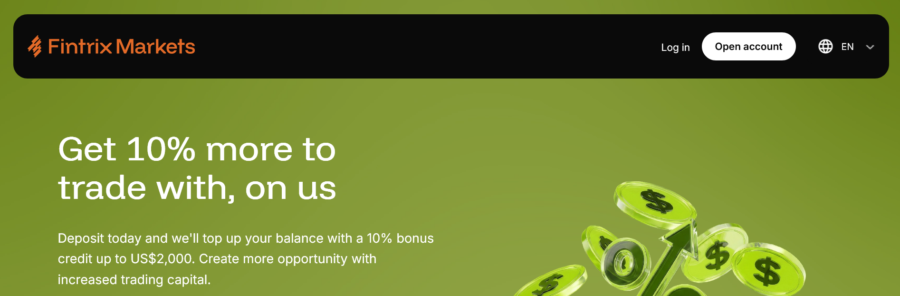
To claim the deposit, traders are required to complete the normal registration process and complete Know Your Customer (KYC) checks. Once client approval is completed the bonus is credited to the trading account.
However, the terms and conditions of the bonus state that:
- The cash incentive cannot be withdrawn or transferred. It’s for practicing trading only.
- Traders must deposit a minimum of $10. You still need to pay money to access the incentive.
- The bonus must be utilized in full within 30 days of being credited to the account, with any unused monies automatically removed. This doesn’t give you long.
- The bonus is only applicable to certain types of account. This is restrictive.

Bottom Line
Forex bonuses can provide an added sweetener when you’re using a broker. But it’s critical to remember that these financial incentives are designed to benefit the service provider first and foremost, and that they’re normally only payable if you meet certain terms and conditions. Always read the small print.
What’s more, while the idea of free cash is an attractive one, don’t let it disproportionally influence which forex brokerage you decide to go with. Other factors, like the company’s regulatory status, the quality of its trading platform, the range of currency pairs on offer, and the fees it charges active traders are far more important.
You can also always opt out of a forex bonus – they are not mandatory even if a broker offers you one.
Ultimately, we believe bonuses are, if they’re going to be used, best for testing a forex trading strategy or potential new broker. A forex demo account can also be used to try a broker’s platform and service.